In Shia understanding, Ghadeer and Karbala are two parts of a single divine narrative.
One established guidance, and the other revealed how people responded to it.
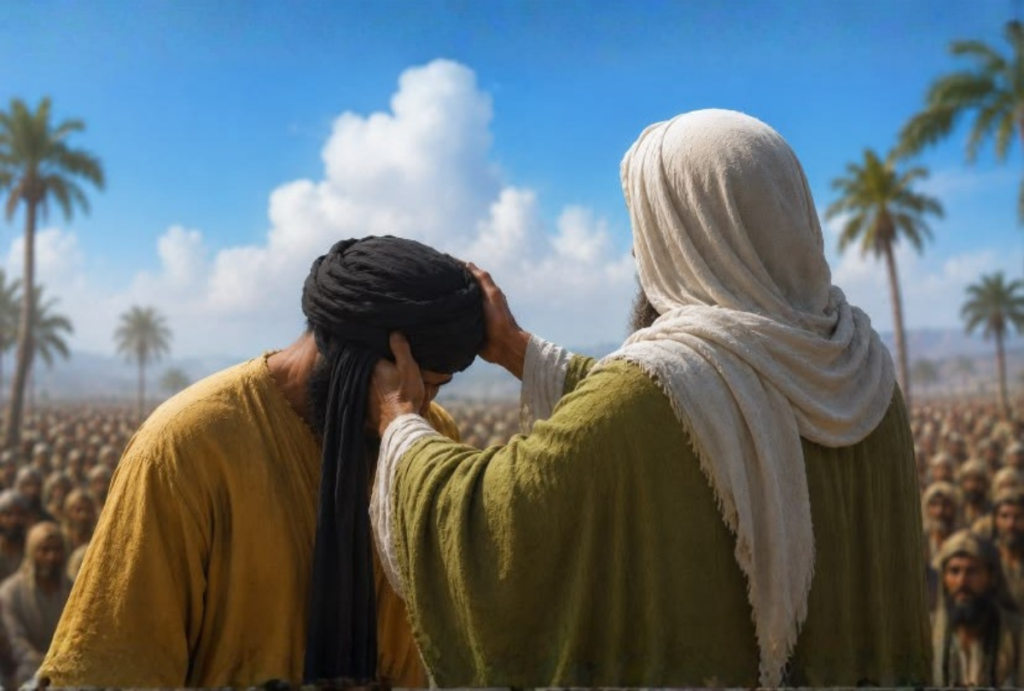
Ghadeer marked the public declaration of divinely guided leadership after the Prophet (saww).
Karbala became the moment that exposed the strength of that commitment.
Together, they continue to shape how faith, loyalty, and truth are understood today.
The Declaration at Ghadeer
At Ghadeer Khumm, the Prophet (saww) delivered a message that defined leadership and guidance for the future of the faith:
“O people, of whoever I am the master, this Ali (as) also is his master. O Allah (swt), befriend one who befriends him, and hate one who hates him. Help one who helps him, and forsake one who forsakes him.”
Al-Amali of Shaykh Mufid, a.7, h.2
Ghadeer established direction, clarity, and responsibility for the community.
A Covenant was Made
Ghadeer was not only a declaration but also a covenant of loyalty and accountability.
Allah (swt) revealed:
“Today I have perfected your religion for you, I have completed My blessing (of guidance) upon you, and I have approved Islam as a religion for you.”
Surah Al-Ma’idah, Ayah 3
This verse reflects the completion of divine guidance through the institution of wilayah.
Faith is therefore understood as both belief and commitment to a divinely guided path.
Then Came Karbala
Decades later, Karbala became the ultimate test of that covenant.
Imam Hussain (as) explained his purpose clearly:
“I did not march out exultingly, nor recklessly, nor seeking to make corruption in the land, nor to oppress anyone. Rather, I marched out seeking to reform my grandfather’s (saww) nation. I desire to enjoin what is right and to forbid what is wrong and to follow the sunnah of my grandfather (saww) and of my father Ali ibn Abi Talib (as).”
Maqtal al-Hussain
Karbala turned belief into action.
It became the moment where conviction was measured through sacrifice and endurance.
The Loyalty was Proven
They stood with truth despite fear, pressure, and certainty of martyrdom.
Their actions reflected a deep internalization of the message of Ghadeer.
This loyalty reflects the spirit that Imam Hussain (as) praised on the eve of Ashura:
“I know no companions more worthy, nor better, than mine, nor any members of a family more joining of the ties of kinship than my Ahlulbayt (as); so, may Allah (swt) reward all of you on my behalf.”
Maqtal al-Hussain
Karbala exposed the difference between spoken allegiance and lived faith.
The Test Continues
The message of Ghadeer and Karbala continues beyond history.
Every generation faces moments where values are tested and belief must be reflected through action.
Loyalty to the Ahlulbayt (as) is expressed through integrity, courage, and moral consistency.
Ghadeer was the declaration. Karbala was the test.
Together, they remind believers that faith is not only belief but something proven through action, sacrifice, and sincerity.
Eid al Ghadeer is a day of loyalty, unity, and responsibility.
Loyalty is not only spoken, it is lived.
Turn love of the Ahlulbayt (as) into visible care for people.
Turn wilayah into well-being by giving in honour of Ghadeer.
Frequently Asked Questions
Ghadeer is understood as the Prophet’s (saww) public declaration of Imam Ali (as) as divinely guided successor.
Karbala is seen as the historical test that revealed who remained loyal to the message of Ghadeer.
Wilayah refers to divinely guided authority and leadership beginning with Imam Ali (as).
It demonstrated whether belief would hold firm under pressure, sacrifice, and persecution.
It highlights the importance of recognizing and remaining committed to divinely guided leadership.
By living with sincerity, standing for justice, and ensuring actions reflect genuine belief.
More from Blog

Bridging the Digital Divide Through Education
Explore how technology can make education more accessible and create equal learning opportunities for children. Support digital inclusion and help equip young…
The Future Starts with Education
Help vulnerable children access education, technology and skills for a brighter future. Support The Zahra Trust with a Back to School gift…
Rebuilding Futures Through Education: Restoring Hope, Dignity and Opportunity
When communities experience crisis, the effects can continue long after the immediate hardship has passed. Conflict, poverty, and displacement can interrupt a…