Part 2: Day in the Life of a Field Worker
Humanitarian work is often spoken about in numbers—projects completed, families reached, aid delivered—but behind those figures are individuals who quietly document reality, navigate risk, and carry stories from the field to the world.
One such individual is a Reporting Officer at The Zahra Trust’s Kabul Office. His work ensures that every act of service is recorded with honesty, dignity, and care, even under some of the most challenging conditions imaginable.
This is his story.
What is your role in The Zahra Trust, and what drew you to getting involved?
I serve as the Reporting Officer for The Zahra Trust at the Kabul Office. During the implementation of projects, I prepare regular progress reports, and once a project is completed, I compile a comprehensive final report—written and supported by photographs and videos—in line with the organization’s established standards. These are then submitted to the Head Office.
Alongside these responsibilities, I assist with the daily operational needs of the office. This includes participating in household surveys, responding to inquiries from the organization about implemented programmes, and overseeing IT-related matters to ensure our systems function smoothly.
Given Afghanistan’s current realities, I feel a deep personal responsibility to stand beside others who are motivated by humanitarian values.
Being able to contribute—however modestly—to easing the hardships faced by the people of my country is a powerful source of motivation. The positive, sincere, and supportive working environment fostered by The Zahra Trust, especially the encouragement and respect shown by its leadership in Najaf, has only strengthened my commitment.
I truly regard my work with this organization as an honour.
What does a typical day at work look like for you?
My workday usually begins early. After a simple breakfast, I walk from my home to the office—a short journey that gives me time to organize my thoughts and mentally prepare for the responsibilities ahead.
During the winter season, I arrive at the office around 8:30 a.m. and sign in. The day typically begins with a brief coordination meeting in the office of Sayed Baqer Husseini, the Executive Officer of TZT–Kabul.
During this meeting, we review instructions and requests received from the Head Office via email, discuss internal plans, and distribute tasks among colleagues.
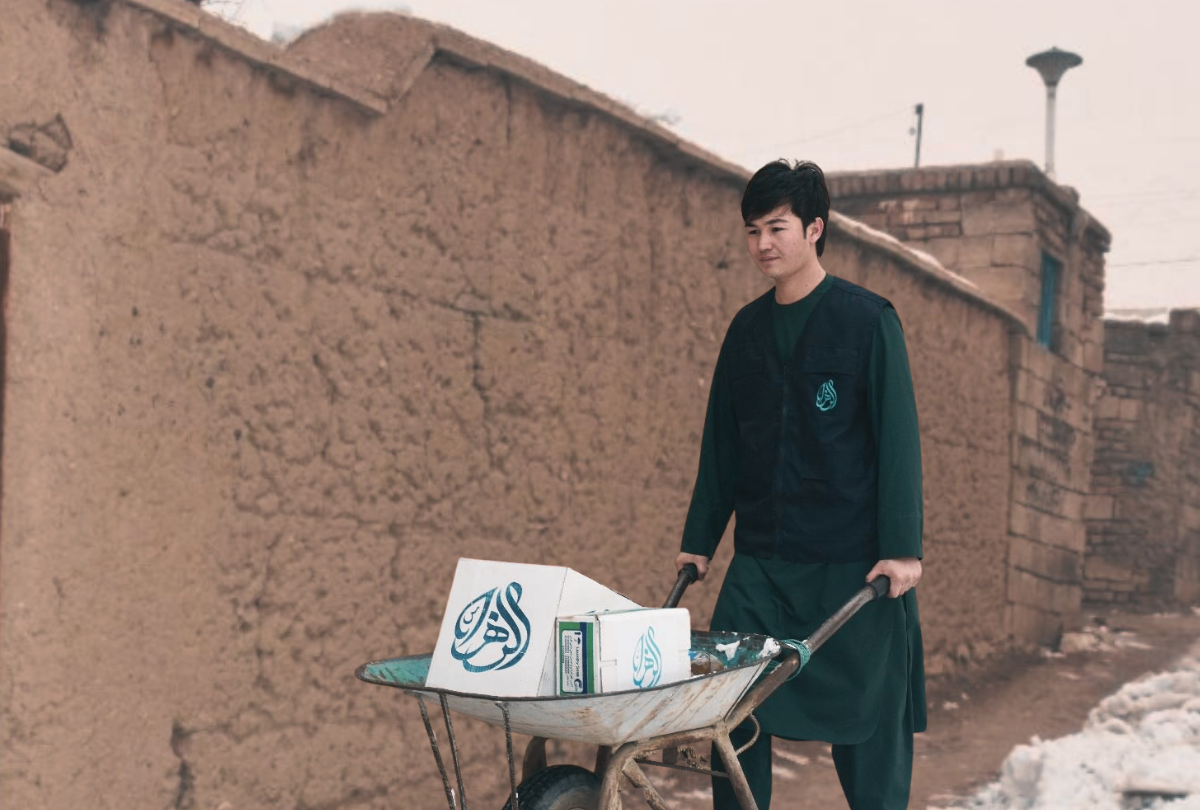
On days when household surveys, aid delivery, or project implementation are scheduled, much of my time is spent outside the office. These days involve direct engagement with families and firsthand observation of their living conditions and the realities on the ground.
On other days, when the focus is on reporting, I remain in the office reviewing documents, drafting and finalizing reports, and editing photographs and videos from projects conducted in Kabul, schools, provinces, or clinics.
While no two days are exactly the same, the common thread across all of them is a strong commitment to documenting reality accurately and ensuring that the true voice of field operations reaches the Head Office.
Do you have a favorite part of the day or your work with The Zahra Trust?
The most fulfilling moments of my work are when we deliver aid packages directly to the homes of those in need—especially when we arrive quietly and unannounced.
When the door opens and we see the expressions of surprise, hope, and relief on the faces of orphaned children and their mothers, something profound happens.
In those moments, the true meaning of service becomes tangible. We feel deep gratitude to God for allowing us to serve as a means of goodness and to be part of the donors’ sincere intentions.
These brief yet powerful encounters wash away the fatigue of long days and give our work meaning, motivation, and inner peace.
Have there been difficult days for you? Why were they difficult?
Yes—without a doubt. Difficult days are an inevitable part of our work.
Under Afghanistan’s complex and sensitive security conditions, carrying out humanitarian activities presents serious challenges, especially when it becomes known that financial support comes from outside the country.
On one hand, transparency and accountability require us to thoroughly document our activities. On the other hand, existing restrictions make this increasingly difficult.
Carrying video cameras in public spaces is prohibited, and photographing beneficiaries or publishing such materials is subject to strict limitations under official guidelines issued by the Ministry of Justice. Any complications place responsibility—and potential consequences—squarely on the executive team.
Legally, the Kabul Office is registered with the Ministry of Economy under the name Wal-Asr Service Organization. However, projects are implemented according to the identity and standards of The Zahra Trust. In some cases, the use of Zahra Trust banners and branding faces legal restrictions, as the organization is not formally registered in Kabul under its own name.
These factors significantly increase pressure on the team. Yet despite this, our humanitarian commitment and belief in the importance of serving those in need continue to motivate us to remain hopeful and steadfast.
Do you have any special memories with staff members or beneficiaries that stand out to you?
One of my most unforgettable experiences occurred on an extremely cold winter day on the outskirts of Kabul. We were scheduled to deliver coal to a family in need. The weather was harsh, and conditions were difficult.
As we approached the family’s home, the vehicle carrying the coal became stuck in a water channel. While trying to help free it, I slipped, and one of my shoes was swept away by the current. Due to the narrow channel, retrieving it was impossible, so I continued my work with one bare foot.
Despite this, we successfully delivered the coal. What made the moment truly unforgettable was the reaction of the family’s father—who himself had a physical disability in one leg. When he noticed my bare foot, he immediately removed his own shoe and offered it to me. No matter how much I insisted that he needed it more, he refused, offering it with a gentle smile filled with dignity and generosity.
That evening, I returned home wearing two different shoes—but carrying something far more valuable: a powerful lesson in humanity.
That moment embodied the greatness of spirit found in people who, despite poverty and hardship, still believe that giving is greater than receiving. It remains a defining symbol of my humanitarian and professional journey.
This is what a day in the life of a field worker truly looks like in Kabul: quiet perseverance, ethical responsibility, human connection, and moments of profound generosity that leave a lasting mark on the heart.
To learn more about our work and how you can get involved, click here!