

Allah (swt) says in the Quran:
“Obey Allah (swt), obey the Messenger (saww), and those vested with authority from among you.”
Surah An-Nisa, Ayaha 59
Muslims look to the Ahlulbayt (as) as examples of faith, wisdom, and noble character, and Imam Muhammad al-Jawad (as) remains a powerful example of this tradition.
Although he became Imam at a young age during the Abbasid era, he became widely respected for his generosity, humility, knowledge, and devotion to Allah (swt).
Generosity
Historical reports describe him helping widows, orphans, and families facing hardship while choosing a modest lifestyle for himself.
He believed wealth should be used responsibly to support others and strengthen society.
His generosity was not simply financial.
He also gave people comfort, dignity, and reassurance during difficult moments.
His example teaches Muslims that generosity should come from sincerity and compassion rather than a desire for recognition or status.
Piety and God-consciousness
Imam al-Jawad (as) was also known as “al-Taqi”, meaning “the pious” or “the God-conscious”.
His awareness of Allah (swt) guided his actions, speech, and decisions throughout his life.
Even while living under political pressure, he remained patient, principled, and committed to truth and justice.
His piety extended beyond worship alone.
It shaped the way he treated others and approached responsibility.
Imam al-Jawad (as) is reported to have said:
“The best form of worship is sincerity.”
Tanbih al-Khawatir, v.2, p.109
This teaching reminds believers that sincerity should remain at the centre of worship, faith, and everyday actions.
Humility and simplicity
Despite his honoured position, Imam al-Jawad (as) lived with humility and simplicity.
He treated people fairly regardless of their background and avoided pride or extravagance.
Many admired not only his intelligence, but also the respectful and approachable way he interacted with others.
His lifestyle demonstrated that true greatness is not measured by wealth or status.
Instead, it is reflected in sincerity, humility, and good character.
Imam al-Jawad (as) showed that a person’s conduct can leave a stronger impact than power or influence alone.
Knowledge and wisdom
One of the most remarkable aspects of Imam al-Jawad’s (as) life was his extraordinary wisdom at such a young age.
His knowledge became a source of guidance for many people during challenging times.
Imam al-Jawad (as) is reported to have said:
“The one who acts without knowledge destroys & ruins more than rectifies.”
Bihar al-Anwar, v.78, p.364
This statement highlights the importance of learning and reflection before acting.
His life encourages Muslims to value thoughtful decision-making and the pursuit of knowledge.
Kindness and care for people
Imam al-Jawad (as) was widely admired for his kindness, hospitality, and concern for others.
He spoke gently, welcomed guests warmly, and cared deeply for people facing hardship or loneliness.
Those around him often felt comforted by his calm and compassionate presence.
Imam al-Jawad (as) is reported to have said:
“Meeting fellow brothers, even very briefly, causes the mind to broaden and develop.”
Mizan al-Hikmah, n.4391
This teaching highlights the importance of community, friendship, and maintaining sincere relationships with others.
His example reminds Muslims that kindness is an essential part of strong character and faith.
Final reflections
The character of Imam al-Jawad (as) continues to inspire Muslims through its balance of wisdom, generosity, humility, and compassion.
Although his life was short, his example left a lasting impact on the global community.
His teachings remind believers that true leadership comes through service to Allah (swt), sincere care for others, and strong moral character.
One meaningful way to follow the generous example of Imam al-Jawad (as) is through Qurbani and supporting families facing hardship.
Honour the spirit of “al-Jawad” by sharing your blessings and helping provide food to those in need.
Let your devotion reach their table.
Frequently Asked Questions
He received the title “al-Jawad” because of his generosity and his ongoing support for people in need, including the poor and vulnerable.
Imam al-Jawad (as) became Imam at the young age of 8, which surprised many scholars and observers at the time.
He was respected for his generosity, piety, humility, wisdom, patience, and compassion toward others.
The title “al-Taqi” means “the pious” or “the God-conscious”, reflecting his strong devotion to Allah (swt).
He demonstrated exceptional knowledge, leadership, and moral character despite becoming Imam during childhood and living under Abbasid rule.
Muslims can learn the value of humility, knowledge, compassion, and remaining committed to faith and good character in everyday life.
More from Blog

Bridging the Digital Divide Through Education
Explore how technology can make education more accessible and create equal learning opportunities for children. Support digital inclusion and help equip young…

The Future Starts with Education
Help vulnerable children access education, technology and skills for a brighter future. Support The Zahra Trust with a Back to School gift…
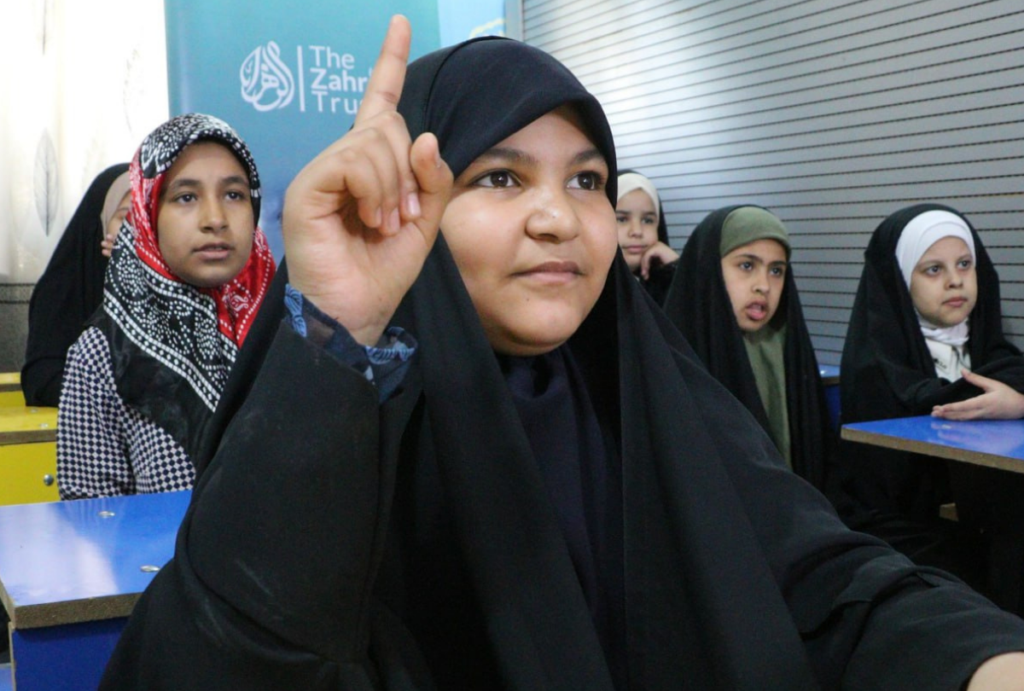
Rebuilding Futures Through Education: Restoring Hope, Dignity and Opportunity
When communities experience crisis, the effects can continue long after the immediate hardship has passed. Conflict, poverty, and displacement can interrupt a…