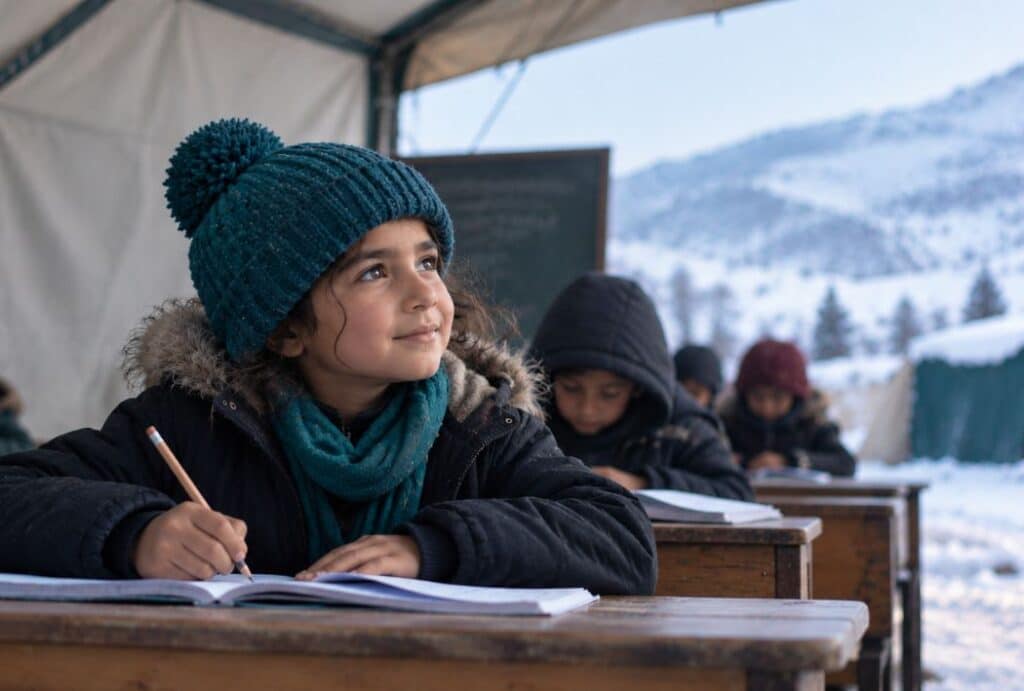
Childhood is made up of ordinary things.
Going to school.
Playing with friends.
Coming home to a safe place.
Having enough food to eat.
Being able to sleep without worrying about what tomorrow will bring.
These things may seem simple, but they help give children a sense of routine, safety and possibility.
For children growing up through prolonged hardship, many of these ordinary parts of childhood can become uncertain.
Poverty, displacement, conflict, disasters and long-term instability can affect far more than a child’s immediate circumstances. They can interrupt education, disrupt routines, affect their sense of safety and make opportunities that other children take for granted much harder to reach.
Understanding this is an important part of understanding humanitarian need.
When Hardship Becomes Part of Everyday Life
Children are remarkably adaptable.
But adapting to difficult circumstances should not mean that hardship becomes invisible.
When a family is struggling to meet basic needs over a long period, children can experience the effects in many parts of their lives.
A school day may become irregular.
A safe place to play may no longer be available.
Moving between homes or communities can mean leaving friends and familiar surroundings behind.
A family may have to focus on finding food, shelter or an income, leaving little room for the routines that help children simply be children.
The longer these pressures continue, the more they can shape a child’s everyday experience.
What Happens to Routine?
Routine can seem ordinary because we rarely have to think about it.
Waking up.
Getting dressed.
Going to school.
Eating meals.
Playing.
Coming home.
Going to sleep.
For children living through crisis, these patterns can be disrupted by displacement, school closures, insecurity or a lack of basic resources.
A routine does not solve every problem, but it can give children something predictable in an uncertain environment.
That is one reason humanitarian responses often look beyond immediate survival.
Helping children return to learning, safe spaces and regular activities can help restore some of the structure that prolonged hardship has taken away.
When Education Is Interrupted
Education is one of the most significant parts of childhood that can be disrupted by prolonged crisis.
A child who cannot attend school may miss lessons and fall behind academically.
But school provides more than education.
It can offer routine, relationships, protection, access to services and a place where children can feel connected to their community.
UNESCO describes education in emergencies as critical not only for learning but also for children’s safety, wellbeing and stability. Its latest global overview reports that 258 million school-aged children and adolescents have had their education affected by crises, while 93 million are entirely out of school.
When education is interrupted for months or years, the consequences can extend beyond the classroom.
It can affect a child’s future opportunities and make it harder to regain lost learning later.
When Safety Is No Longer Certain
Every child should have places where they feel safe.
Home.
School.
The journey between the two.
A familiar neighbourhood.
A place to play.
But conflict, displacement, natural disasters and other emergencies can disrupt these spaces.
Children may have to leave their homes or communities. Schools may close, become damaged or be used as emergency shelters. Families may move repeatedly in search of safety.
These experiences can make the world around a child feel less predictable.
Protecting children therefore means more than keeping them physically alive.
It means creating conditions in which they can feel safe, supported and able to learn and grow.
The Loss of Stability
Stability is easy to overlook when we have it.
Knowing where you will sleep.
Knowing when your next meal will come.
Knowing which school you will attend.
Knowing who your teacher will be.
Knowing where your friends are.
For a child living through prolonged hardship, these certainties may disappear one by one.
Displacement can separate children from their communities. Financial hardship can change what families are able to provide. Crisis can force children to adapt to circumstances they should never have had to manage alone.
This does not mean every child experiences hardship in the same way.
Children are individuals, and their responses and needs are different.
But humanitarian support can help restore some of the foundations that allow children to feel secure.
What About Childhood Itself?
There is another loss that can be harder to measure.
Time to play.
Time to learn for the joy of learning.
Time to explore.
Time with friends.
Time to dream about the future.
When a family is focused on surviving, children can have fewer opportunities to experience these ordinary parts of childhood.
That does not mean children in difficult circumstances cannot experience happiness, friendship or hope.
They can, and they do.
But humanitarian support should not only ask what children need to survive.
It should also ask what they need to grow, learn, feel safe and have opportunities for the future.
Why Education and Safe Spaces Matter
This is why education and child-focused support are such an important part of humanitarian work.
A functioning school or learning space can provide more than lessons.
It can give a child somewhere predictable to go.
It can reconnect them with peers.
It can provide structure to the day.
It can support their wellbeing.
It can help protect them from some of the risks that increase when children are out of school.
Humanitarian responses therefore have an important role to play in helping children recover what prolonged hardship has disrupted.
Supporting Children With Dignity
Children affected by poverty or crisis should not be defined only by what they lack.
They are students, friends, siblings, artists, athletes, dreamers and future professionals.
They have interests, personalities and ambitions.
Dignity-led humanitarian support recognises the whole child.
It means responding to immediate needs while also helping create the conditions children need to continue learning, developing and imagining a future.
Sometimes that means food.
Sometimes it means safe shelter.
Sometimes it means education.
Sometimes it means protection or psychosocial support.
Often, children need several forms of support at once because hardship rarely affects just one part of life.
A Qur’an Reminder
The Qur’an reminds us that caring for those who are vulnerable is part of righteousness:
“Righteousness is not that you turn your faces towards the east or west, but righteousness is in one who believes in Allah… and gives wealth, in spite of love for it, to relatives, orphans, the needy…” (Qur’an 2:177)
Supporting children through hardship is not simply about providing an item or meeting a short-term need.
It is about protecting dignity and helping create opportunities for people to move forward.
Helping Protect the Ordinary Parts of Childhood
Prolonged hardship can take away things that are difficult to measure.
A predictable school morning.
A safe place to play.
The comfort of knowing where you will sleep.
Time to learn without fear.
The freedom to think about tomorrow.
Humanitarian support cannot undo everything a child has experienced.
But it can help restore some of the things every child deserves: safety, education, stability, care and the opportunity to grow.
Because helping a child through hardship is not only about getting them through today.
It is also about helping protect what tomorrow can still hold.
Frequently Asked Questions
What can prolonged hardship take away from a child?
Prolonged hardship can disrupt a child’s education, routine, safety, stability, access to basic needs and opportunities to experience everyday childhood.
How does poverty affect children’s education?
Poverty can make it harder for children to attend school consistently, particularly when families face challenges such as displacement, transportation costs, lack of learning materials or pressure to meet basic needs.
Why is routine important for children?
Routine can give children a sense of predictability and stability. In difficult circumstances, regular access to school, meals, safe spaces and familiar activities can help provide structure.
Why is education important during a humanitarian crisis?
Education can help children continue learning while also providing structure, social connection, protection and access to support services.
How can humanitarian aid support children?
Humanitarian support can provide food, safe shelter, healthcare, education, protection, psychosocial support and other essentials depending on the needs of children and their communities.
How can I help children affected by hardship?
Supporting organisations such as The Zahra Trust can help provide practical assistance and longer-term support to vulnerable communities, helping children access the essentials and opportunities they need to grow.
More from Blog
What Your Support Made Possible Last Winter
Learn how your support helped 27,800 people through winter in 2025, with 123,000 meals and winter essentials provided to vulnerable communities.
Before the Year Ends: Reflecting on the Impact We Choose to Leave Behind
As the year comes to an end, take a moment to reflect on gratitude, intentional giving and the lasting impact we can…
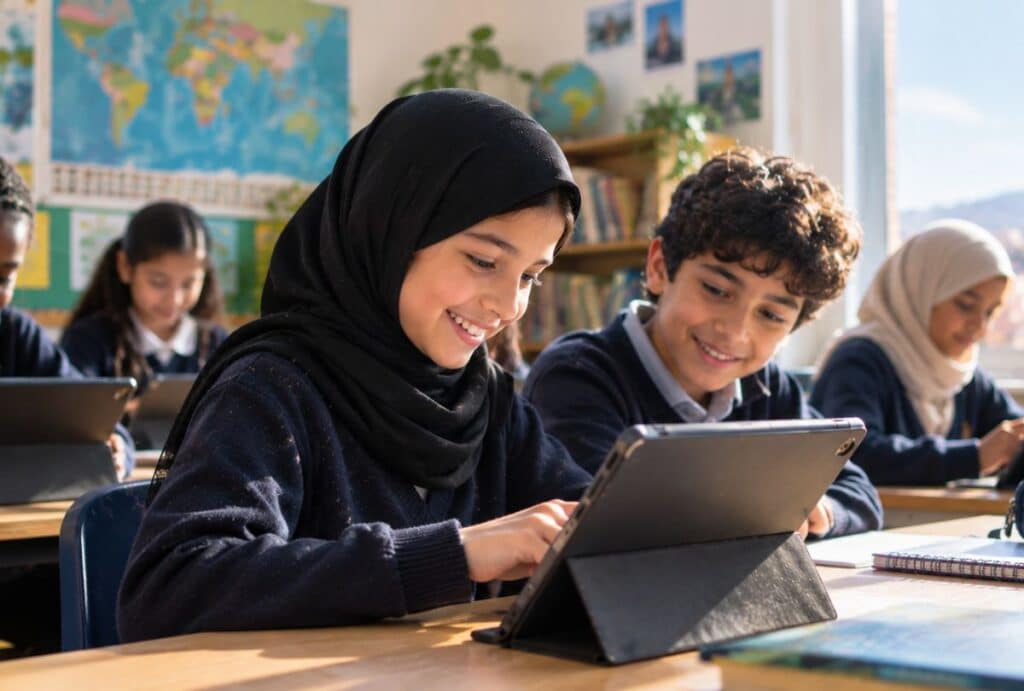
Bridging the Digital Divide Through Education
Explore how technology can make education more accessible and create equal learning opportunities for children. Support digital inclusion and help equip young…