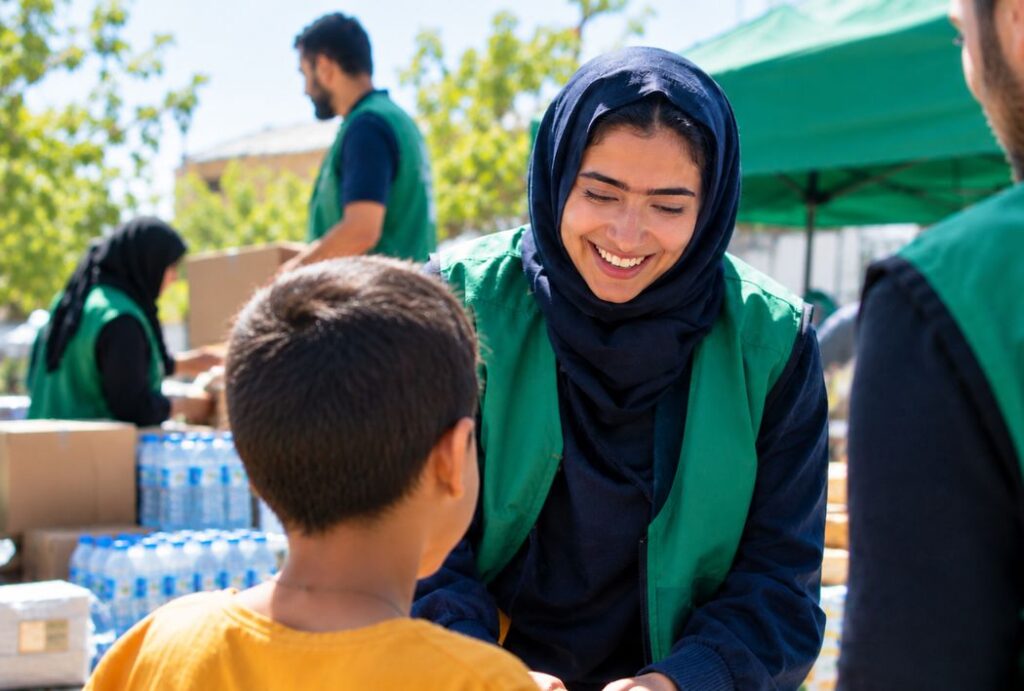
You may already know The Zahra Trust as an organisation supporting people facing poverty, conflict and hardship.
You may have seen our appeals for food, clean water, education, medical care or emergency relief.
But there are many parts of The Zahra Trust’s work that you may not know about.
Our work is rooted in Islamic values and inspired by the example of the Ahlulbayt (as).
Here are five things you might not know about The Zahra Trust.
1. The Zahra Trust Has Been Serving Communities Since 2008
The Zahra Trust was founded in 2008.
When people are facing a crisis, immediate assistance can be life-changing.
But humanitarian work should also look towards what comes next.
That is why The Zahra Trust supports education, healthcare, clean water, livelihoods, skills training and other programs designed to help individuals and communities become more self-sufficient.
We want to help people through difficult moments while also supporting the foundations for a more secure future.
2. The Zahra Trust Is Supported by Teams Across Four Regions
The Zahra Trust is supported by teams in four regions:
- The United Kingdom
- Canada
- The United States
- Australia
Each team helps raise awareness, support donors, coordinate campaigns and connect local communities with our wider work.
For Canadian supporters, this means your giving is connected to a global humanitarian movement while being supported through a Canadian team.
Whether you are giving during Ramadan, Muharram, Arbaeen or throughout the year, you are part of a wider community of people who want to serve others.
3. The Zahra Trust Supports Islamic Forms of Giving
For Muslims, charity and financial responsibility are important parts of our faith.
The Zahra Trust supports forms of giving including Khums, Zakat and Sadaqah.
Khums can then support approved welfare and humanitarian projects and people who are eligible to receive Sehme Sadaat, according to the relevant religious guidance.
This is important because giving is not simply about where our money goes.
It is also about how we give.
For many Muslims, knowing that our religious giving is being handled according to Islamic principles brings an important sense of trust and responsibility.
4. The Zahra Trust Works Towards Long-Term Independence
Emergency relief matters.
A food parcel can help a family through a difficult week.
Clean water can protect health.
Medical support can provide urgent care.
But long-term change often requires something more.
The Zahra Trust also supports programs that help people develop skills, earn sustainable incomes and build greater independence.
This includes skills training and microfinance programs supporting vulnerable families and women.
Education is another important part of this work.
When someone gains knowledge or a practical skill, the benefit can continue long after the original support has been provided.
The goal is not simply to give someone something.
It is to help create opportunity.
5. Mowkeb 470 Is More Than a Place to Stop During Arbaeen
For Shia Muslims, the journey to Karbala is filled with spiritual meaning.
Every year, millions of pilgrims travel towards the shrine of Imam Hussain (as), remembering his sacrifice and the message of Karbala.
The Zahra Trust has operated Mowkeb 470 on the Najaf–Karbala road for more than a decade.
During Arbaeen, the Mowkeb provides pilgrims with food, water, rest facilities and other essential support.
But Mowkeb 470 is not simply an Arbaeen service point.
The site has also been used throughout the year for aid distribution, adult training and children’s classes, and has supported widows and orphans in the local community.
It is a beautiful example of service continuing beyond a single day or season.
What Does the Qur’an Teach Us About Helping Others?
“Cooperate with one another in goodness and righteousness.” (Qur’an 5:2)
We do not have to do everything ourselves.
One person can give.
Another can volunteer.
Someone else can organize a community fundraiser.
Another can share an appeal.
When we work together, our individual efforts can become something much greater.
The Example of the Ahlulbayt (as)
The Ahlulbayt (as) taught us that faith should be reflected in how we treat others.
Imam Ali (as) demonstrated generosity and concern for those facing hardship.
Imam Hussain (as) showed us the meaning of sacrifice and standing for truth.
Sayyida Zainab (sa) showed extraordinary courage and resilience.
Their lives remind us that service is not simply about giving when it is convenient.
It is about developing a heart that notices hardship and responds to it.
How Can You Get Involved With The Zahra Trust Canada?
There are many ways to become part of this work.
You can donate.
You can give Khums, Zakat or Sadaqah.
You can support Sadaqah Jariyah.
You can fundraise with your mosque, family, school, workplace or community.
You can volunteer.
You can share an appeal.
You can set up regular giving to provide ongoing support.
Every act of generosity can become part of a wider effort to serve people in need.
Your Support Can Become Someone Else’s Opportunity
It can be easy to think of charity as a single transaction.
But the impact can travel much further.
A donation can provide a meal.
A meal can help a child stay focused at school.
Education can create opportunity.
Skills training can help someone earn an income.
An income can help a family build greater stability.
And that stability can affect the next generation.
This is the ripple effect of giving.
This is why your support matters.
Together, we can help turn compassion into practical action.
May Allah (swt) accept our efforts and allow us to follow the example of the Ahlulbayt (as) by becoming a source of benefit for others.
Frequently Asked Questions
When was The Zahra Trust founded?
The Zahra Trust was founded in 2008 and has grown into a global faith-based humanitarian organisation supporting communities through relief and development programs.
What does The Zahra Trust do?
The Zahra Trust provides humanitarian and development support, including food aid, medical care, education, clean water, emergency relief and programs supporting vulnerable people.
Is The Zahra Trust a Shia charity?
The Zahra Trust is rooted in Islamic values and guided by the teachings of the Holy Household (as). It supports Shia Muslims with forms of religious giving such as Khums while also providing humanitarian assistance to communities in need.
Can I give Khums through The Zahra Trust?
Yes. The Zahra Trust has permission from leading Maraji to collect Khums, including Ayatollah Sayyid Ali al-Sistani (ha). Khums is distributed according to the relevant religious guidance.
Is The Zahra Trust Canada a registered charity?
Yes. The Zahra Trust Canada is a registered Canadian charity. Its charity registration number is 73174 6681 RR0001.
Will I receive a Canadian tax receipt for my donation?
Yes. The Zahra Trust Canada issues official donation tax receipts. When donating, make sure your legal name and address are entered correctly so your receipt can be issued accurately.
Can I fundraise for The Zahra Trust in Canada?
Yes. Canadian supporters can create fundraising campaigns and involve their families, friends, mosques, schools, workplaces and local communities.
Can I support a specific program?
The Zahra Trust offers a range of programs and appeals. Where possible, donors can choose the type of support they would like to provide, while unrestricted giving allows the Trust to respond where needs are greatest.
What is Mowkeb 470?
Mowkeb 470 is The Zahra Trust’s service centre on the Najaf–Karbala road. During Arbaeen, it provides food, water and essential support for pilgrims. The site also supports year-round education, training and community activities.
How does The Zahra Trust support long-term development?
The Zahra Trust supports programs including education, skills training, microfinance, clean water and income-generation initiatives. These programs aim to help vulnerable families build greater stability and self-sufficiency.
How can I support The Zahra Trust Canada?
You can donate, give Khums, Zakat or Sadaqah, support Sadaqah Jariyah, fundraise, volunteer or share The Zahra Trust’s work with your community.
More from Uncategorized
Lessons from the Shahadat of Imam Ali (as)
In Ramadan, as we fast and pray, we remember Imam Ali (as) – struck down while worshipping Allah (swt). His Shahadat teaches us that faith…
What happened in Quetta and why it matters
Recently you may have heard of the tragic attack which took place in Quetta, Balochistan and might be wondering exactly what happened. On Sunday…