
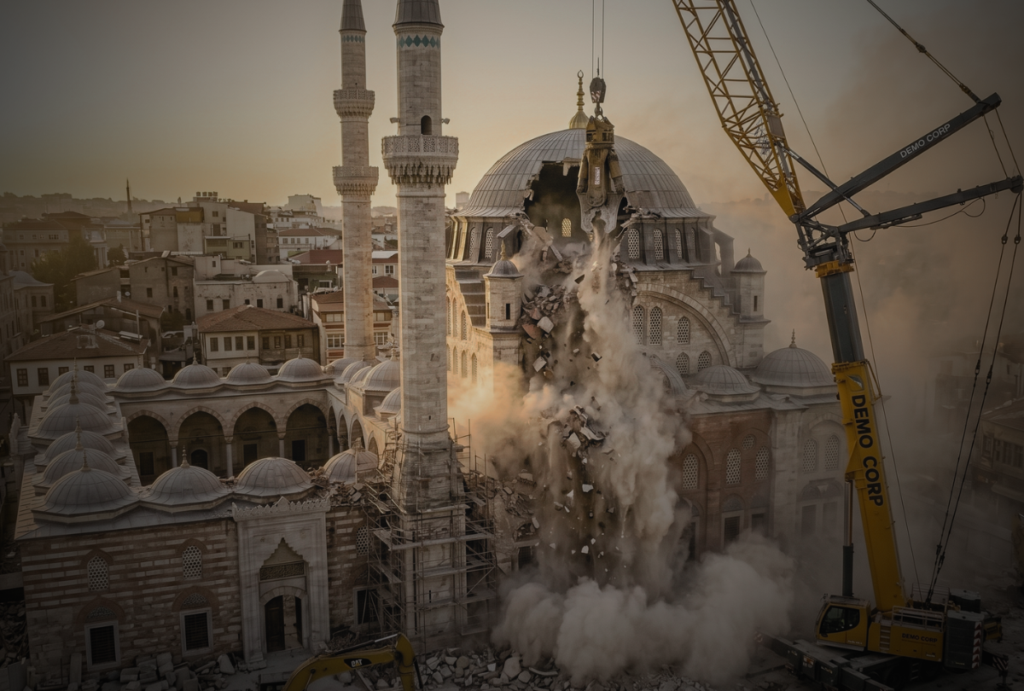
To understand what communities lose when a mosque is lost, we need to look beyond the physical structure itself. While a mosque may be recognized by its walls, prayer hall, and familiar presence within a neighbourhood, its true value lies in the role it plays in people’s lives.
A mosque is a sacred space where faith is nurtured, relationships are strengthened, and communities come together around a shared purpose. It is often the place where children first learn about Islam, where families gather during important moments, and where individuals find comfort during times of hardship.
The loss of a mosque therefore represents much more than the loss of a building. It can affect how a community worships, learns, supports one another, and maintains a sense of collective identity.
The Holy Quran reminds us of the significance of these sacred places:
This verse highlights that places of worship are devoted to Allah (swt). Their purpose extends beyond physical space because they help believers strengthen both their relationship with Allah (swt) and their connection to one another.
The mosque as the spiritual heart of a community
The mosque provides exactly that.
Whether through daily prayers, Friday congregations, religious commemorations, or community events, mosques create opportunities for people to worship together and remain spiritually connected.
These gatherings help transform faith from a private practice into a shared experience.
When a mosque is lost, communities often lose an important spiritual anchor. Individuals may continue their worship, but opportunities for collective prayer, reflection, and remembrance can become more limited.
Losing a place of belonging
One of the most valuable things a mosque provides is a sense of belonging.
Children attend classes and form lasting bonds. Families connect with others who share their values. Newcomers find support and guidance as they settle into unfamiliar environments. Older members remain active and connected through regular participation.
Without a mosque, many of these opportunities become harder to sustain.
This loss is often felt particularly strongly by young people. They benefit from spaces where they can learn about their faith, ask questions, and develop confidence in their identity.
A mosque provides an environment where belonging is reinforced through community life.
When that environment is lost, the effects can be felt well beyond the immediate community.
The loss of learning and guidance
Mosques have always been centres of education and personal development.
They are places where people learn to recite the Qur’an, deepen their understanding of Islamic teachings, and seek guidance on how to apply those teachings in everyday life.
Learning within a mosque happens in many ways. It may occur through classes, lectures, study circles, or simple conversations between community members.
The importance of frequenting the mosque is reflected in a narration attributed to Imam Ali (as):
Thawab al-Amal wa Iqbal al-Amal, v.1, ch.61, h.108
This narration demonstrates that mosques offer opportunities for knowledge, companionship, guidance, and personal growth.
When a mosque is lost, communities may lose one of their most accessible and effective spaces for learning and moral development.
The disappearance of community support networks
The role of a mosque extends far beyond formal worship.
Many communities rely on their mosque as a place where support can be found during life’s challenges. Whether someone is experiencing grief, financial hardship, illness, or personal difficulty, the mosque often becomes a place where help and encouragement are available.
These support networks are built through regular interaction and shared responsibility.
Volunteers organize charitable initiatives. Community members check on one another. Families come together to assist those in need.
Much of this support happens quietly, yet its impact can be profound.
When a mosque is lost, the relationships that sustain these networks can become more difficult to maintain. As a result, individuals may feel increasingly isolated during times when community support matters most.
Loyalty through the example of the Ahlulbayt (as)
The history of the Ahlulbayt (as) demonstrates the importance of preserving spaces where faith and community can flourish together.
One notable example is Masjid al-Kufa, closely associated with Imam Ali (as). Throughout history, it has been remembered not only as a place of worship but also as a centre of leadership, learning, remembrance, and justice.
Within the Shia tradition, sacred spaces play an important role in preserving the legacy of Imam Hussain (as) and the Ahlulbayt (as). Through gatherings of remembrance, communities reconnect with values such as sacrifice, compassion, dignity, and devotion to Allah (swt).
These gatherings do more than commemorate history.
They help transmit those values to future generations and strengthen communal identity in the present.
When a mosque is lost, communities may lose one of the places where these traditions remain active and accessible.
Why sacred spaces matter for future generations
The strength of any community depends on its ability to pass on knowledge, values, and experiences.
Mosques help make this possible.
They create environments where young people can learn from elders, where families can participate together in community life, and where faith becomes part of daily experience rather than an occasional activity.
The impact of losing a mosque can therefore extend far into the future.
Without strong communal spaces, opportunities for mentorship, education, and shared worship may become less available.
Restoring sacred spaces helps ensure that future generations inherit not only Islamic knowledge but also a living experience of community.
Restore more than walls
A mosque is far more than a place where people gather to pray.
It is where communities come together, where children learn, where support begins, and where faith is strengthened through shared experience.
When a mosque is lost, communities can lose belonging, guidance, education, and connection. Yet when sacred spaces are restored, communities regain opportunities to worship together, support one another, and build a stronger future.
Supporting mosque-building initiatives helps restore the spiritual heart of a community.
It helps create places where faith lives on, where relationships flourish, and where future generations can continue to grow in worship, knowledge, and unity.
Help rebuild sacred spaces that restore communities.
Frequently asked questions
Why is a mosque important to a community?
A mosque serves as a centre for worship, education, community support, charitable activities, and social connection. It helps bring people together and strengthens communal bonds.
Why do communities lose when a mosque is lost?
Communities may lose a place for prayer, learning, youth engagement, social support, charitable work, and the shared experiences that create a strong sense of belonging.
Why are mosques important for young people?
Mosques provide young people with guidance, education, positive role models, and a sense of identity within a supportive faith community.
How do mosques support people during difficult times?
Mosques often help individuals and families through emotional support, charitable assistance, counselling, community programmes, and spiritual guidance.
What role do mosques play in preserving Islamic identity?
Mosques help pass Islamic knowledge, traditions, and values from one generation to the next through worship, education, and community activities.
How can supporting mosque-building projects help communities?
Supporting mosque-building projects helps create sacred spaces where people can worship, learn, build relationships, access support, and strengthen community life for generations to come.
More from Blog
Bridging the Digital Divide Through Education
Explore how technology can make education more accessible and create equal learning opportunities for children. Support digital inclusion and help equip young…
The Future Starts with Education
Help vulnerable children access education, technology and skills for a brighter future. Support The Zahra Trust with a Back to School gift…
Rebuilding Futures Through Education: Restoring Hope, Dignity and Opportunity
When communities experience crisis, the effects can continue long after the immediate hardship has passed. Conflict, poverty, and displacement can interrupt a…