
Who was Lady Fatima al-Aleela (sa)? History, tradition and scholarly perspectives
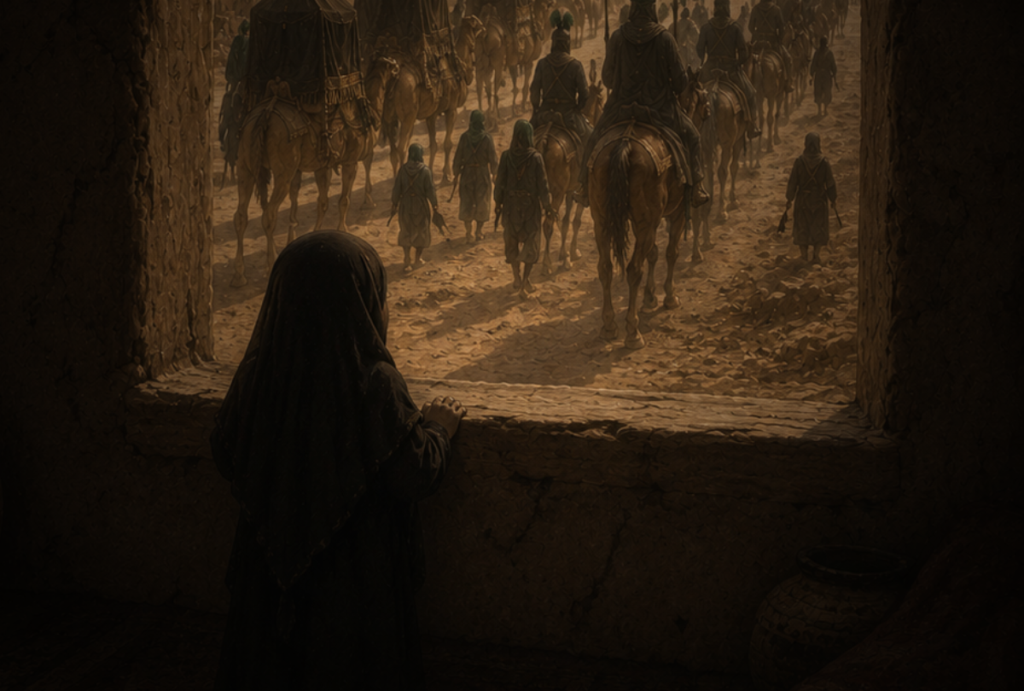
Among the many figures connected to the history of Karbala, Lady Fatima al-Aleela (sa) occupies a unique place in both devotional tradition and scholarly discussion. For those asking who was Lady Fatima al-Aleela (sa), the answer depends partly on whether one is examining later religious narratives, early historical sources, or both.
In many Shia traditions, Lady Fatima al-Aleela (sa) is remembered as a daughter of Imam Hussain (as) who remained in Medina because of illness while her father and family travelled towards Karbala. Her story has been preserved through generations of remembrance and continues to be mentioned in discussions about the sacrifices of the Ahlulbayt (as).
At the same time, historians have studied the available evidence and reached different conclusions regarding how her identity should be understood. As a result, Lady Fatima al-Aleela (sa) remains an important figure whose story reflects both the preservation of religious memory and the challenges of historical research.
What does the title “al-Aleela” mean?
The term “al-Aleela” translates as “the ill” or “the sick.” Rather than functioning as a conventional given name, it serves as a descriptive title attached to a specific narrative.
According to later reports, a daughter of Imam Hussain (as) was unable to accompany him because of illness when he departed from Medina. Over time, the title al-Aleela became associated with this account and the individual connected to it.
This distinction is important because it helps explain why many scholars view Lady Fatima al-Aleela (sa) as a title linked to a historical figure rather than a completely separate name appearing in early genealogical records.
Lady Fatima al-Sughra (sa) and Lady Fatima al-Aleela (sa)
The designation “al-Sughra” means “the younger” and was commonly used in Muslim families to distinguish between relatives who shared the same name.
Under this interpretation:
- Lady Fatima al-Sughra (sa) was a daughter of Imam Hussain (as).
- She reportedly remained behind because of illness.
- The title “al-Aleela” reflected her condition.
- Later generations used both descriptions when referring to her.
This understanding became increasingly widespread in devotional literature and remains the view most commonly encountered in contemporary discussions of the subject.
What do the earliest historical sources say?
The earliest historical records provide fewer details than many later narratives.
One of the key sources examined by scholars is “Kitab al-Irshad” by Shaykh al-Mufid (d. 1022 CE). In his account of Imam Hussain’s (as) family, he refers to daughters named Fatima and Sakina. However, he does not specifically mention a daughter identified as Lady Fatima al-Aleela (sa).
Because Shaykh al-Mufid’s work is among the most respected early biographical sources concerning the Imams, it plays an important role in discussions about the historical evidence surrounding Lady Fatima al-Aleela (sa).
As a result, some historians argue that while the tradition became prominent in later centuries, the earliest surviving texts do not explicitly establish her as a separate historical individual.
The narrative of the daughter left in Medina
The story most commonly associated with Lady Fatima al-Aleela (sa) centres on the belief that she remained in Medina while her father travelled towards Karbala.
The account most often associated with Lady Fatima al-Aleela (sa) centres on her remaining in Medina while Imam Hussain (as) travelled towards Karbala.
According to later narrations, illness prevented her from joining the journey. After the tragedy of Ashura, she is said to have learned of her father’s martyrdom and endured profound grief.
Versions of this narrative appear in later historical and devotional works, including reports found in “Maqtal al-Hussain” by al-Kharazmi. These works helped preserve and circulate the story throughout the Muslim world.
As the centuries passed, the narrative became an established part of many commemorative traditions connected to Karbala and the suffering endured by the family of the Prophet Muhammad (saww).
Why do scholars disagree?
The differing views regarding Lady Fatima al-Aleela (sa) stem primarily from the way historians evaluate sources.
Many scholars accept the traditional account and view later narrations as preserving genuine historical memories transmitted through generations of believers.
Others focus on the distinction between early and later texts. They note that detailed references to Lady Fatima al-Aleela (sa) appear more prominently in sources written centuries after the events of Karbala.
Several factors contribute to the discussion:
- Limited references in early historical works.
- Variations between different narrations.
- Questions surrounding the transmission of reports.
- The development of devotional literature over time.
These considerations have led scholars to reach different conclusions while continuing to recognize the importance of the tradition itself.
Loyalty through the example of the Ahlulbayt (as)
The discussion surrounding Lady Fatima al-Aleela (sa) offers an opportunity to reflect on the scholarly legacy of the Ahlulbayt (as) and those who dedicated their lives to preserving their history.
Throughout Islamic history, scholars worked tirelessly to collect narrations, document events, and transmit knowledge related to the Prophet’s family. Their efforts ensured that the memory of Karbala remained alive across generations.
Influential scholars such as Shaykh al-Mufid, al-Sharif al-Murtada, and Shaykh al-Tusi established standards for historical investigation while maintaining deep devotion to the Ahlulbayt (as). Their contributions helped shape the intellectual foundations of Shia scholarship.
The ongoing discussion about Lady Fatima al-Aleela (sa) reflects that tradition. Scholars have sought to honour the family of Imam Hussain (as) not only through remembrance but also through careful study of historical evidence.
For believers today, this balance between devotion and scholarship remains an important part of engaging with Islamic history. Preserving the legacy of the Ahlulbayt (as) requires both heartfelt remembrance and a sincere commitment to learning.
What can we say with confidence?
While some questions remain open to scholarly interpretation, several points are generally accepted.
Lady Fatima al-Aleela (sa) is widely recognised in later devotional literature as a daughter of Imam Hussain (as).
Many accounts identify her with Lady Fatima al-Sughra (sa) rather than treating her as a separate individual.
The title “al-Aleela” is generally understood as a reference to illness.
The earliest historical sources do not clearly establish a distinct daughter known specifically by this title.
These points help explain why Lady Fatima al-Aleela (sa) continues to be remembered in religious tradition while remaining a subject of historical discussion.
Final reflections
So, who was Lady Fatima al-Aleela (sa)?
In many later Shia traditions, she is remembered as a daughter of Imam Hussain (as), often identified with Lady Fatima al-Sughra (sa), who remained in Medina because of illness while the events of Karbala unfolded.
Her story became part of the broader remembrance of Ashura and the sacrifices made by the family of the Prophet Muhammad (saww). At the same time, historians continue to examine the available evidence and assess how the earliest sources compare with later accounts.
Regardless of the ongoing scholarly discussion, Lady Fatima al-Aleela (sa) remains connected to the enduring legacy of Karbala and the memory of the Ahlulbayt (as).
Let your remembrance extend beyond Muharram. Support orphans and widows in need, and help create a lasting legacy inspired by Aba Abdillah (as). Give beyond the season and create impact that continues.
Frequently asked questions
Many later Shia sources identify Lady Fatima al-Aleela (sa) as a daughter of Imam Hussain (as), although scholars continue to discuss how explicitly this can be confirmed from the earliest historical records.
In many traditional accounts, yes. Lady Fatima al-Aleela (sa) is frequently identified with Lady Fatima al-Sughra (sa), with the title “al-Aleela” referring to her reported illness.
The title means “the ill” or “the sick” and is generally understood as a descriptive label rather than a formal personal name.
The difference arises because detailed accounts appear mainly in later sources, while earlier historical works provide less specific information.
Scholars often refer to works such as Shaykh al-Mufid’s “Kitab al-Irshad” and al-Kharazmi’s “Maqtal al-Hussain” when examining traditions related to Lady Fatima al-Aleela (sa).
More from Blog

Bridging the Digital Divide Through Education
Explore how technology can make education more accessible and create equal learning opportunities for children. Support digital inclusion and help equip young…

The Future Starts with Education
Help vulnerable children access education, technology and skills for a brighter future. Support The Zahra Trust with a Back to School gift…
Rebuilding Futures Through Education: Restoring Hope, Dignity and Opportunity
When communities experience crisis, the effects can continue long after the immediate hardship has passed. Conflict, poverty, and displacement can interrupt a…