
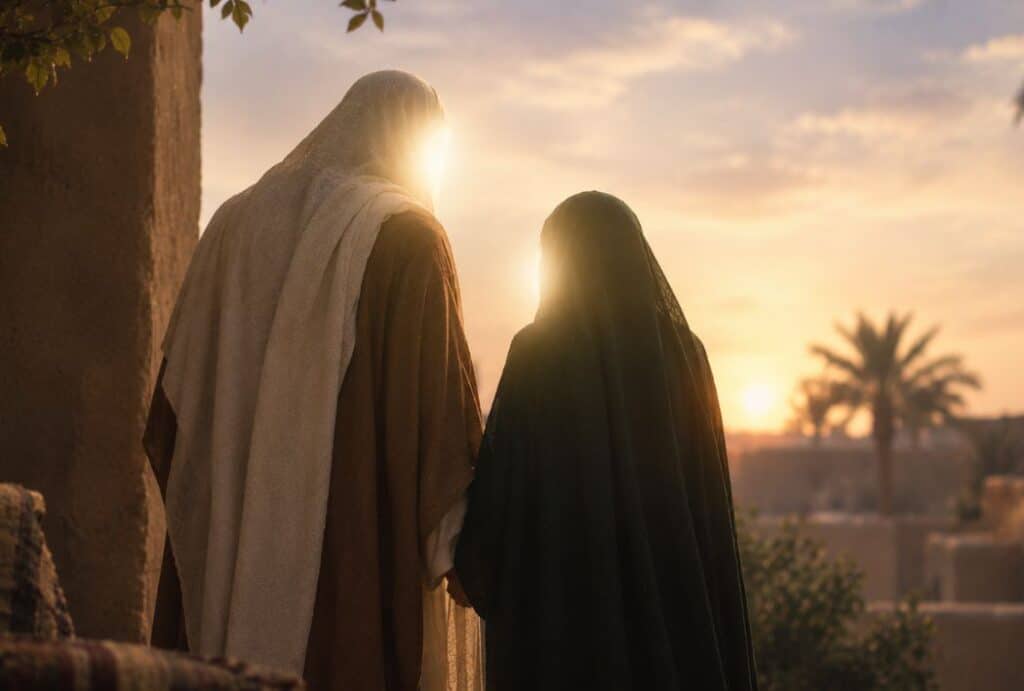
The relationship between Prophet Muhammad (saww) and his daughter, Sayyida Fatima al-Zahra (sa), was one of deep love, respect and spiritual connection.
The Prophet (saww) expressed this bond in a well-known statement:
“Fatima is a part of me; whoever pleases her pleases me, and whoever hurts her hurts me.”
(Muslim Ibne al Hajjaj Qushayri, 1419 (A.H.), p. 993, hadith no. 2449/ Bukhari, 1423 (A.H.), p. 684, hadith no. 3767/ Tirmidhi, 1421 (A.H.), p. 1006, hadith no. 3876/ Suyuti, 1408 (A.H.), p. 45/ Ibne Hajar Asqalani, 1415 (A.H.), vol. 8, p. 265.)
These words reveal far more than a father’s love for his daughter. They point to Sayyida Fatima’s (sa) special place in the Prophet’s life and the importance of recognizing her character, faith and standing.
A Bond Built on Love and Respect
Sayyida Fatima (sa) was not simply the daughter of the Prophet (saww). She was someone he welcomed warmly, showed affection towards and held in exceptional regard.
Accounts of their relationship describe the Prophet (saww) greeting her with honour and making her feel valued. Their bond reminds us that tenderness and respect within a family are not separate from faith. They are part of how faith is lived.
Calling her “a part of me” expressed the depth of this connection. Her happiness mattered deeply to him, and causing her pain was not something he treated lightly.
What Do His Words Tell Us About Sayyida Fatima (sa)?
The statement also reflects the character of Sayyida Fatima (sa). Shia teachings describe her as devoted to Allah (swt), sincere in her worship and steadfast in following the truth.
Her closeness to the Prophet (saww) was not based on family ties alone. Her life reflected the values he taught: compassion, humility, worship and responsibility towards others.
The Qur’an speaks of the special status of the Prophet’s (saww) household:
“Allah only desires to keep away the impurity from you, O People of the House, and to purify you with a thorough purification.” (Qur’an 33:33)
This verse is central to discussions of the Ahlulbayt (as), including Sayyida Fatima (sa). It reminds us of the spiritual significance her family holds for Muslims.
What Can We Learn From This Hadith Today?
The Prophet’s (saww) words encourage us to think about how we treat others, especially those who are vulnerable or whose dignity is overlooked.
His relationship with Sayyida Fatima (sa) shows that respect is not just something we express in words. It should shape our actions, our family relationships and how we respond to another person’s suffering.
Her example also encourages us to live with sincerity, care for others and remain committed to what is right, even when doing so is difficult.
Following the Example of Sayyida Fatima (sa)
Remembering Sayyida Fatima (sa) means more than learning about her life. It means allowing her example to influence how we live.
Through prayer, kindness, generosity and standing beside those in need, we can put the values of the Ahlulbayt (as) into practice.
The Zahra Trust works to support people facing hardship and help communities access the essentials they need. By supporting this work, you can help turn compassion into meaningful action.
Frequently Asked Questions
Why did the Prophet (saww) call Fatima (sa) “a part of me”?
The Prophet (saww) used these words to express his profound bond with Sayyida Fatima (sa). The statement also emphasizes how deeply her happiness and suffering mattered to him.
What does “whoever hurts Fatima hurts me” mean?
It highlights the importance of respecting Sayyida Fatima (sa) and recognizing her special status. The Prophet’s (saww) words connect her treatment with his own, showing that harming or disrespecting her was a serious matter.
What was Sayyida Fatima (sa) known for?
Sayyida Fatima (sa) is remembered in Shia Islam for her faith, worship, humility, generosity and close relationship with the Prophet (saww). She is also deeply revered as a member of the Ahlulbayt (as).
Which Qur’an verse refers to the Ahlulbayt (as)?
Qur’an 33:33 includes the verse of purification, which is central to Shia teachings about the Ahlulbayt (as) and their spiritual status.
More from Blog
When Does Winter Become a Humanitarian Issue?
When does winter become a humanitarian issue? Learn how freezing temperatures can put vulnerable families at risk, and how winter aid can…
The Story of Sayyida Fatima (sa) and Her Wedding Dress
Discover the story of Sayyida Fatima (sa) giving away her wedding dress and what this beautiful example teaches us about generosity, sacrifice…
What Sayyida Fatima (sa) Teaches Us About Giving
Discover what Sayyida Fatima (sa) teaches us about generosity, sacrifice and caring for others, and how her example can inspire the way…