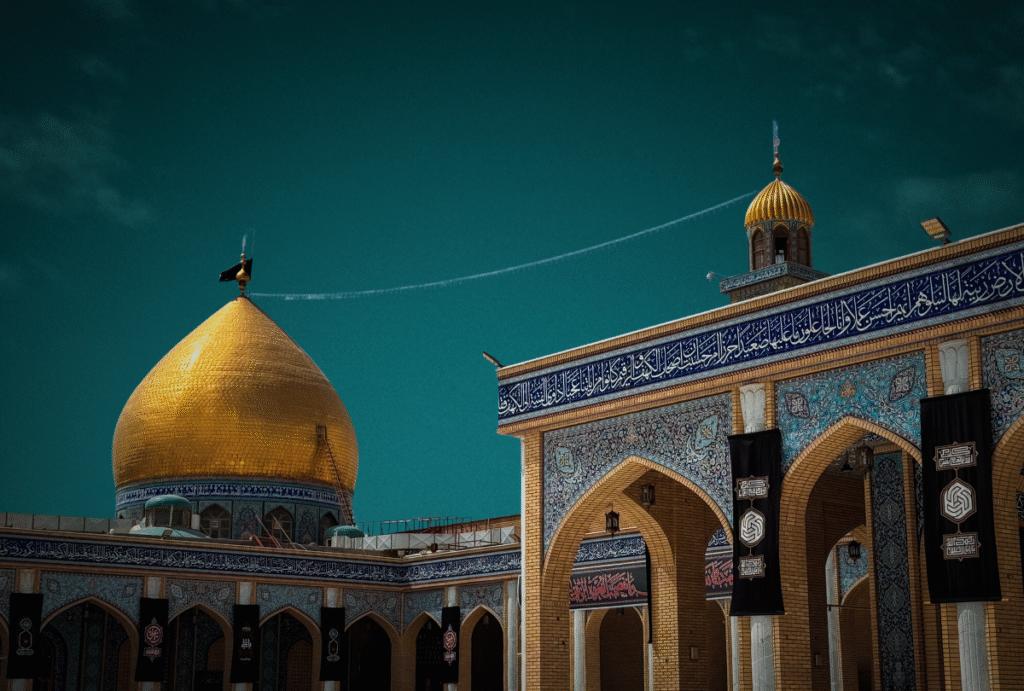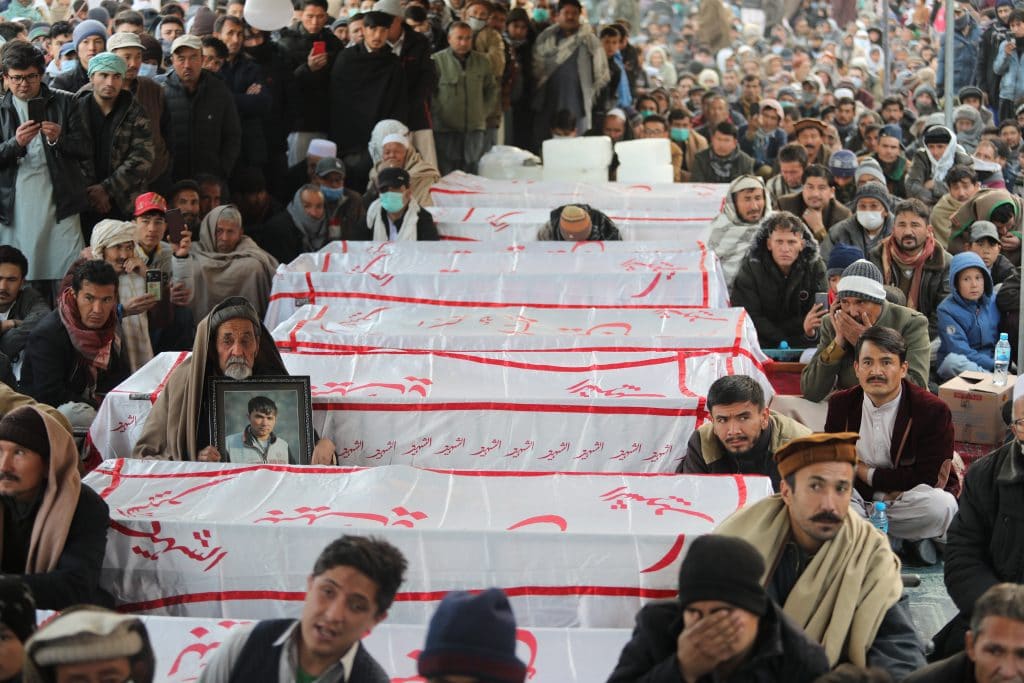
Recently you may have heard of the tragic attack which took place in Quetta, Balochistan and might be wondering exactly what happened. On Sunday January 3rd, eleven hardworking family men from the Hazara community were kidnapped on their way to work. These eleven were coal miners and after being kidnapped were all brutally killed. This attack comes after a suicide bombing last April which killed…
End of content
End of content
For many of us, Eid is a day filled with fun and excitement, as we gather with family and friends to celebrate the end of the holy month of Ramadan. Usually, this day is spent offering prayers in our mosques, having a feast-like meal for lunch or dinner, and giving gifts to our loved ones. This year, like the last, will not look like a typical Eid day full of celebration.
The social precarity of the COVID-19 pandemic has inhibited our ability to commemorate this holy month of Ramadan, and Eid is no different. In many parts of the world, getting together with friends and family for a big meal is either not allowed or highly discouraged. This year, we face another Eid that is limited to small household gatherings, with limited exposure to the social activities that we know and love to participate in on Eid Al Fitr.
For millions of children across West and South Asian regions, this is a reality known all too well. For children who are orphaned, living with single mothers, and in vulnerable situations, Eid can be a saddening day. These children are often limited to prayers in the home, frugal meals consisting of the most basic foods, and rarely ever receiving gifts.
The strain of COVID-19 worsening the circumstances for families facing poverty. In Iraq and other surrounding countries, 1 in 5 children were struggling in poverty. Now, an estimated 2 in 5 children are facing poverty, struggling to survive. In Yemen, the situation has increasingly worsened, as Yemenis are facing the world’s largest humanitarian crisis in history. These and other statistics are certainly disheartening, but together we can make a difference.
This Eid, the Zahra Foundation is working to put a smile on the faces of children celebrating Eid in poverty. We are working to deliver stationery and gifts to orphans and vulnerable children. By donating to our Eid campaign, you can a gift that will serve as a reminder of the generosity of the ummah and provide hope and positivity in the lives of those in the most negative circumstances. Help provide a gift to a child in need by donating here.
Imam As-Sadiq has said, “Indeed, as part of the completion of the fast in the month of Ramadan, is to give the fitrah zakat; just as sending blessings upon the Prophet of Allah and his family is a part of the completion of the prayer; for indeed, whosoever fasts but does not perform the zakat and abandons it intentionally, it is as if he has not fasted at all.”
Death is an inevitable reality for everyone on this earth, “for every soul shall taste of death” (Quran 3:185). But what we leave behind can potentially have a lasting impact for generations to come.
The wasiyat is the Arabic word for the will. In Islam, while it is not mandatory to create a will, it is highly recommended to create, in writing, a legal document providing clear instructions on how to allocate your wealth and assets after you die, or to whom you assign the guardianship of surviving children or other dependents.
“It is prescribed upon you, when death approaches (any) one of you – if he leaves behind wealth – then he should make a will (wasiyyah) for his parents and near relatives in a fair manner [in the one-third]. This is a duty upon the pious people.” (Quran, 2:180)
There are various groups of people who are entitled to inherit the wealth that we leave behind, which include spouses, children, and parents. Islamically, two-thirds of what we leave behind must be allocated according to the divisions established by the sharia. For the remaining one-third, we have the liberty to choose where or to whom we would like to allocate our wealth, such as a beneficiary, an institution or a cause.
Writing a will does not only entail material wealth. Imam Ali (AS) famously wrote a letter to his sons, Hassan and Husayn (AS) in which he imparts valuable pieces of advice, leaving behind lessons and wisdom for his sons to carry with them in their own lives.
The wasiyat also provides a way for those who may be ill or approaching death to determine the payment of any debts through their assets, including charitable obligations, such as Zakat or Khums, the return of any borrowed property, and the completion of any pending prayers and fasts.
As a complete way of life, the purpose of the wasiyat is to wrap up loose ends in both our material and spiritual lives, including our transactions with the many people we have encountered and interacted with in our lives. This has been established to help create a harmonious and smooth journey to the next life, not only for ourselves, but for the loved ones that we leave behind.
In Islam, being mindful of, and preparing for, death is something that should occur on an ongoing basis — not in a morbid way, but in ways that are both practical and spiritual. It can be a way to create a lasting impact, a sadaqa -e-jariah, for the betterment of others’ lives.
At the Zahra Foundation, our vision is to create a world where everyone has access to the basic necessities in life, living self-sufficiently with spiritual development. For more information on how you can provide sadaqa -e-jariah in your Islamic Will long after you have passed away through our various charitable causes around the world, please get in touch by email at: [email protected]
Violence against women is a phenomenon that is on the rise around the globe.
The United Nations (1993) defines violence against women as, “any act of gender-based violence that results in, or is likely to result in, physical, sexual or psychological harm or suffering to women, including threats of such acts, coercion or arbitrary deprivation of liberty, whether occurring in public or private life”. The most common forms of violence against women include domestic abuse, financial abuse, street harassment and sexual harassment (UN Women, 2020).
Some of us may be fortunate enough to only experience the phenomenon as a statistic that is read or reported. Yet, for millions of women worldwide, violence, threats, abuse and assaults have become a part of their daily lives. It is estimated that 1 in 3 women have experienced sexual or physical violence by a spouse, partner, or non-partner worldwide (World Health Organization, 2017).
Undoubtably, these facts and figures are difficult to read. At the Zahra Foundation, we are taking the steps to end violence against women. Victims of abuse are usually denied three essential rights – financial support, food and water, as well as education (UN Women, 2020). The Zahra(s) Trust Canada actively works to eradicate these forms of oppression and ensure women receive these rights through multiple supports. Our supports ensure financial security, food security, and education.
When women are denied their financial rights, it becomes nearly impossible to flee an abusive household. This not only puts women at risk, but their children as well. Furthermore, for widows, financial insecurity can lead to exploitation. Our campaign appeal for orphans, widows and vulnerable children directly works to support women and children, many of whom have experienced domestic or societal abuse. This appeal prioritizes financial aid and tackles the combination of food and financial insecurity. Finances are allocated on the basis of need and are also used to provide women and children with staple foods to ensure physical health needs are met.
The Zahra(s) Trust Canada also works to support housing for women, children and orphans. In addition to housing supports, our educational systems have been successful in providing women and children with basic literacy and academic education and training. Women and children are empowered when they are provided with the tools to support themselves and ensure their rights are fulfilled.
As the Zahra Foundation’s workers are on the grounds in underprivileged countries, we are able to actively meet the needs and ensure the safety vulnerable women and children are met. Safeguarding vulnerable populations, especially women, orphans, the disabled, and oppressed is not only at the core of our values as an organization, it is also a core tenet of our Islamic duties. Inspired by the actions of The Holy Prophet and his household (SAWA), The Zahra(s) Trust Canada takes pride in our work that is exemplary of true Islamic values, community and livelihood.
Donate today towards programs for women and vulnerable children by clicking here.
Eid Al-Adha is one of the most sacred days in the Islamic calendar. It is observed by Muslims around the world following the completion of the Hajj pilgrimage during the Islamic month of Dhul Hijjah.
What is Qurbani?
Qurbani, meaning “sacrifice,” refers to the religious practice of sacrificing livestock as an act of devotion during Eid Al-Adha.
This practice commemorates the willingness of Prophet Ibrahim (as) to sacrifice his son in obedience to Allah’s (swt) command. This powerful act of faith continues to be honoured by Muslims globally.
When is Qurbani Performed?
Qurbani is performed during the days of Eid Al-Adha, specifically from the 10th to the 13th of Dhul Hijjah, after the Eid prayer.
By carrying out Qurbani, we honour Prophet Ibrahim’s (as) incredible devotion and submission to Allah (swt). The story of his sacrifice is a timeless reminder of faith, obedience, and the spirit of giving.
When and How Do You Offer Qurbani?
Qurbani becomes due after the Eid prayer on the first day of Eid Al-Adha and may be performed until sunset on the 13th of Dhul Hijjah.
At The Zahra Trust Canada, we make it easy to fulfill your Qurbani obligation. You can place your order online or by phone. Our trusted local teams carry out the sacrifice in full accordance with Islamic principles, ensuring your offering reaches those who need it most.
What Should You Know Before Offering Qurbani?
Eid Al-Adha is anticipated to begin on 6 June 2025, subject to the moon sighting.
Qurbani is typically offered on behalf of each family unit, often by the head of the household.
While it is obligatory for those undertaking Hajj, Qurbani brings immense spiritual reward for all eligible Muslims, including those not making the pilgrimage.
Qurbani is an important spiritual practice. It symbolizes the sacrifice made by Prophet Ibrahim (as) and serves as a reminder of how we can purify our wealth, hearts, and intentions. It’s also a means of sharing the blessings of Eid with those in need.
“We called to him, ‘O Abraham, you have fulfilled the vision.’ Indeed, We thus reward the doers of good. Indeed, this was the clear trial. And We ransomed him with a great sacrifice. And We left for him [favourable mention] among later generations: ‘Peace be upon Abraham.’ Indeed, We thus reward the doers of good.” [Quran 37:104–110]
By giving Qurbani through The Zahra Trust Canada, you help spread the joy of Eid Al-Adha while directly supporting individuals and families in need.
To find out more about how to give Qurbani this Eid Al-Adha, click here. May Allah (swt) continue to bless you and your loved ones during Dhul Hijjah and beyond.
Some days in history do not introduce something new, they reveal what was always divinely intended.
The 27th of Rajab, known as the Day of Mab‘ath (Eid al-Mab‘ath), marks the moment when Prophet Muhammad (saww) was commanded to publicly proclaim the divine mission that had always been entrusted to him.
The Prophet (saww) was chosen, guided, and protected by Allah (swt) throughout his entire life.
Eid al-Mab‘ath does not signify the beginning of his divine purpose, but rather the point at which that purpose was openly declared to humanity.
It was the formal commencement of his public mission, when revelation emerged into the world and the call to guidance began openly.
On the Day of Mab‘ath, Allah (swt) commanded His Prophet (saww) to recite the first revealed verses, marking a turning point for humanity:
“Read (these Quranic verses) in the name of your Lord who created (the universe). He (specifically) created the human being from a blood clot (and gradually made him into a full person with the ability to understand and speak). Read (these verses) and your Lord is (indeed) the most generous (who blesses without asking; His greatest blessing is the ability to acquire knowledge). He is the one who taught by ‘the pen.’ He taught the human being what he did not know.”
This mercy challenged injustice, restored dignity, and reshaped societies rooted in inequality.
It uplifted the vulnerable and anchored humanity to ethical truth.
Remembering the Day of Mab‘ath renews our sense of purpose: to live with integrity, serve others, and reflect mercy within the global community.
Honour This Day of Mercy Through Action
The significance of Eid al-Mab‘ath is not confined to reflection alone; it calls for action.
Imam Ali (as) described the moment revelation was publicly proclaimed:
“I heard the moan of Shaitan when the revelation descended on him (saww). I said, ‘O Prophet of Allah (saww), what is this moan?’ and he (saww) replied, ‘This is Shaitan who has lost all hope of being worshipped. O Ali (as), you see all that I see and you hear all that I hear, except that you are not a Prophet, but you are a vicegerent and you are surely on the path of virtue.’”
Marking this sacred day through prayer, fasting, remembrance, and charitable giving allows believers to realign their lives with the Prophet’s (saww) guidance and recommit to carrying his mission forward.
The Zahra Trust Movement: Mercy in Practice
At The Zahra Trust, the meaning of Eid al-Mab‘ath is reflected through action.
Through humanitarian relief, education initiatives, orphan care, and long-term development, The Zahra Trust Movement works to transform compassion into meaningful support for communities across the globe.
Reflect on personal character and service to others
Even a single sincere act becomes part of the legacy that began on this sacred day.
Honor the Prophet’s (saww) Mission
Give in gratitude. Live with intention. Let your mercy reflect his.
By supporting Footsteps of Zahra (sa), you help sustain mercy every day, ensuring the mission publicly proclaimed on the Day of Mab‘ath continues to bring hope, dignity, and relief to those in need.
FAQ
It marks the Day of Mab‘ath, when Prophet Muhammad (saww) was commanded to publicly declare his divine mission and begin guiding humanity openly.
By engaging in worship, fasting, reflection, remembrance, and charitable acts that honor the Prophet’s (saww) mission.
Yes. Acts of generosity on sacred days carry deep spiritual significance and reflect gratitude for divine guidance.
It reminds believers that faith is lived through moral excellence, compassion, and responsibility toward others.
By embodying ethical conduct, serving those in need, and striving to reflect mercy in everyday actions.
Through ongoing humanitarian and development efforts that transform generosity into meaningful, lasting impact.
As the holy month of Ramadan comes to an end, Muslims worldwide prepare to embrace Eid Al-Fitr—a day of celebration, gratitude, and unity.
In 2025, Eid Al-Fitr is expected to be observed on Monday, March 31st, though the official date will depend on the sighting of the crescent moon.
While Eid is a time of festivity, it is also an opportunity to fulfill an essential religious duty: giving Zakat Al-Fitr.
What is Eid Al-Fitr?
Eid Al-Fitr, meaning the “Festival of Breaking the Fast,” signifies the completion of Shahr Ramadan—a month of fasting, prayer, and self-discipline. It is a moment to express gratitude to Allah (swt) for the ability to complete this spiritual journey and to come together with loved ones.
Muslims celebrate this occasion with special prayers, feasts, and acts of generosity. But at its core, Eid Al-Fitr is about purification—cleansing our hearts and ensuring that everyone, including the less fortunate, can share in the blessings of this day.
The Role of Zakat Al-Fitr
Zakat Al-Fitr (or Fitrana) is an obligatory form of charity that every Muslim must pay before the Eid prayer. Unlike general zakat, which is calculated annually on wealth, Zakat Al-Fitr applies to every individual, ensuring that no one is left behind during Eid.
Imam Ali (as) reminds us of the deeper significance of giving:
“The wealth of a person is the zakat of his life.”
(Nahj al-Balagha)
Through this act of giving, we cleanse our wealth and provide relief to those in need, fulfilling a vital part of our faith.
Provide Meals: Even a modest donation can help feed struggling families.
Ensure Inclusion: Your support allows the less fortunate to celebrate Eid with dignity.
Help Global Communities: The Zahra Trust directs aid to some of the world’s most vulnerable populations.
Why Trust The Zahra Trust Canada?
At The Zahra Trust Canada, we ensure that your Zakat Al-Fitr is used effectively, reaching those who need it most. With a commitment to transparency and impactful giving, we strive to uplift lives and strengthen communities.
Getting Ready for Eid: Acts of Worship and Kindness
Beyond fulfilling Zakat Al-Fitr, there are other ways to make Eid a spiritually enriching experience:
Join the Eid Prayer: Participate in the congregational prayer and listen to the sermon.
Reflect on Your Blessings: Take a moment to appreciate the lessons of Shahr Ramadan.
Extend Your Generosity: Visit loved ones, give gifts, and support those less fortunate.
Ways to Make a Difference This Eid
Eid Al-Fitr is a time for action, compassion, and unity. Here’s how you can contribute today:
Pay Your Zakat Al-Fitr Early: Ensure that families in need receive support in time for Eid.
Donate an Eid Gift: Just $40 can provide a gift for a child on Eid.
Raise Awareness: Share this message to encourage more acts of kindness.
Final Words: Celebrating with Purpose
As the new moon marks the beginning of Eid, let’s embrace the opportunity to purify our hearts, uplift our communities, and celebrate with gratitude. May your Eid be filled with peace, happiness, and the blessings of giving.
Karbala: a place of profound influence and importance.
Located in Iraq, 100km southwest of the capital of Baghdad, the city of Karbala remains one of the most influential centres of faith for Muslims across the world.
As we embrace the sacred month of Muharram, here are 5 things to know about Karbala.
1. The Name Karbala Has Ancient Roots
The name Karbala has several possible origins. One theory says it may come from the Babylonian phrase “Karb-ila” or “Qurb-ila,” meaning “closeness to God.” Others believe it’s related to the Arabic term “Kar Babel,” once used to describe a group of ancient villages in the region.
Another possible theory comes from the Muslim scholar Yaqut al-Hamawi, who said the name refers to the area’s “soft earth” – the same land where Imam Hussain (as) was martyred.
Some also believe Karbala comes from two Arabic words: “karb” (sorrow) and “bala” (affliction), reflecting the grief and tragedy of the Battle of Karbala.
In 680 AD (61 AH), one of the most important events in Islamic history took place – the Battle of Karbala.
Imam Hussain (as), the grandson of Prophet Muhammad (saww), stood up against the tyrannical rule of Yazid and was martyred along with his family members and companions.
This event became a turning point in Islam. Imam Hussain’s (as) sacrifice is seen as a stand for truth, justice, and dignity – values still remembered and honoured today.
Each year, millions around the world commemorate this event during Muharram and Arbaeen – and honour the legacy of Imam Hussain (as) in Karbala.
3. Karbala is the Burial Place of Imam Hussain (as)
Karbala is home to the shrine of Imam Hussain (as) and his loyal brother Hazrat Abbas (as), both of whom were martyred in the Battle of Karbala. Their shrines stand facing each other in a heart wrenching reminder of the tragedy of that day, and are visited by millions of pilgrims each year who visit and pray next to the resting place of these two noble figures.
Karbala is also a hub of education and scholarship. It is home to respected institutions like AhlulBayt University and The University of Karbala, where students study a wide range of subjects, including Islamic sciences, law, medicine, and religious studies.
Alongside Najaf and Qom, Karbala remains one of the key centres of Islamic learning.
5. The Arbaeen Walk is the Largest Peaceful Gathering in the World
Every year, over 22 million people walk to Karbala for Arbaeen, which takes place 40 days after Ashura, the day Imam Hussain (as) was martyred.
It’s the largest annual public gathering in the world – even bigger than the pilgrimage of Hajj.
Pilgrims walk for days, sometimes weeks, to reach Karbala. Along the way, local Iraqis offer food, shelter, tea, and warmth to honour the guests of Imam Hussain (as). This unmatched generosity is a living reflection of Imam Hussain’s (as) message of unity and love.
Why Karbala Still Matters Today
Karbala is not just a city – it’s a symbol of justice, standing up against oppression, and spiritual devotion.
The land of Karbala continues to influence and inspire countless Muslims around the world – will it inspire you?
FAQs
Karbala is a holy city in Iraq known for the Battle of Karbala in 680 AD, where Imam Hussain (as), the grandson of Prophet Muhammad (saww), was martyred. It symbolises sacrifice, justice, and faith, especially for Shia Muslims.
The Battle of Karbala was fought between Imam Hussain (as) and the army of Yazid. Imam Hussain (as) refused to pledge allegiance to an unjust ruler and was martyred along with his companions. His sacrifice is commemorated every year during Muharram and Arbaeen.
Imam Hussain (a) is buried in Karbala, Iraq. His shrine is a major pilgrimage site visited by millions of people annually, especially during Arbaeen.
The Arbaeen Walk is a spiritual journey that takes place 40 days after Ashura. Millions of pilgrims walk to Karbala to honor Imam Hussain (as). It is considered the largest peaceful gathering in the world.
Yes, Karbala is home to prominent Islamic institutions like AhlulBayt University and The University of Karbala. It offers advanced studies in religious sciences, law, and various academic fields.
Raising children who value sadaqa means raising a generation that understands gratitude, kindness, and care for others.
Charity in Islam is more than donating money – it’s also about everyday good deeds and compassion for the community.
The Prophet (saww) is reported to have said,
“Every kindly act is considered charity.” (Al-Khisal, p.134, n.145)
By teaching these values early on, we help children grow into adults who give back with open hearts.
Let’s look at five practical ways to bring sadaqa into family life.
1. Start with Stories
Children connect deeply with stories, and the Quran is filled with lessons of generosity.
Share with them how the Prophet (saww) and the Ahlulbayt (as) gave charity even when they had little.
One example is of Sayyida Fatima (sa) giving away her new wedding dress to help a poor person.
You can make it part of bedtime routines – a short story about kindness and giving that plants seeds of compassion in their hearts.
2. Lead by Example
Kids notice everything we do.
If they see us regularly giving sadaqa, whether by donating to a cause, helping a neighbour, or volunteering at a local project, they will naturally imitate these actions.
Show them that charity is not occasional, but part of daily life.
3. Give Them Their Own Sadaqa Box
A personal ṣadaqa jar gives children ownership over their giving.
Encourage them to place coins, a portion of their allowance, or even notes describing good deeds inside.
Over time, they’ll learn that charity is about both money and actions, and they’ll feel happy when they give from their own effort.
4. Involve Them in Giving
Bring your children along when donating food, clothing, or money, and let them participate directly.
You might have them hand over a meal to someone in need or help pack food baskets at a community drive.
The Quran reminds us,
“Whatever good you spend in charity, it is for your own good, and you should not spend but to seek Allah’s (swt) pleasure.” (2:272)
When children see the joy their actions bring, charity becomes real and meaningful to them.
5. Teach Everyday Acts of Sadaqa
Explain that ṣadaqa is not only about wealth.
A smile, helping a classmate, holding the door, sharing toys, or checking on a neighbour are all forms of charity.
Teaching them this broad meaning helps children realize that kindness can be practiced anywhere, at any time, and by anyone.
The Prophet (saww) is reported to have said,
“Your removal of an obstacle from the road is a charitable act; your guiding someone the way is a charitable act; your visiting the sick is a charitable act; your enjoinment of good to others is a charitable act; your forbidding others from wrongdoing is a charitable act, and your returning the greeting of peace is a charitable act.” (Bihar al-Anwar, v.75, p.50, n.4)
Conclusion
Teaching children about ṣadaqa is about more than money – it’s about raising them to be grateful, kind, and aware of the needs of others.
When giving and compassion become part of family life, children naturally grow into adults who carry those values forward.
The lessons we plant in their early years can blossom into a lifetime of generosity and service.
FAQ
You can introduce the concept of sadaqa from an early age, even in preschool years, through simple actions like sharing toys, helping others, or putting coins into a donation box
You can say, “Sadaqa means helping others with kindness, money, or good deeds, and Allah (swt) loves it when we do that.”
No. While giving money is one form, sadaqa also includes smiling, helping a neighbour, sharing food, or any act of kindness.
Lead by example. Let your child see you giving regularly, involve them in family acts of charity, and praise their small contributions to help build a lasting habit.
In moments of hardship, grief, or yearning, many Muslims turn to Allah (swt) with deep humility, seeking closeness through the remembrance of the righteous.
But what exactly is tawassul, and how does it fit within the Islamic tradition?
It is not about replacing Allah (swt) but about reaching Him through those whom He loves.
“O you who believe! Guard yourselves against displeasing Allah, seek means to come nearer to Him, and struggle in His way so that you might be successful.” (Quran 5:35)
The values behind tawassul, devotion, love of the righteous, and reliance on divine mercy, are deeply reflected in the mission of The Zahra Trust.
What Is Tawassul?
Tawassul means seeking nearness to Allah (swt) through a beloved means.
This is often through the duas, status, or remembrance of righteous individuals, such as the Prophets, the Ahlulbayt (as), or pious believers.
It is the practice of honouring the will of Allah (swt) through sincere prayer and faith, something we strive for every single day.
Is Tawassul in the Quran and Sunnah?
1. Prophet Yusuf’s brothers
They asked their father, Prophet Ya’qub (as), to intercede:
“They said, ‘O our father! Ask Allah for the forgiveness of our sins for us; surely we were sinners.’” (Quran 12:97)
And he replied:
“He said, ‘I will soon ask my Lord to forgive you; He surely is the Forgiving, the Merciful.’” (Quran 12:98)
2. During the Prophet’s (saww) lifetime
It was common for companions to ask the Prophet (saww) to pray on their behalf.
The Prophet (saww) instructed the blind man first to recite the following:
“O’ Allah! I beseech You and turn my attention towards You by the status of Your Prophet, the Prophet of Mercy…”
Then afterwards, taught him a dua to make tawassul through him:
“O Muhammad! I turn towards my Lord through you for my needs, fulfill me…”
The man was cured, not by the Prophet (saww) himself, but by Allah’s (swt) mercy.
Why Has Tawassul Been Practiced Throughout History?
Muslims across generations, scholars, mystics, and the common faithful, have practiced tawassul as a sign of:
Humility: Recognising our need for help and guidance.
Respect: Honouring those who devoted their lives to Allah (swt).
Hope: Trusting that Allah (swt) responds through the intercession of those close to Him.
Whether through asking for the intercession of the Prophet (saww), invoking the names of Lady Fatima (sa) or Imam Hussain (as) in prayer, tawassul is an act of love and longing for divine nearness.
Why Tawassul Matters Today
In today’s world, filled with uncertainty, loss, and isolation, tawassul offers believers a powerful spiritual connection.
It reminds us:
We are never alone in our prayers.
The righteous continue to inspire us and intercede for us by Allah’s (swt) permission.
Mercy is always near, especially when we call on Allah (swt) through those He loves.
It’s important to remember: tawassul is not worship, nor is it belief in an intermediary instead of Allah (swt).
It is about turning to Allah (swt) through a beloved means; with sincerity and trust.
In serving others with dignity, compassion, and sincerity, we echo the teachings of those we revere and seek nearness to Allah (swt) through.
Tawassul is a gift from our tradition, a bridge between hearts and the Divine.
FAQ
Tawassul refers to the practice of seeking nearness to Allah (swt) by asking through a righteous person’s status or dua. It is a spiritual tradition grounded in humility, love, and the desire to connect more deeply with Allah (swt).
Yes. The Quran encourages believers to seek means to get closer to Allah (swt).“O you who believe! Be conscious of Allah and seek the means (wasilah) to Him.” (Quran 5:35). Tawassul is seen as a way to follow this divine guidance by invoking those whom Allah (swt) loves.
Yes. Hadith narrations show the Prophet (saww) taught a blind man a dua to seek healing through his intercession. Companions also asked him to pray for them during his life and even sought his wasilah after his passing.
No. Tawassul is not shirk. It does not involve worshiping any figure. It is a request to Allah (swt), through the honour or status of a righteous person, trusting that Allah (swt) alone responds to prayers.
Muslims continue this tradition to express hope, humility, and love for the righteous. It brings comfort and spiritual strength, especially during times of hardship, by connecting to Allah (swt) through those close to Him.
The Zahra Trust is inspired by the values of compassion, devotion, and divine nearness found in tawassul. By serving those in need with dignity, The Zahra Trust echoes the legacy of the righteous and their intercession through service.
When people think of widowhood, they often imagine loneliness and despair.
What’s less understood is the vulnerability that comes with this loss: financial, emotional, social, and even physical.
Life as a widow is not just about grief. It is about navigating a new, often uncertain world – with a sense of vulnerability.
Many assume that grief follows a predictable path: sadness, tears, acceptance, and peace. But for widows, the reality is far more complex. The loss is never “over” – it simply changes shape.
2. The Financial Strain Can Be Overwhelming
Widowhood often thrusts women into positions of decision-making without any support. This includes anything from legal, financial, or logistical issues – and many face immense economic hardship if their spouse was the primary breadwinner. There’s a deep vulnerability in simply trying to stay afloat while managing overwhelming practical realities – especially if they are now the sole guardian of children as well.
One of the most surprising things for many widows is the way their social world changes. Many have to deal with stigmatisation. Support groups seem out of reach. Society seems to disappear entirely.
Widows are quietly strong in ways that often go unnoticed. Getting up each day, paying the bills, managing a household, showing up for children or grandchildren – these daily acts of bravery matter deeply. And yet, that strength doesn’t mean they don’t need help, care, or simple kindness.
5. Healing Doesn’t Mean Forgetting
There’s a misconception that if a widow starts smiling again or building a new chapter, she’s “moved on.” In reality, healing can coexist with remembrance. Many widows will continue to build their lives while still in sorrow.
What You Can Do
Remember that small gestures can mean everything – it doesn’t have to be a huge gesture:
A comforting message of support.
A quiet donation to charities who work face-to-face with vulnerable widows who are most in need.
Raising awareness about the stigmatization that often follows widowhood.
In Surah al-Baqarah of the Holy Quran, Allah (swt) states, “Those of you who die and leave wives behind should make a bequest in favour of their wives for their maintenance during the waiting period of a year, without turning them out of the house.” (2:240) Note: Verse 240 reflects an earlier custom of a one-year waiting period for widows, which was later replaced by the four-month-and-ten-day ʿiddah in verse 234.
A narration from Imam Ali (as) also says, “Injustice to orphans and widows brings down divine wrath and takes away the blessings from those who possess them.” (Ghurar al–Hikam, h.5770)
To address any problem we must first acknowledge it – and sometimes simply acknowledging the lack of support that is prevalent in so many countries around the world is a step in the right direction.
And if you are a widow reading this: your journey is valid, your vulnerability is real, and your strength – though you may not always feel it – is incredible.
Widows often experience deep grief, loneliness, and identity shifts after losing a spouse. Grief is rarely linear and can return unexpectedly, making emotional recovery complex and deeply personal.
Widows can be financially, emotionally, and socially vulnerable, especially if they relied on their spouse for income or decision-making. They may also face exploitation, social isolation, or difficulty navigating life alone.
After the death of a spouse, many widows notice a change in their social circle. Friends may pull away or avoid conversations due to discomfort, leaving the widow feeling further isolated during an already difficult time.
Yes. Grief doesn’t have a timeline. Widows may continue to feel the loss of their spouse for years, even while rebuilding their lives. Healing and remembering can exist side by side.
Offer consistent support through small gestures – listening, checking in, or helping with tasks. Avoid clichés and instead be present, compassionate, and patient with their healing process.
Faith in Islam is expressed through patience, discipline, and steadfast commitment to truth.
Allah (swt) commands believers to hold firm even when challenges intensify:
“O you who believe! Be patient (in fulfilling your duties individually), excel in patience (while facing opposition as a community) and take up your steadfast positions (in such social challenges). Guard yourselves against displeasing Allah (swt) so that you may be successful.”
Imam Hussain’s (as) journey to Makkah reflects this command with striking clarity.
It was not a moment of hesitation or uncertainty.
It was a journey taken with full conviction, deep awareness, and unwavering faith in Allah’s (swt decree.
Each step was deliberate, purposeful, and rooted in obedience to divine truth.
A World Broken by Injustice
The era in which Imam Hussain (as) lived was marked by growing injustice and moral decay.
Leadership had strayed from the principles taught by Prophet Muhammad (saww), and oppression was being normalized across society.
Imam Hussain (as) faced a defining moment.
Remaining silent would have meant allowing falsehood to take hold of Islam.
Leaving Madina required immense sacrifice, including separation from home, safety, and stability.
Yet preserving faith demanded action, not comfort.
His departure was a stand against injustice and a refusal to legitimize corruption.
A Journey of Purpose
Imam Hussain (as) did not travel to Makkah seeking refuge or safety. He knew that martyrdom awaited him.
He understood that his sacrifice was necessary to protect Islam from distortion.
He expressed this intention clearly and without ambiguity:
“I never revolted in vain, as a rebel, or as a tyrant, but I rose seeking reformation for the nation of my grandfather Muhammad (saww). I intend to enjoin good and forbid evil, to act according to the traditions of my grandfather (saww), and my father Ali ibn Abi Talib (as).”
Imam Hussain (as) travelled to Makkah to uphold the truth of Islam and to refuse allegiance to injustice, fully aware that martyrdom awaited him.
It teaches that faith requires action and that preserving truth may demand sacrifice.
No. It was a moral and spiritual stand rooted in reform, accountability, and obedience to Allah (swt).
By choosing integrity over comfort, serving others, and standing against injustice.
Footsteps of Zahra (sa) is a monthly giving program that supports life saving work through consistent charity.
By defending the vulnerable, responding with courage, and serving humanity with mercy and faith.
As Shahr Ramadan comes to an end, Muslims worldwide embrace an important charitable obligation that embodies generosity and community spirit—Zakat Al-Fitr.
This guide will help you fulfill this essential duty, ensuring that your fast is completed with purity and that those in need can celebrate Eid with dignity.
Key Information You Should Know
📅 Deadline: Before Eid prayer
💰 Amount: Equivalent to 3kg of staple food per individual
👥 Who Must Pay: Every eligible Muslim
🎯 Who Receives It: Needy Shia Muslims
⏰ Best Time to Give: The night before Eid
Understanding Zakat Al-Fitr (Fitrana)
Zakat Al-Fitr, also known as Fitrana, is a compulsory donation given at the end of Shahr Ramadan. It serves to purify one’s fast while ensuring that underprivileged individuals can partake in Eid celebrations. Unlike annual zakat, Zakat Al-Fitr is a fixed obligation for every Muslim who meets the criteria.
Differences between Zakat al-Fitr and Regular Zakat
Aspect
Zakat Al-Fitr
Regular Zakat
Timing
End of Ramadan
Annually
Amount
Fixed (food value)
2.5% of wealth
Eligibility
All Muslims
Those with qualifying wealth
Purpose
Purification and Charity
Redistribution of Wealth
Who Must Pay Zakat al-Fitr?
You meet the conditions by sunset on the last day of Shahr Ramadan.
You have sufficient food and resources for Eid.
You are responsible for dependents (you must pay on their behalf).
Guidelines from Sayyid Sistani (ha)
Who Can Receive Zakat Al-Fitr?
Must be given to needy Shia Muslims.
Cannot be given to one’s dependents.
When Should It Be Paid?
Anytime after Maghrib sets in on the 1st of Shawwal (Eid Al-Fitr night).
Must be given before performing Eid prayer (or Dhuhr prayer if you are not performing Eid prayer).
If giving in advance, your niyyat (intention) must be of a loan; once the required time set in, you will need to change your niyyat to Zakat Al-Fitr.
Commonly Asked Questions
Can I pay early? – Yes, but with the intention of loan; this will need to change after the time sets in.
What if I miss the deadline? – It becomes a debt that must be settled quickly. Your niyyat will be qurbat, and neither ada or qadha.
Can I give directly to someone? – Yes, provided they meet the eligibility criteria.
Why Zakat al-Fitr Matters
Completes your Shahr Ramadan obligation.
Purifies your fasts and wealth.
Allows struggling families to enjoy Eid.
Strengthens the unity of the Muslim Ummah.
How Your Contribution Helps
Provides essential food supplies for Eid.
Helps families afford clothing and essentials.
Supports those struggling with basic needs.
A Sacred Obligation
“It is obligatory to pay Zakat al-Fitr as a means of purifying one’s fast and feeding the poor. Whoever pays it before the Eid prayer, it is considered an accepted zakat, and whoever pays it after the prayer, it is just a form of charity.” – Ayatollah Sistani (ha)
Steps to Give Zakat al-Fitr
Step 1: Calculate your total amount.
Step 2: Choose your preferred payment method.
Step 3: Complete your donation before Eid prayer.
💝 Ensure Every Family Can Celebrate Eid—Donate Now!
We’re all shaped by endless consumption today.
And today, it is important to remind us with Imam Ali’s (as) words: what we give away holds more value than what we keep.
His life, marked by justice, humility, and service, shows us that true richness lies not in possession, but in generosity.
“You will never attain righteousness until you spend out of what you love.” (Quran 3:92)
This beautiful statement reminds us to rethink our motives: are we giving to get something back, or are we giving to please Allah (swt) and uplift others?
At The Zahra Trust, we remain committed to upholding the legacy of Imam Ali (as); with morals of compassion, care, and giving in the name of Allah (swt).
Here are three lessons on giving from Imam Ali (as), in the hopes we can continue to learn from and be inspired from the noble life of the Imam (as).
1. Giving Builds the Soul, Consuming Feeds the Ego
By letting go of attachment to wealth or possessions, we cleanse our hearts of pride and greed.
Consumption may bring momentary pleasure.
But giving leaves lasting peace, in this life and the next.
2. Giving Promotes Justice, Consumption Can Deepen Inequality
When we give, we share in the responsibility of building a fairer society.
Imam Ali (as), as a just ruler and leader, prioritised the welfare of the oppressed, ensuring no one went hungry while others lived in excess.
“Impose the right (al-haqq) upon whomsoever it is incumbent, whether he be related to you or not. Be patient in this and look to your (ultimate) account; however this may affect your relatives and favorites. Desire the ultimate end in that of it (imposing the right) which weighs heavily against you, for its outcome will be praiseworthy.” (Nahj al-Balagha: Letter 53, Tuhaf al-’Uqul: 144, ‘Uyun al-Hikam wa al-Mawa’iz: 100/2296.)
He reminds us that justice begins not in courts, but in how we share what we’ve been given.
3. Giving Unites the Ummah, Consumption Divides
A culture of giving fosters trust, empathy, and unity.
Your giving doesn’t just meet a need. It restores hope.
Just as Imam Ali (as) served others with humility and courage, so too does your support make real, lasting impact in the lives of the most vulnerable.
FAQ
Imam Ali (as) emphasised that generosity is a form of righteousness and spiritual strength. He taught that giving purifies the soul and strengthens the bonds of community.
Islam encourages giving because it promotes humility, justice, and care for others. Imam Ali (as) showed through his life that giving leads to inner peace and closeness to Allah (swt), while overconsumption can lead to selfishness and spiritual loss.
Imam Ali (as) lived simply and gave generously. He shared food with orphans and the poor, often going hungry himself. His leadership was marked by justice and compassion, ensuring that resources were distributed fairly among the people.
“You will never attain righteousness until you spend out of what you love.” (Quran 3:92). The Quran consistently emphasises giving, helping the poor, and seeking nearness to Allah (swt) through acts of compassion and service.
In a time of growing materialism, Imam Ali’s (as) teachings remind us that true wealth lies in giving, not gathering. By supporting others and living simply, we contribute to justice, strengthen the ummah, and nurture our spiritual well-being.
The Zahra Trust channels donor generosity into life-saving and dignity-restoring aid for vulnerable families. This work reflects Imam Ali’s (as) legacy of service, compassion, and standing with the oppressed.
What is Giving Tuesday?
You’ve heard of Black Friday and Cyber Monday; days focused on deals, shopping, and spending.
But have you heard of the day the world gives back?
A day when your generosity can stretch further, helping more families and multiplying the impact of your sadaqah.
Sadaqah and sadaqah jariyah are not just acts of charity; they are gifts that continue benefiting others long after we give them.
Giving Tuesday fits beautifully into this spirit. It reminds us that every contribution — no matter how big or small — can create lasting change, bring hope, and open doors to countless blessings.
How Does Your Generosity Reach Those Most in Need?
As winter approaches, thousands of families across the world face bitter cold, hunger, and uncertainty.
Giving Tuesday is a global movement of radical generosity. It encourages people to give back after Black Friday and Cyber Monday by supporting meaningful causes that uplift communities.
Giving Tuesday takes place on the first Tuesday after Black Friday.In 2025, it falls on Tuesday, December 2nd.
Islam places immense value on helping others.
As the Prophet (saw) taught:
“Allah (swt) has made generosity the greatest moral virtue.” (Kanz al-‘Ummal, 15926)
Acts of charity are expressions of faith and gratitude.
On Giving Tuesday, The Zahra Trust focuses on providing urgent winter relief for orphans, widows, and vulnerable families.
Your donations deliver warmth, nutritious food, safe shelter, essential supplies, and hope to those facing hardship with courage.
Islam is a religion which not only focuses on individual acts of worship but also communal service. In Islam, giving charity and supporting those in need is highly recommended, and also in some cases obligatory. Amongst the highly recommended forms of charity is a Sadaqa Jariya.
What is a Sadaqa Jariya?
A Sadaqa Jariya is a form of charity that is continuous or long-lasting. Some examples of a Sadaqa Jariya include teaching someone knowledge that will allow them to benefit others, building a school or hospital where individuals will continuously benefit and building a water well that will continue to provide water for those in need.
What is the benefit of a Sadaqa Jariya?
While most of our deeds end with our death, there is an exception to this. Imam Ja’far Sadiq (as) said, “Three things help a man after his death, and these are: a charity given by him, a good habit he taught to others and a good offspring he leaves behind, who prays for his forgiveness.” (Bihar al Anwar, Vol 6, Page 294) This hadith highlights that when an individual donates a form of charity that is continuous, this charity will continue to provide them rewards even after their death.
In the Holy Qur’an, it states: “And expend of that with which We have provided you before death comes to any of you when he says: ‘My Lord! If only You would give me respite for a little while, then I should give alms and be amongst the righteous.'” (63:10). What this verse tells us is that when we are at the time of death we will pray for an option to give more charity so that it could benefit us in the hereafter.
Therefore, giving a Sadaqa Jariya can not only help us get rewards now, it can continue to provide us rewards for the hereafter even after we pass away!
Water Well: One form of Sadaqa Jariya
Sustainable water solutions such as water wells, including electric and manual, and water purification plants are some forms of Sadaqa Jariyas. These water solutions can help uplift communities by not only providing safe accessible clean water for drinking but also for sanitation, food preparation, agriculture and more.
Imam al-Sadiq (AS) said, ‘Six things benefit a person after he passes away: a child who seeks forgiveness for him, a copy of the Qur’an which he leaves behind, a plant that he planted, water that he donated in charity, a well that he had dug, and a tradition that others take from him and [practise] after him.’ (Man La Yahduruhu Al-Faqih, Vol 1, Page 185, Number 555).
Water is a critical resource yet, unfortunately, millions around the globe do not have access to it. 785 million people around the globe do not have access to a basic drinking water service and 2 billion people around the globe use drinking water that is contaminated with faeces. Unfortunately, the lack of accessible safe drinking water is something far too common in developing countries and consequently to up to 80% of illnesses in these nations are due to a lack of clean water and sanitation services.
Not only is clean water critical for quenching thirst, it is also essential for the prevention of water borne illnesses, agriculture and food security and much more. Without safe water communities cannot safely and effectively leave poverty.
We at The Zahra(s) Trust Canada work our hardest to help provide sustainable water solutions to those in need. In Pakistan, where 21 million people do not have access to a safe drinking water source near their home and 55000 children die each year due to diarrhoea due to poor water and sanitation, we have so far provided thousands of individuals in need with access to safe drinking water through your support.
Our team is continuing to work our hardest to provide more water and sanitation solutions in Pakistan and regions around the globe but we need your help. Donate today to help provide a suistainable water solution and fulfil a Sadaqa Jariya on your behalf or behalf of a family member who has passed. Don’t forget, a Sadaqa Jariya can not only continue to provide you rewards but also for those who have already passed.
Imam al-Sadiq (AS) said, ‘The best form of charity is to cool down someone’s internal heat [by quenching their thirst].” (Bihar al-Anwar, Vol. 96, page 172, number 8).
There is a famous hadith Qudsi, or saying, in which Allah (SWT) tells us, “If you walk towards me, I will run towards you.”
Setting an intention is the basis of everything in Islam. From ritual cleansing to praying to donating in charity (which can be easily done here!), we are called to set an intention before we begin each and every act of worship. In this way, we are being shaped into forming a habit – one in which we establish a solid and pure intention at the outset of all of our actions and decisions in life, not only those that we consider as “acts of worship”. This habit moulds our mindsets and outlook on every action we undertake.
When we set intentions, we are subconsciously fortifying our own will and desire to complete and see through an action. In this way, when Allah (SWT) is at the forefront of our intentions, by taking one small step towards a resolution, we are putting in place a cascade of events that will help us see through our resolution, through the help of God. This is how He will “run towards you”.
Perhaps your intention is to pray punctually so that you can establish more discipline in life and fervour in faith. Perhaps it is to give more in charity, recognizing that your wealth is an amanat, a favour that has been entrusted to you, that you have been given to share with those who truly need it. Perhaps you are in a phase of life in which you have extra hours to fill, and feel that you can truly benefit others who may value the time you have to offer. Or perhaps you would like to become more patient with loved ones so that you can find and give more joy in the relationships that Allah (SWT) has so meaningfully arranged in your life.
With the New Year approaching, we may feel the pressure to make and fulfill lofty, but short-lived resolutions. Islam gives us the opportunity to set intentions and resolutions every single day, and we are given a chance at a fresh start at every moment. Let that moment be now.
What do the Imams (as) teach us about generosity?
And how can small, sincere acts of kindness transform lives here in Canada and around the world?
Prophet Muhammad (saww) is reported to have said:
“People are the dependents of Allah (swt) for sustenance, so the most beloved one of people with Him is the one who is helpful to the dependents of Allah (swt) and makes the family members of a house happy.” (Al-Kafi, v.2 p.164)
The Imams (as) lived this hadith through their character, reminding us that generosity is not just charity — it is a way of life.
A World in Need: Why Generosity Matters More Than Ever
In 2025, 808 million people—nearly 10% of the global population—are living in extreme poverty on less than $2.15 a day (UNSD).
While Canada enjoys economic stability, the global ummah continues to face deep hardship.
In sub-Saharan Africa, 67% of the world’s extreme poor reside (World Bank).
These numbers reflect real families: parents sacrificing meals, children fighting for survival, communities struggling to rebuild.
The Imams’ (as) teachings call us to respond with compassion and action.
Timeless Lessons of Generosity from the Imams (as)
1. Imam Ali (as): Giving Even in Worship
While in prayer, Imam Ali (as) offered his ring to a poor man.
A powerful reminder that generosity has no “right moment” — every moment is right.
2. Imam Sajjad (as): Making Charity Part of Daily Life
Each day at noon, anyone entering his home would be fed.
His generosity was consistent, personal, and open to all.
3. Imam Al-Jawad (as): Helping Even When Times Are Hard
After Ahmad ibn Hadeed was robbed during travel, Imam Al-Jawad (as) still ensured he received help.
He taught us that generosity should not depend on convenience.
Imam Al-Sadiq (as) beautifully summarized this spirit:
When entering into the month of Sha’ban, Muslims all over the world prepare to reap the benefits of this month.
Fasting is a highly recommended act in Islam with many benefits. The Holy Qur’an says, “O’ you who have Faith! Fasting is prescribed for you as it was prescribed for those before you, so that you may guard yourselves (against evil).” (Surah Al-Baqarah, verse 183).
While fasting is mandatory during the blessed month of Ramadan, it is also recommended (mustahab) on other days. For example, it is recommended to fast on the first and last Thursday of each month[1].
There are rewards for fasting by your own choice. The Prophet (saww) is reported to have said, “He who fasts a single day of his own accord is rewarded to such an extent that even if he was to be given the whole world’s worth of gold for it, the reward he deserves would not be fulfilled until the Day of Resurrection.” (Maani al-Akhbar, p.409)
Fasting in Sha’ban
Ayatullah Sistani (ha) mentions in “Islamic Laws” that it is recommended to fast the whole month of Sha’ban if one can; if not, it is recommended to fast for at least one day.
The Holy Prophet (saww) is reported to have said, “Sha’ban is my month and the month of Ramadan is the month of Allah (swt). Whoever fasts one day in my month, I will intercede for him on the Day of Judgment; and whoever fasts two days in my month, all of their past sins will be forgiven.” (Al-Amaali by Shaykh Al-Saduq, p.19)
Fasting has been recommended on these days: 1. The 1st of Sha’ban 2. The 13th, 14th, and 15th of Sha’ban 3. The last 3 days of Sha’ban
The First of Sha’ban
Imam Ja’far Al-Sadiq (as) has reportedly said, “Whoever fasts the first day of Sha’ban, it is obligated upon him to go to Paradise.” (Bihar al-Anwar, v.94).
This hadith shows that the reward for fasting on the first day of Sha’ban is immense. It also helps us prepare for the rest of the month with the various acts of worship (ibadah) that are recommended in Sha’ban, including Laylatul Bara’at.
The Thirteenth, Fourteenth, and Fifteenth of Sha’ban
The 13th, 14th, and 15th days of each lunar month are called “Al-Ayyam Al-Beed” (ٱلْأَيَّامُ ٱلْبِيضُ), which translates to “The White Days” or “The Luminous Days”, and the nights are called “Al-Layali Al-Beed” (اللَّيَالِي ٱلْبِيضْ), which translates to the “The White Nights” or “The Luminous Nights.”
Imam Ali (as) is reported to have said, “Fasting on the Luminous Days of every (lunar) month raises the stations and magnifies the rewards.” (Ghurar al-Hikam, n.5457).
The pinnacle for these is the 15th of Sha’ban. After we spend the night worshipping Allah (swt) and praying for Imam Mahdi (ajtfs) during Laylatul Bara’at (Shab-e-Baraat), the worship continues in the day by fasting.
The Last Three Days of Sha’ban
The reward for fasting the last three days of Sha’ban and connecting them to the fasts of Shahr Ramadan is that Allah (swt) will give you thawab for fasting for two months straight.
Imam Ali Al-Ridha (as) is reported to have said, “If one fasts during the last three days of Sha’ban in order to attach it to the obligatory fasting of Ramadhan, Almighty Allah will determine that he has fasted for two consecutive months.” (Wasail Al-Shiah).
What if I have Qadha Fasts?
Qadha fasts must be completed before one can perform the mustahab fasts. However, qadha fasts can be made up on these recommended days. Allah’s (swt) mercy and rewards are unlimited – if He (swt) wills, you will be rewarded for completing your qadha fasts during these recommended days.
There are many benefits and rewards for fasting in general, and particularly during recommended days. These recommended fasts ultimately help us gain Allah’s (swt) pleasure and get closer to Him (swt). These fasts during Sha’ban will also help us prepare for the blessed month of Ramadan so that we can maximize the bounties and blessings of Shahr Ramadan, where we are the guests of Allah (swt).
[1] Sayyid Muhammad Rizvi, “Fasting in Ramadhan: A Simple Guide to Ritual, Social, and Spiritual Dimensions”
Winter is a hard season for many people.
But it can also be a time of deep reflection and growth.
Here are 5 lessons you can learn as a Muslim this winter.
“So surely with hardship comes ease. Surely with hardship comes ease.” (Quran 94:5–6)
In nature, winter may appear barren and lifeless. Yet beneath the surface, renewal is taking place.
The same is true for the human heart.
Winter reminds us that true growth often begins in silence, in those long, quiet nights of prayer, those cold moments of struggle, and the stillness when we feel most alone but turn inward to Allah (swt).
Yet time and again, we see incredible resilience in those who endure hardship with dignity.
This resilience mirrors the strength of the Prophets (as) and the Ahlulbayt (as), who taught us to meet hardship with reliance on Allah (swt) and compassion for others.
73 people with new heating systems for their homes
Just as winter teaches stillness, it also teaches us to warm the hearts of others through kindness, prayer, and presence.
Though winter may feel like an ending, it is also a beginning.
A time to slow down. To hold fast to faith. To trust in Allah’s (swt) timing. And to prepare the soul for spring.
FAQ
Islam teaches that hardship is a test from Allah (swt) and an opportunity for growth. Winter, with its challenges, reminds believers to be patient, reflect, and seek strength in prayer and remembrance of Allah (swt).
Yes. “Indeed, Allah is with those who are patient.” (Quran 2:153) This verse reminds us that even in difficult times like winter, Allah (swt) is near to those who endure with faith and perseverance.
Winter encourages us to slow down, reflect, and return to sincere worship. The stillness of the season allows for deeper spiritual focus, more time in prayer, and a greater appreciation for Allah’s (swt) mercy and provision.
Just as the earth rests and prepares for renewal, winter gives us space for inner reflection. It’s a time to assess our spiritual state, increase our prayers, and realign our hearts with Allah’s (swt) guidance.
While this blog is a spiritual reflection, The Zahra Trust also works to support vulnerable families during the winter with warmth, food, and dignity; living out the values of compassion and service taught in Islam.
Poverty affects millions across Canada and beyond, but there is a proven way to create lasting change: educating women.
When women have access to education, they gain the knowledge and skills needed to improve their lives and the lives of their families.
The Prophet (saww) is reported to have said,
“Seeking knowledge is an obligation upon every Muslim. Indeed, Allah loves those who strive in their pursuit of knowledge.” (Al-Kafi, v.1, p.30, n.1)
Educated women contribute to healthier households, stronger communities, and a brighter future for everyone.
The Impact of Education on Women and Communities
Research shows that each additional year a girl spends in school can increase her future earnings by up to 20%.
Educated women also lead to healthier children, lower infant mortality, later marriage ages, and higher overall family incomes. (UN Women)
Yet globally, over 122 million girls are still out of school, mostly in low-income regions where poverty makes education difficult.
When women are more educated, entire communities and economies benefit, thriving as a result of their knowledge and contributions. (World Bank Group)
Why Is Women’s Education a Key to Breaking Poverty Cycles?
Educated mothers tend to be more informed about nutrition and healthcare, meaning their children are healthier and better equipped to thrive. (World Bank Group)
When parents, especially mothers, have more education, they invest more time and resources in their children’s development, leading to better educational and life outcomes. (IZA World of Labor)
Countries with higher female education levels tend to experience faster economic growth, as women contribute more to the workforce and productive sectors. (World Bank Group)
Knowledge in Islam
Islam places great importance on seeking knowledge, beginning with the very first revelation:
“Read (these Quranic verses) in the name of your Lord who created (the universe).” (96:1)
Throughout history, Muslim women have embodied this value:
Sayyida Khadija (sa): Known for her business acumen, she used her knowledge and resources to support the Prophet (saww) and early Islam.
Sayyida Fatima (sa): She shared knowledge and guidance with women in society, including those who worked in their homes.
Sayyida Zainab (sa): She educated the Muslim community about the tragedy of Karbala and upheld the truth with courage and wisdom.
Conclusion
Educating women is not only a path out of poverty but also a way to strengthen entire communities.
When women gain knowledge, families thrive, societies progress, and future generations are given the chance to succeed.
FAQ
Educating women equips them with skills and opportunities that improve their lives, their families, and their communities. Studies show that women’s education directly contributes to better health, higher incomes, and stronger economies.
Yes. Educated mothers are more likely to send their children to school, support their development, and break cycles of poverty that pass from one generation to the next.
Poverty, early marriage, cultural barriers, and lack of safe schools are some of the main reasons why millions of girls remain out of school worldwide.
Islam emphasises the pursuit of knowledge for both men and women. From the Quran’s first command to “Read” to the lives of women like Sayyida Khadija (sa), Sayyida Fatima (sa), and Sayyida Zainab (sa), the faith highlights women’s vital role in learning and teaching.
Yes. Research shows that every year of schooling for girls not only boosts their future earnings but also improves the overall prosperity of families and societies.
The One Who Gave Everything for Truth
Imam Husayn (as) teaches us that faith is not passive. It demands courage, sincerity, and sacrifice.
Let us honour Imam Husayn (as) not only with remembrance, but with lives shaped by truth, justice, and compassion.
FAQ
Imam Husayn (as) is called the Master of Martyrs because his sacrifice at Karbala preserved the moral and spiritual essence of Islam. He stood for truth and justice when silence would have been easier, giving martyrdom its highest meaning.
No. Imam Husayn (as) did not seek death. He sought reform, truth, and obedience to Allah. Martyrdom became his destiny because he refused to compromise with injustice.
His stand protected Islam itself from being distorted by tyranny. Every martyr after Karbala draws inspiration from his sacrifice, which is why he is honoured as Sayyid al-Shuhada.
Karbala teaches moral courage, patience, and responsibility. It reminds believers to stand for justice, protect the oppressed, and remain faithful to Allah (swt) even during hardship.
By living with integrity, showing compassion, standing against injustice, and serving others sincerely. Honouring Imam Husayn (as) means embodying his values, not only mourning his loss.
Because injustice, silence, and moral compromise still exist. His example continues to guide believers in navigating ethical challenges with faith and courage.
Lady Khadija (sa), the noble wife of Prophet Muhammad (saww), holds a revered place in Islamic history as a woman of extraordinary character and faith.
As Umm Al-Mumineen (Mother of the Believers), she was the first to embrace Islam and remained an unwavering source of strength for The Prophet (saww) throughout her life.
Early Life and Marriage
Born around 555 AD, 15 years before Am al-Fil, Sayyida Khadija (sa) was raised in Mecca by her parents, Khuwaylid ibn Asad ibn Abd al-Uzza and Fatima bint Za’ida.
While details of her early life are limited, historians agree that she was a highly successful and influential businesswoman. She managed her own trade enterprise, employed numerous people, and was known for her wisdom and leadership.
Ibn Sayyid al-Nas describes her as “a lady of great honor and intelligence, who was divinely blessed. Though she was not from the highest lineage, her noble character and accomplishments set her apart.”
Her marriage to Prophet Muhammad (saww) marked the beginning of an inspiring partnership. Their initial relationship was built through business dealings, as Lady Khadija (sa) observed The Prophet’s (saww) exceptional morals and honesty, entrusting him with her wealth.
Following a trade journey to Syria, where he further established his reputation for integrity, Lady Khadija (sa) expressed her desire to marry him. She became his first wife, and he remained deeply devoted to her, never taking another wife during her lifetime.
Supporting the Message of Islam
Lady Khadija’s (sa) contribution to Islam was immeasurable. She not only stood beside The Prophet (saww) during the most challenging times but also played a crucial role in financially sustaining the early Muslim community.
The Qur’an states: “Did He not find you destitute and enrich you?” [93:8]. The Prophet (saww) himself acknowledged her generosity, saying: “No wealth ever benefited me as much as Khadija’s (sa) wealth” [Majlisī, Biḥār al-Anwār, vol. 19, p. 63].
Her resources were used to help the less fortunate, support orphans, relieve people of debt, and promote the values of Islam.
The Prophet (saww) also described her unparalleled devotion: “Allah (swt) did not give me a better wife than her; she believed in me when others denied me, supported me with her wealth when I had nothing, and Allah (swt) granted me children through her, while no other wife bore me children” [Al-Shaykh al-Mufid, al-Ifsah, p. 217].
Lady Khadija (sa) passed away in 619 AD (4 BH). It is narrated that Prophet Muhammad (saww) personally enshrouded her first in his cloak and then in a garment from Paradise before laying her to rest in Al-Ma’lat Cemetery (Jannat Al-Mu’alla), near Mount Al-Hajun.
A Lasting Impact and Link to Ahlul Bayt (as)
The legacy of Sayyida Khadija (sa) remains alive in the hearts of Muslims today. Her devotion to Islam, her charity, and her strength continue to inspire generations.
Her daughter, Lady Fatima (sa), inherited the best qualities of both parents and became a leading figure in the Ahlul Bayt (as). Through Lady Fatima Al-Zahra (sa) and her descendants, Sayyida Khadija’s (sa) legacy of faith and sacrifice continues to shape the Islamic world.
At The Zahra Trust Canada, we are committed to honouring Sayyida Khadija’s (sa) legacy by caring for those in need. Join us in continuing her mission — click here to learn how you can contribute.
Imam Ali Al-Hadi (as) lived in a time of change and oppression – yet he rose above it with wisdom, patience, and generosity that still guide us today.
Imam Ali Ali-Hadi (as) is the 10th Imam in Shia Islam. His life, though marked by intense surveillance and restrictions under Abbasid rule, showed the power of spiritual leadership that overcame physical limitations.
Through his wisdom, patience, and subtle but powerful resistance, the Imam (as) protected the tenets of Islam and nurtured the hearts of the believers.
As we celebrate his wiladat, we reflect on key moments from his life to draw inspiration and strive to walk in his footsteps as true followers.
Who was Imam Ali Al-Hadi?
Imam Ali Al-Hadi is the 10th Shia Imam. He was known for his piety, wisdom, and generosity.
Born in the holy city of Madina, the Imam blessed this world on the 15th of Dhul Hijjah, according to most narrations. Other narrations mention he was born on the 2nd of Rajab. Most narrations say he was born in 212 AH, while some say 214 AH.
His father was our 9th Imam, Muhammad Al-Jawad (as), and his mother was Lady Summana. He is the father of the 11th Imam, Hassan Al-Askari (as), and the grandfather of our Awaited Saviour, Imam Mahdi (ajtfs).
He became the Imam in 220 AH, and his imamate lasted for almost 34 years. The proof of his Imamate is shown from a hadith attributed to Imam Al-Jawad (as), which says,
“Certainly the Imam after me is my son Ali. His command is my command, his word is my word, obedience to him is obedience to me, and the Imamate after him will rest with his son al-Hassan.” (Bihar al-Anwar, v.50)
Al-Hadi, the Guide
One of the titles of the Imam was “Al-Hadi”, which means “the Guide.”
He had this title because he remained persistent in guiding the Muslims on the correct path of Islam, despite being under heavy surveillance from the Abbasid caliphs like Mutawakkil. This was done in both Madina and Samarra.
Shaykh Baqir al-Qarashi mentioned an example of Imam Al-Hadi (as) guiding someone. A man named al-Hasan al-Basri was a Waqifi Shia. When Imam Al-Hadi (as) met him, he said, “Until when is this slumber? Is it not yet time for you to awake?” (i.e. awaken from being away from the truth). The man was so affected by these words that he came back to the correct path.
Al-Naqi, the Pure
Another title of the Imam (as) was “Al-Naqi”, meaning “the Pure”. The Imam (as) was given this title because of the cleanliness of his heart.
This quality of the Imam (as) can be seen through his connection with Allah (swt) and his detachment from the material world. His homes in Madina and Samarra had no furniture. He was an ascetic and preferred the obedience to Allah (swt) over any worldly pleasure.
Imam Al-Hadi (as) is reported to have said, “He who obeys The Creator (swt) is not bothered by the displeasure of the creation (i.e. other people). (Bihar al-Anwar, v.78)
From Madina to Samarra
Under Mutawakkil’s rule, Imam Al-Hadi (as) remained under constant surveillance. With the Imam (as) being popular and guiding people in Medina, the governor of Medina informed Mutawakil of the potential danger to the state due to the Imam’s (as) popularity and asked to have the Imam (as) arrested.
Under the guise of respect, Mutawakkil summoned Imam Al-Naqi (as) to Samarra. While the Imam (as) initially rejected, Mutawakkil persisted and subtly forced the Imam (as) to move. Imam Al-Hadi (as) first went to Baghdad before arriving in Samarra.
Mutawakkil made the Imam (as) stay at Khan as-Sa’alik when he first arrived to Samarra as way to try and embarrass him. After the Imam (as) moved into his home, Mutawakkil had placed the Imam under house arrest and continued to keep him under surveillance. This remained through the Imam’s (as) time in Samarra and as different Abbasid caliphs took reign.
His Martyrdom and Burial
Imam Al-Naqi (as) was poisoned by al-Mutaz and achieved martyrdom on the 3rd of Rajab, 254 AH. He is buried in Samarra with his son, Imam Hassan Al-Askari (as).
The shrine faced terrorist attacks in February 2006 and June 2007, where explosives destroyed the dome and minarets of the holy shrine. The shrine has since been rebuilt and the security tightened up.
The life of Imam Ali Al-Hadi (as) reminds us that true leadership lies in humility, piety, and wisdom. Let us strive to reflect his example in our actions and commitments.
Imam Ali al-Hadi (as), also known as Al-Naqi and Al-Hadi, was the 10th Imam in Shia Islam. Born in Madina in 212 AH (or 214 AH according to some narrations), he was the son of Imam Muhammad al-Jawad (as) and the father of Imam Hassan al-Askari (as). His imamate lasted for nearly 34 years under Abbasid rule.
He is called Al-Hadi (“The Guide”) for his relentless efforts to spiritually guide the Muslim community despite heavy surveillance. He is also known as Al-Naqi (“The Pure”) due to his ascetic lifestyle, sincere worship, and detachment from worldly pleasures.
The Imam faced continuous political pressure and surveillance from the Abbasid caliphs, especially al-Mutawakkil. He was forcibly relocated from Madina to Samarra and placed under house arrest. Despite this, he continued guiding the ummah through wisdom, piety, and quiet resistance.
Imam al-Hadi (as) was martyred by poisoning under the rule of Caliph al-Mu’taz in 254 AH. He is buried in Samarra, Iraq, alongside his son, Imam Hassan al-Askari (as). Their shrine was tragically bombed in 2006 and 2007 but has since been rebuilt.
Imam al-Hadi (as) exemplifies spiritual leadership, humility, and endurance. His silent yet strong resistance teaches us that true strength lies in piety, patience, and guidance. His life is a beacon for those facing oppression and hardship in modern times.
You can honour his legacy by:
Learning about his life through books and lectures.
Giving sadaqa or charity in his name.
Supporting causes that uplift the oppressed.
Practicing humility, prayer, and patience in your own life.
What happens after giving a donation, a meal, or a warm word?
In Islam, giving is not a one-way act. It’s a spiritual exchange.
And at the heart of it is dua.
Dua of the needy can become a powerful source of mercy and blessing for the one who gives.
“If you lend Allah a goodly loan, He will multiply it for you and forgive you your sins; verily Allah is Thankful, Forbearing,” (Quran 64:17)
Being blessed by the dua of someone you showed compassion towards is one of life’s greatest and most humbling acts.
This is how your compassion can bring in eternal blessings.
In Islam, those in need are not to be pitied or looked down upon.
They are honored by Allah (swt) as a test for the rest of us. They give us the opportunity to act with compassion and generosity; and in doing so, to receive blessings and reward.
The Holy Quran beautifully reminds us:
“And they give food in spite of love for it to the needy, the orphan, and the captive, [saying], ‘We feed you only for the countenance of Allah. We wish not from you reward or gratitude.’” (Quran 76:8–9)
This verse captures the pure intention behind giving: doing it for Allah (swt) alone.
And when we do, Allah (swt) does not leave it unanswered.
How Does Giving Heal the Heart?
In times of hardship, when anxiety is high, when life feels uncertain, giving can be one of the most powerful spiritual tools we have.
It softens the heart. It uplifts the soul. It reminds us that we are part of a greater whole.
A small gift of food, warmth, or shelter becomes more than just material help. It becomes hope.
And it becomes a blessing.
So next time you give, remember this: You’re not just giving. You’re being prayed for.
And in that prayer is hidden a world of blessings.
FAQ
In Islam, the dua of the needy, oppressed, or vulnerable holds special power. The Prophet Muhammad (saww) taught that their prayers are not rejected and reach Allah (swt) without any barrier. When you give, their dua becomes a source of mercy and blessing for you.
Yes. “If you loan Allah a goodly loan, He will multiply it for you and forgive you.” (Quran 64:17) This verse teaches that charity is not a loss, but an investment in divine reward and forgiveness.
Giving charity purifies wealth, protects from calamities, invites barakah (blessings), and draws the giver closer to Allah (swt). It’s also a way to earn the prayers of the oppressed, which can lead to both worldly and spiritual benefit.
Giving builds trust, compassion, and unity. It reduces inequality and ensures that no one is left behind. In times of hardship, it becomes a form of mutual support that reflects the values of the Prophet’s (saww) Ummah.
The Zahra Trust delivers aid with compassion, privacy, and respect; never portraying recipients as dependent, but as resilient individuals facing hardship. Every act of giving is seen as a shared journey of faith and mercy.
In 2011, demands for peace, justice and government support sparked the rise of the Arab Spring protests. With calls for justice abandoned by government leaders, many countries were faced with war and poverty. In Yemen, the result is far worse than any other country in the region.
After years of civil war resulting from increasing levels of food insecurity and unemployment, Yemen has been transformed into the world’s largest and most devastating humanitarian crisis. In 2018, UNICEF reported that over 80% of Yemen’s population is in need. Over half of those in need are children. Children are commonly malnourished, fighting disease and are internally displaced within the country. While food insecurity is a major issue, over two thirds of children and their families also do not have access to clean water.
Since the war began, Yemen’s agricultural environment has been destroyed and the majority of the country’s food supply is entrusted to imports. Yet, blockades have made it nearly impossible for Yemenis to receive imports of food, material goods, and even international aid since 2015.
With the grace of Allah (swt), The Zahra(s) Trust Canada is committed to making a change in Yemen. Our volunteers and humanitarian workers are on the grounds in Yemen and have access to staple foods such as pasta, rice and canned goods, as well as emergency response aid that Yemenis desperately need during the COVID-19 pandemic. This February, hospitals and medical centres became targets of air strikes making many types of healthcare precarious for thousands of civilians.
As followers of the Ahl al-Bayt (as), we are continuously reminded of the importance of selflessness and charity, regardless the amount. Imam Ali (as) narrated, “do not feel ashamed if the amount of charity you give is small, because to refuse the needy is an act of greater shame”. You can help by donating food aid, medical aid, or giving khums and sadaqa specifically for our brothers and sisters in Yemen who are in desperate need.
The Zahra(s) Trust Canada appreciates all efforts taken to help our brothers and sisters in Yemen and across all countries fighting war, poverty and famine.
As our final Prophet Muhammad (sawa) said, “a man is not a true believer who fills his stomach while his neighbour is hungry.”
Donate now to revive the message of Prophet Muhammad (saw)
References: https://www.unicef.org/mena/sites/unicef.org.mena/files/2019-02/Yemen-FastFacts-En-24Feb19.pdf https://www.aljazeera.com/topics/country/yemen.html
Who was Sayyida Zainab (sa)?
Sayyida Zainab (sa), granddaughter of Prophet Muhammad (saww), daughter of Imam Ali (as) and Sayyida Fatima (sa), and sister of Imam Hassan (as) and Imam Hussain (as), is one of the most revered figures in Islamic history.
Lady Zainab (sa) was known as Aminatu Allah (the faithful of God) (IMAM.org).
Imam Hussain (as) told her:
“Oh sister, do not forget to pray for me in your night prayer.” (Zaynab al-Kubra, v.1, p.62)
Her unwavering devotion to Allah (swt) gave her strength through Karbala and beyond.
The Qur’an says:
“Indeed, prayer restrains from indecency and wrongdoing, and the remembrance of Allah is greatest.” (Qur’an 29:45)
How did Sayyida Zainab (sa) show courage?
Her courage in the aftermath of Karbala remains legendary.
As a captive, she addressed Ibn Ziyad and Yazid (la) (Nafasul Mahmum), exposing injustice and defending the truth of Islam.
Her bravery was an act of faith that inspires Muslims to stand with justice today.
Why is Sayyida Zainab (sa) remembered for her knowledge?
She was called al-Aalimah (the knowledgeable woman) (IMAM.org), having learned from the Prophet (saww), her mother Sayyida Fatima (sa), and her brothers (as).
Her wisdom helped safeguard the lessons of Karbala for future generations.
Allah (swt) says:
“He grants wisdom to whom He wills, and whoever has been granted wisdom has truly received abundant good.” (Qur’an 2:269)
How do Canadian Muslims honour Sayyida Zainab (sa)’s legacy today?
Canadian Muslims continue her legacy by supporting education, faith, and dignity for the vulnerable:
It honours a woman whose life embodied faith, knowledge, and courage.
She gave speeches that condemned tyranny and preserved the truth of Islam.
Because of her unwavering devotion to Allah and her role as a model of piety.
That faith and courage are inseparable, and knowledge must be used to defend truth and uplift communities.
The Lebanese people have been struggling for several months due to an ongoing economic crisis within the country. Recently, with the new economic impacts of Covid-19, they are struggling even more.
Lebanon needs our help.
Not only is the country facing a worldwide pandemic, but also the collapsing economy is putting citizens at risk of rising poverty and hunger. Half of the population is already living below the poverty line. Currently $1 USD = 10,000 Lebanese Liras. This means that the Lira has dropped to more than half of its original value, and Lira salaries have stayed the same. To put this into perspective, imagine if suddenly your yearly/monthly wage and savings drastically lost more than 60% of their purchasing power.
Since the Lebanese Lira has been devalued, people have found themselves stuck in a financial crisis. This decision has resulted in a rapid increase of suicide rates, medical problems, and overall famine. In recent news, we have discovered multiple cases where males, specifically fathers have committed suicide due to financial struggles. These suicides are becoming more prevalent as the economic and social situation becomes worse, and there is no solution in sight.
As long as the Lebanese population does not have access to basic needs, their financial situation will never change. Hospitals at full capacity, can not accommodate more Covid cases. With the recent blast in Beirut, hospitals already struggling with Covid have been overloaded with victims of the blast. The people of Lebanon need support now. You can make the difference by donating today to help provide greatly needed aid.
The current world population consists of 7.8 billion people. Out of those people, 9.2% of the world, or 689 million people persons live in extreme poverty living on under $1.90 a day and without basic necessities in life – food, water, shelter, education, or healthcare.
With millions living in dire need and facing injustices, we yearn for the return of Imam Mahdi (AJFS) who will eradicate injustice and establish justice.
Poverty is caused by many factors such as inequities in gender or ethnic discrimination, poor governance, conflict, exploitation, and domestic violence. These inequities not only lead a person or a society into poverty but can also restrict access to social services that could help people overcome poverty.
At The Zahra Foundation, we strive to aid in reducing global poverty. Donations made to us directly aid our appeals in countries such as Yemen, Lebanon, and Iraq. These donations are able to help support and provide some relief to those in need. But, unfortunately, due to the great demand, much more is needed to eradicate poverty. We cannot stand by and simply wish for individuals to get the aid that they need, unfortunately, global poverty will not be eradicated so easily… “Indeed Allah (SWT) will not change the condition of a people, until they change what is in themselves” (Quran 13:11).
Imam Mahdi will want us to strive for this change. We must work towards changing ourselves and building our imaan therefore when Imam Mahdi reappears, we will be able to support him as he revolutionizes the world and eradicates poverty.
It is said that the following will happen:
1. He will teach us how to maximize and utilize natural resources to provide everyone with wealth.
2. People will be so trustworthy that they would feel comfortable leaving their homes unlocked as no one would be in need anymore.
3. He will truly eradicate world poverty, distributing wealth equally amongst all people so there would be no one to give Sadaqa to anymore.
4. The amount of cruelty and poverty among us will cease and Allah (swt) will fill the earth with his just government through Imam Mahdi, bringing peace and justice for all mankind.
We pray that Allah will hasten the reappearance of Imam Al-Mahdi (AJFS) to bring peace and justice and eradicate poverty on Earth.
The world is waiting for justice, and justice is waiting for Imam Mahdi.
Contributed by: Wasefah Askari
Throughout every age, the teachings of the Ahlulbayt (as) have led communities toward light and understanding.
Imam Al-Kadhim (as), known for his deep wisdom and compassion, taught that real knowledge begins with the heart.
The Qur’an reminds us:
“Allah (swt) will raise the ranks of those of you who believe and those who have been given knowledge.” (58:11)
His teachings help us understand how knowledge becomes light—shaping character, enriching faith, and guiding action.
Humility: The Foundation of True Understanding
Imam Al-Kadhim (as) taught that wisdom can only thrive in hearts softened by humility.
He said:
“Verily a seed grows in soft ground and does not grow on stone… wisdom thrives in the heart of the humble… because Allah has made humbleness the instrument of the intellect.” (Bihar al-Anwar, v.78, p.312, n.1)
This teaching reminds us:
Knowledge is not just information.
Wisdom grows through sincerity and humility before Allah (swt).
Pride blocks understanding; humility opens the heart to divine light.
In today’s connected world—where information spreads faster than ever—Imam Al-Kadhim’s (as) words help us stay grounded.
True knowledge grows when the heart is soft, sincere, and open to faith.
Wisdom Lies in Discernment
Imam Al-Kadhim (as) encouraged people to pursue knowledge that matters and avoid what distracts or burdens the soul.
He said:
“Luqman was asked, ‘What is the crux of your wisdom?’ He said, ‘I do not ask about that which I know already, and I do not burden myself with that which does not concern me.’” (Bihar al-Anwar, v.13, p.417, n.10)
This is a timeless reminder:
Focus on meaningful knowledge.
Avoid wasting time on what brings no benefit.
Let learning strengthen the heart, enrich character, and inspire action.
In today’s fast-paced world, filled with noise and endless information, Imam Al-Kadhim (as) teaches us to choose knowledge intentionally—knowledge that nourishes the soul and helps us serve others.
Illuminating the Heart Through Perfected Intellect
Imam Al-Kadhim (as) taught that real comfort and strength come from a heart enriched with faith and intellect.
He said:
“He who wants wealth without riches, comfort of the heart free from jealousy, and security in his faith should implore Allah… to perfect his intellect.” (Al-Kafi, v.1, p.18, n.12)
His message is clear: Real wealth is not material—it’s spiritual.
A perfected intellect brings clarity, peace, and protection from envy.
When we seek Allah’s (swt) help in perfecting our minds, we strengthen our faith and our emotional well-being.
This is a roadmap for inner peace in a world full of pressure and comparison.
Relevance Today: Carrying the Light Forward
Imam Al-Kadhim’s (as) teachings guide young hearts toward humility, purposeful knowledge, and wisdom.
That is why The Zahra Trust continues sharing his teachings—helping children build strong foundations in faith, character, and understanding.
His message remains as powerful today as ever: Knowledge becomes light when it shapes who we are and how we serve.
Imam Al-Kadhim (as) teaches that knowledge rooted in humility becomes a light that transforms hearts, strengthens faith, and brings people together.
Through your support, The Zahra Trust helps children learn, grow, and live these teachings in their communities.
Share this message to spread the light of Imam Al-Kadhim’s (as) wisdom.
FAQ
He was the seventh Imam of the Ahlulbayt (as), known for his patience, deep knowledge, and spiritual leadership.
Because wisdom only grows in a humble heart open to divine guidance.
By focusing on purposeful learning, good character, and knowledge that benefits communities.
By teaching children about the Ahlulbayt (as), supporting their education, and nurturing their faith.
When guided by humility and sincerity, it illuminates the heart and helps us act with wisdom and compassion.
Imam Al-Mahdi (ajtfs) is the twelfth Imam for Shia Muslims, in occultation since the early days of his life. He is the promised saviour whom Muslims await for his return – restoring justice and peace to the world
Imam Al-Mahdi (ajtfs): Birth and Hope
The birth of Imam Al-Mahdi (ajtfs) is remembered in both holy reverence and hopeful faith. It is reported that he was born in secrecy in the year 869 AD, or 255 AH in the city of Samarra.
His father, Imam Hassan Al-Askari (as), is reported to have known that the Abbasid caliphs at the time were on guard about the birth of Imam Al-Mahdi (ajtfs) – they knew from hadith that the Twelfth Imam was Al-Mahdi and had confined Imam Al-Askari (as) to Samarra as part of their plan to be aware of when his child might be born.
The birth of Imam Mahdi was reported by Hakima, the aunt of Imam Askari (as). Part of her account is as follows:
“As I was reciting the Qur’an, Narjis [the mother of Imam Al-Mahdi] woke up, so I hastened unto her and told her, ‘Do you feel anything?’
She responded, ‘Yes, auntie!’ I told her, ‘Be calm and let your heart be strong. This is what I told you about.’ Afterwards, a kind of weakness got me and Narjis. Then, I woke up by the voice of my master [i.e., Imam Al-Mahdi] … I saw him prostrating himself … I held him in my arms and found him clean and pure.
Abu Muhammad told me, ‘O auntie! Bring me my child.’ I did so … [He held him,] and said, ‘O my son! Speak!’ He said, ‘I testify that there is no God but Allah alone; He has no partners. And I testify that Muhammad (saww) is His (swt) apostle.’ Then he sent salutations upon Amir al-Mu’mineen (as) and the rest of the Imams until his father.”
The Awaited Saviour
Imam Al-Mahdi (ajtfs) has been in occultation starting from a young age – and most scholars agree that his occultation can be divided into both a Minor Occultation and Major Occultation. We are currently in the Major Occultation, where Imam Al-Mahdi (ajtfs) continues to serve as the Imam of our time.
Many scholars agree that the Qur’an provides reassurance and hope that Al-Mahdi (ajtfs) serves as the Imam of our time, who will return out of occultation to bring justice and peace to our world.
In verse 13:17 of the Qur’an, Allah (swt) states: “…and there is a guide for every people.” Imam Al-Baqir (as) also stated in relation to this promise that “In every generation, there is a guide from us who guides them to what the Prophet of God has brought”.
Verse 28:5 of the Qur’an also states: “We desired to show favour to those who were abased in the land, and to make them imams, and to make them the heirs”.
Finally, in verse 24:55 Allah (swt) states: “Allah (swt) has promised those of you who have faith and do righteous deeds that He will surely make them successors in the earth, just as He made those who were before them successors, and He will surely establish for them their religion which He has approved for them, and that He will surely change their state to security after their fear, while they worship Me, not ascribing any partners to Me. And whoever is ungrateful after that it is they who are the transgressors.”
Numerous hadith also give promises of the awaited Mahdi, including when The Prophet (saww) is reported to have stated to Imam Hussain (as): “You are the master, the son of the master; you are the Imam son of the Imam; you are the Proof son of a Proof; you are the father of nine Proofs from your progeny, the ninth of whom is the Riser (al-Qa’im).”
Another hadith, reported in Bihar Al-Anwar, is when The Prophet (saww) stated: “Al-Mahdi will be among my progeny, among the children of Fatima (sa)”.
Imam Al-Mahdi (ajtfs) continues to serve not only as the Imam of our time but as a lasting emblem of faith and hope – promising those who believe in Allah, the Prophet, and the holy Ahlulbayt that the day will come when justice and peace will prevail over everything else.
Here at The Zahra Trust Canada, we continue to strive in the legacy of Imam Al-Mahdi (ajtfs) through charitable acts of support, empowerment, and hope – to learn more about what we do and how you can personally contribute, click here.
In Shia Islam, there are many joyous and sorrowful occasions, but one of the most celebrated is the marriage between Imam Ali (as) and Lady Fatima (sa). Their union is a divine match that symbolizes love, sacrifice, and devotion to Allah (swt).
Let’s explore the story behind their marriage, the mahr of Fatima (sa), and how their love continues to inspire us.
Imam Ali’s (as) Proposal
When several companions of the Prophet (saww) asked for Lady Fatima’s (sa) hand in marriage, their requests refused. However, Imam Ali (as), encouraged by his close relationship with Rasoolallah (saww), finally approached him to ask for her hand. Although he was initially shy, the Prophet (saww) welcomed his proposal with joy.
“Welcome! Allah (swt) has ordered me to marry my daughter to you,” the Prophet (saww) said (Kanz al-Ummal, v.6), pleased that Imam Ali (as) sought to marry his daughter.
When did Imam Ali (as) and Sayyida Fatima (sa) get married?
The wedding took place on the 1st of Dhul Hijjah, 2 AH. This was 10 months after their engagement.
The Prophet (saww) asked his wife, Umm Salamah, to take Lady Fatima (sa) to Imam Ali’s (as) home. The Prophet (saww) recited the nikkah ceremony for the heavenly couple.
What was Lady Fatima’s (sa) mahr?
According to many narrations, Lady Fatima’s (sa) mahr (dowry) was between 400 and 500 dirhams.
When The Prophet (saww) asked Imam Ali (as) if he had anything to pay for Sayyida Fatima’s (sa) mahr (dowry), Imam Ali (as) said he had a sword, armour, and a horse.
Rasoolallah (saww) advised him to sell his armour and use the money as mahr.
This simple yet meaningful exchange teaches us that true love and devotion are not measured by material wealth but by the sacrifices one makes for the sake of Allah (swt). The mahr of Fatima was thus fulfilled through this act of sacrifice, symbolizing the purity and selflessness of their relationship.
Lessons from their marriage
Their marriage taught timeless lessons that still resonate today. Here are five values we can learn from their union.
1. Simplicity over extravagance: Their wedding was simple and sincere, with no focus on wealth or luxury. It reminds us that faith and character matter more than material displays.
2. Trust in divine will: The marriage only took place after divine approval. Both Imam Ali (as) and Lady Fatima (sa) trusted Allah’s (swt) plan completely.
3. Shared purpose: Their relationship was built on serving Islam and supporting The Prophet (saww). They moved through life with a united mission.
4. Contentment in hardship: They lived with very little, yet remained grateful. Their example shows that peace comes from contentment, not possessions.
5. Mutual respect: Imam Ali (as) and Lady Fatima (sa) honoured and supported one another. Their home was filled with love, care, and respect.
Honouring their marriage
Their marriage is a testament to the strength of faith, the beauty of simplicity, and the power of generosity.
Honour this sacred union by giving in their name: offer your Qurbani, care for an orphan, or support a widow’s future.
May their example inspire our actions.
The Hadith of Ghadir is one of the most significant declarations in Islamic history. This declaration from Prophet Muhammad (saww) completed our faith.
The Hadith of-Ghadir marks a pivotal moment in Islamic history, where The Prophet (saww) declared Imam Ali (as) as his successor. Celebrated as Eid Al-Ghadir, this day is considered the best Eid.
The Prophet (saww) is reported to have said, “The day of Ghadir Khumm is the best Eid of my nation. It is the day on which Allah, the High, ordered me to mention the appointment of my brother, Ali ibn Abi Talib (as) as the flag and standard of my nation. People shall be guided by him after me, and this is the day in which Allah (swt) completed the religion and perfected the bounties upon my nation and on which He was pleased with Islam as their religion.”
Let’s look at key moments of this auspicious occasion.
What is the Hadith of Ghadir?
The Hadith of Ghadir is a tradition from The Prophet’s (saww) sermon in Ghadir Khumm, where he declared that Imam Ali (as) would be his successor.
Delivered on the 18th of Dhul Hijjah in 10 AH, the event took place after Rasoolallah (saww) completed his farewell Hajj (i.e. Hajjatul-Wada’).
Revelation of the Verse of Propagation
After completing his Hajj, Prophet Muhammad (saww) was leaving Mecca towards Madina with other hujjaj when they reached Ghadir Khumm, a pond in the valley of Khumm.
At Ghadir Khumm, verse 67 from Surah Al-Ma’idah was revealed:
“O the Messenger! Deliver (the message) that has been revealed to you from your Lord; for if you do not (deliver it), then (your mission will be incomplete, it will be as if) you have not delivered His message (at all). In delivering this message, do not fear anyone as Allah (swt) will protect you from the people. Allah (swt) does not guide the unbelieving people.” (Quran 5:67)
After this verse was revealed, The Prophet (saww) sent to have all the Hujjaj gather at Ghadir Khumm. Those who had gone ahead had returned, while others who were moving more slowly eventually arrived at Ghadir Khumm.
After the Hujjaj congregated, saddles were used to create a pulpit for The Prophet (saww). The Prophet (saww) then gave a powerful sermon.
During the sermon, The Prophet (saww) asked the thousands of Hujjaj, “O people! Do I not have more right over the believers than what they have over themselves?” to which the Hujjaj answered, “Yes, O Messenger of Allah (swt).”
The Prophet (saww) then grabbed Imam Ali’s (as) hand and delivered the hadith of Ghadir by saying, “For whomsoever I am his Master, Ali is his master.”
Revelation of the Verse of Completion
After The Prophet (saww) completed his sermon, verse 3 from Surah Ma’idah was revealed:
“Today those who disbelieve have despaired of your religion, so do not fear them, but fear Me. Today, I have perfected your religion for you, I have completed My blessing (of guidance) upon you, and I have approved Islam as a religion for you. But whosoever is compelled by hunger(to eat the forbidden things mentioned above)without inclining to sin, then (he should know) that Allah surely is Forgiving, Merciful.” (Quran 5:3)
The Significance of This Event
The Prophet (saww) knew he would be departing the world soon. This declaration would affirm the wilayah (divinely appointed leadership) of Imam Ali (as). Imam Ali (as) was appointed by Allah (swt) to be the successor of The Prophet (saww).
The event is also known as the Eid of Wilayah. Imam Al-Sadiq (as) was asked, “Do the true believers have an Eid other than the two Eid (of al-Adha and al-Fitr) and the Jummah?” The Imam (as) replied, “Yes, they have one which is even greater than these ones and that is the day when Amir Al- Mu’mineen (as) was designated by the Messenger of Allah (swt) with the Wilayah (at Ghadir Khumm) which rests on the necks of all the men and women.”
Today, in the occultation of Imam Mahdi (ajtfs), this concept continues to guide us in staying connected to true leadership and faith.
The Hadith of Ghadir refers to the declaration made by Prophet Muhammad (saww) at Ghadir Khumm, where he proclaimed, “For whomsoever I am his master, Ali is his master.” This event established Imam Ali (as) as his divinely appointed successor.
The event of Ghadir Khumm occurred on the 18th of Dhul Hijjah, 10 AH, after the Prophet (saww) completed his Farewell Hajj. It is commemorated annually as Eid al-Ghadir.
Eid al-Ghadir is celebrated as the day Islam was perfected and Allah (swt) completed His blessings upon the believers. It marks the formal announcement of Imam Ali’s (as) wilayah (divinely appointed leadership) after the Prophet (saww).
Two major verses were revealed:
Surah Al-Ma’idah (5:67): Commanding the Prophet (saww) to proclaim the message.
Surah Al-Ma’idah (5:3): Declaring the perfection of religion and completion of Allah’s blessings after the Prophet’s sermon at Ghadir.
Shia Muslims celebrate Eid al-Ghadir with special prayers, sermons, acts of charity (sadaqa), and by reaffirming loyalty to the leadership of Imam Ali (as) and his successors. It’s considered a day of spiritual renewal and divine connection.
Protecting Dignity When It’s Needed Most
In moments of crisis, human dignity becomes both fragile and sacred.
Islam acknowledges hardship as a part of life, yet Allah (swt) reassures us:
For displaced families, the oppressed, and those facing unimaginable hardship, these words are a reminder to stay patient, rely on His (swt) mercy, and protect the dignity bestowed upon every human soul.
This verse calls us to respond not with indifference, but with compassion, justice, and a commitment to preserving the dignity that Allah (swt) has honoured every person with.
How do we uphold this dignity when the world around us is hurting?
Guided by Faith: Upholding Dignity in Crisis
In Islam, protecting human dignity is more than charity, it is a sacred responsibility.
The Ahlulbayt (as) taught that justice, mercy, and standing with the oppressed are essential parts of faith. Imam Ali (as) said:
Let us face crises together — with compassion, unity, and faith.
Every sincere act of compassion helps protect human dignity.
This Human Rights Day, let us reflect on Islam’s call to mercy and justice, — choosing hope over despair and kindness over silence.
Share this message to inspire others to stand with dignity, humanity, and faith in times of crisis.
FAQ
Islam teaches that every person has been honoured by Allah (swt). Protecting that dignity, especially during hardship, is a sacred responsibility tied to compassion, justice, and mercy.
By offering support, speaking kindly, helping the vulnerable, standing against injustice, and showing mercy to those who suffer.
Helping others reflects gratitude to Allah (swt). When done sincerely, it becomes an act of worship that protects the dignity of both giver and receiver.
Through food aid, shelter, water, education, and long-term empowerment programmes — all designed to respect and restore dignity.
Through daily acts of kindness, raising awareness, volunteering, or supporting relief efforts. Every act of mercy strengthens humanity.
In a time when impact is often measured by how big or visible something is, Islam offers a comforting reminder: no sincere act of charity is ever too small in the sight of Allah (swt).
What may seem modest to us can hold lasting value in the Hereafter.
Imam Al-Baqir (as) beautifully captured this wisdom when he said:
“The most beloved deed in the sight of Allah (swt) is that which is continued, even though it is very little.”
When the World Makes Us Feel Our Giving Isn’t Enough
Many people want to give, yet hold back.
They believe real change only comes from large donations or one-time gestures that feel “significant.”
So they wait for a better moment: more stability, more resources, more certainty.
Islam gently shifts this perspective.
It teaches us that consistency and sincerity outweigh size.
Every act of charity, no matter how small, is seen, recorded, and multiplied by Allah (swt).
The Quran gives us a vivid image of this divine multiplication:
“The parable of those who spend their wealth in the way of Allah (swt) is as the parable of a grain growing seven ears, in every ear there are a hundred grains; and Allah (swt) multiplies for whom He pleases; Allah (swt) is Ample-giving, All-knowing.”
It grows through steady acts of care, carried out by people who choose consistency over recognition.
When individuals commit to small acts of charity, a wider transformation begins.
Needs are met. Dignity is restored. Hope is renewed.
By walking in the Footsteps of Zahra (sa), every act of giving becomes part of something greater: a shared mission grounded in mercy, humility, and service to others.
Start Small and Stay Sincere
You don’t need to give more than you can.
You don’t need to wait until circumstances feel perfect.
Begin where you are. Remain sincere. And trust that Allah (swt) sees what others may overlook.
Because what is small in this world may be immense in the next.
A Movement Built on Collective Giving
This belief lies at the core of The Zahra Trust Movement.
Our work is sustained by thousands of supporters who give regularly, some modestly, while others liberally, all with sincere intention.
Each contribution joins a collective effort inspired by the example of Sayyida Fatima Zahra (sa).
Together, these acts form a living legacy of compassion, reaching communities around the world through shared commitment and care.
No Act Is Ever Too Small
No act is too small. No sincere gift is ever overlooked.
Yes. In Islam, charity is valued for its sincerity and intention. Even a small donation, when given consistently, carries great reward in the sight of Allah (swt).
Consistency reflects devotion and reliance on Allah (swt). As taught by Imam Al-Baqir (as), deeds that continue, even when small, are among the most beloved.
Monthly giving allows your charity to provide ongoing support, creating sustained impact and continued reward.
Giving what you can, consistently and sincerely, is meaningful. Allah (swt) multiplies reward regardless of the size of the gift.
Your donation combines with others to support essential programs worldwide. Together, these contributions create lasting change and mercy.
You can start by joining the Footsteps of Zahra (sa) through an unrestricted monthly donation, turning small acts into continuous charity.
The Timeless Grace of Sayyida Fatima (sa)
In a world where achievements are often measured by visibility and public recognition, Sayyida Fatima Al-Zahra (sa) shows us a completely different kind of strength: a strength rooted in sincerity, humility, and devotion to Allah (swt).
Her life invites each of us to reflect on a powerful question:
What does it truly mean to give for Allah’s (swt) sake, quietly, purely, and with no expectation of thanks?
Allah (swt) beautifully captures the meaning of sincerity in giving through this verse:
“They gave away their food selflessly as if they were saying, ‘We feed you only for Allah’s sake; we expect neither reward nor thanks from you.’” (Quran 76:9)
This ayah is deeply connected with the household of the Prophet (saww), including Sayyida Fatima (sa).
It describes charity that is unpublicised, unconditional, and driven entirely by devotion to Allah (swt).
Sayyida Fatima (sa) embodied this verse in every act of service.
The Quiet Power of Humility in Islam
In today’s world, kindness is often shared publicly: a photo, a caption, a moment of praise.
But Islam teaches us that the truest charity is the kind that happens quietly, where intentions stay sincere and the heart remains protected from pride.
Why Modesty Protects Sincerity
Modesty is more than appearance; it is a spiritual safeguard.
When giving is private:
The heart stays honest and focused on Allah (swt)
The giver avoids the temptation of showing off
The dignity of the recipient is preserved
The reward belongs purely to Allah (swt)
This is ikhlas: the purity of intention that turns simple actions into lasting worship.
Sayyida Fatima (sa) as a Role Model of Spiritual Strength
Sayyida Fatima (sa), the beloved daughter of Prophet Muhammad (saww), demonstrated humility in every part of her life.
Her modesty reflected:
Spiritual clarity
Quiet dignity
Deep connection with Allah (swt)
A genuine desire to serve without recognition
Her life teaches us that hidden deeds often carry the greatest spiritual weight, because they come from a place of sincerity and love for Allah (swt). often the most beloved to Allah (swt), because they come from a heart free of ego and full of sincerity.
What Her Life Teaches Us About Giving
The Story of the Wedding Dress
Sayyida Fatima (sa) gave generously, even when she possessed very little.
Sayyida Fatima (sa) showed through her actions that giving should empower those in need, not embarrass them.
Respecting dignity is a core principle of ethical giving in Islam.
Continuing Her Legacy Through The Zahra Trust
How Your Support Reflects Her Sunnah
The Zahra Trust strives to embody the values of Sayyida Fatima (sa) in every initiative: humility, discretion, and compassion.
Every gift is treated as an Amanah (i.e. a trust or responsibility). and we ensure our support preserves dignity while focusing on meaningful, heartfelt impact.
May Allah (swt) grant us the ability to follow her example: giving discreetly, serving wholeheartedly, and embodying her light in our daily lives.
FAQ
She embodied sincere, private charity, giving selflessly for Allah (swt) without seeking praise. Her example shows how humility and intention turn acts of service into true worship.
Islam encourages discreet charity to protect sincerity and preserve the dignity of those receiving help. Private giving avoids showiness and ensures that the reward rests with Allah (swt).
Modesty safeguards the heart. When giving is unpublicized, the giver’s intentions remain pure, and the recipient’s honor is maintained.
Sayyida Fatima (sa) donated a treasured personal item (her wedding dress) to help someone in need. This story reflects her selflessness and complete trust in Allah (swt).
We provide support with discretion, compassion, and respect for dignity, ensuring aid reaches those in need without causing embarrassment or exposure.
Give quietly, serve without seeking recognition, focus on pure intention, and see charity as an act of devotion, not performance.
Fadak wasn’t just land. It was a gift from Prophet Muhammad (saw) to Lady Fatima Al-Zahra (sa) — rooted in honour, love, and divine command.
Among all his family, Prophet Muhammad (saww) shared an especially unique and deep bond with his daughter, Sayyida Fatima (sa). She looked after him after Sayyida Khadija (sa) passed away, earning the title of “Umm Abiha” (i.e. The Mother of Her Father).
The Prophet (saww) is reported to have said, “Fatima (sa) is a part of me. Whoever pleases her pleases me, whoever grieves her grieves me. Fatima(sa) is the dearest of all people to me.”
One event that shows their relationship is the gifting of Fadak from the Prophet (sa) to Lady Fatima (sa). Let’s explore the background of this event.
What was Fadak?
Fadak was a fertile land located about 140 km away from Medina, inhabited by various tribes. It was known for its rich date orchards and strong economic capabilities, making an income between 24,000 and 70,000 dinars annually.
When The Prophet (saww) had ownership of Fadak, he gifted the land to Sayyida Fatima (sa). However, after his passing, it was usurped from her by the caliph.
Prophet Muhammad’s (saww) Acquisition of Fadak
After the Battle of Khaybar in 7 AH, the tribes in Fadak struck a deal with The Prophet (saww). The tribes would give up half the land to Rasoolallah (saww) in order to live safely and under protection from the Islamic government.
This type of acquisition of properties without bloodshed is called Fay, and the properties belong to The Prophet (saww).
“Whatever Allāh has restored to His Messenger from (the possessions of) the people of the towns, that is for Allah (swt), for His Messenger (saww), for (his)relatives, the orphans, the needy, and the stranded traveller—so that it does not become a means of (perpetual)circulation among the rich among you.” (Quran 59:7)
Gifting Fadak to Sayyida Fatima (sa)
After divine revelation, The Prophet (saww) gifted Fadak to Sayyida Fatima (sa). Two verses from the Holy Quran highlight this:
“Give to the near of kin his due and also to the needy and the stranded traveller.” (Quran 30:38)
When The Prophet (saww) asked Jibraeel about the meaning of this revelation. Jibraeel replied, “Give Fadak to Fatima (sa); it will be a source of income to her and her children.” Prophet Muhammad (saww) then gave Fadak to Lady Fatima (sa) as a gift.
Fadak was a clear gift from The Prophet (saww) to his beloved daughter Sayyida Fatima (sa), given during his lifetime as both a divine trust and a symbol of honour. It was land acquired without battle, and thus belonged solely to him — and he gave it to her openly, with witnesses.
Through it, she supported the poor and upheld justice. Fadak reflected her elevated status and the deep bond they shared.
But after The Prophet’s (saww) passing, that clarity was challenged. What followed became one of the most painful and defining moments in Islamic history. Fadak was taken from her, however Lady Fatima (sa) stood firmly for her right. Her voice became a legacy of truth for generations to come.
More about Fadak can be read from the following resources:
Fadak was a fertile piece of land located near Medina, known for its economic value and rich produce. After the Battle of Khaybar, it came under the Prophet Muhammad’s (saww) control and was later gifted to his daughter, Lady Fatima Al-Zahra (sa).
Fadak was gifted to Lady Fatima (sa) by divine command, as referenced in verses from Surah Al-Israa (17:26) and Surah Ar-Rum (30:38). It was given to her as her rightful due and as a means to support her and aid the poor.
Fadak was a gift, not an inheritance. It was given by the Prophet (saww) to Lady Fatima (sa) during his lifetime. Witnesses and Quranic revelations confirm it was gifted before his passing.
After the Prophet (saww) passed away, Fadak was unjustly confiscated by the ruling authority of the time. Despite Lady Fatima’s (sa) protests and presentation of evidence, her rightful ownership was denied, leading to one of the most sorrowful events in Islamic history.
Fadak symbolizes the spiritual and moral authority of Lady Fatima (sa), and the ongoing struggle for justice and truth. It remains a powerful reminder of her strength, resistance, and the sanctity of her position in Islam.
What is Khums?
Khums literally means “one-fifth.”
In Islamic terms, it refers to an obligation for Muslims (particularly in Shia jurisprudence) to pay 20% of their yearly surplus wealth, that is, one-fifth of whatever savings remain after covering all legitimate annual expenses.
This annual contribution, parallel to Zakat, is due once every lunar year and is a way to purify one’s wealth while fulfilling a religious duty.
Khums is a foundational part of the Islamic economic system, aimed at promoting justice and equity in society by redistributing excess wealth to those in need.
Paying Khums not only cleanses one’s income of impurity, it also reinforces a Muslim’s sense of responsibility to the wider community (Ummah) and to Allah (swt).
How Does Khums Work?
The obligation of Khums is established in the Holy Qur’an:
“Know that whatever thing you may come by, verily a fifth of it is for Allah and the Messenger, for the near relative, and the orphans, the needy and the traveller” (Qur’an 8:41).
In practical terms, the total Khums amount is split into two equal parts: Sehme Imam and Sehme Sadaat.
Half of the Khums (Sehme Imam, the “Share of the Imam”) is entrusted to the Imam (ajtfs) of the time.
In our era, this share is handled by the leading religious scholars (Maraja) as representatives of the Imam (ajtfs).
They allocate these funds to causes that benefit the faith and community, such as religious education, welfare projects, and other charitable work in line with Islamic guidance.
The other half (Sehme Sadaat, the “Share of the Prophet’s Descendants”) is designated specifically for needy members of the Prophet’s family (Sadaat or Sayyids) who are facing hardship.
Notably, it is a point of Islamic consensus that Zakat (the general charity) is not given to the Prophet’s descendants, to preserve their honor.
Khums ensures that these individuals – orphans, widows, and others among Ahlulbayt (as)’s lineage who are in need – receive support with dignity.
At The Zahra Trust, we take our role in handling Khums very seriously.
The Zahra Trust has official permission (ijaza) from several leading Maraja to collect and distribute Khums funds on their behalf.
This means your Khums can be paid with confidence that it will be used appropriately and in accordance with religious guidelines and the approval of your Marja.
The Sehme Imam portion of your contribution is directed toward vital humanitarian and religious projects, for example, providing clean water, shelter, or educational support in impoverished communities as authorized by our Maraja.
The Sehme Sadaat portion is delivered directly to impoverished Sayyid families (descendants of the Prophet (saw)), such as orphans and widows, who are not eligible to receive Zakat and therefore rely on Khums assistance.
By paying Khums, Muslims help uphold social justice and strengthen humanity by sharing their excess wealth with those less fortunate.
This practice is far more than a financial transaction; it is a spiritual investment in the welfare of the Ummah.
It purifies one’s own wealth and soul while materially uplifting others.
Islam provides not only spiritual guidance, but a complete ethical and social framework, and Khums is one of its key pillars for promoting economic fairness.
On the surface, Khums may appear to be a simple yearly tax or charity, but in truth it represents an act of allegiance and trust.
Fulfilling Khums is a believer’s pledge of loyalty to the Ahlulbayt (as) and the Imam of our time (ajtfs), and a commitment to the dignity and well-being of the community.
Through your Khums, countless families are kept warm, fed, and supported as they work to overcome hardship with resilience.
In today’s world, where the gap between wealth and poverty continues to grow, Islam offers Khums as a divine system of mercy, obligation, and trust to bridge that divide.
It binds believers together with a shared responsibility for the welfare of others, especially the most vulnerable.
This isn’t just charity; it’s a system designed by Allah (swt) to uplift, empower, and preserve the Ummah.
Why Did Allah (swt) Prescribe Khums?
Unlike voluntary charity (sadaqa), Khums is an obligatory act for those who meet the criteria, it is not optional for eligible believers.
Allah (swt) ordained Khums to protect the rights of the oppressed and to ensure the dignity of the Prophet’s family is maintained.
The Prophet Muhammad (saw) famously forbade his close relatives from accepting Zakat, likening such charity for them to an impurity.
Instead, Allah allocated a share of certain wealth (like war booty, and by extension surplus income) to them through Khums.
In this way, Khums preserves honor and equity: it provides a dedicated fund to assist the descendants of the Prophet (saw) and supports religious and charitable causes for the community at large.
Khums funds preserve dignity and fairness in society, fund religious education and institutions, support orphans, widows, and the poor, and help build resilient, spiritually grounded communities.
This is justice in action: the vision of the Ahlulbayt (as) made real through our financial devotion.
Your Khums has the ability to make a very tangible difference in the lives of those in need, from providing emergency shelter to families after disasters, to supplying essential food and medicine for children in poverty.
Each contribution becomes part of a movement of unity, hope, and faith, as Muslims band together to uplift the Ummah.
How Is Khums Distributed?
As mentioned, Khums is divided into two equal portions: Sehme Imam (Share of the Imam) and Sehme Sadaat (Share of the Prophet’s Descendants).
The Sehme Imam portion is used under the guidance of the Marjaʿ (highest religious authorities) for causes that benefit the Muslim community and faith.
This can include funding Islamic education, maintaining religious institutions, aiding displaced and struggling believers, and various social welfare initiatives that have the approval of our marajʿ.
Essentially, this share is used wherever the Imam of our time would deem it most beneficial for Islam and the public good, for example, The Zahra Trust often utilizes Sehme Imam funds for programs like Water Aid, orphan support, emergency reliefin countries like Afghanistan and Pakistan, and other humanitarian projects that alleviate suffering.
The Sehme Sadaat portion is given directly to Sadaat: needy and impoverished members of the Prophet (saw)’s family line.
These are often ‘sayyid’ or ‘syed’ orphans, widows, and vulnerable families who cannot receive Zakat and thus depend on Khums for support.
By channeling funds to them, Khums preserves their honor and helps eliminate poverty among the descendants of The Prophet (saw) in a dignified manner.
The Zahra Trust and Khums
The Zahra Trust is proud to be an authorized channel for your Khums in Canada.
As noted, we hold ijaza from top Shia scholars (including Ayatullah Sistani) to collect Khums, which means we are accountable for distributing these funds correctly and Islamically.
Your Khums entrusted to us will go toward providing food, water, and shelter to orphans and widows; supporting displaced families in crisis regions; funding Islamic education in under-served communities; and directly assisting Sadaat in need through Sehme Sadaat distributions.
In all cases, we ensure that your Khums is used in accordance with the guidance of your marja and for the most pressing needs of the Ummah.
Through your trust in our organization, your Khums becomes a direct source of empowerment and protection for those who are suffering.
We remain committed to this movement of justice, following the legacy of the Ahlulbayt (AS) in caring for humanity.
Our duty is to use your contributions with full transparency and impact, so that the spirit of Khums is fully realized.
Our beloved Imams (as) consistently emphasized the importance of Khums as a mechanism to establish social justice and equity.
By fulfilling this obligation, you are upholding a legacy of justice and hope for the downtrodden.
In a world where so much oppression goes unseen or unchecked, your Khums is a form of devotion, and a form of hope.
Ready to Fulfil Your Khums?
If you’re unsure about how to calculate your Khums, or whether you’re eligible, The Zahra Trust is here to help.
Typically, to calculate Khums you determine your net savings at the end of your financial year (after all expenses) and then take 20% of that surplus.
Our team can assist you in this calculation and guide you through any questions of religious permission (e.g. specifying your Marja in the Khums form).
You can visit our Khums information page or contact us directly for personalized help in fulfilling this sacred obligation with confidence and transparency.
With winter fast approaching, remember that your Khums could make a profound difference for those facing the bitter cold without adequate support.
Last year, thanks to the generosity of donors like you, we were able to reach 33,774 people during the winter of 2024 through Khums and charity funds.
This included providing 15,620 people with warm, nourishing food, equipping 621 people with protective winter clothing, and even installing 73 new heating systems in the homes of families struggling to stay warm.
Thank you for your support, achievements like these would not be possible without the compassion and commitment of the community.
May Allah (swt) accept your Khums, increase your sustenance (rizq), and grant you closeness to the Imam of our time (ajtfs).
FAQ
Khums is a religious obligation in Islam – especially emphasized in Shia Islam – which requires eligible believers to contribute 20% (one-fifth) of their surplus income at the end of the year towards specified causes. In practical terms, after you subtract all your living expenses for the year, if you have savings or profit remaining, one-fifth of that amount is due as Khums. It is one of the Furūʿ al-Dīn (ancillaries of the faith) in Ja’fari Shia jurisprudence, alongside duties like prayer and Zakat. The payment of Khums serves to purify one’s wealth and is a form of support for the community, as the collected funds are used for the welfare of society and for the descendants of the Prophet (saw).
Every Muslim who is ‘baligh’ (mature/adult) and financially stable enough to have savings at their year-end should assess if Khums is due.
In essence, if after a year you have surplus money or goods that are beyond your necessary expenses, then Khums becomes obligatory on that surplus.
This obligation is most prominently observed by followers of the Ahlulbayt (as) (Shia Muslims who follow the guidance of the Maraja).
Sunni Muslims generally restrict Khums to specific cases like war booty, but Shia Muslims (following the Ja’fari school) apply it to yearly savings/profits as well.
If you are unsure about your status, it’s recommended to consult your Marja or a knowledgeable scholar.
Our team at The Zahra Trust can also help determine your Khums liability if you have questions about your particular situation.
While both Khums and Zakat are forms of obligatory charity in Islam, they have different scopes and rates.
Zakat (for those required to pay it) is usually 2.5% of certain types of wealth (such as cash, gold/silver above a threshold, business goods, agricultural produce, etc.) and it has a defined list of eligible recipients (the poor, debtors, wayfarers, etc.).
Khums, on the other hand, is 20% of surplus wealth (savings/profit) after all expenses, and it is primarily mandated in Shia Islamic law.
Another key difference is in the allocation: Zakat can be given to any deserving Muslim in the eight categories mentioned in the Quran, whereas Khums is split into the two specific categories we discussed: Sehme Imam (used for community and religious causes under scholar supervision) and Sehme Sadaat (given to needy descendants of the Prophet).
In summary, Zakat and Khums are separate obligations: Zakat is smaller in percentage and narrower in scope, while Khums is a larger percentage on net income and is especially focused on supporting religious infrastructure and the Prophet’s lineage.
Some individuals may end up paying both Zakat and Khums if they meet the criteria for each, but many Shia Muslims primarily focus on Khums as it covers their surplus earnings.
The Zahra Trust is authorized by leading Shia scholars (Maraja, including His Eminence Ayatullah Sayyid Ali al-Sistani, to collect and distribute Khums funds.
We utilize Khums in strict accordance with Islamic guidelines.
The portion of Khums designated as Sehme Imam is used – with the permission of your Marja – to support community welfare and faith-based projects.
For example, Khums donations help us run programs providing food, clean water, housing, and medical aid to orphans, widows, refugees and others in crisis.
Khums funds also enable us to sponsor Islamic education and religious learning in areas that lack resources, ensuring that the teachings of Islam reach those who might not afford it.
The portion known as Sehme Sadaat is distributed directly to deserving Sadaat (needy members of the Prophet’s family) – for instance, impoverished sayyid families, orphans and widows of noble lineage – to assist with their basic needs.
By donating your Khums through The Zahra Trust, you can be confident that it is being handled responsibly and is making a tangible impact on alleviating suffering while also fulfilling the religious directives of your Marja.
These are the two components of Khums.
Sehme Imam means “the share of the Imam.”
In the absence of the Imam (during the Occultation of the 12th Imam ajtfs in Shia belief), this share is entrusted to the Maraja (high-ranking jurists) to spend in ways that would please the Imam (ajtfs).
Practically, Sehme Imam funds are used for things like supporting religious seminaries, building or maintaining mosques and community centers, funding humanitarian relief for oppressed or needy Shia communities, and other projects for the public good as identified by our scholars.
Sehme Sadaat means “the share of the Sadaat (Prophet’s descendants).” The Prophet (saw)’s family (Banu Hashim) does not receive Zakat, so Sehme Sadaat is reserved for aiding sayyids who are poor, orphaned, widowed, or otherwise in need.
This ensures that the descendants of Prophet Muhammad (saw) are cared for without having to rely on general charity, thereby upholding their honor.
At The Zahra Trust, when we receive Khums, we separate and distribute these shares under the oversight of qualified scholars: half toward authorized causes (Imam’s share) and half directly to eligible Sadaat beneficiaries.
Yes, if you have never paid Khums in previous years despite being eligible, you are still obligated to pay it for those past years. This process is sometimes called “backdating” Khums or paying retroactive Khums. Essentially, you would calculate, for each year missed, what your surplus income was for that year and then set aside 20% of that for Khums. This can be a bit complex if it’s been many years or if savings from one year became the principal for the next, etc. It’s recommended to work with a scholar or our team to calculate backdated Khums correctly. The Zahra Trust team can assist you in determining how much you owe for past years and guide you on obtaining any necessary permissions. Fulfilling missed Khums obligations is important to ensure that one’s wealth is purified moving forward. Once paid, you will have “cleansed” that portion of your wealth and can start fresh with a regular annual Khums schedule.
You can fulfill your Khums obligation safely and securely through The Zahra Trust.
We have an online Khums portal to facilitate this process.
Complete the Khums form: The form will ask for details such as the amount you are paying, and any specific intentions or notes.
Calculation help: If you need help calculating the exact amount, you can use our Khums calculator tool or request assistance. We can also help with obtaining any required religious permission (ijaza) if your Marja requires individual consent for Khums distribution.
Make the payment: You can then donate the Khums amount online. We will ensure it’s allocated correctly to Sehme Imam and Sehme Sadaat. You may also contact us for other payment methods (bank transfer, etc.) if preferred.
Receipt and allocation: The Zahra Trust will provide you with a receipt for your records. We then distribute your Khums funds to the approved projects and deserving Sadaat as described. Importantly, your Khums will be disbursed with the approval of your chosen Marja and used to support impactful, faith-driven projects that count as your share in supporting Islam and humanity.
By paying Khums through an authorized charity like The Zahra Trust, you can complete this pillar of faith with confidence that your duty is fulfilled correctly and that your contribution will reach the people and causes it is meant for. We are here to answer any further questions you might have about the process.
The blessed month of Rajab is upon us.
The Holy Prophet (peace be upon him) and the infallible Imams (peace be upon them) have numerous narrations outlining the excellence of this month. Accordingly, there are also numerous recommended acts to take part in this month to worship Allah (swt) and seek forgiveness from Him for previous errs.
One parable often drawn for the month of Rajab and Sha’baan is that the two are a warmup for our body and souls to prepare for the blessed month of Ramadhan. If we were going to embark on a marathon two months from now, certainly we would be preparing in advance. Therefore, Rajab and Sha’baan are the time to train and prepare ourselves physically and spiritually for the journey ahead!
While Rajab, as a month in general, is highly regarded, there are specific dates within the month for specific recommended acts emphasizing those holy days. One of these is Laylat al Raghaib, the night of the first Friday of the month, which in 2021 falls on February 18 2021.
But what is the benefit of Laylat al Raghaib?
On this holy night a special prayer is recommended to be completed between the Maghrib and Isha prayers. It entails 12 units that are broken down into six sets of two units each. In each unit it is recommended to recite Surah al Fatihah (1) once, Surah al Qadr (97) three times and Surah al Ikhlaas (112) twelve times.
Following which there are a few special duas to be recited:
rabbighfir war-ham watajaawaz a’mma ta’lamo innaka antal a’liyyul a’zam
O Lord! Forgive, have mercy and be indulgent about that which Thou knows well, verily Thou art Sublime, Mighty.
Then go into a final prostration and repeat 70 times:
سُبُّوحٌ قُدُّوسٌ رَبُّ ٱلْمَلاَئِكَةِ وَٱلرُّوحِ
subbooh’un quddoos rabbul malaaekate war-rooh
Holy and most Holy is the Lord of the Angels and spirits.
It is reported that this prayer brings about forgiveness from sins. Additionally, it is said that on our first night in the grave this prayer will visit us and help provide cheer in that lonely state.
Coincidentally, the night of the seventh of Rajab is also a recommended night to complete acts of worship, which in North America this year also falls on February 18th! The following prayer is therefore also recommended:
A four-unit prayer, prayed in two sets of two, each involving Surah al Fatihah (1) once, Surah al Ikhlaas (112) three times, Surah al Falaq (113) once and Surah al Nas (114) once.
Following this prayer there are also special short duas to be recited which can be found here.
Evidently, the benefits of tonight, February 18th 2021, are great. On this blessed night and the nights that are coming throughout this month and those to come, we hope that all those who are in need have their duas answered. We pray that Allah (swt) provides food to all those who are hungry, water to those who are thirsty and answers the prayers of all those living in difficulties.
To give a sadaqah in this blessed month and support those in need please donate today at zahrafoundation.ca/donate
For more information on recommended acts in the month of Rajab please visit duas.org
Today, it is easy to feel disconnected and to live without noticing the needs of those around us.
Yet the Quran shows a different path: a community of believers bound by mercy, justice, and support for one another, where solidarity is a reflection of faith.
Prophet Muhammad (saww) is narrated to have said:
“My nation will continue to thrive as long as they love each other, deliver the trust, refrain from the forbidden, respect the guest, maintain the prayer, and pay the alms-tax (zakat).”
Believers are a family under Allah (swt), and maintaining peace nurtures trust and compassion across the Ummah.
Justice as Collective Duty
Standing together for justice protects the community.
The Quran advises us:
“O you who believe! Be maintainers of justice (and bearers) of witness for (the sake of) Allah (swt), even if (this testifying is) against yourselves or (your) parents and relatives…”
Upholding what is right, even when difficult, preserves fairness and integrity within the Ummah.
Mutual Care and Support
Believers are allies who lift each other morally and spiritually.
The Quran shows us:
“O you who believe! Be maintainers of justice (and bearers) of witness for (the sake of) Allah (swt), even if (this testifying is) against yourselves or (your) parents and relatives…”
Encouraging goodness and discouraging wrongdoing strengthens the moral fabric of the community and reflects divine guidance in action.
Selfless Compassion
True solidarity flows from selfless love.
The Quran reminds us:
“And they feed the food, despite their desire for it, to the poor, the orphan, and the captive. (They gave away their food selflessly as if they were saying,) ‘We feed you only for Allah’s (swt) sake; we expect neither reward nor thanks from you.’”
Giving without expecting anything in return binds the community together in compassion and demonstrates the highest form of devotion.
Building a Future of Mercy
When believers act together with sincerity, their unity becomes an expression of worship.
Practicing solidarity through giving, serving, and caring strengthens the Ummah and brings Allah’s (swt) mercy into our shared lives.
The Quran teaches that faith is not meant to exist alone; it flourishes through connection, justice, and compassion.
Reflect on the verse that speaks to your heart.
Let it move you to act, to support someone in need, to serve your community, or to give through charity.
Every act of care rebuilds the Ummah and brings us closer to Allah’s (swt) mercy.
Every day, The Zahra Trust brings Quranic values to life, connecting believers worldwide to uplift those in need.
Together, we live the Quran’s call to mercy and togetherness, turning faith into action and compassion into real impact.
Stand together. Give together. Strengthen our Ummah through Sayyida Zahra’s (sa) path of unity.
FAQ
The Quran teaches that believers are brothers and sisters in faith and should help one another in righteousness and piety (5:2, 49:10). True unity is built on compassion, justice, and mutual support within the Ummah.
Charity purifies wealth and hearts. It strengthens social bonds and ensures that no one in the community is left behind. The Prophet (saww) said that his nation would continue to thrive as long as they pay zakat and care for others.
The Zahra Trust connects people from around the world to support widows, orphans, and families in need. Through this shared act of giving, we build compassion and strengthen the bonds of the Ummah.
Yes. Even the smallest act of charity carries immense weight with Allah (swt). When combined with others’ giving, it creates lasting impact and helps sustain vital aid projects.
You can donate online, set up regular giving, volunteering, or share our work with others. Every action that spreads awareness or provides aid helps us serve those who need it most.
This is the journey that changed the course of history.
When Imam Hussain (as) set out towards Kufa, he knew he was heading into the heart of sacrifice.
But it was on the 2nd of Muharram, in the year 61 AH, that his caravan arrived at the land destined to become a symbol of faith, justice, and martyrdom: Karbala.
This is the story of not just a moment in history, but of a movement that continues to live in the hearts of millions.
“This is the place of grief and trials. This is the place where our camels will kneel, our blood will be spilled, and our graves will be dug.”
With his small group of family and loyal companions, numbering only a little more than 70 people, Imam Hussain (as) camped on the banks of the Euphrates.
The land that was once nameless would become a sacred destination for centuries to come.
Sacrifice and Martyrdom
Imam Hussain (as) knew what awaited him.
Despite knowing he would be denied water, surrounded by a brutal army, and ultimately martyred, he never wavered in his resolve.
His mission was not to win a battle – it was to preserve the core values and morals of Islam.
He famously declared:
“To me, death is nothing but happiness; and living under tyrants, nothing but living in a hell.” (Tuhaf al-Uqul, p. 245)
This powerful statement became a rallying cry for generations of believers in truth, dignity, and faith.
The Death of the Imam, the Birth of a Legacy
Karbala was not just the site of a massacre – it was the land from which a timeless legacy grew.
By choosing death over submission to tyranny, Imam Hussain (as) lit a flame of resistance.
“He who has You has everything, and he who has deprived himself of You is the poorest in the world. Loser is the one who chooses and is content with anything other than You.” (Source: Bihar al-Anwar, Vol. 98)
His life and death became a model of unwavering devotion to Allah (swt), no matter the cost.
Karbala Lives On
Centuries later, the world still remembers Karbala.
Millions walk the Arbaeen pilgrimage. Countless majalis echo with the grief of Sayyida Zaynab (sa). Even today, people of all backgrounds and ages raise the banner of “Labbayk Ya Hussain”.
But this remembrance must go beyond mourning. It must move us to action.
Honour Imam Hussain (as) This Muharram
Karbala calls you. Not just to remember, but to respond.
Answer Karbala’s call this Muharram: feed the hungry, give water to the thirsty, uplift the forgotten. Every act of charity echoes Labbayk Ya Hussain!
Give in their name. Act in their legacy. And worship in their honour.
Frequently Asked Questions (FAQs)
On the 2nd of Muharram, 61 AH, Imam Hussain (as) and his small group of family and companions arrived in Karbala. Aware of the danger ahead, he chose to camp there, knowing it would be the site of his martyrdom and the birthplace of a lasting spiritual movement.
Karbala is the site of the martyrdom of Imam Hussain (as), the grandson of Prophet Muhammad (saww), and his loyal companions. Their stand against tyranny and injustice became a timeless symbol of resistance, sacrifice, and faith, inspiring millions across generations.
Imam Hussain (as) stood not to claim political power but to preserve the moral and spiritual core of Islam. He refused allegiance to Yazid, whose corrupt leadership threatened the faith, and chose martyrdom over submission.
When Imam Hussain (as) said, “To me, death is nothing but happiness; and living under tyrants, nothing but living in a hell,” he was expressing his absolute commitment to justice. For him, dying for the truth was far better than living under oppression.
The legacy of Karbala is honoured through mourning rituals in Muharram, the Arba’een pilgrimage, charitable acts, and global gatherings that keep Imam Hussain’s (as) message alive. His sacrifice continues to inspire activism, faith, and unity among Muslims worldwide.
You can honour Imam Hussain (as) by participating in acts of charity, supporting humanitarian causes, attending majalis (gatherings of remembrance), and embodying values of justice, compassion, and service – just as the Imam lived and died for.
When people think of investing, the conversation often revolves around retirement, property, mutual funds, or long-term savings.
These are seen as essential tools for financial security.
But Islam invites us to think beyond the material world and consider an investment with everlasting returns, one that begins in this dunya but continues into the Akhirah.
In the Islamic tradition, giving isn’t about parting with wealth; it’s about placing it somewhere it can never be lost.
Understanding “Investment” Through an Islamic Lens
What We Typically Associate with Investment
In a modern context, investment is linked with stability: securing a home, building retirement savings, or growing assets over time.
These are important, yet they only address the temporary nature of this life.
How Islam Redefines True Value
Islam reframes value by teaching that the best investment is the one made for Allah (swt).
Charity in Islam isn’t uncertain; it is a guaranteed return, multiplied by the One who owns all wealth.
The Quranic Promise of Multiplication
The Parable of the Seed That Multiplies
“The parable of those who spend their wealth in the way of Allah (swt) is as the parable of a grain growing seven ears, in every ear, there are a hundred grains; and Allah (swt) multiplies for whom He pleases; Allah (swt) is Ample-giving, All-knowing.” (Quran 2:261)
This verse captures the beauty of sadaqah: something small given sincerely can turn into something incredibly vast in reward.
Why Sincerity (Ikhlas) Influences Reward
The true value of charity in Islam comes from intention.
A heartfelt contribution has limitless potential, even if its monetary value seems small.
How Charity in Islam Transforms the Believer
Giving as Spiritual Growth
When a believer gives, it nurtures humility and shifts their mindset.
Instead of feeling attached to wealth, they become more anchored in gratitude and trust in Allah (swt).
How Sadaqah Strengthens Taqwa and Compassion
Regular acts of charity build compassion for others, whether they’re neighbours, newcomers, families in need, or struggling communities abroad.
Giving softens the heart and increases mindfulness of Allah (swt) in everyday life.
heir charity was rooted in sincerity, never in expectation of recognition.
Giving as Worship, Not Obligation
“They gave away their food selflessly as if they were saying, ‘We feed you only for Allah’s (swt) sake; we expect neither reward nor thanks from you.’” (Quran 76:9)
Their example teaches us that charity isn’t just a good deed, it is ibadah.
Understanding Sadaqah Jariyah (Ongoing Charity)
Why Some Deeds Outlive Us
Many investments stop benefiting us once our time in this world ends.
Charity in Islam is viewed as an investment because Allah (swt) promises multiplied and lasting rewards for sincere giving.
The Quran teaches that charity grows like a seed that multiplies many times over, showing the immense spiritual return of giving (Quran 2:261).
Sadaqah jariyah is ongoing charity that continues providing benefit after one’s passing, offering continuous reward.
The Ahlulbayt (as) viewed charity as an act of devotion, giving generously with pure intention.
Focus on intention, give quietly, choose ongoing forms of charity, and give consistently.
The Zahra Trust channels donations into sustainable programs that uplift vulnerable communities with dignity and compassion.
We Canadians we are quite familiar with a cold winter. However, despite the cold, winter for many of us is a season filled with joy because of warm evenings at home, hot chocolate and lattes, holiday breaks from school and work so plenty of time with family and loved ones and, of course, snowmen! While we are very fortunate and blessed to enjoy the winter season in comfort with our family and friends, not everyone is. Unfortunately, for those living in poverty, winter can be the most difficult time of year for many reasons. In this post, we will outline four of those reasons.
1. Inadequate shelter and clothing
If your boiler has ever stopped working at home or if you ever went out unprepared for weather, you likely can imagine what it is like being cold and uncomfortable in harsh weather. If you have ever sent your child to school with their regular jacket and clothing, only later to realize that a snowstorm was on the way, you might be able to imagine the distress a parent goes through when they know their child is at risk of being cold or getting sick. Hopefully these scenarios can give you an idea of what living in poverty in the winter can be like when you do not have sufficient clothing and your home is not equipped to deal with the cold.
2. Seasonal illnesses
The seasonal cold and flu that comes with winter is something we are all quite familiar with. While our fall and winter routine may involve taking our flu vaccine, stocking up on cold and flu medicine and taking extra vitamin C to protect us from getting ill, for those in poverty the cold and flu can be much more dangerous. Without adequate food and safe water to maintain a healthy body, those in poverty are more likely to be at risk of getting sick.
Lack of access to health care means that if someone does get sick, they are more likely to not get the support or treatment they need to recover. Unfortunately, for the elderly this can be very dangerous and even fatal. This year, more than any other, do we really understand the difficulties associated with illness.
3. Increased fuel costs
‘Heat or Eat’ is a common choice those living in poverty must make during the winter. Fuel is something which is already difficult to purchase for those in poverty. Once fuel costs (and need) increase in the winter, those in poverty are faced with even greater difficulty. Some must make the difficult choice between using the fuel to cook food to feed their children, or if they should keep their children warm instead. Others would opt to only have one meal a day so that they can try to keep their children warm as well.
For those who live in regions without electricity and in shelters which would not really classify as a home like you and I are used to, this can result in endless nights of cold and little food to eat. Again, this makes those in poverty more vulnerable to illness and if they do get ill, more at risk of facing more severe symptoms.
4. Transportation
Transportation is always something difficult for those who cannot afford their own car or access to public transport. Many have to rely on their own two feet for getting anywhere. This means that when winter hits, getting anywhere can be really hard. Children must walk to school without sufficient clothing. Elderly who are still working to sustain themselves must walk in the cold to work. Even for those who rely on social services it can be really hard, because they still have to get there to get help! Some charities are able to provide transport services for their beneficiaries, but with limited budgets, this is not always the case. This means that winter not only means living in cold and difficulty, but also could mean living in isolation without income or support.
As you can see, the challenges facing those in poverty during the winter are tremendous. That is why we have launched our Winter Appeal. This appeal will work to supply food and/or heating to those in need this winter. You can help make a difference by donating today and supporting a family in need.
48 years after the death of Prophet Muhammad (saww), Imam Hussain (as) was martyred in Battle of Karbala.
But what were the events that led up to this moment?
Before Karbala
Imam Ali (as) was assassinated in 661 AD, and in the aftermath of this tragic event Imam Hassan (as) became the second Imam.
Imam Hassan’s (as) leadership was marked by significant conflict and attack, even from his own army – causing him to sign a peace treaty with Muawiya to avoid further bloodshed of the innocent.
Despite this, in 670 AD Imam Hassan was martyred. In 680 AD, Muawiya appointed his son Yazid as the next Caliph in Sham, breaching the peace treaty that he had signed with Imam Hassan (as).
Avoiding direct confrontation, Imam Hussain (as) then went to Mecca for Hajj, but was met with assassins sent by Yazid. To prevent bloodshed in the House of God, Imam Hussain (as) changed his niyyat to Umrah and departed from Mecca.
To avoid further conflict, the Imam then went to Kufa – following the reassurance that the people would support him against the onslaught of Yazid.
But those in Kufa were in the end forced to withdraw their support for Imam Hussain (as), threatened by the new governor of Kufa, Ubaydullah.
Imam Hussain (as) and his followers were left without support.
Karbala
On the way to Kufa, Imam Hussain’s (as) caravan was intercepted by the army of Yazid in an area of what is now known as Karbala.
Hurr was leading the army of Yazid, and would later change his allegiance and join Imam Hussain’s (as) side in a noble and courageous act of defiance against tyranny and oppression.
He never believed that Yazid’s army would actually harm and eventually kill the grandson of the Prophet (saww), and would, in the end, become a martyr on the righteous side of Imam Hussain (as).
Yazid’s army cut off access to water, and Imam Hussain (as), along with his children, family, and companions, suffered for three days from thirst and threat.
On 10th of Muharram, the Day of Ashura, Imam Hussain delivered a powerful speech reminding the opposition that he was still the grandson of the Prophet.
Many were martyred fighting alongside Imam Hussain (as), including Abbas (as), who was killed while trying to retrieve water for the children of the camp of Imam Hussain (as) who were dying of thirst.
As the battle wore on, Imam Hussain (as) pleaded with the army of Yazid for a bit of water for his six-month-old baby. Yazid’s army responded by shooting an arrow at the infant and killing the baby while in the arms of Imam Hussain (as).
Imam Hussain (as) buried the baby, and fiercely charged into the battlefield, where he was then martyred and beheaded.
He was killed by those who celebrated injustice and violence – but was, in the end, killed while fighting for peace, truth, and dignity.
Beyond Karbala
Yazid’s army plundered and set fire to tents of the women and surviving family members of Imam Hussain (as).
Those who survived were then taken as prisoners to the capital of Yazid’s caliphate in Damascus.
It was there, however, that Lady Zainab (sa) gave a powerful speech against the tyranny of Yazid and his caliphate, putting them to shame and stunning them into silence.
The legacy of Imam Hussain (as) would continue. His holy family would survive. And millions of believers would remember his name and his stance against injustice.
The Battle of Karbala, fought in 680 AD, marked a defining moment in Islamic history. It symbolized the struggle between justice and tyranny, with Imam Hussain (as) standing against the oppressive rule of Yazid. His martyrdom became a lasting symbol of resistance, courage, and sacrifice for truth.
Imam Hussain (as) left Medina to avoid pledging allegiance to Yazid, whose rule was marked by corruption and oppression. He headed towards Kufa after receiving letters from its people offering support, but their loyalty was ultimately undermined by fear and political pressure.
Hurr was a commander in Yazid’s army who initially intercepted Imam Hussain’s (as) caravan. In a profound act of repentance, he switched sides and joined the Imam (as). Hurr’s transformation from enforcer to martyr highlights the power of conscience and redemption.
Imam Hussain (as) is remembered for his unwavering stand against tyranny and his ultimate sacrifice for justice and moral integrity. Millions around the world commemorate his martyrdom each year during Muharram, drawing inspiration from his legacy to oppose injustice in all forms.
Karbala teaches timeless values: standing up for truth even when alone, defending the oppressed, and maintaining dignity in the face of cruelty. It urges us to uphold ethical principles, resist injustice, and act with compassion.
Imam Ali (as) said:
“Do not feel ashamed if the amount of charity is small, because to refuse the needy is an act of greater shame.” (Nahjul Balagha, Saying 67)
In a world overwhelmed by crisis, injustice, and loss, it’s easy to feel powerless.
Yet Islam teaches us that no act of kindness goes unnoticed, and no sincere intention is without reward.
Why is giving charity important in Shia Islam?
Charity is a central pillar of faith in Shia Islam.
Following the example of the Prophet Muhammad (saws) and the Ahlulbayt (as), Shia Muslims are encouraged to care for orphans, widows, the poor, and the oppressed.
Giving in the way of Allah (swt) purifies wealth, strengthens the Ummah, and brings one closer to the Imam of our time (ajtfs).
What does “The Chain of Compassion” mean in Islam?
A simple share of a campaign inspires someone else to give. That gift means families who once had nothing now drink clean water for the very first time.
A few hours of volunteering help deliver aid faster. That effort ensures warmth and dignity reach those who need it most.
None of this happens in isolation.
These moments of mercy are links in a chain.
A chain that starts with you.
Your compassion, your giving, your belief in the teachings of the Ahlulbayt (as) become the seeds from which hope grows.
How Do You Make A Small Act Matter?
When you give to the causes of the Imam of our time (ajtfs), you:
Show your preparation for the return of the Imam of our time (ajtfs)
Strengthen the Ummah
Fulfil your duty to the vulnerable, the orphan, the widow, and the displaced
Your support reached 33,774 people during the winter of 2024:
15,620 people with warm and nourishing food
621 people with protective winter clothing
73 people with new heating systems for their homes
One small act can start a chain of mercy that stretches far beyond what we see.
FAQ
The “chain of compassion” refers to how even small acts of kindness, charity, or support can create a ripple effect; inspiring others and resulting in long-term, widespread benefit. In Islam, these actions are highly encouraged and rewarded, especially when rooted in sincere intention and love for the Ahlulbayt (as).
Even a small donation can provide vital resources, like food, clean water, or clothing, for individuals and families in need. When combined with the donations of others, it contributes to sustainable community projects and long-term change. Through The Zahra Trust, your small act becomes part of a larger chain of relief and compassion.
Charity is a central pillar of faith in Shia Islam. Following the example of the Prophet Muhammad (saww) and the Ahlulbayt (as), Shia Muslims are encouraged to care for orphans, widows, the poor, and the oppressed. Giving in the way of Allah (swt) purifies wealth, strengthens the Ummah, and brings one closer to the Imam of our time (ajtfs).
The Zahra Trust provides emergency relief, food aid, orphan sponsorship, clean water projects, educational support, and empowerment programs for vulnerable communities. Every donation, big or small, helps deliver essential services to those who need them most.
You can become part of the chain by:
Donating whatever you can
Sharing campaigns and raising awareness
Volunteering your time or skills
Making du’a for those in need
Each act, no matter how small, contributes to lasting change, following the legacy of the Ahlulbayt (as).
What does the mercy of Prophet Muhammad (saww) teach us in today’s world?
Surrounded by conflict, judgment, and division, we turn to the Qur’an for guidance:
“We have not sent you, (O Muḥammad), but as a mercy for the universe.” (21:107)
Every act of kindness reflects the light of the Prophet (saww) in our lives.
Show mercy today, as the Prophet (saww) taught us.
A gentle word, a forgiving heart, or a helping hand can carry the light of his mercy into someone’s life.
Share this message to inspire compassion across our communities.
FAQ
The Qur’an directly describes the Prophet (saww) as a mercy for all creation (21:107). This title reflects the compassion, patience, forgiveness, and kindness he demonstrated in every circumstance — toward friends, strangers, and even enemies. His teachings uplift humanity and encourage us to embody compassion in daily life.
The Prophet (saww) expressed mercy through actions: forgiving those who hurt him, comforting the vulnerable, showing kindness to children, supporting orphans, and guiding others with patience. His decisions were rooted in compassion, even when dealing with hostility or injustice.
We can follow his example through simple acts: forgiving someone, speaking kindly, supporting community members, helping refugees and the vulnerable, and practicing patience. These actions reflect Prophetic mercy and strengthen unity in our diverse society.
The Zahra Trust strives to embody the Prophet’s (saww) teachings by offering relief, food, water, education, and long-term support to those in need. Every donation and act of kindness extends Prophetic mercy into the real world.
The valour, humility, and sacrifices from some of the best people in history to stand against injustice, Imam Hussain (as), Hazrat Abbas son of Ali (as), and Imam Ali ibn Hussain al-Sajjad (as).
The story of Karbala is not just a battle or historical tragedy – Karbala is a movement that has changed the course of history as we know it. The story of Karbala has become central to the Islamic call of justice and goodness to defeat the ills of oppression, tyranny and hypocrisy. Today, we outline three heroes of Karbala whose eloquent sermons and valorous actions saved the message of the Prophet Muhammad (pbuh) and Islam itself.
Imam Hussain (as)
After the assassination of his father, Imam Ali (as), and brother, Imam Hassan (as), Imam Hussain’s (as) refused to give allegiance to the tyrant of his time. In his travels to Makkah, Imam Hussain (as) planned to avoid conflict with others, and delivered a powerful sermon to the people, in which he said, “You have taken lightly your duties as leaders. You have neglected the rights of the oppressed and the lowly, but have assiduously pursued what you regard as your personal rights.” (The Sermon of Mina).
Growing up in the house of the prophet, Hussain (as) was highly regarded for his just nature, compassion and morality. From his youth up until his adult life, Imam Hussain (as) lived with humility and in remembrance of his ever so beloved grandfather, the Holy Prophet Muhammad (pbuh). Imam Hussain (as) was steadfast on the path of true Islam – the Islam that does not prioritize rulers or dynasties. His call for justice and unity of the ummah was central in all of actions, both on and off the battlefield.
Hussain’s (as) actions on the fields of Karbala were nothing short of perfect Islamic morale and in the best of his character. Upon his travels to Kufa, Imam Hussain’s (as) caravan was intercepted by an army in favour of the tyrant of the time. Instead of fighting, acting in bitterness and in emotions of betrayal, the Imam (as) offered water to the horses and soldiers of the opposition. This is one true example of the man Imam Hussain (as) was. His selfless acts of kindness were unfortunately returned with the army cutting off the supply of water, leaving Hussain (as), his family, and his companions crying out in thirst for days.
Hadhrat Al-Abbas ibn Ali (as)
Abbas (as), the half-brother of Imam Hussain (as), is highly revered and known by many as one of the bravest companions of Imam Hussain (as) in Karbala. Abbas (as) demonstrated the highest level of loyalty and bravery for Imam Hussain (as) in his plight against tyrannical rule. Al-Abbas (as) was entrusted by Imam Hussain (as) to bear the flag of the Ahlul Bayt (as). He earned the title Qamr Bani-Hashim, the moon of the Bani Hashim, as he acted as a guiding light for Hussain (as) and his companions in Karbala. His bravery was especially evident in his task to fetch water from the Euphrates river.
Imam Hussain (as) made it clear to Abbas (as) not to fight, only defend himself if necessary and fetch water for the children in the tented camps in Hussain’s (as) army. Faced with a difficult fate, Abbas (as) filled his hide with water for the children, picked up the river water with his hands, but did not drink any – he followed the exact instructions given to him by his brother. While on the way back to the camp, Abbas (as) was struck by arrows of the opposition, one of them piercing the hide of water meant for the children of Al-Hussain (as).
Imam Zain Al-Abideen (as)
Imam Zain Al-Abideen (as) is the son of Imam Hussain (as) and the fourth holy Imam. Narrations have reported that the Imam was severely ill in Karbala. Despite being severely ill, he supported the cause of Imam Hussain (as) and stood against oppression. Imam Zain Al-Abideen (as) was taken as captive along with the women and children to Damascus. In spite of his illness, he delivered his eloquent speech of truth that highlighted the injustices and wrongdoings of the time.
Years after his release from imprisonment, he compiled a book of sayings from his grandfather, Prophet Muhammad (pbuh), regarding the rights of all things, peoples and positions in Islamic law and theology, Risalat Al-Huquq. It was through his literary works and sermons that Imam Zain Al-Abideen (as) kept his father’s and grandfather’s message alive. Imam Zain Al-Abideen’s (as) Imamate is a miracle from Allah (swt) that fulfilled the promise of 12 successors to the Holy Prophet Muhammad (pbuh).
Learning and understanding the plights of the Imams of Ahlul Bayt (as) is a practice that we should all strive to implement in our lives. As mentioned earlier, we cannot look at modern day struggles and not compare these issues to the plight of the Imams, especially Imam Hussain (as). We often hear the saying, “every day is Ashura, and every land is Karbala” – this figurative saying also has a literal meaning, in which tragedies occur around the globe daily. Children do not have access to water, and human beings are denied their basic rights. Yet, there are people who have the spirit of Hussainiyya and are ready to sacrifice what they have to make a difference for their brothers and sisters in the name of Islam and the Ahlul Bayt (as).
The Zahra(s) Trust Canada is committed to facilitating those changes that desperately need to be made. We thank you, our donors, for your generosity and pray that we all can answer the call of the Imam of our time (ajfs).
To help provide water and support those in need click here.
Our faith reminds us that we are deeply connected to one another.
We are not meant to face life’s challenges alone.
Compassion, care, and responsibility are woven into belief itself.
Allah (swt) makes this bond clear in the Quran:
“Surely, the believers are but brethren; make peace between your brothers.”
Together, compassion becomes action and responsibility becomes hope.
FAQ
Because faith connects us. When one person struggles, we are all affected. Supporting others strengthens the entire global community and fulfils our duty to care.
Giving restores dignity, meets urgent needs, and builds long-term solutions. It creates stability and hope for families facing hardship.
Monthly giving provides consistent support. It allows organisations like The Zahra Trust to plan, respond quickly, and sustain vital programs.
The Zahra Trust Movement focuses on long-term empowerment alongside immediate relief. It is rooted in faith, accountability, and compassion.
Sayyida Zahra (sa) gave selflessly and quietly. Following her example means giving sincerely, consistently, and for the sake of Allah (swt) alone.
Yes. Every contribution strengthens the collective effort. When many hearts give, lives are changed.
At The Zahra Trust, we know that when you give, you’re doing more than just transferring money – you’re placing your trust in us to deliver that gift with sincerity and accountability.
We know that you expect clear, real change in the communities that you choose to donate towards.
We also know that with each gift we are upholding the sacred Islamic duty of giving.
This is how your donation transforms from an act of charity into a lifeline of hope for those who need it most.
Understanding Real Needs – Not Just Sending Aid
Before the staBefore any project begins, we work with trusted local partners, volunteers, and experts to assess what is actually needed in a particular region or crisis.
This allows us to:
Avoid misdirected aid (e.g. sending shelter supplies when food is what’s needed)
Respond based on up-to-date, on-the-ground realities
Serve people with dignity, relevance, and care
It’s not about just sending anything for the sake of it – it’s about sending exactly what’s needed to the exact people in need.
Guided Responsibility from Your Generosity
Once a need is confirmed, we begin planning – but not without checks.
All proposed projects go through:
Internal and external review processes
Islamic ethical guidelines rooted in the teachings of the Ahlulbayt (as)
Budget and logistics approval before launch
We then set clear fundraising goals, particularly during Shahr Ramadan, Muharram, and other sacred months, and invite the global community to be part of the mission.
Your donation is never treated lightly.
Swift and Accountable Aid Delivery
Once funding begins, aid delivery doesn’t wait. We begin work immediately.
Aid is often delivered alongside ongoing fundraising, ensuring those in urgent need receive help as quickly as possible.
Every project includes:
Regular progress updates
Photographs and videos of distribution (when safe and appropriate)
Final reports to ensure complete transparency
We also carefully respect local customs, accessibility, and logistical concerns, ensuring dignity and safety for recipients.
Your Donation, Their Lifeline
At The Zahra Trust, your donation is never just a transaction.
Thanks to you – and a community of generous believers like you – widows sleep warm, orphans eat with dignity, and children stay in school.
Together, your trust becomes their hope.
FAQ
The Zahra Trust works with trusted local partners, volunteers, and on-the-ground experts to assess real-time needs in crisis-affected areas. This ensures that aid is relevant, timely, and truly beneficial to the people receiving it.
All proposed projects go through a structured review process that includes financial oversight, ethical checks, and Islamic guidelines. Only after thorough approval are fundraising campaigns launched, ensuring every donation is managed with full accountability.
In many cases, aid is delivered as soon as the need is confirmed, even while fundraising is still ongoing. This helps ensure a swift response in emergencies, particularly in conflict zones or areas hit by natural disasters.
Yes. The Zahra Trust provides regular progress updates, photos (when safe and culturally appropriate), and final project reports. Donors can see how their contributions are making a real difference on the ground.
The Zahra Trust operates based on the teachings of the Ahlulbayt (as), ensuring every project is carried out with compassion, dignity, and Islamic ethics. Local partnerships, hands-on assessments, and community involvement are central to their approach.
The Zahra Trust accepts both Sadaqah and Khums donations and allocates them according to Islamic rulings. Specific donation options are available for eligible categories, and you can choose the type of charity when donating.
In the story of Karbala, many beloved and noble figures gave their lives for Imam Hussain (as) and for Allah (swt).
Among them is Hurr ibn Yazid al-Riyahi, a man whose transformation on the Day of Ashura turned him from a commander in the army of tyranny to a martyr for truth.
His story is not just about redemption – it is a reminder that no soul is beyond return, and that the call to enjoin good and forbid evil is a duty upon us all.
At a Crossroads
As the commander who initially intercepted Imam Hussain’s (as) caravan, Hurr played a role in pushing the Imam’s (as) family towards Karbala.
But as the events unfolded, he found himself conflicted. The night before Ashura, Hurr watched as Yazid’s army prepared to kill the grandson of the Prophet (saww) – and he realised he had a choice.
He could obey a tyrant for worldly safety, or he could walk away from everything he knew to stand with justice, truth, and Allah (swt). This was a choice between enjoining in the good, and allowing evil to prevail.
“There should be among you, O believers, a group of the learned and sincere persons who should be calling the people towards goodness, commanding the right and forbidding the evil – they are the successful ones.” (Quran 3:104)
In that moment, Hurr listened to truth – and the call of the Quran.
With sincerity in his heart, Hurr crossed the battlefield with a plea for forgiveness.
Imam Hussain (as) welcomed him without hesitation. He famously said:
“Surely, you are free as your mother named you.” – Imam Hussain (as)
That name Hurr, meaning “free”, had never been more fitting. Hurr’s act of repentance wasn’t just personal. It was a direct fulfillment of the Quranic principle to forbid evil, even when that choice requires sacrifice.
His martyrdom was an act of faith, of redemption, and of choosing to enjoin what is right even when the cost was his life.
Hurr not only showed loyalty for Imam Hussain (as), but he also followed in the message of Prophet Muhammad (saww) and showed true faith in Allah (swt).
“He who enjoins right and prohibits wrong is the vicegerent of both Allah and His Messenger on the earth.” – Prophet Muhammad (saww)
Redemption Is Always Possible
Hurr’s journey shows us that it is never too late to return to Allah (swt). It is never too late to choose justice over silence, truth over convenience.
Even in the final hours of life, Hurr chose righteousness.
Hurr ibn Yazid al-Riyahi was a commander in Yazid’s army who initially confronted Imam Hussain (as) during his journey to Karbala. However, moved by Imam Hussain’s (as) message and his own conscience, Hurr later defected from Yazid’s army and joined Imam Hussain (as). He was martyred on the Day of Ashura, remembered as a symbol of repentance, truth, and moral courage.
Hurr’s story is a powerful reminder that it’s never too late to repent and return to the path of truth. His journey demonstrates the Islamic principles of tawbah (repentance), enjoining good, and forbidding evil – central tenets in the Quran and Hadith. His life is a timeless example of courage, sincerity, and faith.
Hurr exemplified the verse in Surah Aal-Imran (3:104), which calls on believers to stand up for what is right and oppose injustice. By switching sides from Yazid’s tyrannical army to the Imam Hussain (as), Hurr actively chose to forbid evil and support truth – fulfilling this Quranic command in both word and action.
Hurr’s repentance is significant because it illustrates that sincere repentance is always accepted by Allah (swt), regardless of past mistakes. His change of heart and willingness to sacrifice his life for justice shows the transformative power of faith, especially in the face of overwhelming pressure and danger.
We can honour Hurr’s legacy by standing up for justice, supporting the oppressed, and making ethical choices in our daily lives. Donating to causes that support vulnerable communities, like The Zahra Trust’s humanitarian projects, is a practical way to continue the spirit of Karbala – choosing truth, compassion, and dignity over silence and inaction.
Patience Is Strength, and Devotion Is Freedom
Imam Sajjad (as) shows us that endurance rooted in faith becomes a source of peace.
His patience, devotion, and deep spiritual supplications.
With prayer, humility, and service.
It strengthens faith and earns immense reward.
Yes. Worship brings peace and perspective.
Through mindful prayer and calm responses.
That resilience rooted in faith uplifts everyone.
What lessons can we learn from the birth and life of Sayyida Fatima (sa)?
Sayyida Fatima (sa), the beloved daughter of Prophet Muhammad (saww), exemplifies the divine purity described in the Quran:
“Verily Allah (swt) only desires to keep away the abomination from you, O the People of the House (Ahlulbayt), and to purify you a thorough purification.” (33:33)
Her blessed life illuminates a path of faith, compassion, and service that continues to inspire generations.
As we mark her Wiladat, we reflect on how her example can guide us in today’s world and shape both our character and our communities.
Light in a Challenging World
In today’s world, it is easy to feel overwhelmed by material pursuits, stress, and a loss of empathy.
Many struggle to balance spiritual values with daily demands, leaving hearts longing for guidance and light.
Amid these challenges, Sayyida Fatima (sa) stands as a radiant beacon of purity, faith, and compassion.
Her life reminds us that true strength lies in devotion to Allah (swt), humility, and caring for others.
Even in difficult circumstances, she embodied patience, kindness, and unwavering trust in Allah (swt) — qualities that can guide us through the complexities of modern life.
Lessons from Her Life
The Prophet (saww) is reported to have said:
“Fatima (sa) is a part of me — whoever pleases her pleases me, whoever grieves her grieves me. Fatima (sa) is the dearest of all people to me.” (Bihar al-Anwar, v.43, p.23, n.17)
Sayyida Fatima (sa) teaches us that true honour comes from faith, humility, and compassion.
Her love for her family, her care for the needy, and her modesty are timeless lessons.
This Wiladat, consider a small act of kindness, helping a neighbour, or offering a sincere dua — living by her example honours her legacy.
May this Wiladat remind us to live with faith, compassion, and humility — and inspire us to share her light with others.
As we celebrate the Wiladat of Sayyida Fatima (sa), let her life guide us toward faith, compassion, and humility.
Small acts of kindness and sincere devotion allow her example to shine in our daily lives.
Share this reflection to inspire others with her timeless message.
FAQ
The Wiladat falls on the 20th of Jumada al-Thani. It is a meaningful time to reflect on her life, virtues, and the enduring impact of her legacy.
She is a guiding light of faith, compassion, humility, and devotion. The Prophet (saww) said she is the dearest of all people to him, highlighting her exemplary character and spiritual status.
You can honour her by performing acts of kindness, helping those in need, offering sincere dua, and embodying her virtues in everyday life.
Her life teaches us the importance of faith, service to others, compassion, modesty, and unwavering devotion to Allah (swt).
Through your support, The Zahra Trust continues Sayyida Fatima’s (sa) legacy by serving vulnerable families, uplifting communities, and spreading her example of compassion and faith.
Qasim ibn Hasan (as) was the beloved son of Imam Hasan (as) and the devoted nephew of Imam Hussain (as).
He was just a teenager when he became one of the most heartbreaking martyrs on the Day of Ashura.
This was no ordinary response. It was the voice of a soul deeply connected to Allah (swt) and shaped by the values of Ahlulbayt (as).
A Loyal Warrior of Imam Hussain (as)
Before stepping onto the battlefield, Qasim (as) wore the garments of his father, Imam Hasan (as), honouring the values of truth and dignity that his holy family stood for.
When Qasim (as) asked Imam Hussain’s (as) permission to enter the battlefield, he was first denied. However, eventually the Imam (as) agreed.
He fought not as a boy, but as a warrior. Loyal to his uncle and to the truth Imam Hussain (as) stood for.
A Cry That Shattered Hearts
During the battle, Qasim (as) was surrounded and attacked. As the injuries overcame his young body, he called out:
“O Uncle, come to me!”
The cry of Qasim (as) pierced the soul of Imam Hussain (as), who rushed to his side. But it was too late.
Your contribution builds a lasting legacy of Karbala for generations to come.
Frequently Asked Questions (FAQs)
Qasim ibn Hassan (as) was the teenage son of Imam Hassan (as) and the beloved nephew of Imam Hussain (as). He was martyred during the Battle of Karbala at a very young age, becoming a symbol of bravery and devotion to truth.
Though historical reports vary, Qasim (as) is believed to have been around 13 or 14 years old on the Day of Ashura. Despite his young age, he displayed extraordinary courage and maturity on the battlefield.
When Imam Hussain (as) asked him, “How do you see death, O Qasim?” he responded, “Sweeter than honey.” This iconic statement has become a lasting reflection of his deep faith and willingness to sacrifice for justice.
Before going to battle, Qasim (as) wore the clothes of his father, Imam Hassan (as), symbolising the continuation of his father’s legacy of truth, sacrifice, and loyalty to the mission of Imam Hussain (as).
Qasim (as) was surrounded by enemy forces and brutally attacked. When he cried out to Imam Hussain (as) for help, his uncle rushed to him – only to find Qasim (as) lifeless. According to some narrations, he was trampled to death. His martyrdom remains one of the most heart-wrenching moments of the day.
Qasim’s (as) sacrifice is remembered for its depth of faith and emotional impact. His story teaches that standing for justice is not limited by age. During Muharram, he is honoured as a model of pure-hearted bravery and unwavering devotion.
In Islam, giving charity isn’t just a kind gesture; it’s a meaningful act of devotion.
What truly defines the value of charity is the sincerity behind it, not the size of the contribution.
As Allah (swt) tells us in the Quran:
“If you disclose your charitable expenditures, they are good; but if you conceal them and give them to the poor, it is better for you.” (Quran 2:271)
This verse highlights a key principle: when charity is given quietly, it often reflects a purer intention.
Understanding Charity in Islam: The Heart Before the Hand
Islam teaches that the heart and mind must be aligned with sincerity.
Why Intention Matters More Than the Amount
A modest donation given with genuine care can be more valuable in Allah’s (swt) sight than a large contribution offered for recognition.
It’s the intention that defines the spiritual weight of the act, not the amount.
Quranic Perspective on Sincere Giving
Allah (swt) praises those who give without seeking praise or causing harm to the dignity of others:
“Those who spend their wealth in the way of Allah (swt), and do not follow up (what they have spent) with reproach or hurt to the recipient, for them is their reward with their Lord, and they shall have no fear nor shall they grieve.” (Quran 2:262)
True charity uplifts the heart of both the giver and the receiver.
When Does Charity Lose Its Spirit?
In an age where many acts of kindness are posted online, it’s easy to confuse visibility with virtue.
While sharing good deeds can motivate others, it can also affect the sincerity behind them.
The Rise of Performative Giving
Social media has made it common to showcase charitable actions.
But when the focus shifts toward being seen, the deeper spiritual meaning can get lost.
Islam encourages us to protect our intentions and avoid turning charity into public display.
Preserving the Dignity of Those in Need
A central value in Islam is to honour and protect those who receive help.
Real charity safeguards their dignity, offering support without exposing their struggles or making them feel inferior.
The Correct Way to Give Charity in Islam (Based on Quran & Sunnah)
Islam provides clear and compassionate guidance on how to give in the best way.
Giving Quietly and Without Seeking Praise
Private giving helps maintain sincerity.
When the act is known only to Allah (swt), it strengthens your connection with Him and keeps your heart humble.
Giving Compassionately and Consistently
Islam encourages steady, ongoing acts of giving.
Even small, regular contributions show compassion, care, and dedication to serving others.
Giving Only for the Sake of Allah (swt)
Before giving, take a moment to ask yourself: “Am I doing this for Allah (swt)?”
This simple reflection keeps your intention pure.
Lessons From the Ahlulbayt (as) on Sincere Charity
These forms of charity continue rewarding you for years to come.
3. Giving Locally and Privately
Quiet, direct help, whether offering groceries, supporting a neighbour, or donating anonymously, protects both your intention and the dignity of others.
In Islam, it’s not the amount but the intention that makes charity truly meaningful.
Give With Heart, For Allah (swt) Alone
Charity in Islam is most meaningful when it comes from sincerity, compassion, and humility.
Give with a heart focused solely on Allah (swt), and every act becomes a source of blessing, no matter the size.
FAQ
Islam encourages giving with sincerity, humility, and a desire to please Allah (swt). Private giving is often preferred, though public charity can be beneficial when it encourages others
Because actions are judged by intention. Even small acts can have huge spiritual value when done with a pure heart.
Examples include:
Imam Ali (as) feeding the poor during his fast
Lady Fatima (sa) giving away her wedding dress
Imam Hasan (as) giving quietly and discreetly
Sadaqah jariyah(ongoing charity) is strongly encouraged because it continues helping others over time.
Renew your intention
Give quietly when possible
Protect the dignity of those receiving
Support long-term beneficial causes
Follow the examples set by the Ahlulbayt (as)
Meaningful progress relies on flexibility.
Whether responding to a humanitarian emergency or supporting communities over the long term, the ability to adapt is what transforms good intentions into real impact.
The same principle applies to charitable giving.
When donors give with trust, NGOs can act with clarity and responsiveness.
Resources are directed to where needs are most pressing, rather than being constrained by rigid funding conditions.
Unrestricted giving is not about relinquishing responsibility; it is about enabling trusted organizations to deliver effective, timely support.
For NGOs working in complex environments, flexibility is essential.
The Problem with Restricted Giving Many donors choose to restrict their donations to specific projects or causes.
While well-meaning, this approach can limit a charity’s ability to respond to evolving needs.
When funding is heavily restricted, organizations may struggle to act quickly in emergencies or adapt as situations change.
Without flexibility, organizations are forced into reactive approaches.
With it, they can plan thoughtfully and serve with dignity.
Give Where it’s Most Needed
Unrestricted giving means trusting a charity to allocate funds where they are needed most, whether that is emergency relief, ongoing programs, or strengthening internal systems that ensure accountability and protection.
Give where it’s needed most. Trust the process.
Walk in Zahra’s (sa) footsteps through unrestricted giving.
When charities receive unrestricted support, they gain the freedom to:
Respond immediately to crises
Scale effective programmes based on real needs
Invest in skilled teams and strong governance
Maintain transparency and accountability
Build sustainable initiatives that last beyond emergencies
This flexibility transforms short-term relief into long-term change.
From Emergency Response to Long-Term Change
Unrestricted funding allows charities to remain present long after headlines fade, supporting recovery, resilience, and dignity.
Across the sector, organisations with flexible funding are better positioned to innovate, learn, and improve over time.
This approach enables long-term planning rather than constant crisis-to-crisis survival.
Impact grows when charities are trusted to act with foresight, not constraint.
Faith, Intention, and the Power of Trust
Our faith teaches that the value of charity lies in sincerity and trust.
Allah (swt) says in the Quran:
“Those who spend their wealth by night and by day, secretly and openly, for them is their reward with their Lord, and they shall have no fear, nor shall they grieve.”
“Verily Allah, Blessed and most High, says, ‘In My stead, I have entrusted every single thing to the one who grasps it, except for charity, for verily I immediately seize that up in My Hand.’”
Unrestricted giving reflects this spirit, releasing control and placing trust in Allah (swt).
The Zahra Trust Movement: Putting Trust in Action
The Zahra Trust has used unrestricted funds to respond quickly in times of crisis and to develop sustainable initiatives rooted in dignity and long-term impact.
Through The Zahra Trust Movement, donors become partners in change.
It allows charities to use donations where the need is greatest, rather than limiting funds to a specific project.
It enables faster responses, smarter planning, and sustained long-term change.
Yes. Trusted charities maintain governance, reporting, and oversight to ensure responsible use of funds.
Needs change rapidly. Flexibility prevents delays and missed opportunities.
It allows investment in people, systems, and sustainable programs.
Monthly giving provides stability and allows The Zahra Trust to plan and respond effectively.
The cold shouldn’t be deadly. And it doesn’t have to be.
As winter approaches, families across the world are preparing for the cold. But for millions of displaced and vulnerable people, winter is not just a season. It’s a threat.
In regions ravaged by war, economic collapse, and climate crisis, winter brings hunger, illness, and death.
No fuel. No warm clothes. No food. No safety.
At The Zahra Trust, we believe no one should suffer in the cold; not now, and not again next year.
What is the Immediate Need this Winter?
Right now, families urgently need:
Food baskets to prevent hunger in freezing temperatures
Fuel and heating for families in refugee camps and damaged homes
Winter clothing and blankets to protect children, the elderly, and the sick
These essentials can be the difference between life and death.
And they rely on one thing: your compassion.
“Those who spend their wealth by night and by day, secretly and openly, for them is their reward with their Lord, and they shall have no fear, nor shall they grieve.” (Quran 2:274)
What About For Next Year?
But beyond survival, people deserve dignity, opportunity, and hope.
They need you to help support sustainable projects like:
Shelter and housing for displaced families
Education for children whose futures have been disrupted by war and poverty
Clean water for entire communities
Orphan support to ensure no child is left behind
This is the kind of giving that doesn’t just help people survive the winter, it helps them rebuild their lives.
How Does The Zahra Trust Help Meet These Needs?
With your support, The Zahra Trust will provide:
Winter essentials to families in Iraq, Afghanistan, Pakistan, Yemen, Lebanon, Palestine, and beyond
Long-term aid to build futures, not just patch the present
Transparent reporting so you can see exactly how your donation is making a difference
This is how we transform charity into impact.
This is how we build the Ummah.
This is how we honour our duty to Allah (swt), the Ahlulbayt (as), and our fellow believers.
The Zahra Trustprovides urgent winter relief, such as food, fuel, and warm clothing, to vulnerable families, while also supporting long-term development projects like housing, clean water, education, and orphan care.
Long-term development: sustainable aid such as education for orphans, shelter construction, and water access for vulnerable communities.
This dual approach ensures your gift has both urgent impact and lasting benefit.
Winter is a critical time for survival in many regions. Coupled with the spiritual and charitable significance of the year-end season, including Giving Tuesday where your donation is doubled, this is one of the most impactful times to donate. Your support helps save lives now and build futures for the year ahead.
Yes. Sadaqah, Khums, and general charity donations are accepted. The Zahra Trust is authorised to collect Khums on behalf of several leading Maraja, and we ensure your donation is directed appropriately based on your intention and the type of donation.
Yes! Your donation is tax-deductible. You’ll receive a receipt, and we recommend speaking with your local tax advisor to understand how to claim your deduction.
To maximize your impact:
Give early in the campaign to help families prepare for the cold
Set up a monthly donation for ongoing support
Share the campaign with friends and family
Donate during Giving Tuesday for double the impact, or key Islamic dates for spiritual reward
Even small acts, given with sincerity, become part of a greater chain of compassion.
Your Compassion in Action
Every gift carries intention.
Through The Zahra Trust, your compassion becomes action — lifting families, restoring dignity, and strengthening communities through faith-led service.
Your support creates real change.
Needs Met with Mercy
Communities around the world face hunger, poverty, and displacement. While these challenges are great, the mercy of the Ummah is greater.
Through collective compassion, lives are supported with care and respect.
Your generosity changes lives every day.
Continue spreading mercy where it’s needed most.
Join the Footsteps of Zahra (sa) monthly movement.
How Your Support Transforms Lives Through The Zahra Trust
Your support provides more than aid. It restores dignity.
Donors, volunteers, and beneficiaries form a shared journey of mercy.
Keep giving.
Keep believing.
Keep walking in Zahra’s (sa) footsteps.
FAQ
It funds relief, education, healthcare, and empowerment programs.
Yes. Every gift contributes to collective change.
Because dignity requires both immediate care and future stability.
It ensures programs can continue reliably.
Always. Dignity is central to all support.
By serving others with mercy, sincerity, and justice.
In Surah al-Baqarah, Allah (swt) says, “We will certainly try you with some: fear (and insecurity); hunger (and thirst); loss of wealth; (loss of) lives; and of children. So (O Muḥammad) give the good news (of success)to the patient ones (in hardship).” (The Holy Qur’an, 2:155)
In a world full of trials, there are moments when hope feels lost: when families are torn from their homes, children are orphaned, and basic needs like clean water or education feel out of reach. Yet, through your compassion and generosity, lives are being transformed.
At The Zahra Trust, we’ve witnessed the power of timely support. Here are five lives changed by acts of mercy.
1. A Well of Hope: How Clean Water Changed Nasir’s Village
Nasir’s village in Baltistan, with 60 households, depended on a single unreliable tap. Children missed school and families walked long distances just to fetch water. Hygiene and health were constant concerns.
In November 2024, our team in Pakistan built a new well with motors and piping. Now every household has clean water around the clock. Life has become healthier, easier, and full of new possibilities.
The Zahra Trust works with vulnerable communities to provide safe access to water. Every project is designed to create long-term, meaningful change.
Imam Al-Baqir (as) is reported to have said, “Verily the first thing to be rewarded on the Day of Resurrection will be the giving of water.” (Mizan al-Hikmah, n.3345)
2. From Street to Stability: Um Fatima’s Kiosk Breakthrough
After losing her husband, Um Fatima raised four daughters alone by selling snacks and tissues on the streets. Her income was unpredictable, leaving the family vulnerable to hardship. She worried constantly about their future and safety.
The Zahra Trust helped her build a permanent metal kiosk with shelves, shifting her business off the street and into a safe space. This provided steady income and security for her family. Today, Um Fatima is thriving and planning to expand.
At The Zahra Trust, we uplift widows and vulnerable individuals with tools, training and safe workspaces to create lasting livelihoods. Our approach fosters independence and community renewal.
Imam Ali (as) is reported to have said, “Injustice to orphans and widows brings down divine wrath and takes away the blessings from those who possess them.” (Ghurar al-Hikam, h.5770)
3. When Hunger Strikes, Compassion Responds: Ali Juma’s Story
Ali Juma, a father of ten including two disabled sons, lost his job after the Afghan government collapsed. He struggled to afford food and heating for his family, especially through harsh winters. His children faced hunger and poor health.
In winter 2024, our team delivered food packages – rice, oil, pasta and tea – to Ali Juma and 34 other families. This vital aid relieved their hunger and ensured basic nutrition during the cold season. His children regained strength and their smiles.
When families face hunger, we respond quickly with food packs tailored to their needs. Each delivery brings relief, stability, and a reminder that they’re not alone.
A narration from Imam Ali (as) says, “The nourishment of the body is food, whilst the nourishment of the soul is feeding others.” (Mishkat al-Anwar, n.325)
4. From Displacement to Dignity: Abdul Rahman’s Journey of Renewal
The tragedy of Karbala shoulFleeing conflict in Southern Lebanon, Abdul Rahman and his family arrived at The Zahra Trust’s Khaldeh Relief Center with no food, shelter, or medical care. They were exhausted, displaced, and uncertain about their future.
The center provided them with secure housing, nutritious meals, hygiene items, and emotional support. In just 58 days, their lives were transformed, restoring safety, dignity, and hope. Today, Abdul Rahman volunteers in his city’s recovery efforts.
We at The Zahra Trust respond to emergencies with swift, compassionate aid, offering shelter, food, and support that restores stability and uplifts vulnerable families during conflict and crisis.
Imam Al-Sadiq (as) is reported to have said, “A man who fulfils one need of his believing brothers Allah (swt) will fulfil one hundred thousand needs of his on the Day of Resurrection.” (Mizan al-Hikmah, n.489)
Four-year-old Areej became an orphan after losing her father to cancer; her mother’s unstable income couldn’t afford early education. Areej was shy, isolated, and emotionally fragile.
The Zahra Trust enrolled her in preschool, offered emotional support, and health check-ups through the Najaf branch. She began socializing, smiling, and discovering a love for art, and even dreams of becoming a doctor.
We support orphaned and vulnerable children with education, mentoring, and health services to help them heal and grow. Our programs lay the groundwork for brighter, more resilient futures.
Prophet Muhammad (saww) is reported to have said, “There is a house in Heaven called the House of Happiness, which none shall enter except those who have made the orphans of the believers happy.” (Kanz al-Ummal, n.6008)
We provide clean and sustainable water access by building wells, installing motorized pumping systems, and creating long-term solutions tailored to each community. Our water projects reduce the burden on women and children, improve health, and restore dignity.
We provide monthly food parcels, daily hot meals, and Qurbani meat to families in need. Our support reaches communities year-round and increases during times like Shahr Ramadan and Muharram, helping fight hunger with dignity.
We help widows move from survival to self-sufficiency through income-generating support, such as small business kiosks or vocational training. We also offer essential aid, emotional support, and community-building opportunities to restore their independence and confidence.
Our orphan care programs cover educational costs, access to emotional and spiritual support, healthcare, and even safe housing. We aim to create nurturing environments where children can heal, learn, and dream of a better future.
We respond to crises with life-saving support like food, water, shelter, hygiene kits, and medical aid. Our teams work quickly to reach vulnerable people affected by war, disaster, or displacement.
Behind every statistic is a story. Behind every donation is a life touched. The five stories you’ve read are just a glimpse of what your support makes possible. In a time when grief is remembered and sacrifice is honoured, your generosity can be the light that breaks through someone’s darkness.
As another year unfolds, we at The Zahra Trust pause to reflect – not just on what we do, but why we do it.
And at the heart of every orphan we support, every family we feed, every village we serve, one truth remains: we are truly grateful for you.
You Give Hope Where There Was None
Every time you donate – whether a meal, a blanket, a Quran, or a schoolbook – you restore dignity to someone who felt forgotten.
A mother in Yemen whispers a dua for your health. A child in Iraq smiles because they’ve been given a new backpack in time for school. A family in Pakistan makes wudhu from clean water for the first time in months.
Without ever meeting them, you became their supporter. Their brother. Their sister. Their lifeline.
Whether you gave during Muharram, Shaban, or Ramadan, you showed that giving isn’t seasonal – it’s sacred.
Your generosity is a reflection of the values we all strive to embody:
The patience of Imam Hassan (as)
The sacrifice of Imam Hussain (as)
The charity of Lady Fatima (sa)
The courage of Imam Ali (as)
You Are Part of a Global Movement of Mercy
From London to Karbala, from New York to Najaf – our community is growing. And at the center of that community is you.
Your giving is not just an act of charity – it is a force of unity in a world in desperate need of hope and care.
You Remind Us What This Work Is About
When we read your messages, hear your duas, or see the names you donate in honour of – we are reminded of how personal this mission is for so many.
Your giving is not transactional – it’s transformational. For others. For us. For you.
In a world full of organisations, you chose The Zahra Trust. You trusted us with your sadaqah, your khums, your time, your voice. That trust is not something we take lightly – it humbles us and holds us accountable every single day.
Thank you for being with us – not just as a donor, but as part of a movement.
Thank you for your duas, your compassion, your belief that the world can be better, and that we all have a role to play in it.
May Allah (swt) accept your giving, bless your family, and make you among the helpers of Imam Mahdi (ajtfs). Ameen.
FAQ
The Zahra Trust is a Canadian-registered Shia Muslim charity dedicated to supporting vulnerable communities worldwide. Inspired by the teachings of the Ahlulbayt (as), we provide critical aid including food, water, shelter, education, and orphan support in regions affected by poverty, conflict, and natural disasters.
Your donation directly supports those most in need. Whether it’s feeding a family during Ramadan, sponsoring an orphan, funding emergency relief, or building a water well, 100% of eligible donations go to charitable causes, with transparent reporting and on-the-ground impact.
Gratitude (shukr) is a core Islamic value. As taught by the Ahlulbayt (as), acknowledging blessings leads to increased provision and closeness to Allah (swt).At The Zahra Trust, we recognise our supporters as one of the greatest blessings – your generosity enables us to serve others in line with these values.
Yes, The Zahra Trust accepts Sadaqah, Zakat, Khums, and other forms of Islamic charity. These are distributed according to Shariah guidelines to eligible recipients, including orphans, widows, displaced families, and those suffering from extreme poverty.
The Zahra Trust operates in crisis-affected and impoverished regions including:
Iraq
Yemen
Pakistan
Afghanistan
Lebanon
East Africa
Palestine
And more, depending on emergency needs.
We work directly or with trusted local partners to ensure your donations reach those in need efficiently and respectfully.
Imam Zain Al-Abideen (as) is honoured with the title “the ornament of the worshippers”, capturing his spiritual beauty, humility, and deep commitment to Allah (swt).
His life reminds us that true worship is not limited to rituals—it comes from a heart filled with gratitude and consciousness of Allah (swt)
Your kindness turns mercy into action and gratitude into lived worship.
Together, we honor the legacy of Imam Zain Al-Abideen (as)—a legacy rooted in devotion, gratitude, and service.
May we follow his example, finding worship in every breath and gratitude in every moment.
FAQ
He is the fourth Imam of the Ahlulbayt (as), the great-grandson of Prophet Muhammad (saww), and known for his devotion and profound spiritual supplications.
He taught that gratitude is central to worship. In the SahifaSajjadiyah, he expresses profound thanks to Allah (swt) not only for blessings, but for the ability to recognize them.
Begin your day with dhikr
Practise daily gratitude
Serve others with sincerity
Make intention part of every action
No—true gratitude includes action, using your blessings to help others and serve Allah (swt).
It is a celebrated collection of duas from Imam Zain Al-Abideen (as), sometimes called the “Psalms of Islam,” offering guidance on spiritual growth, reflection, and mindfulness.
When winter arrives in Canada, it arrives with certainty.
Snow blankets the streets, temperatures slide below freezing, and families wrap themselves in layers to keep warm.
For many Canadians, winter brings cozy evenings indoors and comforting traditions.
But in other parts of the world, winter brings hardship, difficulty, and bitter cold that many families simply aren’t equipped to face.
This contrast invites reflection.
Compassion in Islam teaches believers that offering warmth (physical, emotional, and spiritual) is one of the greatest acts of mercy.
Whether through charity, community support, or simple kindness, compassion becomes a powerful source of hope in a season where many struggle to survive.
“The parable of those who spend their wealth in the way of Allah (swt) is as the parable of a grain growing seven ears, in every ear, there are a hundred grains; and Allah (swt) multiplies for whom He pleases; Allah (swt) is Ample-giving, All-knowing.” (Quran 2:261)
Understanding Compassion in Islam During Winter
The Quranic Foundation of Mercy and Generosity
The Quran makes it clear: mercy is at the heart of faith. Compassion is not just a value; it’s an instruction.
Winter brings this teaching into sharp focus. In regions such as Afghanistan, Pakistan, Iraq, and Lebanon, many families face cold weather without proper heating or warm clothing.
Winter conditions can be harsh, unpredictable, and unforgiving.
In Canada, where warm homes, heated buildings, and winter clothing are widely available, Muslims are encouraged to express gratitude by helping those who face winter without these supports.
Compassion becomes a bridge between comfort and hardship, and an embodiment of Islamic teachings.
How Winter Reveals Human Need and Human Potential
Canadian winters are well-known for their intensity.
While many Canadians prepare months ahead (buying snow tires, winter coats, and home heating supplies), millions of families around the world enter the season with limited resources.
Islam encourages believers to notice this imbalance.
When we recognize our blessings, we’re urged to share them.
Compassion in Islam is not passive; it pushes us to respond to those in distress with empathy, generosity, and meaningful support.
Why Compassion in Islam Is an Active Responsibility
Moving From Emotion to Action in Islamic Teachings
In Islam, compassion becomes powerful when it moves beyond emotion and turns into action.
Whether offering warmth, sharing food, or providing financial assistance, every act of generosity reflects a deep connection to Allah (swt) and to the teachings of Prophet Muhammad (saww).
Islam teaches that even the smallest act matters.
A kind word, a comforting gesture, or a small donation can create long-lasting impact.
In winter, when challenges are greater, this impact becomes even more significant.
Everyday Acts of Warmth: Small Deeds, Big Impact
Acts of compassion can take many forms:
Donating warm jackets and boots to local shelters
Preparing care packages for those experiencing homelessness
Donors help extend this impact around the world, especially in winter when families need it most.
How You Can Be a Source of Warmth This Winter
Simple Acts of Care You Can Offer Today
Donate winter clothing or blankets
Support local food banks or shelters
Assist newcomer families adjusting to the winter
Join mosque-led winter initiatives
Make dua for families experiencing hardship
Giving With Sincerity: The Heart of Islamic Charity
Compassion in Islam is rooted in intention.
When we give for the sake of Allah (swt), every act becomes a source of blessing.
Even the smallest gesture may be the warmth someone has been praying for.
Carrying Warmth Into Every Season
Compassion in Islam reminds us that winter is more than a time of cold; it’s a reminder of our responsibility to one another.
Every act of kindness brings warmth to the world, reflecting the mercy taught in the Quran and lived by the Ahlulbayt (as).
When we share warmth with those in need, we become a source of comfort, hope, and light
FAQ
Compassion is a form of worship. Offering warmth or relief in winter aligns with Quranic teachings and the examples of the Ahlulbayt (as).
Quran 2:261teaches that charity given sincerely is multiplied many times. Giving during hardship carries a special reward.
Through humility, quiet service, and generosity. Figures like Imam Ali (as), Lady Fatima (sa), and Imam Sajjad (as) modelled sincere, dignified giving.
Donate warm clothing
Help newcomer families
Support local shelters
Participate in mosque drives
Pray for those in need
Your compassion provides winter clothing, meals, heaters, and essential support to families in need while maintaining dignity and respect.
One Life, Infinite Worth
This verse holds stillness within it.
It asks us to see the immeasurable value Allah (swt) places on a single human life. One act of mercy. One moment of care. Infinite reward.
In Islam, compassion is never wasted.
When Suffering Feels Distant
In a world shaped by constant news and crisis, it is easy to feel removed from individual pain.
The Qur’an brings us back. One person matters. One life matters — beyond measure.
A single act of kindness can change everything.
Reflect on this verse.
Ask yourself: whose life can I touch today — through prayer, compassion, or service?
What Saving a Life Can Look Like
Saving a life may mean food, shelter, or medical aid. It may also mean restoring dignity, hope, or stability.
Islam honours all forms of mercy that sustain life.
A Future Shaped By Care
When believers live this verse, communities flourish.
Needs are met with solidarity.
Pain is answered with presence.
Lives are sustained with compassion.
This is how faith becomes visible.
Living the Verse Daily
Carry this ayah into daily life. Let it guide how you see others — with care, responsibility, and mercy.
These simple acts bring blessings to both you and your family.
Building Community Support in a New Country
Finding belonging can transform your experience of distance. Canada’s Muslim communities are diverse and welcoming.
Engaging with them helps fill emotional gaps:
Attend local masjid programs
Participate in community events
Join volunteer projects
Build friendships with other migrant families
These connections remind you that you’re part of a larger family here too.
Daily Habits That Strengthen Love From Abroad
Love is sustained through everyday actions: small, sincere habits that keep your family present in your life. Small acts done consistently hold powerful emotional value.
Meaningful Conversations with Intention
Instead of brief check-ins, try deeper ways to connect:
Set regular call times
Share updates about your life in Canada
Send duas or Islamic reminders
Ask about your family’s routines, worries, and joys
Intentional communication helps maintain emotional warmth.
Our work embodies the Islamic belief that the global community is one family united in care and compassion.
Distance Tests Us, Faith Unites Us
For Muslim migrant families across Canada, distance may bring longing, but it also brings opportunities to express love in new ways.
Through dua, charity, community, and faith, families remain deeply connected across oceans and time zones.
Your journey reflects courage, sacrifice, and devotion, and your family feels that love, no matter the distance.
FAQ
By staying intentional in communication, making dua for each other, and giving charity on behalf of loved ones.
Islam encourages honouring parents, keeping communication strong, and remembering loved ones in dua even when separated.
Yes. Sadaqah given in honour of a loved one strengthens spiritual closeness and brings blessings to everyone involved.
Meaningful calls, dua, Islamic reminders, regular check-ins, and community involvement, done with sincere intention.
Through global humanitarian work that supports vulnerable families, strengthens dignity, and reinforces unity across the global community.
Through dua, gratitude, sadaqah, patience, and maintaining family ties (silatar-rahm).
In an era where fake news is widespread and indistinguishable from reality, it can be difficult to commit and stand up for any cause, let alone sacrifice all you have for it. Although he lived in a distant era amidst a different backdrop, things were not so different in Hussain (as)’s time.
The leadership of his time was oppressive and corrupt to the core, and they used propaganda to control and subvert the masses. But Hussain (as) was adamant in his mission to uphold justice and truth and distinguish them from corruption and immorality. He lost his own and his family’s lives along the way. But today, his example lives on as a beacon for others. Reflecting on the life and death of Hussain (as) has ignited the hearts of millions around the world to stand up for their beliefs as he did. Here are some of the ways Hussain (as) remains an inspiration to us today:
Animal Rights To Hussain (as), living with justice and morality was universal and a principle that applied to all beings, including animals. He demonstrated compassion to animals by ensuring that his horses and camels, modes of transportation of his time, were given water and rest even before himself so as not to burden them beyond their abilities.
Unity and Equality Hussain (as) lived and acted upon the belief that no one individual was superior to another on the basis of superficial traits like race or religious background, something that he learned from his grandfather, Muhammad. He believed in the equality of all people. His supporters, who were united in their stand for truth, included Christians and Black people in an era where many Arabs deemed their race to be superior over others. Today, a group of Christian Iraqis and Hussaini Brahmins in India continue to commemorate their devotion to Hussain (as) and his supporters on the basis of truth and unity.
Patience In his mission for justice, Hussain (as) witnessed the callous murder of his family members, from his brother to nephew to his infant son. The women of his family were subjected to torture and trauma, including sister, wife, and young daughter. Even in the face of such atrocities, his commitment to his cause did not waver. He stood with patience and strength by holding firm to his vision for a better world.
Courage Hussain (as) and a handful of his loyal supporters were confronted by thousands of opponents. Despite being severely outnumbered and knowing that their lives were at stake, each and everyone refused to succumb to an oppressive regime. Hussain (as) did not follow the status quo and did not blindly follow the masses out of fear of material losses. His courage has been the inspiration for movements around the globe. With courage, he was able to “be the change” that he wished to see.
Social Justice Because of his unwavering beliefs, Hussain (as) is revered as a champion of human rights and justice across all spheres of life. Charitable initiatives around the world have been established under the name and inspiration of Hussain (as). These range from building wells in developing countries to collecting clothing and food for the homeless and hosting blood drives for hospitals.
The Zahra(s) Trust Canada is one such charitable organization, who, along with its global partners as part of its Zuwar initiative, has provided over one million bottles of water, 100 000 hot meals, hundreds of thousands of cartons of juice, fresh fruit, and accommodation for thousands of pilgrims paying their respects to Hussain (as) at his shrine in Iraq. In addition, The Zahra(s) Trust Canada has also raised thousands of dollars in supporting various global initiatives such as appeals to assist those in need in Afghanistan and medical aid for infants with complex medical conditions.
You can be a part of the global movement to uphold the values that Hussain (as) defended. Donate at www.zahrafoundation.ca.
In every era, Allah (swt) blesses the Ummah with examples of unwavering faith.
Among these noble figures is Ummul Baneen (sa) — the wife of Imam Ali (as) and the mother of four sons whose devotion shaped the history of Islam.
Her life reminds us that loyalty, compassion, and sacrifice strengthen our faith and bring communities together.
Who Was Ummul Baneen?
Ummul Baneen (sa), born Fatima bint Hizam, came from the noble Banu Kilab tribe. (WikiShia)
She married Imam Ali (as) after the passing of Sayyida Fatima Al-Zahra (sa). Together, they had four sons—Abbas, Abd Allah, Ja’far, and Uthman—each of whom was martyred in Karbala.
Her profound loyalty to the Ahlulbayt (as) earned her the title “Mother of the Sons.”
She remains a symbol of devotion, resilience, and sacrifice for the cause of Islam.
Loyalty Rooted in Faith
Ummul Baneen (sa) embodied a loyalty that rose above personal ties. It was loyalty anchored in deep faith and love for the Ahlulbayt (as).
When she entered the household of Imam Ali (as), she gently asked not to be called by her given name, Fatima — out of compassion for his children, who still mourned their mother, Lady Fatima (sa).
Her heart belonged entirely to the family of the Prophet (saww).
She raised her sons to stand beside Imam Hussain (as), teaching them that loyalty to truth requires courage, sacrifice, and unwavering devotion.
Her Sacrifice: Strength in Sorrow
The strength of Ummul Baneen (sa)’s heart was extraordinary.
Her sacrifice was not only in losing her four sons, but in offering them willingly for the cause of justice and truth.
Each of her sons was raised with the values of honour, bravery, and faith — prepared to defend Imam Hussain (as) without hesitation.
Imam Ali (as) is reported to have said:
“Surely, Allah (swt) has chosen for us followers (Shias), who assist us and are happy at our happiness and are sad in our sadness.” (Ghurar al-Hikam, v.1 p.135)
Ummul Baneen (sa) lived these words. Her grief was never centred on herself, but on the suffering of the Ahlulbayt (as).
Her sacrifice continues to inspire generations with its depth and sincerity.
Carrying Her Legacy Forward
The story of Ummul Baneen (sa) echoes through every remembrance of Karbala.
Her loyalty and sacrifice remind us that faith is demonstrated through service, compassion, and unwavering commitment to truth.
At The Zahra Trust, these same values guide our mission to uplift lives with dignity, compassion, and love for the Ahlulbayt (as).
Ummul Baneen (sa) teaches us that devotion is shown through loyalty, sacrifice, and deep love for the Ahlulbayt (as).
Her legacy continues to shine as a source of strength for all who seek to grow in faith and compassion.
Share this reflection to honour her memory and inspire others to live with loyalty and love.
FAQ
She was Fatima bint Hizam al-Kilabiyyah, wife of Imam Ali (as) and mother of Hazrat Abbas (as) and his three brothers. She is remembered for her loyalty, faith, and devotion to the Ahlulbayt (as).
All four of her sons were martyred in Karbala — a sacrifice she accepted with deep faith and patience.
Her story teaches loyalty to truth, love for the Ahlulbayt (as), and strength through sacrifice.
Through remembrance gatherings, poetry, and reflections on her role in the mission of Imam Hussain (as).
Introduction: The First Flame Before Karbala
Before the historic tragedy of Karbala, one man emerged as a symbol of loyalty and sacrifice: Muslim ibn Aqeel (as). Often overlooked, he was the first to lay down his life in the service of Imam Hussain (as), and in doing so, he ignited the spirit of resistance that would define the legacy of Ashura.
His story, filled with courage and betrayal, is a reminder that the path of truth often begins in solitude – and that those who walk it first bear the heaviest burden.
Who Was Muslim ibn Aqeel (as)?
Born around 12 AH, Muslim ibn Aqeel (as) hailed from the esteemed Bani Hashim clan. As the son of Aqeel ibn Abu Talib, he was the nephew of Imam Ali (as) and a close cousin of Imam Hussain (as).
Growing up in the household of the Ahlulbayt (as), Muslim was known for his integrity, intelligence, and unwavering piety. His education and values were shaped by the most virtuous personalities in Islamic history – people for whom sacrifice and truth were non-negotiable.
A Noble Lineage and Deep Connections
Muslim’s familial ties placed him in direct proximity to the Prophet Muhammad (saww). His heritage was not just a matter of birth, but one of immense responsibility. The presence of his daughter during his final days – and Imam Hussain’s (as) deep care for her after his martyrdom – highlights the human side of these historic sacrifices.
A Trusted Companion to Imam Hussain (as)
Muslim ibn Aqeel (as) was far more than a cousin to Imam Hussain (as); he was a trusted envoy and loyal supporter. When letters poured in from the people of Kufa urging Imam Hussain (as) to lead them, it was Muslim bin Aqeel (as) who was chosen to go on behalf of the Imam.
This choice reflected not just trust, but complete confidence in Muslim bin Aqeel’s (as) judgement, spiritual clarity, and moral integrity.
The Mission to Kufa
Upon reaching Kufa, Muslim was initially embraced by the locals. Thousands pledged allegiance to Imam Hussain (as) through him, promising to support a righteous movement against tyranny.
For a moment, hope flickered brightly.
A Sudden Shift in Power
However, things quickly changed with the appointment of Ubaydullah ibn Ziyad (la) as governor. He launched a strategic campaign of intimidation and manipulation, causing widespread fear.
Muslim bin Aqeel (as) watched as his supporters – many of whom had just pledged their loyalty – abandoned him one by one.
Deserted But Not Defeated
Even as the crowd disappeared and betrayal unfolded, Muslim ibn Aqeel (as) did not waver. Alone and on the run, he sought shelter in the home of a woman named Taw’a, who displayed remarkable courage by giving him refuge, if only briefly.
Despite overwhelming odds, he chose to stand firm.
The Martyrdom of Muslim ibn Aqeel (as)
On the 9th of Dhul Hijjah, 60 AH, also known as the Day of Arafah, Muslim was captured and brought before Ubaydullah. Before his execution, he requested that a message be delivered to Imam Hussain (as), urging him not to enter Kufa:
“Return from this journey… The people of Kufa lied to you as well as to me. Nothing can be achieved by means of falsehood.” (Source)
His request was denied. He was thrown from the palace rooftop, and his head was sent to Yazid in Damascus – a chilling prelude to the events of Ashura.
A Father’s Legacy and A Guardian’s Compassion
Imam Hussain (as) was deeply moved by the news. In one of the most touching moments recorded in Islamic history, he took Muslim’s orphaned daughter into his lap, gently caressing her head – an act that signified both comfort and a pledge of guardianship.
This simple gesture conveyed profound love and continuity in the face of immense loss.
His Resting Place in Kufa
Muslim ibn Aqeel (as) is buried in Kufa, Iraq, where a shrine stands today in his honour. It draws thousands of visitors each year, especially during Muharram, who come to pay tribute to the first martyr in the Karbala movement.
Why His Story Still Resonates
Muslim ibn Aqeel’s (as) life is not just a historical narrative – it’s a moral compass. His commitment to justice, even in the face of death, makes him a timeless role model.
His stand reminds us that integrity doesn’t require a crowd, just conviction and courage.
Relevance in Our Time
In today’s complex world, Muslim ibn Aqeel (as) continues to inspire those who:
Stand against oppression
Speak out for justice
Hold fast to their principles despite fear or pressure
Visit his shrine or contribute to its maintenance.
Frequently Asked Questions
He was the cousin and ambassador of Imam Hussain (as), sent to assess support in Kufa prior to the tragedy of Karbala.
He was the first martyr in the Karbala movement, whose death exposed the betrayal of Kufa and foreshadowed the events of Ashura.
He is buried in Kufa, Iraq, at a shrine that is visited by thousands each year.
He warned Imam Hussain (as) not to come to Kufa, stating that the people had betrayed both of them.
Imam Hussain (as) comforted Muslim’s daughter and took her under his care, showcasing his deep love and respect for Muslim.
Through acts of charity, education, reflection, and standing firm in times of moral challenge, Muslim ibn Aqeel’s (as) legacy can live on.
Conclusion: A Torchbearer of Truth
Muslim ibn Aqeel (as) stood alone in a city that had promised support and delivered betrayal. Yet his name remains etched in the hearts of believers, reminding us that every movement for justice begins with someone brave enough to walk alone.
His story isn’t just about martyrdom – it’s about being a torchbearer for truth in times when it’s most needed.
You can read more about Muslim ibn Aqeel’s (as) role in the events of Karbala here.
And you can honour his legacy by giving sadaqa in his name to help the most vulnerable.
Mercy That Arrives Every Month
Consistency creates security.
In faith, it steadies the heart.
In family, it builds trust.
In giving, it sustains lives.
Monthly charity reflects a deep spiritual truth: mercy is most powerful when it arrives again and again. When support is reliable, families can breathe, plan, and begin to heal.
When One-Time Help Isn’t Enough
Families facing hardship don’t experience need once — they live with it daily.
A single food parcel may ease hunger for a week. A one-off payment may solve a momentary crisis. But when help is irregular, families are left vulnerable to the next emergency.
Sustainability is an act of faith. Planning is an act of mercy.
Let your giving reflect Zahra’s (sa) compassion — quiet, constant, and unwavering.
Small amounts, given monthly, create extraordinary collective impact.
The Story of Us
Thousands of families are sustained today because believers chose consistency.
Winter aid arrives on time. School sponsorships continue uninterrupted. Widows receive support they can rely on.
This is what steady mercy looks like.
Make your mercy monthly.
Walk in Zahra’s (sa) footsteps today.
FAQ
Because it provides stability and allows families to plan and recover with dignity.
It sustains food, education, and basic needs without interruption.
Yes. Consistency multiplies impact over time.
Food security, education, winter aid, healthcare, and livelihoods.
Yes, it remains flexible while maintaining consistency.
Because regular good deeds carry lasting reward.
In a world where the plight of orphans is often ignored or cast aside, The Zahra Trust Nursery stands as a beacon of hope – rooted in mercy, built on compassion, and guided by the teachings of the Ahlulbayt (as).
Established to serve Iraq’s most vulnerable children, this nursery isn’t just about early childhood education. It’s about restoring the right of every child to play, learn, and be loved.
It’s about honouring the dignity of a child’s life by giving them a chance to begin again.
A Faith-Driven Response to Forgotten Childhoods
Unlike mainstream nurseries in Iraq, where early years are often reduced to rote memorisation and desk time, The Zahra Trust Nursery takes a different approach – one that honours both international best practices and Islamic principles.
Children learn through play, discovery, and movement in a purposefully designed open-plan space that encourages creativity, independence, and joy.
This is education rooted in the belief that every child is a trust from Allah (swt) – and every effort to nurture them is an act of worship.
Learning Through Play: Evidence-Based and Spiritually Grounded
Decades of research, including guidance from the UK’s Early Years Foundation Stage (EYFS), have shown that play-based learning strengthens communication, emotional regulation, and critical thinking. That’s why early childhood systems in countries like the UK, USA, and Canada build their foundation on play.
The Zahra Trust Nursery mirrors these high standards, integrating global research into a child-centred, Islamic learning environment.
Every corner of the nursery has been carefully crafted; from sensory play stations and literacy corners to role-play areas like markets and petrol stations. Children experience the joy of learning through everyday themes like transport, animals, and “our world,” helping them connect classroom lessons to the world beyond.
And what makes this nursery truly unique is its spiritual foundation. Lessons are enriched with the values of the Ahlulbayt (as): compassion, honesty, kindness, and self-respect.
Here, children are taught that seeking knowledge is not only a right but a sacred duty.
More Than a Nursery: A Place of Healing
For children who have lost their parents, experienced war, or suffered deep trauma, this nursery is not just a school. It is a sanctuary.
Every child receives:
A daily hot meal – often the only one they’ll eat that day
Emotional care and consistent support
Exposure to new experiences through first-time visits to airports, farms, and nature reserves
A sense of belonging, stability, and love
These are children who’ve known hardship before they could even speak. Now, through your support, they are learning to laugh, trust, and dream.
Built By Believers Like You
Everything within these nursery walls – from the classroom furniture and colourful books to the meals, resources, and trained staff – exists because of your donations.
This project is a powerful testament to what we can achieve as a community when we come together in service of those in need.
And as the new academic year approaches, more vulnerable children are waiting for a chance to learn and grow in this nurturing environment.
The Zahra Trust Nursery is an early childhood education project in Iraq that provides orphaned and vulnerable children with a nurturing, play-based learning environment. It combines global educational best practices with Islamic values inspired by the teachings of the AhlulBayt (as).
Unlike traditional Iraqi preschools that focus heavily on desk learning, The Zahra Trust Nursery follows a child-centered, play-based approach. It encourages creativity, movement, and hands-on exploration while embedding Islamic character building and moral values in everyday learning.
The curriculum is deeply rooted in the teachings of the Ahlulbayt (as), promoting compassion, kindness, honesty, and respect. Children learn in an environment that nurtures both their academic growth and spiritual development.
The program is specifically designed for orphaned and underprivileged children in Iraq – many of whom have faced poverty, instability, or the trauma of losing their parents. The nursery offers them stability, emotional care, and a fair start in life.
The Zahra Trust Nursery is 100% donor-funded. All resources – from classroom supplies and trained educators to daily meals and field trips – are provided through the generous support of donors around the world.
You can support the nursery by donating to The Zahra Trust’s Back to School Campaign, which helps expand the nursery’s impact to more children in need. Your contribution provides education, food, clothing, and care to vulnerable young learners.
Yes, donations to support orphaned and deprived children are typically eligible for both Sadaqah and Zakat. You can indicate your intention at the time of donation to ensure funds are used accordingly.
The day of Arba’een marks the 40th day after the martyrdom of Imam Hussain (as) and his loyal companions at the Battle of Karbala.
While it is a time of profound grief, it is also a moment of spiritual renewal – a chance to reconnect with our values, strengthen our love for the Ahlulbayt (as), and act upon the legacy left behind by Imam Hussain (as).
Here are 4 deeply meaningful acts that you can perform on the day of Arba’een to honor Imam Hussain (as) and draw closer to Allah (swt) through your remembrance and actions.
1. Recite Ziyarat Arba’een
One of the most recommended acts on Arba’een is the recitation of Ziyarat Arba’een, a powerful supplication narrated by Imam Al-Sadiq (as).
This ziyarat not only expresses our love for Imam Hussain (as), but also reaffirms our commitment to his cause – the cause of truth, justice, and standing against oppression.
“I declare positively that I have full faith in you, and I know for certain that you will return. I am fully committed to the laws of my religion and certain of my deeds, my mind and heart ready for your return and my affairs carried out in the light of your instructions, until Allah gives you permission, together with you – along with you, and not with your enemies.”
Whether read at home, in a masjid, or at the shrine in Karbala, this ziyarat connects you to the spiritual mission of Imam Hussain (as) and our current Imam Mahdi (ajtfs).
2. Visit the Grave of Imam Hussain (as)
If you are able to visit Karbala for Arba’een, the ziyarah is among the most rewarding and transformative pilgrimages a believer can make.
Every year, millions walk to Karbala as a symbol of their devotion and mourning – an act of solidarity and faith with the Ahlulbayt (as).
If you’re unable to go in person, don’t lose heart. Sending your salaam from wherever you are, with sincerity and love, is a powerful act in itself. Your devotion is seen by Allah (swt) and received by Imam Hussain (as).
“O’ Son of Shabib! Should you weep for Hussain (as) in the measure that tears roll down your cheeks, Allah (swt) would forgive all the sins committed by you, whether they be the great sins or the small sins and whether they be meagre or immense.” (Al-Amali of Shaykh as-Saduq, p.111)
Arba’een is not only a day of remembering the past – it is a day of renewing your faith and devotion.
Reconnect with the message of Imam Hussain (as): standing up for truth, no matter the cost. Reaffirm your allegiance to the Ahlulbayt (as) and their mission.
Make heartfelt dua for the reappearance of Imam Mahdi (ajtfs) and for the strength to be among his sincere followers.
Let Arba’een be a day where we not only mourn, but also grow. Where we not only cry, but commit. And where we not only remember, but revive the values of Karbala in our own lives.
Make Arba’een a Day of Hope
As Shia Muslims, Arba’een is not the end of mourning – it is the beginning of action. The sacrifices of Karbala demand more than remembrance; they demand change in how we pray, how we give, how we live.
The Day of Arba’een marks 40 days after the martyrdom of Imam Hussain (as) at Karbala. It is a time of mourning, reflection, and spiritual renewal. Shia Muslims commemorate this day to honour the sacrifices made by Imam Hussain (as) and his companions, reaffirming their commitment to the values of justice, truth, and loyalty.
ZiyaratArba’een is a specific ziyarat (supplication) taught by Imam Al-Sadiq (as) and is one of the most emphasised acts on the Day of Arba’een. Reciting it expresses love for Imam Hussain (as), acknowledges his sacrifice, and reaffirms one’s allegiance to the Ahlulbayt (as). It can be recited whether or not one is physically present in Karbala.
While visiting the grave of Imam Hussain (as) in Karbala is highly recommended and spiritually rewarding, it is not required. You can honourArba’een from anywhere by sending sincere salaams, making dua, and participating in remembrance gatherings. Your devotion is still accepted and meaningful.
You can honour Imam Hussain (as) by giving charity, feeding others, helping those in need, or supporting humanitarian causes. These acts reflect the selflessness and compassion of the Ahlulbayt (as), especially Imam Hussain (as).
Arba’een is a time to renew your allegiance to Imam Hussain (as), reflect on the values of Karbala, and commit to living a life of integrity, resistance against injustice, and love for the Ahlulbayt (as). It is also a time to pray for the reappearance of Imam Mahdi (ajtfs) and for strength to follow the path of truth.
“Surely the number of the months with Allah (swt) is twelve months in Allah’s (swt) ordinance since the day when He created the heavens and the earth. Four of them are sacred months…” (Quran 9:36)
The sacred months in Islam are four significant points in the Islamic calendar.
Dhul Qadah, Dhul Hijjah, Muharram, and Rajab have been honoured since ancient times as periods where conflict was set aside, and communities shifted their focus to worship and reflection.
But in our modern context, filled with distractions and challenges, what makes these sacred months so meaningful?
Why Does Our Broken World Need Sacredness?
Around the world, many people across the world are facing serious difficulties, from conflict to food insecurity to displacement.
The challenges are real and often overwhelming.
The sacred months in Islam bring us back to principles that soften the heart and strengthen the soul.
These months encourage:
Peace rather than tension
Mercy rather than retaliation
Restraint rather than reaction
At a time when the world feels heavy, these sacred pauses help us refocus on faith, compassion, and purpose.
Take time this month to slow down. Reflect on your journey.
These months are not meant to be symbolic alone; they are an invitation to transform our inner reflection into meaningful actionThese months aren’t simply symbolic; they’re meant to inspire realThese sacred months call for meaningful action rooted in inner reflection.
The teachings of the Ahlulbayt (as) remind us that compassion isn’t just an idea; it’s something we practise, especially in times when spiritual reward is multiplied.
During the sacred months:
Helping someone in need carries extra spiritual significance.
The four sacred months in Islam are Dhul Qadah, Dhul Hijjah, Muharram, and Rajab. Allah (swt) identified them as sacred in the Quran (9:36) and encouraged believers to uphold peace, avoid wrongdoing, and increase acts of goodness.
These months were traditionally a time when fighting was prohibited, allowing space for reflection and community stability. Today, Muslims treat them as a chance to deepen faith through worship, charity, and self-improvement.
The Quran states: “Surely the number of the months with Allah (swt) is twelve months in Allah’s (swt) ordinance since the day He created the heavens and the earth. Four of them are sacred…” (Quran 9:36)
Muslims are encouraged to:
Stay away from harmful actions
Increase prayer and worship
Give sadaqah regularly
Strengthen character and promote peace
Charity in these months is believed to bring greater spiritual reward and helps build a stronger, more compassionate global community.
You can give sadaqah through trusted organizations like The Zahra Trust, ensuring your donation reaches vulnerable individuals and families.
Kazim is a young boy from Kabul whose childhood changed when he lost his father.
His mother, now the sole provider for Kazim and his siblings, struggled to keep them safe from Kabul’s harsh winters.
Without proper clothing, Kazim would walk early mornings to his Quran class in freezing cold, his hands tucked under threadbare jackets, uncertain if he’d be warm enough to concentrate on learning.
In December of 2024, Kazim received a warm jacket and trousers.
For Kazim, these clothes weren’t just fabric.
They were a shield, enabling him to go to class without fear of the cold, to feel proud among friends, and to refocus on his education instead of enduring frostbite or distraction.
Providing basic but essential support like a warm jacket isn’t just an immediate response.
73 people with new heating systems for their homes
Kazim’s story is one among many; each intervention small in itself, but collectively powerful.
One Story, Thousands of Lives
When we see Kazim walking confidently to class, not shivering, we see not just one child’s relief. We see the faceless resilience of hundreds, who would otherwise have suffered in silence.
The same mother’s renewed hope, the same family’s reduced fear of winter means that your giving multiplied thousands of times over.
“Those who spend their wealth by night and by day, secretly and openly, for them is their reward with their Lord, and they shall have no fear, nor shall they grieve.” (Quran 2:274)
You’ll be a part of a wider mission of community support, care, and love; all rooted in our shared devotion towards the Ahlulbayt (as) and Allah (swt).
Because of You
Because of your giving, families endured winter with strength and love.
A boy like Kazim could focus on his Quran lessons with warmth instead of cold.
Mothers felt relief instead of guilt.
Your generosity doesn’t just supply clothing or meals. It restores hope, protects learning, and uplifts the human spirit.
Winter aid provides essential relief, such as warm clothing, food, heating, and shelter to vulnerable families during harsh winter months. In conflict-affected or economically unstable regions, this support can mean the difference between survival and suffering. The Zahra Trust delivers this aid to communities across Afghanistan, Yemen, Iraq, Pakistan, and more.
Last year, The Zahra Trust provided thousands of families with winter essentials like coats, blankets, fuel, and food. One story is Kazim’s, a young boy in Kabul who was able to attend school warmly and safely after receiving winter clothes through your donations.
The Zahra Trust operates winter relief programmes in high-need areas such as Afghanistan, Yemen, Lebanon, Iraq, Pakistan, and beyond – supporting orphans, widows, refugees, and low-income families.
You can donate online atzahratrust.ca during our Winter Aid & Year-End Giving campaign (Nov 1 – Jan 31). Your contribution will help provide urgent relief now and support long-term recovery for displaced and vulnerable communities.
Yes, The Zahra Trust is authorised by leading Maraja to accept Khums, and many of our relief projects are Zakat-eligible. You can allocate your donation accordingly during checkout on our website.
In Afghanistan, poverty, conflict, and social inequality weighs heavily on the shoulders of young children in desperate need of support.
But through your generosity, four young girls – Malika, Zahra, Gulsom, and Asma – are stepping into a brighter, more dignified future.
These are their stories.
Malika: A New Chapter in a Broken Home
Malika, a 9-year-old girl from Shahrak Surkh Abad, lived in the shadow of her father’s drug addiction and her family’s deep poverty. With no stable shelter, no consistent meals, and no hope for education, her future seemed bleak and hopeless.
But everything changed when she was welcomed into Allameh Mohammad Baqir Majlesi School, supported by The Zahra Trust.
With daily snacks, fee waivers, and a nurturing learning environment, Malika found more than just education – she found joy, purpose, and resilience.
Her mother, once heartbroken at being unable to send her daughter to school, now watches Malika return home each day with laughter and ambition.
She now has a future, based on hope and care.
Zahra: From the Depths of Grief to the Heights of Achievement
Zahra, now 10, lost her father in a tragic coal mine collapse. Orphaned and living in one of Kabul’s poorest townships, Zahra was at risk of being forgotten and neglected.
But The Zahra Trust, through its orphan-focused programs, intervened. She was brought into the Allameh School and quickly emerged as one of its top students.
Despite her deep poverty, Zahra’s heart is full of light. Her academic excellence is a testament to what’s possible when compassion meets opportunity.
Zahra now has a future where there is hope outside of poverty and despair.
Gulsom: Growing Through Faith and Family
Seven-year-old Gulsom joined the school after her family attended one of its cultural events. The bond between her teachers and family has since flourished, fueling her educational and emotional development.
With every lesson in math and every verse of Quran she learns, Gulsom grows stronger and happier – both spiritually and intellectually.
Her story reminds us that education rooted in Islamic values empowers children to overcome poverty with pride, dignity, and faith.
Asma: A Wheelbarrow Puller’s Daughter with Sky-High Dreams
Asma’s father pulls a handcart through the streets of Kabul to earn a meager living. When school officials first approached him, he hesitated, worried he couldn’t afford his daughter’s education.
But thanks to The Zahra Trust, Asma was enrolled with full support.
Now in second grade, Asma is thriving – not just academically but socially. She sings in the school choir, reads essays aloud, and participates in cultural programs with joy and confidence.
Her education has become a source of pride for her entire family, and her future is now full of hope.
A Ripple Effect Across Families and Communities
These aren’t just isolated success stories.
In each of these cases, the support extended by The Zahra Trust didn’t just change one life – it uplifted entire families and communities.
Parents, once defeated by poverty, now speak with pride about their children’s futures. Teachers witness the transformation of students into leaders. And local neighbourhoods begin to believe in change.
Through your zakat, sadaqah, and ongoing support, The Zahra Trust ensures that this divine gift reaches those most in need.
These children – Malika, Zahra, Gulsom, and Asma – are not just statistics. They are future teachers, leaders, and voices of their communities.
By supporting The Zahra Trust, you become part of a sacred mission to uplift the oppressed, honour the legacy of Lady Fatima (sa), and invest in a better world – one child at a time.
The Zahra Trust provides comprehensive support to orphaned and underprivileged children in Afghanistan, including free education, daily nutrition, school supplies, and emotional care. Through partnerships with local schools like Allameh Mohammad Baqer Majlesi School, we ensure that vulnerable children – especially girls – receive equal opportunities to learn and thrive.
You can sponsor an orphan by visiting our Orphan Sponsorship page. Your monthly donation helps cover the child’s school fees, supplies, meals, and healthcare – providing a brighter, safer future for children in need.
In Islam, and especially in the teachings of the Ahlulbayt (as), seeking knowledge is a sacred duty for both men and women. Supporting girls’ education reflects the legacy of Lady Fatima Al-Zahra (sa), who was both a symbol of purity and a source of wisdom. Educated girls uplift families, strengthen communities, and preserve faith.
Yes. The Zahra Trust ensures that your Zakat is distributed according to Shariah guidelines, directly benefiting the most deserving, including orphans, widows, and the poor in regions like Afghanistan.
As a Shia-led organization, The Zahra Trust centers its work around Islamic values, transparency, and a commitment to serving the most vulnerable – especially in Shia-majority or underserved areas. Our on-the-ground teams ensure aid reaches those who need it most, with dignity and accountability.
Why does volunteering matter so much for our communities today?
Allah (swt) reminds us in the Qur’an:
“Help one another in righteousness and piety.” (5:2)
Volunteering is one of the simplest yet most powerful ways to act upon this verse.
Through serving others, we build compassion, trust, and unity — the foundations of strong communities.
This International Volunteer Day, we reflect on how small acts of service create hope and bring lasting change across Canada.
Service as Worship
Volunteering is more than lending a helping hand — it is an act of faith.
The Prophet Muhammad (saww) is reported to have said:
“The service of a believer to his fellow believing brother is (worthy of) a station of which the reward and grandeur can only be perceived by returning the same service.” (Mustadrak al-Wasa’il, v.12, p.429, n.14524)
Every hour spent serving others becomes a form of worship, strengthening both the volunteer and the community.
Building Stronger Communities
Serving others strengthens the bonds that hold Canadian communities together.
Imam Ali (as) is reported to have said:
“The best of your brothers is the one who rushes to do good and draws you towards it, and orders you to do good and helps you with it.” (Ghurar al-Hikam, n.5021)
When volunteers encourage and support one another, they create networks of care, trust, and shared responsibility — qualities that every thriving community needs.
Multiplying Impact Through Volunteering
Even the smallest act of kindness can spark far-reaching change.
Imam Al-Sadiq (as) said:
“When the believer excels in his good deed, Allah (swt) will enhance each one of his good deeds to equal seven hundred…” (Bihar al-Anwar, v.71, p.247, n.7)
Every volunteer’s effort has the potential to inspire others, uplift families, and multiply goodness across the entire community.
Volunteers Bring Hope to Life
Volunteers bring hope to life across Canada.
On International Volunteer Day, we honour those who give their time and compassion to support others.
Through simple acts of service, volunteers strengthen communities, build resilience, and show that compassion can transform lives.
Volunteers show us that service is not only an act of kindness — it is a pillar of faith and resilience.
Their dedication inspires us to support one another, do good, and strengthen the bonds that hold our communities together.
Celebrate their impact by sharing this message and spreading the spirit of giving.
FAQ
Volunteering helps communities thrive, strengthens social bonds, and allows individuals to live their faith through service.
Volunteers gain experience, confidence, empathy, and spiritual growth.
No. Most volunteer roles simply require commitment, kindness, and a willingness to help.
Even small acts of service inspire others, strengthen community networks, and create lasting positive change.
Lead by example, share your experiences, and highlight the benefits of service.
Are you seeking relief from your trials?
In moments of fear, loss, or uncertainty, we often feel vulnerable and alone.
But what if there were a spiritual shield available; a way to protect your soul while you protect others?
Giving charity opens that shield.
It invites Allah’s (swt) mercy into your life and turns hardship into hope.
“Those who spend their wealth by night and by day, secretly and openly, for them is their reward with their Lord, and they shall have no fear, nor shall they grieve.”
We become the shelter for others; and in doing so, we become sheltered ourselves.
Ask yourself: what kind of giver will you be?
See your regular giving not as a burden, but as a prayer. A way to seek barakah, forgiveness, and divine ease.
Story of Us: The Zahra Trust in action
The Zahra Trust brings relief where hardship is greatest: distributing food parcels, building community kitchens, responding to emergencies, and supporting vulnerable families.
Donors and volunteers together become a living example of mercy protecting mercy, one heart easing another’s pain.
Fund solar‑powered water wells in remote villages in Pakistan, providing clean and sustainable water access to thousands.
Support education and skills programs across multiple countries from Lebanon to Iraq, supplying school materials, meals, and vocational training for orphans, widows, and youth.
Deliver emergency relief aid (like shelter, medical, and food) rapidly in crisis zones like Afghanistan and Pakistan, leveraging the power of united giving. ng.
In every act of support, the giver is also protected. In every act of service, the soul is shielded.
Give regularly. Seek protection through mercy. Walk in the footsteps of Zahra (sa).
Start your monthly gift today.
FAQ
According to the teachings of the Prophet Muhammad (saww), charity (sadaqah) acts as a shield against calamity. It invites Allah’s (swt) mercy, eases trials, and protects both the giver and the receiver from hardship.
Yes. In Surah Al-Baqarah (2:280), Allah (swt) says: “If someone is in hardship… and gives in charity, that is better for them, if only they knew.” This verse affirms that giving during difficulty brings spiritual and practical relief.
Islam teaches that sincere charity can soften tests and bring hidden barakah (blessing). It is both a spiritual act of worship and a means of inviting divine support during hardship.
The Zahra Trust provides critical aid, such as food, shelter, and emergency relief, in regions like Iraq, Yemen, and Afghanistan. Donor support offers protection and sustenance to families in crisis, while reflecting the mercy of Islam.
Monthly charity creates lasting impact and continuous spiritual reward. Regular giving helps build resilience in struggling communities and brings ongoing protection and barakah to the giver.
The month of Rajab is described as one of four sacred months in the Islamic calendar.
Findings from the fields of psychology and neuroscience have established that it takes between 21 and 40 days to create a habit, and about 90 days to create a new lifestyle. When we delve deeper into our faith, we can come to appreciate that the basis for this principle has already existed within the folds of Islam. Through the allocation of special months throughout the year, Islam provides the opportunity to revive our souls and habits.
“Surely, the number of months according to Allah is twelve (as written) in the Book of Allah… of which there are Four Sacred Months. … So, do not wrong yourselves during them. (Quran, 9:36)
The word Rajab comes from the Arabic root “rajaba”, which literally means “to respect” or “to be in awe of”.
In one narration, Prophet Muhammad (SAW) said: “The month of Rajab is the greatest month of Allah… Indeed, Rajab is the month of Allah, while Shaban is my month and (the month of) Ramadan is the month of my community.”
When the Quran advises us not to “wrong ourselves” in the sacred month of Rajab, it’s as if it is asking us to turn inwards and re-evaluate the many ways that we may be unjust to ourselves through our shortcomings and negligence of our own selves. In this month, we are called to heighten our awareness of our actions, and begin replacing poor habits with ones that are healthier, both physically and spiritually.
Many of us scramble to prepare just days before the month of Ramadhan – the holiest month of the Islamic calendar – whether this involves physical, mental, or spiritual preparation. The narration above encourages us to recalibrate ourselves two months earlier, starting with the month of Rajab. By planting the seeds of newer, healthier habits in Rajab, we can expect to see its fruits by the month of Ramadhan, and in this way, we can change our habits that will ultimately create a new lifestyle.
In the month of Rajab, some of the most recommended acts are fasting, giving sadaqa (charity), and asking Allah (SWT) for forgiveness as a way to become aware of the distractions of our ego and of this world that turn us away from our purpose and proximity to God.
The month of Rajab is also unique because it comes with its own set of titles. This month is also known as Rajab al-Asabb, or the Pouring, referring to the abundance of blessings that Allah (SWT) pours down on us. It is also known as Rajab al-Fard, or the Separate one, because of its distinguished status over other months.
Rajab is also marked by two momentous celebrations: the birth of Imam Ali (AS) on the 13th of Rajab, and al-Isra wal Meraj, or the Prophet (SAW)’s Night Journey and Ascension to the heavens on the 27th of Rajab.
Let us embark upon our own spiritual journey today, as we mark the beginning of the month of Rajab. Let us work towards healthier habits that allow us to create a lifestyle rooted to our higher purpose, to serving others, and to understanding Allah (SWT) by better understanding ourselves.
True generosity isn’t measured by the size of our wealth; it’s measured by the sincerity within our hearts.
“You shall never attain the perfect standard of righteousness until you spend in charity from the wealth that you love; and whatever you spend, Allah (swt) surely knows it.” (Quran 3:92)
Through your support, we uplift families facing hardship and ensure the vulnerable are not forgotten.
Your giving becomes part of a movement grounded in mercy and compassion.
Common Misconceptions About Generosity in Islam
Is Generosity Only About Wealth?
No. Islam teaches that even a kind word is a form of charity.
The true value lies in intention and compassion, not in the size of the gift.
Finding Balance Between Giving and Responsibility
Faith encourages generosity that is thoughtful and sincere.
Imam Hassan (as) showed that giving should uplift the soul and support the community without causing personal harm.
Give in the Name of Imam Hassan (as)
Your sadaqah allows us at The Zahra Trust to respond rapidly wherever suffering is greatest.
Whether it’s providing emergency assistance during harsh winter months, delivering meals to struggling families, or giving a child access to education, your generosity has the power to transform lives.
Together, let’s make generosity a force that strengthens hearts, supports communities, and honours the noble example of Imam Hassan (as).
FAQ
Imam Hassan al-Mujtaba (as) was the eldest grandson of Prophet Muhammad (saww) and the second Imam in Shia Islam. He is known for his remarkable compassion, humility, and generosity.
Historical accounts show that he gave generously throughout his life, often giving away all he had to support those in need. His generosity reflected deep trust in Allah (swt) and a sincere desire to uplift the vulnerable.
His example teaches that generosity is rooted in sincerity and compassion, not in wealth. Giving strengthens unity, supports the vulnerable, and nurtures spiritual growth.
Yes. Quran 3:92 states, “You shall never attain the perfect standard of righteousness until you spend in charity from the wealth that you love; and whatever you spend, Allah (swt) surely knows it.”This verse perfectly reflects the giving spirit of Imam Hassan (as).
The Zahra Trust provides aid with dignity and compassion (food, shelter, education, and emergency support), reflecting the values Imam Hassan (as) lived by.
You can give unrestricted sadaqah through trusted organizations like The Zahra Trust. Donations made in his name help continue his legacy of compassion by reaching the most vulnerable with dignity and care.
On January 27th 2020, Canada confirmed its first case of Coronavirus.
At the time, the risk of the spread of the novel Coronavirus, Covid-19, was not fully understood and some predicted that it would be rare to see the spread of the virus. Almost two months later, on March 11th, the World Health Organization officially declared the outbreak of Covid-19 as a pandemic.
Since then, a lot has changed. For us living in Canada, changes since the start of the Coronavirus pandemic have been vast. Shifting from working at the office to working at home, home schooling, not getting to see family and friends, wearing a mask whenever you leave the home, these are only some of the changes that have taken place.
For many of us, one of the biggest changes was no longer being able to visit mosque, something we may have felt was most difficult during the holy months of Ramadhan and Muharram. Unfortunately, many of us have lost loved ones as well. Meaning this year, while we still may not face the difficulty of separation from Mosque in Ramadhan, we may also face the difficulty of separation from our loved ones.
So, while we have undoubtedly gone through a rollercoaster of changes here in Canada, how aware are we of the changes that have taken place around the world? For many of us, Coronavirus has meant separation from family and friends, staying in and working and studying from home. Thankfully with access to free healthcare, not many of us were faced with the difficult decision that comes along with not being able to afford medical treatment. Elsewhere, however, shattered health systems were put to the extreme test and effectively failed in being able to treat and support those who became ill.
For millions around the globe, Coronavirus has meant not only medical emergencies but also increased financial burden and stress. In Iraq, where there are millions in need of humanitarian aid, some of the widows and vulnerable women we support were in dire need of financial support after being unable to work as housemaids or in restaurants due to quarantine restrictions. Men and women around the globe living in poverty who usually rely on daily wages to feed their families were left extremely vulnerable being unable to fulfil many of the jobs they used to do.
In countries already facing extreme distress, it is not uncommon for significant portions of the population to live in areas where health workers are insufficient or completely absent. In Yemen, where 80% of the population was already in need of humanitarian aid, the risk of an outbreak was alarming.
The Zahra(s) Trust Canada has worked its hardest over the past year to provide humanitarian assistance to those at risk due to Covid-19. Today, one year later, millions around the globe, both here in Canada and abroad, are still in need. So, we are launching a Qurbani for Covid campaign. Donating the greatest Sadaqah on behalf of you and your family will provide meat to those in great need around the globe. Donate today at zahrafoundation.ca/qurbani
In a world that often feels uncertain and unjust, the life of Imam Ali ibn Musa al-Ridha (AS) remains a powerful reminder of what it means to live with courage, compassion, and clarity.
As the 8th Imam of Shia Islam, Imam Ridha (AS) is remembered not just for what he said, but for how he lived.
He embodied knowledge, justice, and mercy, offering guidance in one of history’s most turbulent times.
Here are six reasons why his legacy still touches hearts across the Muslim world today, and how you can honour his example in your life.
1. He led with truth during a time of fear and oppression
Born in Medina in 765 CE (148 AH), Imam Ridha (AS) accepted leadership at a time when the truth was under attack.
The Abbasid rulers feared the influence of the Prophet’s family, and many Imams were imprisoned or martyred.
Imam Ridha stood firm.
He taught openly, welcomed seekers of knowledge, and reminded people of the essence of Islam: mercy, justice, and sincerity.
You can carry on this work by supporting The Zahra Trust’s mission to serve the vulnerable.
2. His title, “al-Ridha,” means “the one who pleases God”
The name “al-Ridha” (الرضا) spoke to his deep spiritual rank.
His life was a reflection of divine approval.
Even his enemies, including the Abbasid caliph al-Ma’mun, recognized his character and integrity.
This title is a reminder that pleasing Allah (SWT) comes through humility, service, and unwavering truth.
Want to learn more about the role of the Imams in Islam?
May we all strive to live lives that please Allah (SWT), just as Imam Ridha (AS) did.
In the holy city of Najaf, The Zahra Trust is planting seeds of hope in the hearts of orphaned children in need.
For young girls like Jannat, Ruqaiya, Ritaaj, and Ala’a – each of whom lost their fathers far too soon – the journey from hardship to healing has begun with the nurturing embrace and support of people like you.
These are not just stories of children. They are stories of hope, and most importantly, faith.
Jannat, Age 5: A New Dawn After Loss
At just three years old, little Jannat’s world changed forever when her father passed away from a sudden heart attack.
Left in the care of her mother, she faced food insecurity, poverty, and the looming threat of being left behind in education.
But in 2024, she finally saw the light of hope.
Jannat was enrolled in The Zahra Trust’s nursery in Najaf, built upon the Early Years Framework – a holistic approach that combines learning through play, Quranic education, and emotional development.
In just a matter of months, Jannat began to read short Surahs, recognize letters, and name objects around her. Her mother noticed a visible change – Jannat now walked into the nursery each day with joy in her eyes and hope in her heart.
For her mother, this support lifted the burden of tuition fees and allowed her to meet other essential needs like medical care.
For Jannat, it was the beginning of a brighter, more secure future.
Ruqaiya, Age 9: The Dignity of Being Seen
Ruqaiya, Jannat’s older sister, also lost her father at a tender age.
Without proper clothing or school supplies, she was unable to attend school like other children, and the financial strain left her education hanging by a thread.
But through your support, The Zahra Trust provided Ruqaiya with back-to-school essentials: a new uniform, hijab, school bag, notebooks, pencils, rulers, and even colouring sets.
For Ruqaiya, these items were a source of dignity, empowerment, and belonging – and it completely changed her mindset.
Ruqaiya is now able to step into her classroom with pride. Her learning has become more interactive, her confidence stronger, and her enthusiasm for education renewed.
This isn’t just about supplies. It’s about restoring dignity in a young orphan girl whose life was overshadowed by loss.
Ritaaj, Age 5: From Sorrow to Smiles
In the heart of Najaf, another young soul was grieving.
Ritaaj lost her beloved father at age four. Withdrawn, quiet, and emotionally fragile, she struggled to connect even with her sisters after experiencing such trauma.
But everything changed when she joined The Zahra Trust nursery, a place where early learning is blended with warmth, structure, and spiritual growth.
With the nursery’s focus on personal, social, and emotional development, Ritaaj began to thrive.
She learned to solve puzzles, engage in imaginative play, and even started helping her peers.
This transformation reflects the power of Islamic values combined with modern early education.
Ritaaj now walks with purpose, joy, and a dream – proof that with love and guidance, even the most broken hearts can heal with faith.
Ala’a, Age 5: From Fear to Flourishing
Ala’a never knew her father – he passed away when she was only four months old.
Raised by her grieving mother and surrounded by poverty, she was initially terrified of school.
But with your support, The Zahra Trust was able to stand by her side.
Step by step, Ala’a was gently introduced to a nurturing nursery environment. Guided by the Early Years Framework, she began to explore learning through Quran lessons, imaginative play in the kitchen corner, and meaningful friendships.
By year’s end, Ala’a was spelling, reciting, smiling – and excited to attend school each day.
This transformation has brought immense relief to her mother, who once feared that her daughter’s emotional wounds would never heal.
The Zahra Trust: Honouring the Legacy of Lady Fatima (sa)
In the example of Sayyida Fatima Zahra (sa), we find a guiding light for caring for the most vulnerable – especially the orphans and the poor.
In a world filled with conflict and hardship, it is often children who are the most affected. But the power of community service, and of an education, is undoubtedly the most inspirational form of relief and also hope for children in need.
These orphans of Najaf are not forgotten. They are remembered, cherished, and raised with dignity because of people like you.
Together, we can build a brighter future – one child at a time.
The Zahra Trust provides orphaned children in Najaf with vital support, including early years education, school supplies, emotional care, and nutritional assistance. Through nurseries guided by the Early Years Framework, we ensure that children receive quality Islamic and academic learning in a nurturing environment.
Early childhood education helps orphaned children build a strong foundation in literacy, Quranic recitation, social skills, and emotional resilience. For children who have experienced trauma or loss, it provides routine, stability, and the love they need to thrive.
Donations to The Zahra Trust are used to fund nurseries, provide school uniforms, hijabs, backpacks, Qurans, and educational tools. Funds also cover operational costs, enabling us to offer a nurturing and safe space for learning, especially for girls from impoverished or grieving families.
Yes. The Zahra Trust’s programs are deeply inspired by the teachings of the Ahlulbayt (as), especially the legacy of Lady Fatima Zahra (sa), who emphasized the care of orphans and the needy. Our work is a living example of Islamic compassion in action.
Absolutely. You can choose to sponsor a child’s education, support nursery facilities, or donate towards school supply packs. Sponsoring a child directly connects you with their journey and allows you to make a meaningful, long-term impact.
Girls like Jannat, Ruqaiya, Ritaaj, and Ala’a often face compounded challenges – grief, poverty, and gender-based barriers to education. By investing in their education and well-being, we empower future mothers, leaders, and caretakers of the Ummah.
You can donate online, sponsor a child, or support specific initiatives like The Zahra Trust’s Back to School Campaign. Every contribution – no matter how small – makes a lasting difference in a child’s life.
As the days of Fatimiyya return each year, the hearts of believers grow heavy with grief and reverence.
This sacred period marks the martyrdom of Lady Fatima Al-Zahra (sa), the beloved daughter of the Prophet Muhammad (saw), the mother of the Imams (as), and the radiant light of the Ahlulbayt (as).
It is a time to ask ourselves: What does her life teach us about compassion, strength, and the responsibilities we carry today?
What Makes Lady Fatima (sa) Inspirational?
Sayyida Fatima (sa) remains one of the most powerful and inspiring figures of our Islamic heritage and history, reminding us all that strength comes only from the love and devotion we have for Allah (swt).
Lady Fatima (sa) was more than the daughter of the Prophet (saw); she was the continuation of his mission.
Her life was one of immense patience, spiritual clarity, and unwavering service to the truth.
Despite the injustice she faced, she remained a pillar of dignity and care; never turning away those in need, never ceasing in her worship, and never letting hardship harden her heart.
At The Zahra Trust, her legacy is the foundation of everything we do.
Her example inspires the care we offer to the vulnerable, the hope we uphold for the displaced, and the love we extend to orphans and widows across the globe.
How Do We Carry Her Light Forward?
As Fatimiyya passes through our hearts and homes, let it leave behind more than tears.
Through remembering Lady Fatima Al-Zahra (sa), we are reminded of the strength and compassion that continues to guide our path.
May we strive to be among those who honour her not just in words, but in actions.
May we embody her compassion in our families, her resilience in our trials, and her devotion in our worship.
FAQ
Fatimiyya refers to the days commemorating the martyrdom of Lady Fatima Al-Zahra (sa), the daughter of Prophet Muhammad (saw). These days are marked by mourning, reflection, and remembrance of her life, sacrifices, and pivotal role in preserving Islam.
Lady Fatima (sa) is regarded as the embodiment of purity, faith, and justice. As the daughter of the Prophet (saw), the wife of Imam Ali (as), and the mother of the Imams (as), her spiritual and moral legacy is central to the Shia Islamic faith. Her stance for truth and her compassion for the oppressed continue to guide Shia Islamic values today.
Fatimiyya teaches us about resilience in the face of injustice, compassion for the vulnerable, and dedication to divine principles. Lady Fatima’s (sa) life is a model of how to combine deep spirituality with social responsibility.
Fatimiyya is observed through majalis (gatherings), lectures, mourning processions, and acts of charity in her name. Many Shia Muslims use this time to reflect on her sermons, especially the Sermon of Fadak, and to renew their commitment to her teachings.
The Zahra Trust draws inspiration from the compassion and justice of Lady Fatima (sa) by supporting orphans, widows, and vulnerable families. Through humanitarian aid and community support, the organisation aims to uphold the principles of mercy, equity, and service exemplified by Lady Fatima (sa).
What makes leadership in Islam truly different from leadership in our world today?
In many places, leadership is viewed as power, authority, or influence.
But in Islam, leadership is a trust — a responsibility to serve with justice, compassion, and humility.
The Qur’an teaches:
“Surely Allah commands you… to make over the trusts to their owners and that when you judge between people, judge with justice.” (4:58)
From Prophet Muhammad (saww) to Imam Ali (as), Islamic teachings remind us that leadership is not domination but service — guiding others with fairness and mercy.
These teachings show us that justice and compassion were not mere ideals; they were lived values embodied by the Ahlulbayt (as) in every act of leadership.
Imam Ali (as): A Model of Justice and Compassion
Imam Ali (as) is one of Islam’s clearest examples of true, principled leadership.
Leading a vast and diverse community, he never viewed leadership as privilege.
He understood it as a sacred trust — to ensure fairness, dignity, and protection for all.
By acting with honesty and standing with those in need, believers help build strong, resilient, and caring communities.
Putting Justice and Compassion into Action
Your support helps make these values real.
Through providing aid to families, supporting communities in crisis, and standing up for those in need, you bring Islamic principles of leadership to life.
Every act of generosity helps create a fair and compassionate world — showing that true leadership begins with service.
Leadership in Islam calls each of us to embody justice and compassion in our daily lives.
By acting with fairness and mercy, we honour the example of Imam Ali (as) and the Ahlulbayt (as).
Share these teachings with others so more people may be inspired to lead with integrity and care.
FAQ
Leadership in Islam is a trust, guided by justice, compassion, and service — not privilege or power.
He ruled with fairness, cared for the vulnerable, and lived humbly, showing that leadership is service.
Yes. Justice and compassion strengthen families, workplaces, and communities.
By acting with fairness, helping others, and being compassionate in daily interactions.
Because societies cannot thrive without fairness, integrity, and mercy — values Imam Ali (as) emphasised.
“And remember when your Lord announced that, ‘If you be thankful to Me, I will surely increase My blessings for you…’”
Receiving with humility uplifts the heart. And gratitude ties both together in a sacred bond.
To give is to trust that Allah (swt) will replace. To receive is to recognise that His mercy has reached you, through another human hand.
This cycle is not transactional. It is relational. It connects one heart to another, and both to the Divine.
A Vision of a Grateful Ummah
Imagine a community where every meal shared, every coin donated, every act of service is met with gratitude; not just from the receiver, but from the giver too.
A community where we don’t give from guilt, but from joy.
Where those in need are not seen as burdens, but as barakah; and opportunities to be part of Allah’s (swt) mercy.
This is the community we are building. One gift at a time.
Do We Give to Be Seen, or to Be Sincere?
The Quran beautifully teaches us to give:
“They gave away their food selflessly as if they were saying, ‘We feed you only for Allah’s sake; we expect neither reward nor thanks from you.’”
Fund solar-powered water wells in remote villages in Pakistan, providing clean and sustainable water access to thousands.
Support education and skills programs across multiple countries from Lebanon to Iraq, supplying school materials, meals, and vocational training for orphans, widows, and youth.
Deliver emergency relief aid (including shelter, medical, and food) rapidly in crisis zones like Afghanistan and Pakistan, leveraging the power of united giving.
Our teams serve in the spirit of Zahra (sa), who gave even when her hands were empty. She gave with faith. With love. With gratitude.
Let Your Giving Be Grateful
This is your invitation to give again. But this time, not just to help.
Give to honour the blessings you already hold. Give to thank Allah (swt) for every provision.
Give because you know it was never really yours to begin with. Give with gratitude.
Together, we keep Lady Zahra’s (sa) compassion alive.
Start your monthly gift today.
FAQ
The Quran teaches that giving should be sincere and free of ego, while gratitude multiplies blessings. Verses such as 2:245 and 14:7 show that Allah (swt) rewards both generosity and thankfulness with increase.
Yes. Giving charity (sadaqah) is an act of worship in Islam. When done with gratitude and humility, it purifies wealth and brings the giver closer to Allah (Quran 2:261).
Gratitude transforms giving from duty into devotion. The Quran (14:7) promises increase to those who are grateful, showing that both giver and receiver benefit when gratitude is present.
The Zahra Trust ensures aid is given with respect and received with dignity. Inspired by the legacy of Zahra (sa), their work reflects compassion, sincerity, and the Quranic spirit of mutual upliftment.
Yes. Monthly giving sustains long-term impact across food, water, education, and healthcare, reflecting consistent gratitude and commitment to uplifting the Ummah.
What are we willing to sacrifice for Allah (swt)?
How can we look to our past to understand what sacrifice even means?
The Legacy of Prophet Ibrahim (as)
Eid Al-Adha symbolises one of the most defining moments in the life of Prophet Ibrahim (as). It marks the trial in which he was commanded by Allah to sacrifice his beloved son, Ismail (as) – a command he obeyed with complete submission.
At the last moment, Allah (swt) replaced Ismail with a ram, symbolizing divine mercy and the acceptance of Prophet Ibrahim’s (as) obedience.
This act was not just a physical sacrifice – it was a test of faith. His story teaches us that true faith means complete surrender – to place the will of Allah (swt) above all else, even when it is most difficult.
Eid Al-Adha invites us to reflect on our own willingness to submit. Are we willing to let go of ego, wealth, comfort, or pride in the pursuit of something higher?
The Echo of Sacrifice in Karbala
Centuries after Prophet Ibrahim’s (as) test of faith, another sacrifice would shake the heart of the Islamic world – the tragedy of Karbala.
Imam Hussain (as), the grandson of the Prophet Muhammad (saww), faced an unjust ruler who demanded allegiance at the cost of truth.
Refusing to bow to tyranny, Imam Hussain (as) stood for justice, knowing that the price would be his life and the lives of his loved ones.
On the 10th of Muharram, under the blistering sun of Karbala, Imam Hussain (as) offered his family, his companions, and ultimately himself in defense of the values of Islam. Just as Prophet Ibrahim (as) had shown the willingness to sacrifice his son, Hussain (as) also sacrificed his own sons – but this time, the blade was not stopped.
The tragedy of Karbala is not just a historical event; it is a living lesson in courage, faith, and sacrifice. It tells us that there may come a time when standing up for truth demands everything.
Two Sacrifices, One Message
At first glance, the sacrifice of Eid Al-Adha and the martyrdom of Karbala may seem unrelated.
One ends in a divinely granted pardon, the other in heartbreak. But both are rooted in the same truth: submission to Allah (swt), no matter the cost.
Eid Al-Adha teaches us to obey Allah (swt), to detach from the material, and to give with sincerity. Karbala teaches us to uphold justice, to resist oppression, and to endure for a divine cause. Together, they paint a complete picture of what it means to live a life of faith – with the heart of Ibrahim (as) and the soul of Hussain (as).
This Eid, let us honour both sacrifices. Let us offer not just animals, but our pride, selfishness, and complacency. Let us remember that every act of devotion today is connected to those sacrifices that shaped our faith.
May we carry the spirit of both Ibrahim and Hussain – unwavering, faithful, and eternally striving.
Islam approaches health holistically, considering physical, spiritual and mental health.
From an Islamic point of view, a human consists of two aspects; the physical body and the metaphysical soul. The health of these two aspects are interconnected and it is therefore important for individuals to take care of both. When examining the role of mental health in Islam, there is a strong emphasis on spirituality and ensuring that the soul is at ease.
Although millions of people, including Muslims, live with mental health issues, studies have shown that there is an inverse association between religious or spiritual practices and depression (Bonelli et al., 2012). This can be traced back to many aspects of spiritual health, all of which are promoted and encouraged by Islam. The religion of Islam promotes many ideologies and acts that are able to strengthen and encourage spiritual health, which in turn can have a positive effect on mental health.
1. Islam gives a Purpose to Life
In many cases, those who struggle with mental health issues such as low mood or worries feel that life has no meaning or purpose. In Islam, the questions about the nature of life and the world and our purpose in life can be answered through the Quran and the teaching of the Ahlulbayt (as). The Quran highlights that the purpose of individuals on Earth is to obey Allah (swt) through Worship. Islam recognizes that life is temporary and that all that we do on a daily basis is just a test from Allah. At the end of the day our purpose is to serve Allah to earn happiness in eternity, which can bring ease to an individual who is struggling with worries of uncertainty and confusion.
O my people, this worldly life is only [temporary] enjoyment, and indeed, the Hereafter – that is the home of [permanent] settlement. (Quran, 40:39)
2. Islam promotes praying and seeking Du’a
In times of hardship, one can feel lonely and it seems like one is suffering on their own without anyone to help. However, Allah recognizes that we need help at times and thus encourages us to seek help from Him. Through the five daily prayers and Du’as, we can become closer to Allah and He can help us get through tough times. This sense of closeness to Allah can bring ease to one’s heart and mental state. The association between regular prayers and improved mental health has been reported by several studies and has shown that prayers promote individuals to be in a more relaxed state, thereby decreasing anxiety and other symptoms of mental illness (Javed 2012; Doufesh et al., 2014).
3. Islam promotes patience during hardships
Every individual is faced with an array of problems in life, some of which may be physical or mental health problems. Although living with health problems can deteriorate one’s life, Allah tells us to have patience and that He, in turn, will provide us with the strength to overcome hardships.
“O you who believe! Seek help in patience and prayer. Truly God is with the patient” (2:153).
4. Islam teaches us to take care of our physical health
We are given a vessel on this Earth for our soul, and Allah has told us to maintain not only our spiritual, but physical health as well. The Quran states “eat and drink and do not commit excesses; indeed He does not love those who are excessive” (7:31), which implies that individuals should stay healthy. Physical activity and healthy eating are strongly associated with improved mental health and a decrease in risk of chronic diseases, which can also prevent mental illnesses. Indeed Allah is the All-Knowing.
5. Islam Forbids Consumption of Alcohol
Alcohol is a depressant and can have major impact on mental illnesses as it can interfere with chemicals in our brain that are good for our mental health. It can also lead to addiction and lead to greater problems in an individual’s life. It is therefore no surprise that Islam forbids the consumption of alcohol as it can impair physical, mental and spiritual health.
“They ask you about intoxicants and the games of chance. Says: in both of them there is a great sin and means of profit for men, and their sin is greater than their profit.” (2:219)
At The Zahra(s) Trust Canada, we recognize the importance of physical, spiritual and mental health. Accordingly, we work our hardest to provide not only for those in need with their physical necessities but also in supporting their spiritual and mental health needs. You can help support by donating today at zahrafoundation.ca/donate
Disclaimer: This post is provided for general information only. It is not intended to, and does not, amount to medical or professional advice on mental illnesses. If you are in need of mental health support please speak to your family doctor or a qualified professional.
References:
Bonelli, R., Dew, R. E., Koenig, H. G., Rosmarin, D. H., & Vasegh, S. (2012). Religious and spiritual factors in depression: review and integration of the research. Depression research and treatment, 2012, 962860. https://doi.org/10.1155/2012/962860
Ijaz S, Khalily MT, Ahmad I. Mindfulness in Salah Prayer and its Association with Mental Health. J Relig Health. 2017 Dec;56(6):2297-2307. doi: 10.1007/s10943-017-0413-1. PMID: 28502025.
Beauty, Compassion, and Inspiration:Fatima Zahra (AS), the Most Celebrated Woman
In pre-Islamic Arabia, it was no secret that girls and women were subjugated and considered to be inferior to men. The horrors of female infanticide were once a reality, and it was not uncommon for parents to hang their heads in shame upon the birth of a baby girl. Today, in stark contrast to that reality, we celebrate the birth and life of Lady Fatima (AS), the blessed daughter of the Prophet Muhammad (SAW) and Lady Khadija (AS), who in an era that denigrated the status of women, became the mother of the holy lineage of the Holy Prophet (SAW) and is recognized as the Leader of the Women of Paradise.
The Prophet Muhammad (SAW) himself demonstrated the immense love and value that he placed on his beloved daughter. Whenever she would enter a room, the Prophet (SAW) would rise from his seat out of respect for her. He famously referred to her as Umme Abiha, or “the mother of her father” to illustrate that her role in his life is no less than that of a mother, the most cherished of women in everyone’s lives.
Fatima (AS) was known to continuously provide comfort and compassion to her father, particularly on difficult days when he would come home covered in dust, thorns, and trash by those who opposed and ridiculed him. She often shielded her father’s body from the stones that others threw on him.
She was also adept at nursing and was responsible for tending to the wounds. In one example, Fatima (AS) demonstrates her skill by being the only one who was able to stop the blood flow from an injury on the Prophet (SAW)’s head, despite others’ efforts, by covering the wound with ashes from burnt straw.
Fatima (AS) was valiant and vocal in her stand for her own rights as a woman when they were denied, and in this way stood as a shining example for women of all times.
The Prophet (SAW) was reported as saying “If beauty were a person it would be Fatima. Nay! She is greater…”
Today, Fatima’s name is held synonymous with inner and outer beauty, the beauty of character, faith and spirituality.
How does Fatima (AS) inspire you? Take part in the Instagram contest and stand a chance of winning a beautiful metal bracelet. Click here to enter.
Dhul Hijjah is one of the four sacred months in Islam. The first ten days hold a special status and are referred to as the “Al-Ayyam al-Ma’lumat” or “the Appointed Days” in the Holy Qur’an (Surah al-Hajj, 22:28). The status of these days is further cemented as Allah (swt) swears by them in Surah al-Fajr (89:1-2).
During these ten days, there are recommended acts we can perform to benefit greatly. The Prophet (saww) is reported to have said that there are no days when Allah (swt) is as pleased with good deeds as He (swt) is during these ten days (Sayyid bin Tawus, Iqbal). Below, some of these recommended acts are listed.
1. Fasting
“Fasting in Ramadhan: A Simple Guide to Ritual, Social, and Spiritual Dimensions” by Maulana Sayyid Muhammad Rizvi mentions that fasting is recommended for the first nine days of Dhul Hijjah (the tenth day would be Eid al-Adha, making it haram/unlawful to fast).
Fasting on the 1st of Dhul Hijjah is highly recommended. Fasting on the 9th of Dhul Hijjah, which is Arafat Day, is also highly recommended, provided that it does not affect one’s ability to perform the a’maal. (acts of worship).
It is important to note that any wajib (compulsory) fasts one must make up will take priority over a recommended fast. However, the compulsory fast to make up can still be done during these nine days.
2. Special Prayer Between Maghrib and Isha
A special prayer is recommended between Maghrib and Isha in the first ten nights. A hadith attributed to Imam Muhammad Al-Baqir (as) mentions the reward of offering this prayer is receiving the rewards of those performing Hajj (Sayyid bin Tawus, Iqbal).
It is a prayer consisting of two units (rakaahs), and the following is recited in each unit:
“And We appointed for Musa thirty nights, and completed (the period) with ten more; thus he completed the whole time appointed by his Lord of forty nights. And Musa said to his brother Harun: Take my place (Act for me) among the people. Do right, and do not follow the way of those who do mischief.”
3. Special Recitations
Mafatihul Jinan has a few special recitations recommended for the first ten days:
A dua that can be recited anytime after Fajr and before Maghrib.
Five short duas (supplications) that were delivered by Angel Jibrail to Prophet Isa (as) from Allah (swt) as a gift.
Increase your worship and good deeds during these first ten days. This includes:
Praying Salaatul Layl
Reciting the Holy Qur’an
Increasing tawbah (repentance) and istighfar (seeking forgiveness)
Self-reflection on how to improve ourselves
Acts of charity: monetarily, volunteerism, etc.
It is also highly recommended to perform the special devotions for the night & day of Arafat, and the special devotions for the night and day of Eid al-Adha including the Eid prayer.
5. Qurbani
Performing or donating towards Qurbani is the act of sacrificing an animal for the sake of Allah (swt). It commemorates the willingness of Prophet Ibrahim (as) to sacrifice Prophet Ismail (as) in obedience to Allah’s (swt) command.
Qurbani has various benefits, including forgiveness of sins, protection from misfortunes, and helping the less fortunate with the Qurbani meat.
The Zahra Trust Canada is distributing Qurbani meat to the most vulnerable people. Help us combat food inequality by nourishing communities, supporting local economies, and promoting sustainability with your Qurbani donation.
For more information and to secure your Qurbani, please click here.
Ummul Baneen, a symbol of patience, sacrifice and strength.
We live in a society that encourages us to be very self-serving. To cater to our whims, and eliminate any causes for discomfort in our environments, whether they are physical, mental, or emotional. To gratify ourselves and amplify our individual experience of happiness and pleasure and ‘positivity’.
What we neglect to account for in that process is that as the social beings that we are, living in a society often involves encountering, managing, and even choosing negative emotions and experiences. Living harmoniously with others can involve making compromises to our own personal comfort and short-term happiness for longer-lasting peace.
And when your goal is not only to live in harmony with others, but to live for higher virtues and greater goals, then sacrificing the most beloved of your possessions can be a source of transcendent pleasure that is parallel to no other experience.
The Quran says “You will never attain righteousness until you give [in the way of Allah] from that which you love. And whatever you give, indeed Allah is Knowing of it.” (3:92).
Lady Ummul Baneen, the mother of Usman, Jafar, Abdullah, and Abbas, the moon of the Bani Hashim, epitomized the meaning of giving and sacrificing for a greater purpose, in spite of the discomfort and pain that it may have brought.
While her birth name was Fatima, she gave up her name when she became the wife of Imam Ali (AS) so that her name would not serve as a painful reminder to the young children of Imam Ali (AS) and Lady Fatima (AS), who had tragically lost their beloved mother.
Her entire life and the lives of her children were dedicated to faithfulness, love, and loyalty to the Ahlul Bayt, the family of the Prophet Muhammad (SAW), each of whom were beacons and living examples of immaculate morals, justice, and love. She brought up her four sons to stand by their brother Husayn (AS) in the fight for truth, knowing well that they would be killed in the battle of Karbala.
And ultimately, when they were killed, she also gave up her title “Ummul Baneen”, the mother of sons, requesting that she never be addressed by this name again.
There can be profound meaning and beauty in giving up what we hold dear to us, what we believe “belongs” to us. Lady Ummul Baneen demonstrated this by sacrificing for the sake of Allah, with the awareness that nothing was “hers” to keep, but belonged to Allah.
What are some of the things that we can give up for a greater purpose?
As winter approaches, the cold becomes more than just a seasonal element.
It becomes life-threatening for so many people.
Across regions served by The Zahra Trust, families are facing the colder temperatures without shelter, heat, or enough food to make it through the night.
Imagine a widow, recently displaced, cradling her child as the wind seeps through the thin canvas of a temporary shelter.
No heating. No warm clothes. No fire for food. Just freezing cold temperatures.
“They give food, in spite of their love for it, to the needy, the orphan, and the captive, [saying], ‘We feed you only for the sake of Allah. We wish not from you reward or gratitude.’” (Quran 76:8–9)
A Child’s Winter Without Warmth
Last winter, we met Kazim, a young boy living in a makeshift home with his mother in Kabul, Afghanistan.
They had no electricity. No heating.
Kazim couldn’t attend school; not because of lack of ambition, but because his home was too cold, and his clothes too thin.
But thanks to the generosity of donors like you, Kazim received winter clothing, heating equipment, and warm meals.
Kazim’s story isn’t unique. But it could have ended very differently without urgent support.
Why Winter Aid Can’t Wait
In the areas we serve, from conflict zones to refugee camps, families are not only battling poverty, but brutal winters with little protection.
Children walk to school in worn-out sandals. Families sleep in rooms without insulation or heating. Mothers sacrifice meals to feed their children.
Winter strips away the little comfort many families have; making hunger, illness, and school dropouts more likely.
These aren’t just numbers. These are real families, protected because you acted before it was too late.
You were part of a movement of unity, compassion, and care; following in the footsteps of our noble Ahlulbayt (as).
Why Does This Matter Now?
Snow has already begun to fall in parts of Iraq, Afghanistan, Pakistan, and beyond.
Fuel prices have risen. Resources are scarce. And families can’t afford to wait for the calendar to catch up.
Unrestricted donations allow The Zahra Trust to move quickly, delivering essentials like:
Food parcels
Heating equipment
Blankets and warm clothing
Safe shelter where needed most
Every gift, no matter the size, fuels urgent relief and lasting impact.
This winter, a widow and her child will sleep warmer because of you. A student won’t miss school. A home will be heated. And a family will feel seen and supported.
“…whoever gives life to a person (i.e., saves his life), it shall be as if he had given life to humanity altogether…” (Quran 5:32)
Thanks to you, cold nights can be turned into warmth, hunger into hope, and hardship into faith.
FAQ
The Zahra Trust launches its Winter Appeal early to respond before the worst of winter sets in. Cold weather has already begun in regions like Iraq, Afghanistan, and Pakistan, and families without heating, food, or shelter are already at risk.
Thanks to unrestricted donor support, The Zahra Trust delivers essential winter aid including:
Warm clothing for children and the elderly
Blankets and heating systems for homes
Food parcels for vulnerable families
Emergency fuel and shelter support
This aid helps protect against illness, hunger, and school dropout during the harshest season.
Winter aid is provided to displaced families, widows, orphans, and vulnerable individuals in high-risk areas. Priority is given based on urgent need, especially in communities impacted by poverty, conflict, or climate extremes. The Zahra Trust ensures aid reaches those most in need, with dignity and compassion.
Your donation helps provide urgent relief like food and warmth right now, while also supporting long-term impact through shelter, education, and orphan care. Because donations are unrestricted, The Zahra Trust can allocate resources flexibly and respond where the need is greatest, without delay.
In the 2024–25 winter season, The Zahra Trust reached over 33,000 individuals with essential aid:
15,620 received warm meals
621 were given protective winter clothing
73 homes were equipped with heating systems
This life-saving impact was only possible because of donor generosity.
Unrestricted giving allows The Zahra Trust to act swiftly and effectively, without being limited to specific items or locations. It ensures that aid goes directly to where it’s needed most, whether it’s food in a refugee camp, heating for a widow, or shelter for an orphaned child.
What lessons can we draw from the Prophet (saww) about supporting the needy?
By living the Prophet’s teachings and supporting trusted charities like The Zahra Trust.
“The parable of those who spend their wealth in the way of Allah (swt) is as the parable of a grain growing seven ears, in every ear, there are a hundred grains; and Allah (swt) multiplies for whom He pleases; Allah (swt) is Ample-giving, All-knowing.” (Quran 2:261)
When you give for the sake of Allah (swt), your charity doesn’t end when you submit a donation. It doesn’t stop at national borders. And it doesn’t fade after the moment passes.
Your sadaqah travels: carrying warmth, food, hope, and faith to communities in crisis around the world.
For Muslims looking for a trusted Islamic charity in Canada that delivers meaningful, global impact, The Zahra Trust is where your giving truly reaches.
The Global Reality: Why So Many Still Need Our Support
Conflict, hunger, poverty, displacement, and limited access to clean water continue to affect communities in regions such as Yemen, Iraq, Pakistan, and Afghanistan.
Children go to sleep hungry.
Families are forced to rebuild after disasters.
Mothers walk long distances just to find safe drinking water.
These struggles are overwhelming, yet your charity brings hope to these difficult situations.
Why This Is Not a Story of Despair
Even amid these challenges, hope is restored through your giving.
When you support an organization like The Zahra Trust that operates globally, you become part of a network of mercy that extends far beyond your own city or province.
A meal delivered, a home warmed, a child supported.
These acts create ripples of goodness that reach across borders.
How Your Charity Brings Real Change: Immediate and Long-Term Impact
Providing Food, Water, and Essential Relief
Your donation helps provide life-saving essentials such as nourishing food parcels, emergency aid, and clean water solutions for communities experiencing drought or displacement.
This is why many who give sadaqah in Canada choose unrestricted donations: they allow us to respond quickly wherever the need becomes urgent.
Why Unrestricted Giving Matters
Unrestricted charity is one of the most impactful ways to give.
It grants the flexibility to direct resources toward urgent crises, shortages, or infrastructure needs, particularly in regions affected by conflict or natural disasters.
Your adaptable giving becomes a source of strength and stability for families in need.
It allows us to act quickly, without delays, ensuring relief reaches communities when they need it most.
This form of giving reflects the heart of Islamic generosity: sincere, responsive, and compassionate.
Inspired by Faith: Giving in the Path of Allah (swt)
Following the Example of the Ahlulbayt (as)
The Ahlulbayt (as) modelled compassion through action, giving selflessly even when they had little, helping without hesitation, and uplifting the vulnerable wherever they could.
Their example guides our mission and inspires Canadian Muslim donors who want their giving to reflect their faith.
Becoming Part of a Global Movement of Mercy
When Muslims give, they join a global community committed to uplifting the Ummah.
This shared mission creates meaningful, lasting change, extending mercy from one heart to another across continents, cultures, and languages.
Behind every number stands a real family, a real hardship, and a real prayer made for the one who gave.
Your charity has the power to bring real, lasting transformation.
Whether you choose a one-time gift or commit to monthly giving, your support helps us respond quickly and effectively wherever the need arises.
For anyone searching for a reliable organization, donating through The Zahra Trust ensures your sadaqah reaches those who need it most, with compassion, care, and transparency.
Give where it matters most. Keep the mercy flowing. And let your generosity reach further than you ever imagined.
FAQ
Your donation supports global projects such as emergency food relief, clean water access, orphan education, widows’ support, and long-term development programs in over 12 countries.
We work with trusted local teams who assess needs, deliver aid transparently, and monitor the impact of every donation to ensure it brings dignity and real, lasting change.
It gives us the flexibility to respond immediately to crises, shortages, and urgent needs — especially in areas affected by conflict or disaster.
Charity is a foundational value in Islam. The Quran teaches that giving in Allah’s (swt) path multiplies reward and benefits both the giver and the community.
Yes. We regularly share updates, reports, and real-life stories showing exactly how your charity supports vulnerable families.
You can donate easily on The Zahra Trust’s website. Choose a one-time or monthly donation and let your generosity uplift the Ummah.
“They give food, out of love for Him, to the poor and the orphan and the captive…”
Feeding the hungry is not a side act of kindness. It is a central act of worship, a reflection of divine mercy, and a deed deeply rooted in the legacy of the Ahlulbayt (as).
To feed someone is to nourish more than a body.
It is to honour their dignity, uphold their humanity, and carry out a command from Allah (swt) Himself.
Feed a Family. Multiply Mercy. Walk in the Footsteps of Zahra (sa).
To follow Zahra (sa) is to feed not just for sustenance, but for sincerity.
Not to be praised, but to be purified.
How Can You Be Part of the Mercy That Multiplies?
Every meal shared through The Zahra Trust is not just food, it’s faith in action.
It’s barakah that moves across borders. It’s love that lifts hearts and revives lives.
We invite you to give: not once, but continually.
To feed the hungry as an act of allegiance to Allah (swt), to the Prophet (saww), and to the mercy of Zahra (sa).
When you join Footsteps of Zahra (sa), you’re not just donating. You’re joining a movement of hope. One meal, one month, one Ummah at a time.
Feed with love. Give with faith. Keep hope alive through Zahra’s (sa) footsteps.
Start your monthly gift today.
FAQ
Feeding the hungry is a sacred act of worship in Islam. It reflects divine mercy, fulfills a Quranic command, and was practiced by the Prophet (saww) and the Ahlulbayt (as). It is a means of gaining reward and purifying the soul.
The Quran praises those who feed the hungry solely for Allah’s (swt) sake. In Surah Al-Insan (76:8–9), believers are described as giving food to the needy, orphans, and captives without seeking reward or thanks, purely for the pleasure of Allah (swt).
The Zahra Trust delivers emergency food parcels, supports school meal programs, and funds sustainable community kitchens across countries like Iraq, Yemen, Gaza, and Afghanistan. These projects are powered by regular donations from the global Muslim community.
Yes. Even a small, consistent donation can fund meals every month. When combined with others through collective giving, these donations help feed entire communities, proving that shared mercy multiplies impact.
Footsteps of Zahra (sa) is The Zahra Trust’s monthly giving initiative. It allows donors to support long-term food relief and other essential services inspired by the compassion of Sayyida Zahra (sa), who fed others even when she had little herself.
Recently you may have heard of the tragic attack which took place in Quetta, Balochistan and might be wondering exactly what happened.
On Sunday January 3rd, eleven hardworking family men from the Hazara community were kidnapped on their way to work. These eleven were coal miners and after being kidnapped were all brutally killed. This attack comes after a suicide bombing last April which killed 18 people and countless other attacks over the past two decades. Some estimates have indicated that in Balochistan alone there have been at least 3000 Hazaras killed since 2000.
Oppression and targeting are not something new to the Hazara community. Since the 1890s, the Haraza ethnic community have been continuous victims of mass persecution, displacement, and marginalization. Although majority of this ethnic group live in Afghanistan, many live in Pakistan and other nations. The Hazara community have faced countless attacks from terrorist organizations.
Unfortunately, the oppression facing the Hazara community victim is not limited to physical persecution and oppression. For decades, this community has faced significant discrimination leading to socio-economic effects as well. Reports indicate that Hazaras living in Balochistan, unfortunately, live in great poverty and this is the case in other regions in Afghanistan as well. At The Zahra Foundation, we believe that no human should be a victim of violence, discrimination, or oppression.
Imam Ali (AS) said, “People are of two kinds; either your brothers in religion or your brothers in humanity.”
It is for this reason that we have launched the #UnitedinHumanity campaign. A campaign to support the oppressed around the globe, specifically the Hazara community following this recent attack in Quetta. Our goal with this campaign is to highlight that regardless of faith or background, we as humans should be able to stand together and support those in need. While we may not be able to bring back those who have been wrongfully killed, we can still support the community and families which remain living in dire conditions.
The Islamic way of living is one that advocates for complete harmony in nature and upholds the rights of all beings. Somewhere along the way, humans began to neglect those rights, as well as the responsibilities they hold as “custodians” and stewards of the Earth (Quran 2:30), throwing this harmony off balance. Climate change is a drastic and inevitable consequence of this negligence.
“Corruption has appeared in both land and sea because of what people’s own hands have brought, so that they may taste something of what they have done, so that hopefully they will turn back” (Quran 30: 41).
Consider the following statistics:
The last 7 years have seen the warmest temperatures on record. This is pointing to a disturbing upward trend that will only continue without intervention.
Human activity is the primary contributor to climate change. Global carbon emissions spiked as a result of industrialization, transportation, and electricity needs. In 2020, carbon emissions dropped 5.8% as a result of the pandemic, but with economic recovery, these levels began increasing again in 2021.
Climate change places more than one million species at risk. It is estimated that every day, dozens of plants and animals go extinct. Diversity is needed to maintain a healthy ecosystem, which ultimately maintains a healthy planet – our collective home. The collapse of a few species creates a domino effect that, in time, will have a larger impact higher up on the chain. We are seeing its effects today, with heatwaves, ravaging wildfires, and changes in rainfall impacting the availability of resources and habitability of certain regions. It is in our own best interests to care for the health and wellbeing of other species!
While we may acknowledge the gravity of these statistics, it is important for us all to take a closer look at our own behaviour and see whether we are unconsciously rejecting the reality of climate change and the impact of our actions. Many of us simply shrug off our individual role in contributing to the decline of the Earth’s natural resources. As Muslims, living sustainably and consciously is a part and parcel of our faith.
The Quran reminds us that we have a responsibility to each other and to the abundant resources on this planet. The Quran says, “Eat and drink, and be not wasteful. Surely He does not love the wasteful/extravagant.” (7:31). When we waste food and water or purchase plastics and clothing items and discard them frivolously, we are acting extravagantly and being unjust to the resources Allah (SWT) has provided us with.
Historically, Prophet Muhammad (SAW) set the stage for what it means to live consciously and sustainably. Killing of animals for sport (hunting) was forbidden to protect wildlife. Cutting trees and ravaging crops were also forbidden even during times of war and destruction. He encouraged people to act with compassion to their animals – the mode of transportation of the time – by providing them with rest and not overloading them with supplies. Islamically, there are many ethical regulations in place when slaughtering animals for food so as to prevent waste and to instill consciousness of nature and compassion for other creatures of Allah (SWT).
The Prophet (SAW) was also reported to say: “No man will grow a plant or sow a crop that birds, animals, or man eat from unless he has a reward for it.”
Living sustainably and being eco-friendly is not just an environmental issue – it is also a moral and ethical one. We can all make small changes to minimize this growing problem and live in harmony with the Earth. After all, “He brought you into being from the earth, and made you dwell in it.” (Quran 11:16)
Rajab is a cherished month in the Islamic calendar, known for its deep opportunities for spiritual growth.
As one of the four sacred months, it gently guides believers toward mercy, forgiveness, and meaningful reflection.
Life with its busy routines and long days can sometimes make spiritual focus feel challenging.
But Rajab arrives as a peaceful reminder that even small acts of devotion can reshape the heart.
The Modern Heart: Distracted, Yet Longing
Many Muslims balance demanding schedules: school, work, family, and community commitments.
Add to that the weight of global news, social media, and everyday pressures, and the heart can feel overwhelmed.
Rajab offers a moment to pause.
A moment to breathe. A moment to reset one’s spiritual direction.
This sacred month invites us to reflect on:
What spiritual steps can I take today?
How can I prepare for the coming months?
How might my compassion ease someone else’s hardship?
“O Muḥammad (saww), say on My behalf: ‘O My servants who have transgressed against their own selves, do not despair of Allah’s (swt) mercy; verily Allah (swt) forgives all the sins since He indeed is the Most-Forgiving, the Merciful.’” (Quran 39:53)
What Is the Importance of Rajab?
Rajab encourages both inner reflection and outward generosity.
Turning to Allah (swt) in humility helps us recognize the challenges faced by others, whether nearby or across the world.
Communities everywhere face difficulties:
Families experiencing hunger
Orphans in need of care and stability
Widows managing life without support
This is where spiritual growth becomes compassion in action.
Each act of giving becomes a quiet reminder of our shared responsibility to care for one another.
By giving with intention, you experience one of the core spiritual benefits of Rajab: transforming inner reflection into meaningful kindness that reaches beyond yourself.
Your support helps uplift families, strengthen communities, and restore dignity to those facing hardship.
Rajab is one of the four sacred months and is often referred to as the “Month of Allah” (swt). It marks the start of a spiritual journey toward Shahr Ramadan, inspiring believers to reflect, seek forgiveness, and renew their relationship with Allah (swt).
Muslims can gain spiritually during Rajab by:
Seeking forgiveness (istighfar)
Reciting Quran and duas
Giving charity (sadaqah)
Voluntary fasting
These acts help prepare the heart for the blessings of Shahr Ramadan.
Yes. A reassuring verse is: “O Muḥammad (saww), say on My behalf: ‘O My servants who have transgressed against their own selves, do not despair of Allah’s (swt) mercy; verily Allah (swt) forgives all the sins since He indeed is the Most-Forgiving, the Merciful.’”” (Quran 39:53).
As a sacred month, Rajab brings increased spiritual reward for charity. Giving sadaqah allows believers to extend the mercy they seek to those who need it most.
The Zahra Trust puts spiritual intention into action by providing food, water, education, and emergency aid to vulnerable families, widows, and orphans. Donations given in Rajab bring both spiritual reward and meaningful change.
Allah (swt) reminds believers that guidance is continuous and rooted in obedience to divine authority:
“O you who believe! Obey Allah (swt), and obey the Messenger (saww) and those who are vested with authority from among you. And if you disagree with one another in anything, then refer it to Allah (swt) and the Messenger (saww) if you (truly) believe in Allah (swt) and the last day. This is better and fairer in the end.”
The month of Shaban arrives as a moment of reflection and mercy.
Through the blessed births of Imam Hussain (as), Hazrat Abbas (as), Imam Sajjad (as), Ali Al-Akbar (as), and Imam Al-Mahdi (ajtfs), believers are reminded that Allah’s (swt) guidance continues through the Ahlulbayt (as), calling hearts toward faith lived through service and compassion.
Shaban encourages us to pause and ask how belief can be expressed through meaningful action today.
A World in Need of Mercy and Justice
Across the world, many communities continue to face hardship, inequality, and uncertainty.
The need for mercy, understanding, and justice feels especially present.
Shaban reminds us that Allah’s (swt) mercy does not disappear in difficult times.
It is carried through those who model patience, sacrifice, and moral clarity.
From Karbala to the present day, the Ahlulbayt (as) guide believers in how to remain steadfast and compassionate.
The Prophet (saww) is reported to have said:
“The likeness of my Ahlulbayt (as) amongst my nation is similar to Noah’s Ark. Those who embarked on it were rescued, and those who rejected it perished.”
Imam Al-Ridha (as) described the justice he will establish:
“So when he (Imam Al-Mahdi ajtfs) will make his advent, the Earth with radiate with the celestial illumination of its Lord and the scale of justice will be positioned among mankind such that not a single person will oppress another individual.”
Inspired by the compassion of Imam Hussain (as) and the hope represented by Imam Al-Mahdi (ajtfs), our mission focuses on long-term impact rooted in dignity and care.
Footsteps of Zahra (sa) is The Zahra Trust’s monthly giving program, allowing supporters to give consistently and intentionally, inspired by the generosity and humility of Sayyida Fatima Zahra (sa).
By choosing to join The Zahra Trust Movement, supporters become part of a global community working together toward a more compassionate and just world.
A Month to Realign the Heart
Shaban offers a moment to realign hearts and intentions before Shahr Ramadan.
It encourages believers to reflect, to give, and to serve with sincerity.
Between the sacrifice of Imam Hussain (as) and the promise of Imam Al-Mahdi (ajtfs) lies our shared responsibility.
To act with mercy. To give with purpose. To carry hope forward.
Shaban is a sacred month marked by the births of Imam Hussain (as), Hazrat Abbas (as), Imam Sajjad (as), Ali Al-Akbar (as),and Imam Al-Mahdi (ajtfs). It reminds believers that Allah’s (swt) mercy and guidance continue through every generation and prepares the heart for the month of Ramadan.
Imam Hussain (as) stood for truth through sacrifice, while Imam Al-Mahdi (ajtfs) represents the completion of justice. Shaban connects both, reminding believers that sacrifice and hope are inseparable.
They teach that faith is active and lived through service, patience, courage, and mercy, especially in times of hardship and injustice.
By renewing intentions and committing to consistent acts of charity, service, and compassion that reflect the values of the Ahlulbayt (as).
Footsteps of Zahra (sa) is The Zahra Trust’s monthly giving program, designed to support ongoing humanitarian work inspired by the compassion of Sayyida Fatima Zahra (sa).
It means becoming part of a global community dedicated to mercy, justice, and sustained impact through collective action and continuous giving.
As the heart of the Ahlulbayt (as), Lady Fatima Al-Zahra (sa) lived a life of unmatched sincerity, strength, and sacrifice.
But more importantly, we believe that every believer can carry her light.
You don’t need wealth to give. You don’t need status to serve. You only need intention, compassion, and sincerity.
In remembering Sayyida Fatima (sa), we are reminded that the most powerful charity is not in the amount, but in the spirit.
May we honour her legacy not just in our mourning, but in our manners.
Not only in our words, but in our way of life.
May Allah (swt) allow us to carry her light forward, in every act of compassion, in every moment of patience, and in every step we take toward justice.
FAQ
Lady Fatima (sa) was the daughter of Prophet Muhammad (saww), the wife of Imam Ali (as), and the mother of Imam Hasan (as) and Imam Hussain (as). She is revered in both Sunni and Shia Islamic traditions, particularly in Shia Islam, where she is considered the highest example of purity, devotion, and social justice.
Lady Fatima (sa) demonstrated that charity is a lifelong commitment rooted in sincerity and compassion. Even during times of poverty and hardship, she gave to those in need without expecting anything in return, embodying the true spirit of sadaqah (charity) for the sake of Allah (swt).
Her legacy reminds Muslims that charity is not just about material giving but about living with compassion, justice, and empathy. Her example encourages believers to make kindness a daily habit and to uplift others regardless of their own circumstances.
Inspired by Lady Fatima’s (sa) life, The Zahra Trust works to uphold her values of compassion and justice by supporting orphans, widows, and vulnerable communities worldwide. The organisationoperates with a commitment to dignity, sincerity, and long-term impact, mirroring her spirit of lifelong service.
Imam Hassan Al-Mujtaba (as), the second Imam in Shia Islam, was the son of Imam Ali (as) and Sayyida Fatima Al-Zahra (sa) and the first grandson of Prophet Muhammad (saww).
Revered for his wisdom, patience, and dedication to preserving the faith, Imam Hassan’s (as) role in the history of the Ahlul Bayt (as) and his leadership in guiding the Muslim community offer invaluable lessons.
His Birth and Early Life
Born on the 15th of Ramadan, 3 AH (625 CE), Imam Hassan (as) was named by Prophet Muhammad (saww) by divine command.
He was granted numerous titles, including Sayyid Shabab Ahl al-Jannah (Master of the Youths of Paradise), Rayhanat Nabi Allah (The Flower of the Prophet of Allah), and Al-Sibt (The Grandson).
Growing up in Rasoolallah’s (saww) household, Imam Hassan (as) was immersed in Islamic teachings from an early age. He would attend The Prophet’s (saww) gatherings and relay the knowledge to his mother, Lady Fatima (sa).
His Leadership and Challenges
During the caliphate of his father, Imam Ali (as), Imam Hassan (as) was instrumental in supporting his leadership. When believers pledged allegiance to Imam Ali, Imam Hassan (As) delivered a speech at his father’s request.
He actively participated in battles, including the Battle of Jamal, where he traveled to Kufa with Ammar ibn Yasir and Qays ibn Sa’d to rally support. During the Battle of Siffin, he not only delivered speeches but also commanded the right flank of the army alongside his brother, Imam Hussain (as).
After the martyrdom of Amir Al-Mu’mineen (as), Imam Hassan (as) assumed leadership. However, he faced opposition from Mu’awiya, who sought control over the caliphate. Though many pledged allegiance to him, divisions persisted, particularly in Sham (modern-day Syria), where Mu’awiya’s influence was widespread.
To prevent further bloodshed, Imam Hassan (as) signed a peace treaty with Mu’awiya, though Mu’awiya later broke its terms. Despite the challenges, Imam Hassan (as) remained a beacon of knowledge and wisdom, reportedly stating: “Think, because thinking is the life of the heart of a man who sees and is the key to doors of wisdom.” [Musnad al-Imam al-Hassan (a), p. 718]
Imam Hassan (as) dedicated himself to worship and scholarship, frequently praying in the Mosque of the Prophet (saww) and addressing the concerns of those who sought guidance.
Martyrdom and Everlasting Legacy
Imam Hassan (as) was poisoned and martyred in 50 AH (670 CE) in Medina. His life embodied patience, humility, and generosity.
The Prophet Muhammad (saww) is reported to have said: “He is the master of the youth of Paradise and the Proof of God upon the ummah … He who follows him is of me and he who disobeys him is not of me.” [Farāʾid al-samṭayn, vol. 2, p. 35] At The Zahra Trust Canada, we honour his legacy through charitable initiatives that provide aid, education, and support to those in need. To learn more about our work and how you can contribute, click here.
The birth of Prophet Muhammad (saww) marks the arrival of the greatest person to ever walk the earth — a mercy sent to all of creation.
His life was a beacon of compassion, wisdom, and justice, guiding humanity towards light and truth.
In this blog, we explore how the Prophet (saww) spoke about himself — with humility, sincerity, and truthfulness — offering a window into his noble character.
Divinely Educated and Spiritually Elevated
In his own words, Prophet Muhammad (saww) speaks of a spiritual rank unlike any other — taught directly by Allah (swt) and unmatched in piety.
These hadiths show his closeness to Allah (swt) and his status as the best of creation.
Hadiths:
“I have been educated by Allah (swt) Himself and Ali (as) has been educated by me.” (Makarim al-Akhlaq, v.1, p.51, n.19)
“Indeed, the most pious one from among you and the person most acquainted with Allah (swt) is me.” (Kanz al-Ummal, n.31991)
“Allah (swt) has not created a creation better than me, nor dearer to Him than me.” (Uyun Akhbar al-Ridha, v.1, p.262, n.22)
Here we see that the Prophet’s (saww) divine education and sincerity made him a true reflection of Allah’s (swt) light on earth.
Noble Leader and Seal of Prophethood
The Prophet (saww) spoke of his leadership among humanity and his role as the final messenger.
These hadiths show both his honoured position and the humility with which he carried it.
Hadiths:
“I am the chief of the children of Adam, without pride.” (Bihar al-Anwar, v.8, p.48, n.51)
“I am the leader of the messengers, without pride, and I am the seal of the prophets, without pride; and I am the first intercessor and the first mediator, without pride.” (Kanz al-Ummal, n.31883)
Even in declaring his unmatched role, the Prophet’s (swt) words radiate humility, sincerity, and service to all people.
Bearer of Mercy and Unparalleled Blessings
The Prophet (saww) described his mission as a mercy for all people and spoke of the unique blessings granted to him by Allah (swt).
These hadiths reveal the special gifts and responsibilities that set him apart from all other prophets.
“O people, verily I am a mercy gifted (to you).” (Al-Tabaqat al-Kubra, v.1, p.192)
“I have been given five things that no prophet before me was given: I was sent to the white, black and red; the earth has been made pure for me and a place for prostration; I have been made victorious with awe; and spoils were permitted for me when they were not permitted to any before me (or to any prophet before me); and I have been given the collection of wise words (the Quran).” (Amali of Shaykh al-Tusi, p.484, n.1059)
Through these words, we see a prophet whose mission was universal, whose blessings were unmatched, and whose mercy continues to touch the world today.
Conclusion
From his own words, we see Prophet Muhammad (saww) as the most honoured of creation — divinely taught, humble in leadership, and a mercy to all. His teachings remain a guiding light for every generation.
His life and words continue to inspire, offering timeless lessons in humility, compassion, and devotion. Reflecting on his sayings helps us deepen our understanding of his character and strengthens our connection to his example.
FAQ
According to Shia sources, Prophet Muhammad (saww) was born on the 17th of Rabi Al-Awwal in the year 570 CE. This date marks the beginning of a blessed era for humanity.
The Prophet (saww) spoke about himself to teach the ummah about his role, rank, and mission. These descriptions were never out of pride, but to clarify his position and responsibilities as the final messenger.
They teach us about the Prophet’s (saww) humility, sincerity, and closeness to Allah (swt), as well as the unique blessings and responsibilities given to him. They also remind us to follow his example in character and conduct.
Studying his own words gives us a direct insight into his mission, values, and qualities. It helps deepen our love for him and strengthens our commitment to following his guidance.
When we give for the sake of Allah (swt), we all hope to make a real difference.
But one question often arises: Should we focus on meeting urgent needs now, or on building lasting change for the future?
At The Zahra Trust, we believe the most powerful impact comes when these two approaches come together.
Emergency aid and sustainable charity are not in competition: they are two sides of the same coin, each vital in its own way.
And when used together, you could be a part of a movement of compassion, hope, and unity; following in the footsteps of our noble Ahlulbayt (as).
What Does the Quran Say About Charity?
Islamic teachings emphasise both responding swiftly to those in distress and ensuring ongoing support for long-term wellbeing.
The Holy Quran states:
“And they give food in spite of love for it to the needy, the orphan, and the captive, [saying], ‘We feed you only for the countenance of Allah. We wish not from you reward or gratitude.’” (Quran 76:8-9)
The Quran states again:
“The parable of those who spend their wealth in the way of Allah is as the parable of a grain growing seven ears, in every ear, there are a hundred grains; and Allah multiplies for whom He pleases; Allah is Ample-giving, All- knowing.” (Quran 2:261)
These verses show how Islam encourages both immediate generosity and the kind of giving that multiplies over time.
We often think we must choose between helping now or investing in the future. But the most powerful impact happens when we do both.
Short-term charity saves a child from hunger today.
Long-term charity ensures they won’t go hungry tomorrow.
Thanks to your compassion, The Zahra Trust is able to respond to emergencies and build lasting solutions. Families are not just supported, they are empowered.
When you give, whether it’s a meal, a blanket, a book, or a brick, you are not just easing hardship. You are walking with a family on their journey from crisis to resilience.
It is your kindness, your belief, and your trust that brings relief today and rebuilds hope for tomorrow.
FAQ
Short-term charity focuses on immediate needs like food, shelter, and medical aid during crises. Long-term charity builds sustainable solutions, such as education, skills training, and infrastructure, to help communities become self-reliant.
Islam places great emphasis on responding quickly to those in urgent need. The Quranencourages believers to act swiftly to ease the suffering of others, especially during emergencies, disasters, and times of hunger or displacement.
Long-term charity addresses the root causes of poverty and hardship. By supporting education, rebuilding communities, and providing vocational training, it empowers individuals and families to build a better future.
Absolutely. Supporting both ensures you are helping people survive today and thrive tomorrow. Organizations like The Zahra Trust implement both types of aid, thanks to your generous contributions.
Short-term: Emergency food packs, winter relief, and medical supplies. Long-term: Building schools, funding orphans’ education, supporting widows with income generation, and constructing homes for displaced families.
The tragedy of Karbala did not end with the martyrdom of Imam Hussain (as) on the 10th of Muharram.
When the battlefield fell silent, a sacred responsibility remained: the burial of the martyrs.
On the 13th of Muharram, an extraordinary event unfolded. Imam Zain Al-Abideen (as), though imprisoned in Kufa, miraculously appeared in Karbala to bury his father and the martyrs.
After the army had left with the Caravan of Honour, the tribe of Banu Asad approached the battlefield intending to bury the dead.
One of the tribesmen said, “Once the army had left, I came to the battlefield and saw light emanating from those corpses that were covered with blood yet smelled sweet scents.”
The Banu Asad were unable to identify the disfigured and decapitated bodies scattered across the plain. The scene was heartbreaking and overwhelming.
The Miracle of Imam Zain Al-Abideen (as)
Imam Zain Al-Abideen (as), having become the Imam after the martyrdom of Aba Abdillah (as), was taken as a prisoner to Kufa.
Yet on the 13th of Muharram, he arrived in Karbala to perform the burial rites of Imam Hussain (as) and the shuhada of Karbala.
This was a moment that defied the physical barriers of oppression and prison. It was a divine miracle, made possible only through the will and authority of Allah (swt).
In Surah al-Baqarah, Allah (swt) says, “Allah (swt) grants His kingdom to whomever he pleases.” (2:247)
According to Imam Al-Ridha (as), Imam Sajjad (as) left the prison of Kufa without anyone noticing to perform the burial rites of Imam Hussain (as) and the martyrs. Once completed, he returned to the prison. (Nafasul Mahmum)
The Burial of the Martyrs of Karbala
When Imam Zain Al-Abideen (as) arrived in Karbala, the Banu Asad were confused. The Imam (as) advised them that it was his task to bury the martyrs.
Imam Sajjad (as) advised the Banu Asad of the martyrs’ names, identifying the members of the Banu Hashim from the remaining martyrs.
The Imam (as) placed his hand under his father’s back and said, “In the Name of Allah, and according to the creed of the Messenger of Allah (swt). Allah (swt) has said the truth, and so has His Messenger (saww). The will of Allah (swt) be done; there is no power nor might except in Allah, the Great.”
Imam Zain Al-Abideen would then bury his uncle, Hazrat Abbas (as) next. When he approached his uncle’s body, the Imam (as) said, “May the world after you be obliterated, O moon of Banu Hashim, and peace from me to you, O martyr, and the mercy of Allah (As) and His blessings.”
Ali Al-Akbar (as) was buried by Imam Hussain’s (as) feet
Ali Al-Asghar (as) was buried with Imam Hussain (as)
Habib ibn Madhahir was buried near Aba Abdillah’s (as) tomb
Hurr ibn Riyahi’s tribe took his body for burial
The remaining members of Banu Hashim and the companions were buried in a common grave
By the loving grace of Allah (swt), the martyred heroes of Karbala were finally laid to rest.
Conclusion
As we reflect on the events of Ashura, let us not forget the miracle that followed. The 13th of Muharram is a day of divine proof, sacred honour, and spiritual continuity.
In the spirit of Karbala, let us honour the martyrs through acts of compassion. Support vulnerable families, orphans, and the oppressed, just as the Ahlulbayt (as) supported all those in need.
The bodies of Imam Hussain (as), his family, and companions lay unburied for three days, from the 10th to the 13th of Muharram. During this time, only the soldiers of Ibn Saad’s (as) army were buried, leaving the martyrs exposed under the sun, without shrouds or graves.
The burials took place on the 13th of Muharram. The burial was performed by Imam Zain Al-Abideen (as), who miraculously appeared despite being imprisoned in Kufa. He was assisted by members of the local tribe,Banu Asad, who helped dig the graves under his guidance.
Banu Asad lived near Karbala and felt spiritually and morally compelled to bury the martyrs. Years before, Imam Hussain (as) had purchased the land of Karbala and gifted it back to the tribe on the condition that they would bury him and his companions if he were ever killed there. This agreement moved them to act when they saw the bodies abandoned.
The bodies were severely disfigured, beheaded, and many were unrecognizable. The Banu Asad were unable to distinguish one martyr from another, especially among the youth and family members.
They needed someone who knew each individual personally, and that person was Imam Zain Al-Abideen (as).
By divine will, Imam Zain aA-Abidin (as) was granted the ability to leave prison and return to Karbala. In Shia belief, only an Imam can bury another Imam and perform their funeral rites.
This sacred responsibility affirmed his position as the next Imam and preserved the honour of his father’s burial.
Imam Ja’far al Sadiq (as), an individual born in 8th century, has influenced the lives of hundreds of millions around the globe until today.
Despite the great number of lives he has impacted, still many do not know much about him. The world was first introduced to Imam Ja’far al Sadiq (as) on the seventeenth day of Rabi’ al-awwal 83 AH. He would go on and become one of the most influential figures in Islamic history. In this blog post, we will introduce six facts on the life and teachings of Imam Ja’far al Sadiq.
Imam Ja’far al Sadiq (as) is the sixth holy Imam of the Shi’a school of Islam and is the direct descendent of the Holy Prophet.
Imam Ja’far al Sadiq (as) is the sixth successor after the Holy Prophet (sawa). He is his direct descendent through the lineage of Fatima al Zahra (sa) the daughter of Prophet Muhammad (sawa) and Imam Ali ibn Abi Talib (as), the cousin and first successor of the Prophet. Imam Ja’far al Sadiq (as) is the son of Imam Muhammad al Baqir (as), son of Imam Ali al Sajjad (as), son of Imam Hussain (as), son of Fatima (sa), daughter of Prophet Muhammad (sawa).
Imam Ja’far al Sadiq (as) holds a critical role in the development of Islamic knowledge.
Records indicate that Imam al Sadiq (as) had over four thousand students who would learn various subjects from him. This included both religious sciences such as jurisprudence, exegesis and Hadith as well as other sciences such as chemistry, medicine, mathematics and astronomy. Some of his students included Jabir Ibn Hayyan, the famous chemist, as well as key figures in Islamic knowledge such as Abu Hanifa, the leader of the Hanafi school in Islam. He was also praised by Malik ibn Anas, the leader of the Maliki school, as the most knowledgeable and pious scholar in their time.
Imam Ja’far al Sadiq (as) is one of the four Imams of the Shi’a school who are buried in Al-Baqi Cemetery (Janatul Baqi) in Medina.
Jannatul Baqi is one of the holiest cemeteries in Islam. It holds the graves of many companions of the Holy Prophet (sawa) and four Imams of the Shi’a school namely, Imam Hassan al Mujtaba (as), Imam Ali al Sajjad (as), Imam Muhammad al Baqir (as) and Imam Ja’far al Sadiq (as). Jannatul Baqi was once a beautiful cemetery with white domes and golden pillars, built in the 1840s by the Ottoman Empire out of honour and respect for its sanctity. Unfortunately, since then it has been demolished. Every year on 8th Shawwal, the destruction of Jannatul Baqi is commemorated as International Baqi day.
Imam Ja’far al Sadiq (as) was also a spiritual and moral guide
While Imam al Sadiq (as) is widely renowned and famously known for his role in Islamic sciences, he was also an extremely influential spiritual guide. The Lantern of the Path is a profound book attributed to Imam al Sadiq (as) covering topics such as worship, behaviour, the relationship between humans and God and is revered by many. The Imam is also praised and known for his endless teachings on morality from topics such as good conduct, manners, generosity and more.
The Ja’fari school in Islam is named after him
The Shi’a jurisprudential school takes their name from Imam Ja’far al Sadiq (as). The jurisprudence taught by Imam al Sadiq (as) was that of the Holy Prophet (sawa) and the Imams preceding him. During the time of al Sadiq (as) he was able to spread the knowledge of his forefathers and hence the school is named after him.
Imam Ja’far al Sadiq (as) was martyred on the 25th Shawwal
Devastatingly, Imam Ja’far al Sadiq (as) was martyred by poison on the order of the Caliph al-Mansur on 25th Shawwal. The tragic loss of Imam al Sadiq (as) is still mourned by millions around the globe. His young son, Imam Musa al Kadhum (as) became the Imam after him and continued to uphold the mission of their forefather, the Holy Prophet (sawa).
Today, the legacy of Imam Ja’far al Sadiq continues to be a vital part of Islam’s spiritual, intellectual and cultural life. He was a man whose influence and importance far exceeds that of most historical figures from any period or culture, still serving as a source of wisdom and inspiration for over 1.5 billion Muslims today.
To donate in honour of Imam Ja’far al Sadiq (as) click here.
Ali Juma has endured years of immense hardship. As the sole provider for a family of ten, including two disabled children, he has struggled to meet even their most basic needs.
Residing in a rented house on the outskirts of Kabul, Ali’s challenges escalated after losing his job following the collapse of Afghanistan’s previous government. With no stable source of income, he found it nearly impossible to afford food and medical care for his family, leaving him feeling helpless and overwhelmed.
As winter set in, bringing even harsher conditions, The Zahra Trust stepped in to support Ali Juma and 34 other struggling families. They received essential food aid, including staples like rice, cooking oil, pasta, and tea—helping them endure the cold months without the constant fear of hunger.
For Ali Juma’s children, especially his two disabled sons, this aid made a world of difference. It provided not just sustenance but also a renewed sense of security and comfort.
The impact was immediate. With enough food to sustain his family for a month, Ali Juma felt a profound sense of relief. His children, once burdened by malnutrition and uncertainty, could now enjoy regular meals, bringing back their smiles and energy.
“I would like to extend my gratitude to the staff of The Zahra Trust for helping me during these difficult times,” he expressed. “May God reward all the donors who assist the needy people of Afghanistan.”
Ali Juma’s story is a testament to the importance of sustainable humanitarian efforts. While food aid provides crucial short-term relief, long-term solutions such as stable employment, access to healthcare, and ongoing assistance are essential in breaking the cycle of poverty.
Your generosity enables us to do more than just provide meals—it allows us to restore hope, dignity, and stability for families in crisis. With continued support, we can ensure that vulnerable families like Ali Juma’s receive the help they need to survive and rebuild their futures.
Quote:“I would like to extend my gratitude to the staff of The Zahra Trust for helping me during these difficult times. May God reward all the donors who assist the needy people of Afghanistan, and I thank them all, especially The Zahra Trust.”
The Quran holds a vital place in literacy and education within Muslim communities across the world.
This sacred text encourages lifelong learning and serves as a foundation for spiritual and intellectual growth.
The Best Speech and Cure
Imam Ali (as) is reported to have said, “Learn the Book of Allah Almighty; for it is the best of speech and the most eloquent exhortation. Get educated through it, for it is the spring of the hearts. Get cured by its light, for it is the cure for everything in the heart. Excel in its recitation for it is the best of stories.” (Tuhaf al-Uqul, n.150)
This hadith highlights the Quran’s unique power to educate, heal, and inspire the heart and mind.
The Quran also describes itself by saying, “We send down (the revelation of) the Quran, which is a (spiritual) healing and a mercy for the believers, and it adds nothing to the unjust but loss.” (17:82)
Learning it brings both spiritual and intellectual benefits.
Lifelong Learning of the Quran
Imam Al-Sadiq (as) is reported to have said, “The believer should be such that he does not die without learning the Quran, or without being engaged in learning it.” (Al-Daawat, p.220, n.600)
This hadith emphasises the importance of a lifelong dedication to the Quran.
It encourages believers to continuously seek knowledge and deepen their understanding throughout their lives, reflecting the Quran’s role as an ongoing source of guidance and wisdom.
Contemplation and Understanding
Imam Ali (as) is reported to have said, “Verily, there is no good in recitation that does not have contemplation in it. Verily, there is no good in worship that does not have understanding.” (Bihar al-Anwar, v.92, p.211, n.4)
This hadith highlights that true learning involves deep reflection, not just reading.
The Quran itself states, “This is a blessed Book which We have revealed to you so that they may ponder over its verses and that the people of understanding minds may be mindful.” (38:29).
Believers are encouraged to ponder its messages to gain real insight and meaningful connection.
Conclusion
The Prophet (saww) is reported to have said, “The superiority of the Quran over any other speech is as the superiority of Allah (swt) over His creation.” (v.92, p.19, n.18)
This reminds us of the unmatched status of the Quran as a source of guidance, wisdom, and light.
Engaging with its teachings nurtures both the heart and the mind, encouraging lifelong learning and reflection.
FAQ
The Quran places great emphasis on reading, learning, and reflection. It is considered a source of guidance and knowledge that nurtures both the mind and the heart, inspiring believers to pursue lifelong education.
Hadiths from the Ahlulbayt(as) and the Prophet (saww) provide insight into the spiritual and practical significance of learning the Quran. They encourage believers to engage deeply with the Quran through reading, understanding, and contemplation.
Learning the Quran develops spiritual growth and intellectual skills such as critical thinking, reflection, and moral understanding. It also brings healing and guidance for personal and communal challenges.
Supporting education provides orphans and vulnerable children with essential knowledge and skills that empower them spiritually and practically. This foundation helps them build confident, productive lives in their communities.
Quranic learning enriches faith while also fostering important skills like literacy, comprehension, and ethical thinking, which benefit learners in all aspects of life.
“Winter is the best season for the believer,” according to the Holy Prophet (SAW), because “its nights are long for him to pray in, and its days are short for him to fast in.”
There are many reasons why your winter donations are critical!
For many, winter is the harshest time of the year because with the long nights come cold and harsh conditions. For those who are homeless or have inadequate shelter, winter is the most trying time of the year. Harsh weather in many regions around the world also means drastic food shortages.
Afghanistan has descended into a humanitarian crisis like no other. Large parts of the country are suffering from drought due to failing crops and an impending famine. The World Health Organization has predicted that 1 million children under the age of 5 in Afghanistan will die of starvation, and another 2 million will be severely malnourished this winter. More than half of the population is already experiencing extreme hunger.
Hundreds of people gather to receive food aid from distribution centres, only to be rejected because they are “not eligible”. This is because the emergency aid that is coming in to the country is “nowhere near enough”1. But in this process and with this justification, millions of innocent children are starving and dying today.
This winter, let us not lose out on the opportunity to support those in need. Let the warmth of the spirit of this season spark a flame of hope and comfort in the lives of others.
Donate here and help provide relief this winter to the plight of families facing hunger and starvation in Afghanistan and refugees who have been displaced from Afghanistan.
From within the family to the community to the broader world stage, issues of injustice and oppression have always existed. The ugly face of injustice and oppression can take on many forms, whether it looks like domestic abuse within the household, bullying, crimes, or imprisonment for adhering to one’s faith, culture or identity, systemic racism leading to debilitating cycles of poverty, or politics and policies that eventually transform people’s homes into warzones.
The silver lining behind such injustices is that they are often a source of motivation for people to come together and mobilize their efforts in bringing about change in the world. The past two years have precipitated many global movements for social justice, with what some argue to be a rekindled consciousness for the value of life, human rights, and equality. There is a growing sense of urgency to act and advocate for those who are not able to stand up for themselves.
This weekend, we celebrate the man who represents a revival of justice in the world. Narrations tell us that The Mahdi (atf)’s reappearance will be a major catalyst for global change, and that under his governance, all individuals, communities, and nations will understand and enjoy what it means to live in an ideal society – a society that is established on the platform of true justice.
Justice, or Adalat, is an usool-e-deen, one of the five integral roots upon which Islam stands and flourishes. There are several verses in the Quran that emphasize and instruct us on dealing with others fairly:
“… Be persistently standing firm in justice, witnesses for God, even if it be against yourselves or parents and relatives. Whether one is rich or poor, Allah is more worthy of both.” (4:135)
“And establish weight in justice and do not make deficient the balance.” (55:9)
Many communities write areezas around the time of the Imam (ajtf)’s birth anniversary, the 15th of Shaban. In these letters, they express their hopes and desires to the Imam, not only for their own personal lives, but also for the lives of others who are suffering and experiencing oppression in different ways. But celebrating the Imam, reciting prayers, sending him letters, and awaiting his reappearance are only small steps towards becoming his and Islam’s ambassadors. To really believe in and be a part of his mission means to imbue those qualities in ourselves today. To think about what justice looks like today. To raise our voices today. And to act with justice in everything thing we do – from the way we interact in businesses and relationships to whether we choose to remain passive in a situation that demands our action.
The Zahra(s) Trust Canada was established on the basis of serving humanity to provide the less fortunate with a chance to thrive, a chance at more equitable opportunities. This is how we are acting alongside the Imam (ajtf) towards justice today. How will YOU act for justice?
In the quiet outskirts of Najaf, Iraq, seven young orphans and their elderly grandmother faced a life of unimaginable hardship following a devastating tragedy.
After witnessing the violent death of their mother in a family dispute and the subsequent imprisonment of their father, the children were left without stability or security. Their maternal grandmother, Saadia Khazal Khashan, stepped in to care for them, despite her own struggles with poverty and limited resources.
Their living conditions were dire. The house lacked electricity, running water, and even basic sanitary facilities. The absence of an external fence left them exposed to theft and danger, making nights especially terrifying.
The youngest child, A’un, often woke up crying from nightmares about his mother’s death, and Saadia, overwhelmed by fear and helplessness, sometimes sought refuge with neighbors. The bitter winter only worsened their suffering, with cracked hands from washing dishes in freezing water and no way to keep warm.
Recognizing their urgent need, The Zahra Trust stepped in with compassion and immediate action. A field survey was conducted, and a structured plan was developed to uplift the family.
Restoring Stability and Safety
The Trust’s support came in three crucial phases:
Immediate Needs: The home was equipped with running water, sanitary fixtures, and an electric water heater, improving hygiene and providing warmth. Electrical connections and safe circuit breakers were installed, ensuring safety. A secure external fence was built, offering much-needed protection.
Food and Essentials: Regular food packages were delivered, supplying grains, vegetables, fruits, and meat so the children no longer had to endure hunger.
Educational and Emotional Support: To nurture the children’s well-being, the male orphans participated in enriching programs. They joined a Toyota-sponsored dream car drawing competition, attended a local book fair, and celebrated Imam Ali’s birthday, finding joy in these moments of normalcy.
The Transformation
The impact was life-changing. With running water, Saadia no longer had to wash dishes in the cold, and the children could bathe in warm water, improving their health. The secure fence gave them peace of mind, allowing them to sleep without fear.
Deeply touched by the support, Saadia expressed her gratitude:
“When night falls, I cry for my daughter and the hardship my grandchildren face. But now, with the help of The Zahra Trust, I see a light in our lives. The warm water, the secure fence, and the food have brought comfort to my heart and hope to our home.”
The children, too, found hope. Their participation in recreational and educational activities reminded them they were not alone, strengthening their resilience and restoring their sense of belonging.
Continuing the Journey
While their situation has improved, challenges remain. Saadia remains committed to caring for the children, prioritizing their needs while refusing to leave her home out of fear of losing it.
The Zahra Trust continues to support them with monthly stipends, seasonal clothing, and educational opportunities, ensuring they have the resources to move forward.
This family’s story is a testament to the power of compassion and meaningful support. It proves that even in the wake of tragedy, hope can be restored, dignity can be reclaimed, and lives can be rebuilt with collective effort and care.
Quote: “When night falls, I cry for my daughter and the hardship my grandchildren face. But now, with the help of The Zahra Trust, I see a light in our lives. The warm water, the secure fence, and the food have brought comfort to my heart and hope to our home.“
Seeking knowledge has always been a core value in Islam, shaping hearts and guiding lives.
Among the many narrations that reflect this is the Hadith of Unwan Al-Basri — the account of an elderly man who approached Imam Ja‘far Al-Sadiq (a) in search of deeper spiritual understanding.
In this blog, we will briefly look at the events surrounding this meeting and explore three timeless lessons we can draw from it.
The 94-Year-Old Student
Unwan Al-Basri was a 94-year-old man who attended the lessons of Malik ibn Anas. In time, he also began to sit in the gatherings of Imam Ja‘far Al-Sadiq (as).
One day, the Imam (as) told him that he was occupied with other matters and advised him to continue his studies with Malik ibn Anas, as he had done before.
Saddened by this, Unwan Al-Basri prayed two rak‘ahs the next day, asking Allah (swt) to soften the Imam’s (as) heart towards him. After that, he stopped attending Malik ibn Anas’ lessons and would only leave his home to take part in congregational prayers (Salaat al-Jama‘ah).
Eventually, his longing for the Imam’s (as) knowledge grew so strong that, after one such prayer, he went to the Imam’s house.
He greeted the servant and asked permission to see the Imam (as). Before long, he was admitted, where he asked his questions and received the Imam’s (as) answers and wisdom.
This meeting is recorded in Bihar al-Anwar and is famously known as “The Hadith of Unwan Al-Basri.” It holds many lessons for those seeking knowledge and sincerity in their faith.
Lesson #1: Praying in Salaat Al-Jama’ah
The first lesson from this event is never to abandon Salaat Al-Jama’ah. Despite feeling dejected, Unwan Al-Basri only left his house to pray in congregation.
The Prophet (saww) is reported to have said, “One prayer of a man in congregation is worthier than his forty years of prayers at home (alone).” (Mustradak-ul-Wasail, v.6)
Praying together strengthens unity, reminds us that worship is not just a private act, and allows hearts to be nurtured in the presence of fellow believers.
Lesson #2: The Importance of the Ahlulbayt (as)
This event also reminds us of the status of the Ahlulbayt (as). Unwan Al-Basri’s attachment to the Imam (as) grew so strong that he sought knowledge only from him, recognizing that no one else possessed the same depth of insight.
The Prophet (saww) is reported to have said, “The likeness of my Ahlulbayt (a) amongst my Ummah is similar to Nuh’s (as) ark. Those who embarked on it were rescued and those who rejected it perished.” (Bihar al-Anwar, v.27)
Holding firmly to the Ahlulbayt (as) is a safeguard for both our faith and our understanding of the truth.
Lesson #3: Knowledge is a Lifelong Journey
Even at 94 years old, Unwan Al-Basri was actively seeking knowledge. In Islam, there is great emphasis on pursuing and acquiring knowledge throughout one’s life.
Imam Ja‘far Al-Sadiq (as) is reported to have said, “If people knew [the benefits] of seeking knowledge, they would seek it even if they had to shed blood or dive into the deepest seas.” (Awali al-La’ali, v.4)
In our modern world, where instant answers are readily available and AI tools can provide information in seconds, it is easy to mistake access to data for genuine understanding.
The Ahlulbayt (as) taught that real knowledge transforms the soul and character — something that cannot be rushed, bought, or reduced to quick content.
In a society focused on speed and constant revenue generation, we must be mindful not to lose the depth and sincerity with which knowledge should be sought.
Conclusion
The Hadith of Unwan Al-Basri reminds us that the pursuit of knowledge is not limited by age, circumstance, or the challenges we face. It is a lifelong journey that can transform individuals and communities.
This story also highlights the broader challenges many face in accessing education and opportunities. Orphaned and vulnerable children, along with widows and women with limited resources, often encounter barriers that make learning and personal growth difficult.
Reflecting on these realities encourages us to value education, support learning in all its forms, and recognize the lasting impact that knowledge and mentorship can have on lives and communities.
FAQ
Unwan Al-Basri was a 94-year-old man who initially attended the classes of Malik ibn Anas before seeking knowledge from Imam Ja‘far Al-Sadiq (as). His encounter with the Imam (as) became known as the “Hadith of Unwan Al-Basri.”
Maintaining prayer in congregation (Salaat al-Jama’ah).
Recognizing the unmatched knowledge of the Ahlulbayt (as).
Understanding that knowledge is a lifelong pursuit, rooted in sincerity and depth.
It reminds us that learning is not limited by age or circumstance, and that true knowledge transforms character — something especially important in today’s fast-paced, information-driven world.
Dua isn’t just words, it’s worship. It’s a sacred conversation that brings peace in pain and strength in struggle.
The Ahlulbayt (as) showed us how to turn to Allah (swt) with full hearts, especially when we feel overwhelmed by trials, uncertainty, or loss.
Dua (supplication) is a form of worship that connects the heart to Allah (swt). When recited with understanding, it transforms our pain into peace and our hope into strength. It allows us to pour out our grief, seek His mercy, and find stability when the world feels uncertain.
Imam al-Ridha (as) is reported to have said, “I urge you to use the weapon of the prophets.” When asked what that weapon was, he replied, “Supplication.” (Mīzan al-Ḥikmah, n.4045)
The duas of the Ahlulbayt (as) carry us through the heaviest trials. They begin by glorifying Allah (swt), then lead into heartfelt requests, teaching us to rely on Him (swt) completely, especially in moments of deep affliction. In today’s world, where hardship surrounds so many, these prayers offer not just words, but a lifeline.
Let us explore five duas the Holy Household (as) have taught us to navigate through tough times.
The Imam (as) gave this dua to a paralyzed man who cried in repentance over mistreating his father, advising him to recite it after his Isha prayer. After reciting the dua, the young man was relieved of his paralysis.
This dua calls out to Allah (swt) through many of His names and attributes, one after another, in a manner that leaves us in awe but comfort.
“O Opener of all doors! O He Who answers wherever He is called upon!”
Through these names, we ask Allah (swt) to relieve us of whatever afflictions we are facing, whether it’s poverty, sickness, disputes, or forgiveness of our sins.
After sending blessings on the Ahlulbayt (as), the dua mentions the weaknesses and deficiencies of the human being who is asking their Creator to remove these worries from their life.
This dua shows the importance of relying on Allah (swt) in all aspects of our lives. When we are in proximity to Him (swt), we will be able to overcome any trial and tribulation thrown at us.
The ziyarat starts off by sending salutations on the Master of Martyrs, Imam Hussain (as):
أَلسَّلاَمُ عَلَيْكَ يَا أَبَا عَبْدِ اللّٰهِ
“Peace be upon you, O Aba Abdillah.”
We all face hardships in life. When we think about what Imam Hussain (as) and the Caravan of Honour (as) went through in Karbala, our grief automatically shifts to theirs.
“O Aba Abdillah! Surely the tribulations are great and unbearable, and your tragedy is great for us, and for all the people of Islam and unbearable and great is your tragedy in the heavens and for all of the dwellers of the heavens.”
This powerful ziyarat helps us to not only build a connection to Imam Hussain (as), but to Allah (swt) and the Ahlulbayt (as) as well through Aba Abdillah (as). When we connect to Imam Hussain (as) and understand his status, we can overcome any despair in our lives.
The Prophet (saww) is reported to have said, “By He (swt) who sent me as a Prophet with truth that the remembrance of Hussain ibne Ali (as), is greater in heaven than on the earth. On the right of Allah’s (swt) throne, he [Hussain (as)] is written as ‘the lamp of guidance and the ship of salvation’.” (Bihar al-Anwar, v.36)
In this dua, we ask Allah (swt) to grant us our legitimate desires and get us through trials by invoking the names of the 14 Masumeen (as) and asking for their intercession.
The following lines of this line are repeated throughout when invoking each of the Masumeen:
“We are turning our faces toward you, seeking your intercession and your advocacy for us before Allah (swt); and we are presenting you (as our intermediary) for the settlement of our needs. O well-esteemed with Allah (swt), intercede for us before Allah (swt).”
The lofty status of the Ahlulbayt (as) allows them to be intercessors, as they are the closest to Allah (swt). The Holy Qur’an says in Surah Taha:
“On that day, the intercession will not benefit anyone except (through) a person whom the Beneficent (swt) gives permission and whose word He (swt) approves.” (20:109)
The Prophet (saww) confirms this permission granted to the Ahlulbayt (as) as reportedly said, “The Imams from the progeny of al-Hussain (as) are such that whoever obeys them has obeyed Allah (swt), and whoever disobeys them has disobeyed Allah (swt). They are the Firm Rope (to Allah), and they are the means of recourse to Allah (swt).” (Uyun Akhbar al-Ridha, v.2)
It is a short but powerful call for relief and the reappearance of Imam Mahdi (ajtfs). The dua ends with this cry to the Imam (ajtfs);
يَامَوْلَانَا يَاصَاحِبَ الزَّمَانِ
أَدْرِكْنِيْ أَدْرِكْنِيْ أَدْرِكْنِيْ
اَلسَّاعَةَ اَلسَّاعَةَ اَلسَّاعَةَ
اَلْعَجَلَ اَلْعَجَلَ اَلْعَجَلَ
“O our Master, O Master of the Time!
Help, help, help!
Rescue me, rescue me, rescue me!
This moment, this moment, this moment!”
It reminds us that even in hardship, especially with all the turmoil that is currently present, hope lives in the promise of his (ajtfs) return.
In every generation, the Ahlulbayt (as) gave us duas to turn to when trials felt too heavy to bear. These five supplications remind us that we are never alone in our pain or despair. Our faith gives us words to rise through grief, stay patient through hardship, and hold on to hope.
At the core of our hope is Sahib Al-Asr (ajtfs). He knows of our afflictions, and he will be the one to bring us relief.
Dua (supplication) is not just prayer – it’s an act of worship that connects our hearts directly to Allah (swt). It helps us transform grief into peace, seek mercy, and find strength amid trials by turning to divine guidance and solace.
Here are five key duas:
Dua Mashlool – from Imam Ali (as), known for miraculous healing and comfort in sin-related guilt.
Dua 54 of Sahifa Sajjadiya – prayer by Imam Sajjad (as) for removing worry and grief.
Ziyarat Ashura – devotional recitation attributed to Imam al-Baqir (as), known for resilience against tribulations.
Dua Tawassul – practiced every Tuesday; it invokes intercession of the 14 Infallibles (as) through Imam Hasan al-Askari (as).
Dua Faraj – supplication taught by Imam Mahdi (ajtfs) for relief and hope during hardshi
Dua Mashlool calls upon Allah (swt) using His divine attributes (e.g., “Opener of all doors!”). Imam Ali (as) recommended it to a repentant paralyzed youth, and after recitation – paralysis lifted. It remains a powerful prayer for overcoming affliction.
Also known as “Reliever of worry and remover of grief,” Dua 54 is a heartfelt plea by Imam Sajjad (as) to alleviate stress, anxiety, and emotional burdens. It emphasizes soul connection with Allah (swt) and reliance on His mercy.
Ziyarat Ashura is a solemn expression of loyalty to Imam Hussain (as). Reciting it – especially for 40 days – can deepen spiritual resilience, soften the heart, and remove tribulations by connecting us to the sacrifice and unwavering faith of Karbala’s Imam.
Dua Tawassul is recited every Tuesday night. It seeks the intercession of the Ahlulbayt (14 Masumeen) through Imam Hasan al-Askari (as). By appealing to their nearness to Allah (swt), believers find assistance and fulfillment of legitimate needs.
Dua Faraj, attributed to Imam Mahdi (ajtfs), is a cry for divine relief: “Help, help… Rescue me this moment.” It strengthens hope in Allah’s promise of deliverance, especially amid hardship, and reminds believers that aid is near.
Reading isn’t just a habit, it’s an act of growth and can even be a commitment to faith.
In Islam, seeking knowledge is not only encouraged – it’s an obligation.
This National Read a Book Day, we reflect on a powerful legacy of learning within the Islamic tradition, especially in the areas of charity, ethics, and spiritual development.
Whether you’re just beginning your journey or looking to deepen your faith, these 5 must-read Islamic books will inspire your heart, expand your soul, and guide your actions with sincerity.
1. Nahjul Balagha (The Peak of Eloquence)
Nahjul Balagha, compiled by Sayyid al-Sharif al-Radi, is a timeless collection of sermons, letters, and sayings from the Commander of the Faithful (ss) teaches everything from divine justice to compassion for the poor.
In Nahjul Balagha, Imam Ali (as) calls us to live with dignity, humility, and unwavering faith.
It is a beautiful reminder of just how intellectually rich our Islamic tradition is – and a must-read for everyone, regardless of where you are on your journey of faith.
2. Misbah al-Shari’ah (Lantern of the Path) by Imam Ja’far Al-Sadiq (as)
A short but spiritually rich guide, Lantern of the Path helps you connect your inner self to acts of charity, sincerity, and worship.
Combining practical spiritual advice with deep ethical reflection, this book is ideal for anyone seeking to align actions with faith.
Imam Ja’far al-Sadiq (as), one of the greatest teachers in Islamic history, provides timeless guidance on how to walk a path that is both God-conscious and socially responsible.
3. The Scale of Wisdom (Mīzān al-Ḥikmah)
This vast hadith collection, compiled by Ayatollah Muhammad Muhammadi Rayshari, features the sayings of the Prophet (saww) and the Ahlulbayt (as) on topics like giving, honesty, compassion, and community.
It is an essential reference for ethical living, filled with authentic narrations that provide insight into how Muslims should conduct themselves with care, generosity, and sincerity.
Whether you’re looking to improve your character or better understand Islamic morals, this book is a must-read.
4. Revival of the Religious Sciences by Al-Ghazali
While Al-Ghazali is not identified as a Shia scholar, his work has had profound influence across the Muslim world.
This book dives deep into the ethical and spiritual dimensions of Islam, covering everything from charity and prayer to sincerity and humility.
It offers a comprehensive guide to living a God-conscious life; rooted in intention, reflection, and inner reform. A timeless read for anyone committed to personal transformation through faith.
5. The Holy Quran
This should go without saying – but the best and most truthful way to understand how to live our lives as Muslims is to return to the Noble Quran.
The Quran is the most beautiful collection of written work we can engage with to become closer to Allah (swt).
Every letter, every word, and every ayah has the power to transform our lives for the better. It teaches us the essence of charity, justice, and compassion in its purest form.
Honour the Islamic Legacy of Learning
This National Read a Book Day, let’s reflect on the wisdom of the Ahlulbayt (as) – and use our learning to uplift those most in need.
In today’s world, it remains more important than ever to uphold the Islamic legacy of education, compassion, and charity – and we pray that the future is bright for us all.
FAQ
Some of the most impactful Islamic books on charity and ethics include NahjulBalagha, Lantern of the Path by Imam Ja’far al-Sadiq (as), The Scale of Wisdom, Revival of the Religious Sciences by Imam Al-Ghazali, and, of course, the Holy Quran. These works offer timeless guidance on generosity, moral character, and spiritual development.
Reading is highly valued in Islam because the very first revelation to Prophet Muhammad (saww) was “Iqra” — meaning “Read.” Islam places great emphasis on seeking knowledge, reflecting deeply, and applying learning in daily life to improve oneself and benefit society.
The Quran emphasises charity (sadaqa) as a core part of faith. Verses such as “Those who spend their wealth by night and by day, secretly and openly…” (Quran 2:274) highlight the spiritual and social rewards of giving. Charity purifies the soul, helps those in need, and strengthens the ummah.
The Ahlulbayt (as) were not only spiritual leaders but also educators who preserved and taught the deeper meanings of the Quran and Islam. Their wisdom, recorded in books like NahjulBalagha and Lantern of the Path, continues to guide Muslims on ethics, justice, and piety.
You can support Islamic education by donating to reputable charities like The Zahra Trust, which works globally to provide access to education for orphans, widows, and vulnerable communities. Volunteering, sharing knowledge, and reading Islamic texts are also powerful ways to honour this legacy.
In Islam, the concept of Sadaqa Jariyah – ongoing charity – reminds us that our actions can echo long after we leave this world.
The Quran tells us,
“The parable of those who spend their wealth in the way of Allah (swt) is as the parable of a grain growing seven ears, in every ear, there are a hundred grains; and Allah (swt) multiplies for whom He pleases; Allah (swt) is Ample-giving, All-knowing.” (2:261)
The Ahlulbayt (as) also taught us that even the smallest act of kindness can grow into something eternal.
It is a duty, therefore, upon us all, to ensure that we uphold the morals and values of giving and inspiration.
Here are six powerful ways you can earn continuous rewards, in the hopes that we can continue in the blessed legacy of our Prophet (saww) and our Ahlulbayt (as).
1. Building a Masjid
A masjid is more than just bricks. It’s a sanctuary for worship, the centre of community, and a source of spiritual growth.
Imam Al-Sadiq (as) is reported to have said,
“He who builds a mosque, Allah will order a house to be built for him in Paradise.” (Al-Kafi, v.3, p.378, n.1)
Every prayer, every sajdah, every tear shed in dua – you share in that reward if you contributed to building it.
Teaching someone the Quran, a dua, or even a life skill that empowers them is considered a form of sadaqa jariyah.
Spreading beneficial knowledge – whether through teaching, writing, or mentoring – is one of the most meaningful legacies a person can leave, that will continue to inspire generations to come.
True knowledge transforms lives. Pass it on.
3. Donating a Quran
Imagine gifting someone a Quran – and earning a reward for every letter they recite, and for every time they seek guidance in its verses.
The Quran is more than just an Islamic book. It’s a source of light, mercy, and guidance. Gifting it to someone is a gift that continues to reward both hearts and souls.
In many parts of the world, access to clean water is still a struggle. By helping fund or dig a well, you’re giving communities stability, health, and hope – for years to come.
A righteous child is a powerful legacy. When they pray, act justly, or help others – those actions reflect your effort in raising them well, and brings blessings on yourself, your children, and even society as a whole.
Whether through good manners, love for the Ahlulbayt (as), or dedication to prayer – a child raised with faith becomes a source of ongoing reward for their parents.
A righteous child is a tree that keeps bearing fruit – even long after you’ve returned to Allah (swt).
6. Sharing Beneficial Reminders
Sometimes, the simplest reminder – a hadith, a Quranic ayah, or even a gentle word of hope – can change someone’s life.
Even if it’s just a forwarded message or a social media post, if it inspires someone to do good, that reward also becomes yours.
Your reminder might be the moment someone chooses prayer, chooses peace, or chooses to hold onto faith.
How Can We Leave a Legacy of Eternal Reward?
At The Zahra Trust, we believe in the power of Sadaqa Jariyah to uplift lives and revive hope – not just in moments, but for generations to come.
Whether it’s building homes, digging wells, funding education, or sponsoring orphans, your support helps us deliver continuous charity on your behalf, guided by the teachings of the Ahlulbayt (as).
Sadaqa Jariyah is a form of charity in Islam that provides ongoing rewards even after a person passes away. It includes actions like building a masjid, digging a well, or teaching beneficial knowledge – any deed that continues to benefit others over time.
Some common examples of Sadaqa Jariyah include:
Building or helping fund a mosque
Donating a Quran
Sponsoring an orphan’s education
Digging a well or providing clean water
Sharing beneficial Islamic knowledge
Raising a righteous child
Yes, teaching someone – whether it’s Quran, a dua, Islamic principles, or even a life skill – is considered Sadaqa Jariyah. If the person continues to benefit from your knowledge or teach others, you earn a share in their reward.
Absolutely. You can give Sadaqa Jariyah on behalf of a loved one who is living or has passed away. It’s a beautiful way to honour their memory and benefit their soul in the hereafter.
The Zahra Trust runs sustainable projects like masjid construction, water well installations, orphan sponsorships, and Quran distribution. Donating to these initiatives ensures your charity continues to benefit people over time – qualifying as Sadaqa Jariyah.
Sadaqa Jariyah reflects the mercy and justice of Islam. It allows our good deeds to multiply even after death, ensuring we leave behind a legacy of hope, faith, and impact. It is a way to remain spiritually connected to the world while preparing for the Hereafter.
On August 16, 2021, we were haunted by images of hundreds of Afghans desperately trying to flee instability in their country by clinging onto an airplane as it was taking off. Since then, Canada has pledged to re-settled 40,000 Afghan refugees through its federal humanitarian resettlement program.
The United Nations High Commissioner for Refugees (UNHCR) estimates that more than half a million Afghans were internally displaced in 2021 due to insecurity and violence, on top of 3.5 million who were already internally displaced prior to political changes that took place this year. A staggering 80% of those internally displaced are women and children. Other vulnerable populations include the elderly, those with existing health issues, and families with disabilities. These groups are in need of additional supports in the form of social programs and medical aid.
Today, over 3,500 refugees have arrived in Canada, and as we expect to welcome more in the new year, there is a dire need to assist an increasing number of Afghan families, and particularly these vulnerable groups, rebuilding their lives in their new homes.
Building a new life comes with its challenges for anyone, but is an especially onerous process for refugees. Being uprooted from the lives that they have established, refugees leave behind not only their personal belongings, but also their former identities in the form of culture, language, careers, and relationships. For refugees, rebuilding their lives entails addressing many complex needs. They are forced to shape new identities as they learn a new language, orient themselves to new geographical and cultural terrains, work on transferring skills that they had developed in well-established careers and education, and come to terms with the immense changes in their lives. They may have left behind deeply rooted friendships and homes that perhaps belonged to their families for generations. During the process, they may have experienced a significant loss of financial stability, loss of loved ones, loss of health, and trauma.
While assisting refugees can come in the form of fulfilling basic essentials like shoes, clothing, personal hygiene and school supplies, there is so much more work to be done to help them resettle and reclaim their lives.
Unfortunately, hundreds of millions around the globe are currently living without an easily accessible source of safe, clean drinking water. Water wells and other sustainable water solutions help provide a solution to this crisis and are a continuous source of relief to communities in need.
Last week we shared a post all about Sadaqa Jariya and the benefits of sponsoring a water well. Often we get many questions about how these water solutions are built, so in this post, we will be answering these common questions!
1. Where are your water wells or water solutions built?
Currently, we have various projects ongoing to provide sustainable water solutions for communities in need. These include electric water wells, manual hand pumps and toilet facilities, solar water wells and water filtration plants. The first three of these are most commonly built in Pakistan. The exact location of the well depends based on what are the needs of the region considering factors such as electricity availability, drilling depth required to access water and other factors. The final project, water filtration plants, are currently being built in Yemen to purify existing but contaminated water sources.
2. Can I build a water well in a specific location of my choice?
In order to uphold the best interest of our beneficiaries, we, unfortunately, cannot accommodate requests for water wells to be built in specific locations. This is done in order to ensure those who need access to safe water are able to get it at the best and most efficient rate possible.
3. How much does it cost to sponsor these projects?
The cost for sponsoring a sustainable water solution depends based on the type of water solution it is.
Hand Pumps and Toilet Facilities: $900 CAD
Electric Water Wells: $2100 CAD
Solar Water Plants: $3000 CAD
Water Purification Plant: The total cost of this project is $85,000 CAD, however, smaller donations can be made.
4. How long do these solutions take to build?
Similarly to cost, timeline for water solutions also depends on which type and region it is.
Hand Pumps and Toilet Facilities: Typically up to nine months for completion.
Electric Water Wells: Typically up to nine months for completion.
Solar Water Plants: Typically up to 18 months for completion.
Water Purification Plant: Unfortunately, due to the unstable situation in Yemen the timing for this project can vary. Current timings can take from 6 to 12 months, however, this can be extended or delayed if situations beyond our control pose a risk to installation.
5. How many people to these solutions benefit?
The number of people who benefit from a solution depends on various factors such as the location of installation and capacity. The range could be anywhere from up to 100 individuals to thousands. In some communities, these water solutions are the only source of sustainable safe water for the entire village.
6. Can I include a message on the water well in memory of a loved one?
Yes, you certainly can! A message to indicate the well was been donated in memory of a loved one or to indicate that it has been completed on behalf of an individual or organization can be included in all of these sustainable water solutions.
We hope this post has helped answer some of your common questions about water wells and sustainable water solutions! If you have any other questions do not hesitate to get in touch with us by visiting our contact page!
In the pre-Islamic tribal period of Jahiliyyah (ignorance), societal ills such as racism were rampant.
The enslavement of Black, African and dark-skinned peoples was particularly pervasive – any changes to the laws and practices of slavery were bound to upset the general majority of society. With the dawn of Islam and the prophethood of the last Holy Prophet, many formerly enslaved individuals were given highly respected positions within the Islamic society.
Islam’s message of racial justice and equality is clear in the Qur’an and through the actions of the Prophet and his family (SAWA). There is a great condemnation within the teachings of Islam for tribalism, racism, and all forms of prejudice. With the end of Black History Month upon us, we aim to explore and review the Islamic condemnation of prejudice, racism and nationalism that has hindered the livelihood and growth of Black people throughout history.
“Righteousness is not that you turn your faces toward the east or the west, but [true] righteousness is [in] one who believes in Allah, the Last Day, the angels, the Book, and the prophets and gives wealth, in spite of love for it, to relatives, orphans, the needy, the traveler, those who ask [for help], and for freeing slaves; [and who] establishes prayer and gives zakat; [those who] fulfill their promise when they promise; and [those who] are patient in poverty and hardship and during battle. Those are the ones who have been true, and it is those who are the righteous.” (2)
While slavery was not fully abolished during the time of the Prophet (SAWA), the Qur’an instructs Muslims to not only free enslaved peoples, but to empower them too. They are to be given rights to property, income, enfranchisement and the general ability to participate in society. Muslims are also instructed to give charity to captives or enslaved peoples, thus empowering them, if they cannot free them.
“O’ Humanity! Without doubt We have created you from a male and a female and have made you into various nations and tribes, so that you may come to know and understand one another. Surely, the best, most honoured among you in the sight of Allah is the one who is the most God-conscious. Surely, Allah has full Knowledge and is All-Aware.” (1)
This verse from Allah (SWT) addresses all of humanity and is one of the verses that addresses critical societal issues in history and in modern times. There is high importance placed on equality between all human beings, regardless of race, gender, ethnicity or ability. The Holy Qur’an continuously denounces all forms of superiority of one human being to another, specifically regarding superficial traits and characteristics.
Our fifth Imam Ja’far al-Sadiq (AS) reported from the Prophet (SAWA) who said,
“Whosoever possesses in his heart ‘asabiyyah (prejudice in any of its forms such as tribalism, racism, nationalism) even to the extent of a mustard seed, God will raise him on the Day of Resurrection with the (pagan) Bedouins of the Jahiliyyah.” (3)
This is another clear indication from the words of the Prophet (SAWA) regarding God’s hatred for all forms of prejudice. As mentioned, people during the pre-Islamic era of ignorance were culturally and societally archaic in their knowledge, actions and organization. To be judged with the inhabitants of the Jahiliyyah is a very fearful situation within Islamic tradition.
A final example to bind the anti-racist teachings of Islam and our Holy Prophet (SAWA) is seen through the actions and livelihood of his Ahlul Bayt (AS). Many of the early Imams of Ahlul Bayt (AS) were Arabs by ethnicity. As the lineage of the Prophet (SAWA) continued, it is recorded that many of the wives and mothers of the Imams were not Arab, but Persian, Indian, or African (Inloes, 2014). Many of the mothers of the holy Imams and the Imams (AS) themselves are described through Shi’i narrations as being of African descent and having dark complexions with African features (Inloes, 2014).
As Shi’a Muslims, the Prophet and his Ahlul Bayt (SAWA) are the best of teachers and examples to follow. It is through their deeds, lifestyles and teachings that we gain closeness to Allah (SWT). In the spirit of the Ahlul Bayt (AS), The Zahra(s) Trust Canada employs Islam’s message of anti-racism, bigotry, hate and prejudice through our campaigns to assist those in need around the world. We work to provide support to those in need without discrimination. To support this cause you can get involved by click here or donating here.
REFERENCES:
The Holy Qur’an – 2:177
The Holy Qur’an – 39:13
Al-Kulayni, Al-Kafi, Vol. 2, bab Al‘Asabiyah, p. 308, Hadith #3
In 2002, United Nations Secretary General Kofi Annaan issued a powerful statement on the 50th anniversary of the Universal Declaration of Human Rights that continues to resonate in the Muslim and non-Muslim world alike: “The Caliph Ali Bin Abi Talib is considered the fairest governor who appeared during human history (After the Prophet Muhammad)”.
Imam Ali ibn Abu Talib (as), the cousin and son-in-law of the Prophet Muhammad (saw), is revered in Islam by all sects, whether as the first Imam succeeding the Holy Prophet (saw), or as the fourth Rightly Guided Caliph. In our shared history, we have the ultimate champion of human rights. And yet, much of the Muslim world, and beyond, is plagued with corruption, oppression, a lack of ethics, and utter negligence of the value of human life.
In a famous 7th century letter to Malik-al-Ashtar, the governor of Egypt of the time, Imam Ali (as) imparts timeless pearls of wisdom on how to be a just, equitable, and moral leader and person in general.
Here are 11 golden principles from his letter that apply to leaders and the general masses alike:
On Leading
Select only the most qualified and honest individuals to serve – whether this is in governments, for jobs, or other roles and responsibilities. This hints at the fact that there is no place for nepotism in any part of life according to Islam. Imam Ali (as) emphasized that favouritism was a source of injustice.
Ensure that staff are consulted on all decision-making, so that no unilateral decisions are made. This eliminates the risk of authoritarianism.
Have a system of checks and balances that oversees all activities in government.
Stay away from public property that others have equal rights to; do not take it for yourself or for your relatives.
Acknowledge and appreciate the work of others, and give credit where it is due. This boosts morale and increases productivity, collaboration, and willingness to provide high quality work. There is much research being done today in the field of psychology demonstrating the effectiveness of leaders who adhere to this principle in yielding tangible results, both economically and socially!
On Daily Life
Have open, clear, and regular communication
Treat others with respect and forgive their slips and flaws, whether they were made intentionally or out of neglect.
Create a positive environment for others.
Stay away from negative people who only seek out the flaws of others.
Uphold justice and social equality in all matters
Be humble always
When we think of leaders today, whether it is in higher levels of government or within our local communities, how many adhere to all, or any, of these principles? Are our leaders always the most qualified and the most honest? When we think of our own behaviour, whether it is on the job or with our relationships, do we maintain the highest standard of ethics for ourselves, the ethics of Imam Ali (as), the leader of our faith, to whom we look up and revere? Do we make decisions fairly, or is there favouritism in our circles? Are we forgiving of others shortcomings? Do we actively seek to create a positive atmosphere? How can the way we communicate with others improve so as to build, not break, relationships?
To learn more about Imam Ali (as) check out our blog post here on Eid al Ghadeer or you can also learn more about his amazing wife who is the inspiration for all our work here!
May humanity, Muslim and non-Muslim alike, unite under the principles of Imam Ali (as) by adopting the highest level of ethics in serving and supporting the global community.
On the 8th of Rabi Al-Thani 232 AH, the world was blessed with the birth of Imam Hassan Al-Askari (as), the eleventh Imam of the Ahlulbayt (as).
His life was a shining example of knowledge, patience, and devotion to Allah (swt).
In this second part of our two-blog series, we reflect on three of his inspiring hadiths and the lessons they offer for believers today.
Finding Blessings in Every Trial
Imam Hassan Al-Askari (as) is reported to have said, “Every single ordeal contains a favour from Allah (swt) that encompasses it.” (Bihar al-Anwar, v.78, p.373, n.34)
Life’s challenges often seem like setbacks, yet within each lies a hidden mercy or lesson.
Recognising this truth nurtures patience and gratitude, helping believers see trials not as punishments, but as opportunities for spiritual growth and deeper trust in Allah’s (swt) wisdom.
The Unmatched Gift of Humbleness
The Imam (as) has been narrated to have said, “Humbleness is a blessing that cannot be envied.” (Tuhaf al-Uqul, p.489)
True humility stems from recognising that every gift comes from Allah (swt), and it protects the believer from pride.
Unlike worldly possessions, humility invites no jealousy, for it elevates a person in the sight of Allah (swt) without seeking status among people.
True Beauty Inside and Out
Imam Al-Askari (as) has reportedly said, “Physical beauty is the outer beauty, and the beauty of the intellect is inner beauty.” (Alam al-Din, n.313)
Outward appearance may be admired, but it is wisdom and clear thinking, blessings from Allah (swt, that leave a lasting impression.
Nurturing the mind through knowledge ensures a beauty that remains long after physical features fade.
Conclusion
Imam Hassan Al-Askari’s (as) hadiths highlight the blessings found in trials, the gift of humbleness, and the lasting beauty of knowledge.
These teachings encourage us to grow in faith and character.
Through his wisdom, we are reminded that every challenge, act of humility, and pursuit of knowledge can draw us closer to Allah (swt).
FAQ
Imam Hassan Al-Askari (as) was the eleventh Imam of the Ahlulbayt (as), known for his wisdom, patience, and devotion. He lived during a challenging period and left valuable teachings for all believers
His wiladat is celebrated on the 8th of Rabi Al-Thani, 232 AH, by Shias worldwide
His hadiths provide timeless guidance on spirituality, ethics, and knowledge, offering lessons to help believers grow in faith and character.
You can study his life through trusted Islamic books, attend lectures, and follow reputable community resources about the Ahlulbayt (as).
“…Always help one another in righteousness and piety…”
Fund solar‑powered water wells in remote villages in Pakistan, providing clean and sustainable water access to thousands.
Support education and skills programs across multiple countries from Lebanon to Iraq, supplying school materials, meals, and vocational training for orphans, widows, and youth.
Deliver emergency relief aid (like shelter, medical, and food) rapidly in crisis zones like Afghanistan and Pakistan, leveraging the power of united giving.
This is not about charity. It is about allegiance to a movement of faith and hope.
“Who is it that will lend to Allah a good loan which Allah will multiply many times over?”
Become a monthly giver through Footsteps of Zahra (sa) and help build lasting mercy across the Ummah.
Start your monthly step today.
FAQ
Collective charity is giving together as a united Ummah. Islam emphasizes cooperation and shared responsibility, and collective giving strengthens both social bonds and spiritual reward.
Unity multiplies impact. When Muslims pool their resources, they can support sustainable, long-term projects that uplift entire communities, as commanded in the Qur’an (5:2).
Monthly giving provides consistent support to those in need while allowing donors to earn continuous reward (thawab). It transforms charity into an ongoing act of worship.
Donations fund food relief, water projects, education, orphan care, and emergency aid worldwide, guided by Islamic values and real community needs.
Yes. Islam values sincerity and consistency. When small donations are combined, Allah (swt) multiplies both impact and reward.
What is a Mubahila?
Mubahila, derived from the Arabic root word bahala, means to invoke the curse of God upon the liars in a dispute.
In Islam, the term gained profound significance when Prophet Muhammad (saww) used it to conclusively prove the truth of Islam to the Christians of Najran.
This monumental event, commemorated as Eid Al-Mubahila, is a testament to the unique status and purity of the Prophet’s noble family, the Ahlulbayt (as).
What Was the Historic Context to Mubahila?
During the latter years of his prophetic mission, Prophet Muhammad (saww) sent letters inviting emperors, kings, and communities to Islam.
Among these recipients were the Christians of Najran, a prominent tribe in the Arabian Peninsula, known for their theological influence and religious scholarship.
Who Were the Christians of Najran?
Responding to the Prophet’s (saww) invitation, a delegation of priests and scholars journeyed to Madina.
They inquired what they were being invited towards.
The Prophet (saww) responded:
They were being invited towards tawhid
The Prophet (saww) was the final prophet
Jesus (as) was also a prophet.
Despite respectful exchanges, a core dispute arose: how could Jesus (as) be a prophet if he had no father?
How Does the Quran Explain Nabi Adam (as)’s Prophethood?
Allah (swt) addresses this question directly:
“Surely the example of Isa (as) is like that of Adam (as). He was created from clay, then Allah said to him, ‘Be!’ and he was.” (Surah Ale Imran, Verse 59)
This clear analogy silenced logical objections.
Adam (as) had neither father nor mother, yet he was a created being, a prophet, and a human, debunking the divinity attributed to Jesus (as)
What Was the Verse of Mubahila?
When the Christians remained unconvinced, Allah (swt) revealed:
“If anyone disputes in this matter after knowledge has come to you, say: ‘Come, let us call our sons and your sons, our women and your women, ourselves and yourselves. Then let us earnestly pray and invoke the curse of Allah upon the liars.’”(Surah Ale Imran, Verse 61)
This verse formed the divine command for the momentous Mubahila.
The Christians agreed to the mutual invocation the next day.
The stage was set for a decisive moment: truth would stand against falsehood under divine judgment.
Who Represented Islam During Mubahila?
On the day of Mubahila, the Prophet (saww) brought forth none other than:
Imam Hassan (as) and Imam Hussain (as), representing “our sons.”
Lady Fatima (sa), representing “our women.”
Imam Ali (as), representing “ourselves,” alongside the Prophet (saww) himself.
This exclusive gathering emphasized that only the purest souls could stand for truth in this divine test.
What is the Significance of Each Family Member During Mubahila?
Each member of the Ahlulbayt (as) symbolized purity, unwavering faith, and spiritual authority.
Their presence demonstrated their inseparability from the Prophet’s mission and legacy.
What Happened on the Day of Mubahila?
As the Christian delegation witnessed these radiant figures, their leader famously remarked that if these holy souls raised their hands in prayer, mountains would move.
“O Christians! Surely, I see the faces that if they ask God to remove a mountain from its place, He would surely remove it. Therefore, do not do imprecation (i.e. invoking curses); otherwise, you will perish, and there will not remain any Christian on the face of the earth, up to the Day of Resurrection.” (Source)
Fearing destruction and divine wrath, they withdrew from the imprecation and chose peaceful coexistence instead.
What Was the Aftermath of Mubahila?
The Christians agreed to pay jizya (a tax for protection) and retained freedom of worship under Islamic governance.
No violence occurred, showcasing Islam’s emphasis on peace and justice.
What are the Spiritual Lessons from Mubahila?
This event taught Muslims the power of truth, the unmatched status of the Ahlulbayt (as), and the value of dialogue over conflict.
It reinforced the notion that true faith withstands scrutiny and divine judgment.
How Does Mubahila Act as Proof of the Ahlulbayt’s (as) Purity and Authority?
The Mubahila irrevocably affirmed that no one but the Prophet (saww)’s immediate family possessed the required purity for such a divine challenge, solidifying their spiritual leadership in Islam.
How Do Muslims Observe Eid Al-Mubahila?
Around the world, believers mark Eid Al-Mubahila by gathering for remembrance, reciting the relevant verses, performing extra prayers, and reflecting on the lessons of steadfast faith and familial loyalty.
Some confuse Mubahila as a battle, but it was a peaceful spiritual stand-off.
Others wrongly limit its significance to history, ignoring its enduring theological impact.
What is the Relevance of Mubahila in Modern Times?
In a world where truth is often obscured by noise, the story of Mubahila reminds Muslims to stand firm, speak clearly, and uphold justice, drawing courage from the pure Ahlulbayt (as).
Conclusion: Renewing Commitment to Ahlulbayt (as)
Eid Al-Mubahila isn’t just a historical event.
It’s a living testament to truth and purity.
By remembering this day, we honour the sacrifice and moral fortitude of the Ahlulbayt (as) and renew our pledge to follow their luminous path.
Eid Al-Mubahila commemorates the historic event in which Prophet Muhammad (saww) invited the Christian delegation of Najran to a mutual invocation (Mubahila) to affirm the truth of Islam. It is significant because it publicly confirmed the elevated status of the Ahlulbayt (as) and established their purity and truthfulness in the eyes of all.
‘Mubahila’ means mutual invocation of curses. In the Quran (Surah Aal-Imran, 3:61), it refers to the act of calling upon God to curse the liars in a religious dispute. It was used by Prophet Muhammad (saww) as a final proof in a theological debate with the Christians of Najran.
Prophet Muhammad (saww) took only members of his immediate family: Imam Hassan (as) and Imam Hussain (as) as “our sons,” Lady Fatima (sa) as “our women,” and Imam Ali (as) as “ourselves.” This powerful moment highlighted the unmatched status of the Ahlulbayt (as).
On the Day of Mubahila, the Christian delegation saw the pure and radiant presence of the Ahlulbayt (as) and, fearing divine punishment, chose not to proceed with the imprecation. Instead, they agreed to a peaceful treaty, paying jizya under Muslim protection. This marked a clear moral and spiritual victory for Islam.
Eid Al-Mubahila is celebrated with remembrance, duas, and acts of charity. Believers reflect on the role of the Ahlulbayt (as) in upholding truth and may engage in recommended acts such as prayer, reciting specific verses, and giving sadaqa in their name.
The Verse of Mubahila (Surah Ale Imran, Verse61) is a divine instruction for the Prophet (saww) to bring his closest family members to call upon God’s curse on liars. This verse uniquely elevates the Ahlulbayt (as), as they were the only ones chosen for this pivotal moment – showing their purity and divine favor.
Imam Musa al-Kadhim (as) is reported to have said:
“Rajab is (the name of) a river in Paradise that is whiter than milk and sweeter than honey. Hence, if one fasts for even a single day in Rajab, Almighty Allah will allow him to drink from that river.” (Wasail al-Shia, v.10, ch.26, h.13881)
The words of the Imam (as) open a doorway into the heart of this sacred month.
To drink from it is to cleanse the soul, soften the heart, and let our actions be guided by compassion and forgiveness.
When Hearts Grow Distant from the River
In a world that moves too fast, hearts often grow distant from remembrance.
The noise of everyday life hardens what was once soft, and distractions pull us away from reflection and prayer.
Yet the month of Rajab arrives like a gentle stream, calling us back to stillness and sincerity.
Allah (swt) reminds us in the Quran:
“Surely the number of the months with Allah (swt) is twelve months in Allah’s (swt) ordinance since the day when He created the heavens and the earth. Four of them are sacred months…” (9:36)
Rajab is one of these sacred months, a time when the doors of mercy open wider.
As this blessed month begins, let mercy flow through your words, deeds, and giving, so you may taste the sweetness of Rajab in this world and the next.
Let Mercy Flow Through Every Action
Rajab is a month of mercy and a time to renew our bond with Allah (swt) through fasting, prayer, remembrance, and giving.
Each act purifies the heart and draws us closer to divine compassion.
Through The Zahra Trust, your mercy becomes action.
Every meal shared and every family helped is a reflection of that river in Paradise, flowing through the hands of those who give sincerely.
Join The Zahra Trust in turning spiritual renewal into real change.
Share this reflection, give to those in need, and help the river of Rajab’s mercy flow across the Ummah.
FAQ
Rajab is one of the four sacred months mentioned in the Quran (9:36). It is a time when acts of worship and mercy are especially valued, and believers are encouraged to seek forgiveness, purify their hearts, and draw closer to Allah (swt).
Imam Musa al-Kadhim (as) said that Rajab is a river in Paradise whiter than milk and sweeter than honey. Fasting even a single day in Rajab allows one to taste this mercy. It reminds us that acts of worship and kindness have profound spiritual rewards.
Engage in fasting, prayer, dhikr, and charity. Let mercy guide your words and actions. By giving and supporting others, you embody the blessings of Rajab in this life, as well as in the hereafter.
Absolutely. Each act of generosity brings the mercy of Allah (swt) into the world. Through initiatives like The Zahra Trust, your giving feeds families, supports widows, and uplifts children, reflecting the sweetness of Rajab’s river on Earth.
Along with Dhul Qa’dah, Dhul Hijjah, and Muharram, Rajab is one of the four sacred months during which good deeds are especially rewarded. It is a time to renew our faith, act with compassion, and seek Allah’s (swt) mercy.
Black banners drape the walls of mosques, Hussainiyas, and homes. The alam of Hazrat Abbas (as) is raised high as a symbol of loyalty and unwavering faith. Poetry, latmiyas, and nohas are recited, sharing words of grief. People attend the majalis wearing black clothes to mourn and pay their respects.
All of this for the love of Hussain ibn Ali (as), the grandson of the Prophet (saww). This love has lit a fire in us that rekindles every Muharram.
Prophet Muhammad (saww) is reported to have said, “Surely, there exists in the hearts of the believers, regarding the martyrdom of Hussain (as), a heat that never subsides.” (Mustadrak al Wasail, v. 10)
Many narrations help us understand the magnitude of this tragedy. A few of these hadith are below.
Followers of the Ahlulbayt (as)
As followers and lovers of the Ahlulbayt (as), we must show our love to the infallibles by being happy in their happiness and sad in their sadness.
In the Quran, Allah (swt) says in Surah ash-Shura, “(O Muḥammad), say (to your followers), “I do not ask of you any reward for it (i.e., the task of conveying Allah’s message to you) except love for my near relatives.” And whoever performs the good deed (by loving The Prophet’s family), We shall increase for him in its goodness. Surely Allah is Forgiving and Thankful (to those who love the Prophet’s family). (42:23)
Imam Ali (as) is also reported to have said, “Surely, Allah (swt) has chosen for us (the Ahlulbayt [as]) followers (Shias), who assist us and are happy at our happiness and are sad in our sadness.” (Ghurar al-Hikam, v.1)
We know the Tragedy of Karbala caused immense grief and hardship for the Holy Household (as), thus we must ensure it is a period of mourning for us as well.
The Remembrance of Imam Hussain (as)
Throughout the year, we remember Imam Hussain (as). On Thursday nights, we recite Ziyarat Waritha. On a’maal nights like Laylatul Qadr, we also recite a Ziyarat of Imam Hussain (as).
Why do we remember him so often? It’s because of the sacrifices he made to save Islam. Through him, we can attain proximity to Allah (swt).
The Prophet (saww) is reported to have said, “By He (swt) who sent me as a prophet with truth that the remembrance of Hussain (as), the son of Ali (as), is greater in heaven than on the earth. On the right of Allah’s (swt) throne, he [Hussain (as)] is written as ‘the lamp of guidance and the ship of salvation’.” (Bihar al-Anwar, v.36)
If our remembrance is sincere, it will enable us to draw closer to Allah (swt) and the Prophet (saww).
This can be seen in a tradition attributed to the Prophet (saww) where he says, “Hussain (as) is from me and I am from Hussain (as). Allah (swt) loves whosoever loves Hussain (as).” (Kitab al-Irshad, p.249)
His martyrdom has not only kept him alive but also helped our souls to remain alive too.
The Day of Ashura is a day of immense grief, sorrow, and tragedy. This day cannot be compared to any other day.
Imam Hassan (as) is reported to have said, “O Aba Abdillah (as)! There is no day like your day, when 30,000 people who call themselves as followers of our grandfather (saww) and who call themselves Muslims will gather around you, shed your blood, dishonour you and capture your sons & women, and plunder your property.” (Al-Lohoof)
On Ashura, we must remember to put aside all worldly affairs and focus solely on the tragedies that Imam Hussain (as) and the Caravan of Honour faced. If we keep it as a day of mourning, Allah (swt) will reward us greatly on the Day of Judgment.
Imam Ali Al-Ridha (as) is reported to have said, “The one for whom the Day of Ashura is a day of tragedy, grief and weeping, Allah The Mighty, The Glorious, shall make the Day of Judgment a day of joy and happiness for him.” (Bihar al-Anwar, v.44)
Weeping for Aba Abdillah (as)
Crying for Imam Hussain (as) is highly recommended and a great form of worship that will wipe away our sins.
Imam Ali Al-Ridha (as) is reported to have said, “O’ Son of Shabib! Should you weep for Hussain (as) in the measure that tears roll down your cheeks, Allah would forgive all the sins committed by you, whether they be the great sins or the small sins and whether they be meagre or immense.” (Al-Amali of Shaykh as-Saduq, p.111)
Imam Al-Ridha (as) is also reported to have said, “Those who weep should weep over the likes of Hussain (as) for surely, weeping over him does away with one’s great sins.” (Bihar al-Anwar, v.94)
The tears shed for Aba Abdillah (as) have other benefits too, including the intercession of Prophet Muhammad (saww) and Sayyida Fatima Al-Zahra (sa).
In a narration, The Prophet (saww) said to Lady Fatima (sa), “On the Day of Judgment, you shall intercede for the ladies and I shall intercede for the men; every person who has wept over the tragedy of Hussain (as), we shall take him by the hand and lead him into Paradise.” (Bihar al-Anwar, v.94).
Why Did Imam Hussain (as) Stand Up?
A key element that can help us connect to Imam Hussain (as) and the tragedy is to understand the reason he took this stance.
Aba Abdillah (as) reportedly said, “I never revolted in vain, as a rebel, or as a tyrant, but I rose seeking reformation for the nation of my grandfather Muhammad (saww). I intend to enjoin good and forbid evil, to act according to the traditions of my grandfather (saww), and my father Ali ibn Abi Talib (as).” (Bihar al-Anwar, v.44)
This was an important stance, and he was only left with two options – either to give his allegiance to Yazid (la) and see Islam be destroyed, or to stand up against a tyrant to save Islam while sacrificing himself. The Imam (as) chose the latter.
Imam Hussain is reported to have said, “To me, death is nothing but happiness; and living under tyrants, nothing but living in a hell.” (Tuhaf al-Uqul, p.245)
Conclusion
Various narrations remind us of the reward and importance of mourning for Aba Abdillah (as). Through our grief, we honour his sacrifice, strengthen our love for the Ahlulbayt (as), and stay connected to the values of Karbala: truth, justice, and faith.
Muharram marks the martyrdom of Imam Hussain (as), the grandson of the Prophet (saww), who gave everything to defend Islam. On Ashura, we mourn his sacrifice and the suffering of his family out of love, loyalty, and connection to the Ahlulbayt (as).
Yes. According to many hadiths, even a single tear shed for Imam Hussain (as) can lead to the forgiveness of sins. Such grief also brings the intercession of the Prophet (saww) and Lady Fatima (sa) on the Day of Judgment.
Imam Hussain (as) is the lamp of guidance and ark of salvation. Remembering him through Ziyarat and gatherings keeps his mission alive in our hearts and helps us draw closer to Allah (swt) through truth and sacrifice.
Imam Hussain (as) rose not for power or rebellion, but to reform the nation of his grandfather (saww). He stood for justice, enjoined good, forbade evil, and sought to preserve the true teachings of Islam.
Loving the Ahlulbayt (as) means sharing in both their joy and sorrow. When they grieve, especially over Karbala, we grieve with them, deepening our faith and loyalty through that emotional and spiritual bond.
Every year, humanity produces over 2 billion tonnes of waste. But more than 1,400 years ago, the Quran gave us timeless guidance on protecting our planet.
On this World Cleanup Day, let us look to the Holy Quran and reflect on our duty as caretakers of this Earth.
As Muslims – and especially as followers of the Ahlulbayt (as) – we know that our faith is deeply rooted in justice, balance, and care for all of creation.
The Earth is not just a place we live, but a blessing from Allah (swt). Our choices, our consumption, and our actions all impact this gift.
Here are 3 powerful Quranic verses that remind us of this sacred responsibility.
1. Do Not Act Wickedly
“We said, ‘Eat and drink from the provision of Allāh and do not act wickedly on the earth, creating chaos.’” (Quran 2:60)
This verse is a clear warning against spreading corruption and chaos.
Wasting resources, polluting nature, and living with heedless consumption all contribute to the disorder that harms this planet and the people who live on it.
As Muslims, we are called to act with gratitude and restraint, appreciating Allah’s (swt) provisions without abusing them.
2. Blessings from this World
“And seek by means of what Allāh has given to you the abode of Hereafter and at the same time do not neglect your portion of Allāh’s blessings from this world. And do good to others just as Allāh has done good to you. And do not pursue through your wealth mischief in the land. Surely Allāh does not love the mischief-makers.” (Quran 28:77)
This beautiful verse speaks to the balance our faith requires.
We aim for the Hereafter – but that doesn’t mean we neglect our duties here.
Environmental destruction is a form of mischief, and our wealth or resources should never be used in ways that harm the Earth.
Giving back, supporting others, and living ethically are ways of honouring the blessings we’ve been given.
3. Calamities and Disasters
“Calamities (and disasters) appear in the land and the sea because of what the people’s hands have wrought as polytheism and sins. (Allāh allows such disasters to occur) so that He may make them taste the consequences of some of their doings with the hope that they may turn away (from their sins).” (Quran 30:41)
This verse powerfully reminds us that the consequences of our actions extend far beyond ourselves.
Pollution, deforestation, and climate change are not just contemporary problems; they are spiritual and moral ones that will affect future generations to come. Allah (swt) urges us to reflect, repent, and reform our behaviour.
These calamities are not punishments without purpose – they are wake-up calls to correct our path.
Ensuring eco-conscious aid delivery to vulnerable communities
Our work is rooted in compassion, but it is also grounded in environmental responsibility – we believe in caring for both people and the planet.
In the past year, The Zahra Trust has built sustainable water wells, provided eco-conscious aid to thousands of families in need, and rebuilt homes with reduced environmental footprint. Learn more here.
Let’s protect the Earth – and the people who live on it – for the sake of Allah (swt).
FAQ
Islam teaches that the Earth is a trust (amanah) from Allah (swt), and we are its stewards. The Quran and teachings of the Ahlulbayt (as) urge us to avoid corruption, waste, and harm to the environment.
Key verses include:
Quran 2:60 – “Do not act wickedly on the earth, creating chaos.”
Quran 28:77 – “Do not pursue through your wealth mischief in the land.”
Quran 30:41 – “Calamities and disasters appear due to what people’s hands have wrought.”
These remind us to live with balance and responsibility.
Every good deed, when done with sincere intention, is an act of worship. Caring for the environment, reducing waste, planting trees, or conserving water are all ways to earn divine reward and live in obedience to Allah (swt).
The Zahra Trust integrates eco-conscious practices in all its humanitarian work – including building sustainable water systems, eco-friendly shelters, and promoting clean living conditions in vulnerable communities around the world.
You can:
Participate in a local cleanup
Support eco-conscious charities like The Zahra Trust
Educate others on Islamic environmental ethics
Reflect on your consumption and reduce waste
“Indeed, the number of months with Allah is twelve [in a year] … of them, four are sacred.”
Allah’s (swt) doors are wide open. And the soul that returns is never turned away.
Your Deeds Are Seeds, For Ramadan and Beyond
Rajab is the soil. Sha‘ban is the watering. Ramadan is the harvest.
Every small effort now, every coin given, every prayer whispered, every tear shed in repentance, prepares your heart to fully embrace the mercy of Ramadan.
Give now, not just for reward, but for readiness.
Give not from abundance, but from faith, just as Sayyida Zahra (sa) did.
Choose One Act This Rajab
This month, pick one deed and hold it close:
A daily act of remembrance.
A weekly fast.
A monthly donation.
A nightly prayer.
Let this act be your offering. Let it be your turning point. Let it be your beginning.
When you give during Rajab, you’re not just offering aid, you’re reviving a Sunnah, echoing the compassion of the Ahlulbayt (as), and honoring the legacy of Zahra (sa), who gave even when she had little.
You are not just changing lives.
You are changing yours.
Let your mercy flow through Zahra’s (sa) path.
Become a monthly donor today, and carry this mercy into every month that follows.
FAQ
Rajab is one of the four sacred months mentioned in the Quran (9:36). It is known as the “Month of Allah” and marks the beginning of a spiritually significant season that leads into Sha‘ban and Ramadan. Good deeds during Rajab are greatly rewarded, and it is a time for repentance, charity, and spiritual renewal.
Among the most rewarded deeds in Rajab are:
Sincere charity (sadaqah)
Extra prayers (nafl salah)
Fasting (especially on Mondays and Thursdays)
Remembrance of Allah (dhikr)
Seeking forgiveness (istighfar)
These acts carry multiplied rewards and prepare the soul for Ramadan.
Yes, many scholars and traditions highlight that charity during sacred months like Rajab carries special barakah and divine acceptance. Giving in Rajab not only helps others but also purifies the heart and multiplies your reward.
Absolutely. Fasting even one day in Rajab is highly recommended. The Prophet Muhammad (saww) emphasized the virtue of fasting in Rajab, and even a single day carries immense reward.
Approach Rajab with sincere intention. Choose one consistent act: daily dhikr, weekly charity, or occasional fasting. Use this month to reconnect with Allah (swt), seek forgiveness, and prepare your heart for the blessings of Sha‘ban and Ramadan.
Sayyida Zahra (sa) embodied selfless giving and spiritual devotion. Giving in Rajab honors her legacy of compassion. Supporting causes in her name during this month reflects her teachings and spreads mercy across the Ummah.
The global refugee crisis has now reached unprecedented levels.
Over 122 million people have been forcibly displaced worldwide due to conflict, persecution, and violence – this number includes refugees, internally displaced persons (IDPs), and asylum seekers.
Here’s what you need to know to better understand how we can collectively offer support to those most vulnerable.
1. The Global Displacement Crisis is at an All-Time High
Access to education for refugee children remains worryingly low.
This gap severely limits their opportunities for stable employment and integration into host societies – perpetuating cycles of poverty and dependence.
Despite record-high displacement figures, global humanitarian aid is shrinking. Many powerful nations have cut their donations, leaving organisations underfunded.
This decline means less food, limited healthcare, and inadequate shelter for millions already living in precarious conditions.
“You shall never attain the perfect standardof righteousness until you spend in charity from the wealth that you love; and whatever you spend, Allāh surely knows it.” (Quran 3:92)
Your donation can fund food, shelter, clean water, medical care, and education. Trusted organisations include:
The Day of Ashura is one of the most sacred days in the Islamic calendar.
It is the day that saw the martyrdom of Imam Hussain (as), the grandson of the Holy Prophet Muhammad (saww), and his loyal companions in the land of Karbala.
While our hearts weep for these tragic events, Ashura is also a time for deep spiritual devotion. It’s a day of worship and recommitment to the values Imam Hussain (as) died for: truth, dignity, and unwavering faith.
Here’s how you can honour this day.
Acts of Worship on the Eve of Ashura
On the night before the 10th of Muharram – the Eve of Ashura – Imam Hussain (as) and his companions prepared for battle with faith, spending the entire night in worship.
Refrain from food and drink until afternoon, to empathize with the thirst and suffering of the camp of Imam Hussain (as). Note: this is not considered a fast.
Recite Ziyarat Ashura, a powerful devotional visitation that invokes our connection to Imam Hussain (as), his companions, and the tragedy of Karbala.
Attend majalis and engage in Husayni rituals with sincerity.
Recite the Quran and allow its words to deepen your understanding of sacrifice, faith, and divine justice.
Let yourself weep. The tears shed for Imam Hussain (as) are beloved by Allah (swt) and a sign of a heart connected to truth and justice.
Make This Day Worthy of the Legacy of Imam Hussain (as)
Imam Hussain (as) gave everything on the Day of Ashura.
Ashura isn’t just a moment in history – it’s a call to live a life rooted in truth, dignity, and faith.
What does Hussain (as) mean to you?
Put the Legacy of Karbala into Action
This Muharram, let your remembrance lead to genuine transformation.
Keep the message of Karbala alive through long-term, life-changing projects.
Your contribution builds a lasting legacy of Karbala for generations to come.
By giving in the name of Imam Hussain (as), you honour his mission – one of faith, justice, and dignity.
Frequently Asked Questions (FAQs)
The Day of Ashura, observed on the 10th of Muharram in the Islamic calendar, commemorates the martyrdom of Imam Hussain (as), the grandson of Prophet Muhammad (saww), and his companions in the Battle of Karbala. It is a day of mourning, reflection, and spiritual recommitment to values like justice, truth, and faith.
On the night before Ashura, it is recommended to:
Stay awake in worship and remembrance of Allah (swt)
Recite the Holy Quran and reflect upon its meanings
Perform two units of prayer twice, reciting Surah al-Ikhlas 50 times in each rak’ah
Offer Salat al-Layl (the Night Prayer) for spiritual closeness and introspection
These practices echo the devotion shown by Imam Hussain (as) and his companions before battle.
On the 10th of Muharram, it is highly recommended to:
Abstain from food and drink until afternoon (this is not a formal fast)
Let yourself weep and mourn – the tears shed for Imam Hussain (as) are honored by Allah (swt)
Fasting on Ashura is not obligatory for Shia Muslims. Instead, many choose to abstain from food and drink until the afternoon to spiritually connect with the thirst and suffering experienced by Imam Hussain (as) and his family in Karbala.
Ziyarat Ashura is a devotional prayer recited to express love for Imam Hussain (as), condemn his oppressors, and reaffirm one’s commitment to his cause. It strengthens the spiritual bond between the reciter and the mission of Karbala.
You can honour Imam Hussain (as) by supporting causes that reflect his values of justice and compassion. This includes:
Donating to build masjids or health and sanitation infrastructure
Sponsoring orphan homes or water wells
Giving in the name of Imam Hussain (as) to support the vulnerable and uphold dignity
Charity in his name transforms mourning into meaningful legacy.
In Islam, food is a blessing that must be respected. Prophet Muhammad (saww) taught us to value every bite, no matter how small.
Wasting food goes against the spirit of gratitude, and the Quran warns us not to do israaf, the habit of excess and wastefulness.
As Muslims, we’re reminded that even small actions reflect the sincerity of our faith.
What is Israaf?
Israaf (إسراف) is an Arabic term meaning wastefulness or extravagance, and it’s considered one of the greater sins in Islam.
It applies not just to wealth, but also to how we use food, water, and other resources.
The Prophet (saww) is also reported to have said, “There is nothing of good to be found in waste, and nothing of waste to be found in good.” (Bihar al-Anwar, v.75, p.303, n.6)
When we waste food, we fall into the trap of israaf — turning a blessing into a burden, and ignoring the needs of those without enough.
Canada – Food Waste by the Numbers
According to Greenly, over one-third of all food produced — around 2.5 billion tonnes — is lost or wasted every year globally.
Here in Canada, the problem is just as serious.
According to Second Harvest, an estimated $58 billion worth of food is wasted annually, accounting for nearly half of all food produced nationwide.
Back to School Campaign: Child Food Aid
A hungry child cannot learn. Our Child Food Aid program delivers hot, nutritious meals so students can focus on their education instead of their empty stomachs.
School meals improve nutrition, health, attendance, and learning outcomes, while also strengthening communities and local food systems.
In Islam, wasting food is more than a bad habit — it’s a loss of blessings and a neglect of those in need. By avoiding israaf, we live by our faith and create opportunities to help others.
Every plate saved from waste can mean a full plate for a hungry child. Through our Child Food Aid program, you can help provide hot, nutritious meals so students can focus on learning and building a brighter future.
Israaf refers to wastefulness or excess. In the Quran, Allah (swt) warns against israaf and encourages moderation in all aspects of life, including food. Avoiding waste is a way to show gratitude for Allah’s(swt) blessings.
Food waste in schools means lost resources, missed opportunities to feed children in need, and a negative impact on the environment. It also undermines efforts to teach students about responsibility and compassion.
Hunger can make it harder for children to concentrate, learn, and perform well in school. By reducing food waste and providing meals to those in need, we can help improve attendance, focus, and overall academic outcomes.
Schools can introduce portion control, allow flexible mealtimes, run food-sharing programs, and educate students about the importance of avoiding waste. Involving parents and communities in these efforts can also make a big difference.
Islam is a holistic religion, not only does it provide spiritual guidance, it outlines every aspect of life including financial responsibilities that every Muslim must uphold. Today, we will discuss 6 key facts about Khums to help us understand what sometimes can be seen as a daunting topic!
Before we begin, what is Khums?
Khums is a twenty per cent obligatory Islamic tax on some items that we own, payable under specific conditions. There are a few key facts to understanding Khums so let’s begin so we can all better understand Khums and its implications!
1. What does the Qu’ran say about Khums?
“Know that whatever of a thing you acquire, a fifth of it is for Allah, for the Messenger, for the near relative, and the orphans, the needy and the wayfarer” (8:41). Allah (SWT) in the Holy Qu’ran outlines for us exactly the purpose of Khums.
2. What are the financial gains that are liable for Khums?
Essentially, all forms of income whether they be through work or inheritance are liable. They include net savings, haram and halal wealth, buried treasure, minerals, spoils of war, and gems obtained from sea diving. Interestingly, some financial gains are only paid for Khums if unused for a year. These include inheritance, items such as clothing, household goods/provisions and property and savings that have not been used for a year. Of course, in the modern world, some of these categories occur more than others, for example, it is more likely that you will have unused clothing or household goods in comparison to finding buried treasure.
3. Who should pay Khums?
Every individual Muslim who has reached the age of puberty and is of sound mind. For minors, it becomes the parents’ or guardians’ duty to pay it.
4. When should khums be paid?
There are 2 ways a Muslim can pay Khums. First, they can pay Khums upon receipt of the gain immediately. This means to pay the Khums on things which you think will be more than what you require once you own them.
The second, which might be easier, is to fix an annual date as the Khums annual date. On this date, one should pay Khums on the surplus of what one has for the preceding year.
5. How is Khums calculated?
In order to understand how Khums is calculated we have divided life’s expenditures into major categories: food, clothing and furniture, property, cash and debts.
Food: Whatever foodstuff exists in your possession, which is unused and which has a monetary value should be counted.
Clothing and furniture: Consider your unused or extra items acquired during the last year, and one-fifth of them should be paid as Khums.
Property: If you require, for example, two cars and you own three, you have to pay Khums on the third car. Or if you have a house which suffices your need, but you have purchased another home, the latter is considered a surplus of your needs and the Khums should be paid on it.
Cash: One-fifth of all money that is saved and is at hand needs to be paid as Khums.
Debts and loans: If your money is lent to someone else, after one year Khums becomes due on it.
After calculating the items on which Khums should be paid, there are two ways to pay Khums: First way is to give one-fifth of the commodity itself. So for example, if you have 5 kilos of rice, pay 1 kilo as Khums. The second way is to pay the cash equivalent according to the market value. So instead of giving the one kilo of rice, you pay its cash equivalent.
Keep in mind, Khums is a matter which you should double-check with your Marja. Your Marja will also let you know where you can donate your Khums. The Zahra(s) Trust Canada has Khums Ijaza from Ayatullah Sistani, Ayatullah Basheer Hussain Najafi, Ayatullah Ishaq al Fayadh and Ayatullah Sayed Al Hakim, meaning if you are a muqalid of any of these Maraja you can pay your khums to The Zahra(s) Trust Canada who will allocate the funds accordingly.
“The parable of those who spend their wealth in the way of Allah is like a grain that grows seven ears; in every ear there are a hundred grains. And Allah multiplies for whom He wills. Allah is All-Encompassing, All-Knowing.”
Donors offer their support with faith; not always knowing the impact, but trusting in Allah’s (swt) promise of increase and following in the footsteps of the beloved Ahlulbayt (as).
In every direction, there is growth. There is mercy. There is Zahra (sa).
Give with sincerity.
Receive with humility.
Grow together in mercy.
Join the movement. Become a monthly donor.
Step forward in the Footsteps of Zahra (sa).
FAQ
Charity purifies the heart, increases barakah, and brings the giver closer to Allah (swt). It nurtures humility, compassion, and spiritual growth.
In Surah Al-Baqarah (2:261), Allah (swt) promises multiplied reward for sincere charity, likening it to a seed that grows many times over.
Yes. Charity trains the soul to detach from materialism, strengthens faith, and cultivates inner peace.
Giving with sincere intention transforms charity into worship. Islam places great emphasis on niyyah, and reward increases when charity is given purely for Allah’s sake.
Consistent giving allows sustained care for vulnerable communities and strengthens unity across the Ummah.
It is a monthly giving initiative inspired by Sayyida Zahra (sa), allowing donors to participate in an ongoing circle of mercy and service.
Imam Hussain (as) stood alone amidst the brutal fighting of the Battle of Karbala and surrounded by the martyred bodies of his companions and family.
With bloodied hands and a broken heart, he called out:
“Is there no one to help me?”
Some of his last words – before he was tragically struck down and killed. Martyred for a cause of justice and dignity.
His words were not just a plea. It was a call to conscience. Not just for those around him on that tragic day, but for every generation that followed.
More Than a Historical Moment
Imam Hussain’s words are still echoing today. Not only during majlis or during lectures relating to Muharram, but by Muslims across the world, suffering at the hands of injustice and oppression.
Muslims today still whisper the words, “Is there no one to help me?” in regions of conflict, in refugee camps, in broken homes plagued by poverty, and in forgotten corners of the world where hope hangs on by a thread.
When Imam Hussain (as) asked for help, he was seeking those who would continue to stand for truth, defend dignity, and oppose injustice.
Are we answering his call? Are we answering the call of countless Muslims in need today?
Answering the Call of Imam Hussain (as) Today
In a world still plagued by oppression, silence in the face of injustice is a form of betrayal.
Every time we see the innocent persecuted, the powerful go unchecked, and truth silenced, Imam Hussain’s (as) cry echoes again:
“Is there no one to help me?”
It’s heard in war zones. In refugee camps. In broken legal systems. In corrupt institutions. And it’s asking us: Will you be among those who answer?
You don’t need to be on a battlefield to answer the call of Imam Hussain (as).
“O you who believe! Be maintainers of justice and bearers of witness for the sake of Allāh, even if this testifying is against yourselves or your parents and relatives; it should not makeany difference to you whether the person (foror against whom you are testifying) is rich or poor; Allāh is closest to them both. So do not follow your caprice lest you swerve from thetrue testimony. If you swerve or turn aside fromtruth, then you should know that Allāh is aware of what you do.” (Quran, 4:135)
Speak up when others stay silent. Defend those who have no voice. Support those who are most vulnerable.
Imam Hussain’s message transcends time and place. That’s why millions still gather each year, not just to mourn the tragedy of the Battle of Karbala, but to recommit to his values of dignity, truth, and justice.
His cry wasn’t out of desperation – it was summoning those who truly believe.
And it’s still being asked today: “Is there no one to help me?”
Imam Hussain’s (as) cry was not just a plea for physical support during the Battle of Karbala. It was a spiritual and moral call to anyone who stands for truth and justice. It continues to resonate today as a call for ethical courage in the face of oppression.
Imam Hussain’s (as) stand at Karbala represents resistance against tyranny, even when isolated and outnumbered. His story transcends time and speaks to anyone fighting injustice, corruption, or oppression in society. That’s why millions remember him every year, especially during Muharram.
You can answer his call by upholding justice, speaking the truth, supporting the oppressed, and acting with integrity – even when it’s difficult. Whether through activism, education, or everyday moral choices, your actions can reflect the spirit of Karbala.
Ashura, observed on the 10th of Muharram, commemorates the martyrdom of Imam Hussain (as) in 680 CE. It is a day of mourning for many Muslims, especially Shia Muslims, and serves as a reminder of sacrifice, resistance, and unwavering faith in the face of oppression.
Imam Hussain (as) is remembered not just as a historical figure, but as a universal symbol of resistance and righteousness. His legacy continues to inspire people of all backgrounds to stand up for justice, compassion, and truth.
Teachers don’t just educate – they shape minds, hearts, and entire generations.
In Islam, teaching is deeply embedded in our history. And as we mark World Teachers’ Day, it is only fitting that we look to the legacy of knowledge within our own tradition.
The Holy Prophet (saww) and the Ahlulbayt (as) were not just spiritual leaders, but lifelong teachers who left behind a timeless legacy of learning.
Here are 5 of the most influential Islamic teachers in history, whose lives continue to inspire seekers of knowledge around the world.
1. Prophet Muhammad (saww): The Greatest Teacher
The Holy Prophet (saww) didn’t just bring revelation – he taught it.
His teachings were not only divine but also practical, touching on both spiritual and worldly understanding.
He was, and remains, the greatest teacher in Islamic history.
2. Imam Ali (as): The Gateway to Knowledge
Imam Ali (as) stands as a beacon of intellect and eloquence. His sermons, letters, and judicial rulings continue to be studied for their depth and wisdom.
The Nahjul Balagha, a compilation of his writing and teachings, is considered one of the greatest works in Islamic literature.
He taught over 4,000 students, including prominent Sunni scholars like Abu Hanifa and Malik ibn Anas. His influence extends from jurisprudence and theology to the natural sciences.
“The one who is pious in the world, Allah places wisdom in his heart and makes his tongue reproduce it (uttering the words of wisdom). And makes him aware and knowledgeable about the faults and shortcomings of the world and its diseases and ailments and their cures. And transfers him out of the world in a pure and perfect condition toward the house of peace (i.e. the next world).” – Imam Al-Sadiq (Bihar ul-Anwar. Vol. 73. P 48)
He is known as the father of the Ja’fari school of thought, and his classroom left an eternal mark on Islamic civilization.
4. Imam Hussain (as): The Teacher of Dignity
Karbala wasn’t just a historical tragedy. It was a timeless lesson for humanity.
Imam Hussain (as) taught us that truth, justice, and sacrifice are worth more than life itself. His actions on the plains of Karbala became a sermon for the oppressed and a lesson in standing up for what is right.
“I am not rising (against Yazid) as an insolent, or an arrogant, or a mischief-monger or as a tyrant. I have risen (against Yazid) as I seek to reform the ummah of my grandfather. I wish to bid the good and forbid the evil, and to follow the way of my grandfather and my father, Ali bin Abi Talib.” – Imam Hussain (al-Khatib al-Khuwarazmi, Maqtal al-Husayn, vol. I, p. 88)
Some of the most influential teachers in Islamic history include Prophet Muhammad (saww), Imam Ali (as), Imam Ja’far Al-Sadiq (as), Imam Hussain (as), and Sayyida Zainab (sa). These revered figures not only taught Islamic knowledge but lived lives of justice, compassion, and sacrifice.
Prophet Muhammad (saww) is called the greatest teacher because he taught the message of Islam through wisdom, patience, and compassion. He transformed an entire society through his knowledge and lived example, making learning a central part of faith.
Imam Ali (as) contributed profoundly to Islamic education through his sermons, judicial rulings, and letters. His wisdom is preserved in NahjulBalagha, and he is often referred to as the “Gateway to Knowledge” due to his deep understanding of divine and worldly matters.
Imam Al-Sadiq (as) taught over 4,000 students, including leading scholars from different schools of thought. He laid the foundation for the Ja’fari madhhab, influencing fields like theology, jurisprudence, and science. His teachings remain central to Shia Islam.
After the tragedy of Karbala, Sayyida Zainab (sa) played a vital role in preserving and spreading the message of Imam Hussain (as). Through powerful public sermons, she exposed tyranny, defended truth, and taught the values of courage and faith to generations.
The Zahra Trust supports Islamic education by providing access to schools for orphans and long-term aid to vulnerable communities. Their work helps uphold the Islamic value of seeking and spreading knowledge.
The final days of Shahr Ramadan have been bestowed upon us.
The last ten days of this holy month consist of numerous Aamal and supplications to purify one’s soul and endure nearness to Allah (swt). Throughout those final days, seeking forgiveness and reciting dhikr should be maintained throughout this month and after Shahr Ramadan. Maintaining consistency in our Aamal increases our spirituality and establishes a God-consciousness state of mind. Developing a schedule for the last ten days may be beneficial to keep track of all the recommended Aamal and duas for each eve night until Eid al Fitr. Therefore, listing our Aamal, reciting dhikr, and maintaining our wajibat will keep us sustained spiritually and advance our relationship with Allah (swt).
Here are six special acts of Amaal that can be used in the last final days to sustain us spiritually and advance our relationship with Allah (swt).
1. Performing Ghusl
The first recommended act for this holy month includes performing Ghusl (prescribed bath). Maintaining Ghusl is recommended throughout this holy month while completing our daily Aamal and supplications. Whilst establishing ghusl, your body is purified from all impurities for your nafs (soul) to feel pure during Aamal and recitation.
“Ghusl is a major ablution as opposed to wudu which is a minor ablution. In Islamic laws, ghusl is considered an act of worship; it is an act of purifying oneself from the ritual impurity (najasat) caused by sexual intercourse, discharge of semen or blood, and by touching the dead body. The ritual bath is given to a dead Muslim before burial is also known as ghusl.”
2. Eight Raakat Namaaz & Recitation
It is recommended to perform 8 Rakaat of prayer which consists of reciting Surat al Fatiha and any other Sura ending with a salawaat recitation.
3. Daily Tasbih
It is recommended to say the following glorification every day in the month of Ramadan. It consists of ten parts; each part comprises ten phrases of glorification of Almighty Allah. The dua can be found here.
4. Dua abu Hamzah Al Thamali
Dua abu Hamza Al thamali is a dua that offers significant forgiveness and portrays nearness to Allah (swt). Through reciting this dua at the time of dawn (Suhoor), one can seek forgiveness and maintain spirituality.
In ‘Misbah al-Mutahajjid’, it has been narrated on the authority of Abu-Hamzah al-Thumali that Imam Zayn al-`Adibeen (as) used to offer prayers the whole nights of Ramadan. At the last hour of the Month of Ramadan nights, he used to say this supplication
5. Dua Nudba
Dua Nudba offers us an insight into the final days of Shahr Ramadan. The following dua can be recited on the last Friday, the final night of the month and on Eid. This dua concludes our final nights within this month by reciting words all praise to Allah and his generosity for all our blessings throughout this month.
6. Constant Zikr and seeking forgiveness.
Lastly, it is important to always maintain constant God-consciousness and dhikr throughout our final days and nights of this month. Reciting salwaat, tasbih, Quran memorization, and seeking forgiveness will help us obtain spirituality till the end of the month.
Specific Duas to recite include: Dua Kumayl to seek forgiveness, Dua al tawba and munajat e Taebeen.
Join us in these next few nights in sincere submission to Allah (swt) and May Allah accept all your duas and aamal for this holy month.
Mental health starts in childhood.
The foundations laid during this time shape the adults young people will become, the choices they’ll make, and the lives they will lead.
Yet today, millions of children and teenagers are struggling in silence. Let’s change that.
Mental Health Starts in Childhood
From the earliest years of life, a child’s brain is developing rapidly. During childhood and adolescence, young people begin to acquire the resilience and social skills they need to thrive in adult life.
When nurtured in a safe and supportive environment, these years can build lifelong mental strength.
But when neglected or filled with stress, trauma, or instability, the damage can be deep and long-lasting.
A Difficult Environment Hurts Mental Health
Unfortunately, many children don’t grow up in nurturing environments.
Instead, they face harmful experiences that increase their risk of developing mental health disorders.
Children exposed to:
Violence
Poverty
Bullying
Loss of a stable home environment
Are at significantly higher risk of emotional distress, anxiety, depression, and other long-term psychological conditions.
For children living in conflict zones, refugee camps, or regions plagued by instability, the risks are even greater.
Many of these children not only lack access to professional mental health care – they may never have known peace, routine, or safety.
From helping orphans return to school, to delivering long-term aid and psychosocial care to children in crisis, we are working across some of the world’s most remote and underserved regions – ensuring that no child is left alone.
Every child deserves the love, dignity, and support needed to grow into a healthy adult.
Let’s bring hope, healing, and strength back into the lives of the children who need it most.
FAQ
Childhood and adolescence are critical periods for brain development and emotional growth. During these years, young people build social, cognitive, and emotional skills that influence their lifelong mental well-being.
Common mental health conditions in children and adolescents include depression, anxiety, behavioural disorders, and developmental conditions such as autism and childhood epilepsy. In teens, suicide is a leading cause of death.
Children exposed to violence, poverty, bullying, neglect, or unstable home environments are at a higher risk of developing mental health conditions. Living in conflict zones or displacement can increase that risk significantly.
Barriers include stigma, lack of awareness, limited access to mental health services, and cultural or language obstacles. In many low-resource or crisis-affected areas, mental health services may not be available at all.
The Zahra Trust supports vulnerable children – especially orphans and those in crisis – by providing access to education, shelter, and long-term emotional and mental health care in some of the world’s most underserved areas.
When hardship hits, families face impossible choices.
A mother fights her hunger and watches her children share the last loaf of bread between themselves.
A brother works overtime to provide his siblings with blankets while he freezes in harsh winters.
“Indeed, those men and women who give in charity and lend to Allah a good loan will have it multiplied for them, and they will have an honourable reward.” (Quran 57:18)
How Your Charity Strengthens Families?
The Zahra Trust delivers your generous donations to families in need with what matters the most:
Food on the table: a week of nutritious meals so children stay healthy.
“Give charity even with a small amount because indeed all that is intended for the sake of Allah; although it may be small it becomes great after having an honest intention” (Wasa’il Shia, Vol 1. P 115)
Thank you for putting your trust in The Zahra Trust. May Allah (swt) accept your charity.
FAQ
Charity provides vital support to families facing hardship. This can be in the form of food, shelter, medical care, or education.
Compassion is at the heart of Quranic teachings. When Muslims act with compassion, they reflect the mercy of Allah (swt) and uphold the values of justice and unity.
The Quran encourages believers to give selflessly:“They give food, despite their love for it, to the needy, the orphan, and the captive…”(Quran 76:8).
Both are valuable. One-time donations meet urgent needs, while ongoing support builds long-term strength. Together, they allow families to recover from crisis and move toward stability.
Muslim Bin Aqeel was the cousin of Imam Hussain (as), and was personally sent by the Imam to Kufa to try and gather support.
In the beginning the people of Kufa pledged their loyalty to Imam Hussain, causing Muslim Bin Aqeel to write a letter to Imam Hussain that Kufa would stand behind them.
However, Ubaidullah Ibn Zayed, the governor of Kufa who was appointed by Yazid himself, threatened the people if they showed allegiance to Imam Hussain (as).
Unfortunately, this caused many Kufians to withdraw support from Imam Hussain (as). But it should be remembered that Muslim Bin Aqeel was one of the first who worked tirelessly to gather support and loyalty to Imam Hussain (as) from the people of Kufa – risking his own life in the process.
A close companion of Imam Hussain (as), Sulayman Ibn Razeen was sent to Basra with a letter from Imam Hussain (as) to the chiefs of the city, to try and gain support.
Some of the leaders of Basra, however, suspected a plot, and quickly ordered the beheading of Sulayman Ibn Razeen – who had only come with a letter of peace and love towards his Imam Hussain (as).
Abu Wahab’s wife, Umm Wahab, was also present at the battle of Karbala. When she saw her husband killed on the battlefield, she ran towards the headless corpse, where she was also killed by Yazid’s army after refusing to leave the body.
Umm Wahab is one of the few female martyrs of the Battle of Karbala, making both her and her husband one of the most tragic cases of the forgotten heroes of the Battle of Karbala.
Habib Ibn Muthahir
A staunchly devoted companion of Imam Ali (as) and later of Imam Hussain (as), Habib Ibn Muthahir was one of the people of Kufa who pledged loyalty to Imam Hussain (as) – and kept his word.
After realising many of the people of Kufa had turned their back on Imam Hussain (as) after being threatened, he left Kufa to join Imam Hussain (as) and his army.
At the age of 75, Habib Ibn Muthahir was one of the oldest – however fought as one of the bravest.
Said to be one of the last martyrs of the Battle of Karbala, Suwayd Ibn Amr Al Khathami was one of the companions of Imam Hussain (as) who fought bravely and with honour during the battle.
Struck down in the midst of battle and severely injured, he was left for dead amongst the other corpses, only half conscious.
Only half alive and barely able to defend himself, Suwayd Ibn Amr Al Khathami fought in the tragic memory of his beloved Imam Hussain (as) until he was finally killed – making him one of the last loyal companions killed in the Battle of Karbala.
The Legacy of the Companions of Karbala
As we remember, honour, and weep for the loyal heroes of the Battle of Karbala, we must also keep their legacy alive.
Keep the message of Karbala alive through long-term, life-changing projects.
Your contribution builds a lasting legacy of Karbala for generations to come.
Frequently Asked Questions (FAQs)
The forgotten heroes of Karbala include companions like Muslim bin Aqeel, Sulayman Ibn Razeen, Abu Wahab, Umm Wahab, Habib Ibn Muthahir, and Suwayd Ibn Amr Al Khathami. These individuals showed immense loyalty and courage by sacrificing their lives in support of Imam Hussain (as).
Muslim bin Aqeel was sent by Imam Hussain (as) to Kufa to gather support. Despite early loyalty from the Kufans, political pressure led to betrayal. He was captured and martyred, becoming one of the first to give his life for the cause.
Abu Wahab was a Christian convert inspired by Imam Hussain (as). He bravely fought and was martyred in the Battle of Karbala. His wife, Umm Wahab, also became a martyr, making them one of the most tragic yet devoted couples in Karbala’s history.
Habib Ibn Muthahir was a loyal companion of both Imam Ali (as) and Imam Hussain (as). At 75 years old, he fought valiantly and led the left flank of Imam Hussain’s army before being martyred. His loyalty never wavered, even when many others abandoned the cause.
The companions of Karbala teach us the value of standing for truth, justice, and unwavering faith – even at the cost of one’s life. Their sacrifice continues to inspire generations to live with dignity and uphold the values of the Ahlulbayt (as).
You can honour them by embodying the values they died for: supporting justice, helping the oppressed, and engaging in meaningful acts of charity. Contributing to causes like building mosques, providing clean water, and supporting orphans reflects their noble mission.
Poverty is one of the most pressing issues of our time. It strips individuals and communities of dignity, hope, and opportunity.
As Muslims – and especially as followers of the Ahlulbayt (as) – we are taught to stand with the oppressed, care for the needy, and serve the vulnerable with compassion and justice.
Here are 5 facts about poverty every believer should know, and what we can do to help. .
1. More Than Just a Lack of Money
Poverty is more than just a lack of income or livelihood. It includes serious difficulties like malnutrition, limited access to education, social discrimination, lack of medical care, as well as restricted access to representation and decision-making.
It also affects physical health, mental wellbeing, education, and even access to justice.
Islam teaches us to look beyond the surface – to understand the full impact of hardship and offer support rooted in mercy and care.
This is not just a number – it’s a wake-up call. Nearly 1 in 10 people on Earth live without enough resources to meet even their most basic daily needs. That includes food, clean water, and shelter.
As Muslims, we are taught that the best of people are those who benefit others. Let these numbers move us toward greater action, not indifference.
Poverty affects children the most severely. Many suffer without access to clean water, proper nutrition, or education. Some grow up without a safe home or medical care.
When a child lives in poverty, the damage can be lifelong – affecting their health, development, and future ability to escape the cycle of poverty.
For many around the world, poverty means more than financial hardship – it means being shut out of safety nets entirely. Without health insurance, aid, or support programs, millions are left vulnerable to disasters, illness, or job loss.
In many countries, these basic supports are either unavailable or unaffordable. This is where faith-based aid and community support become so essential.
In addition to this, in conflict zones women are 7.7 times more likely than men to live in extreme poverty, highlighting the disproportionate effect war has on vulnerable women.
Poverty doesn’t affect everyone equally. Women – especially in conflict or crisis zones – are far more likely to be impacted by economic hardship. Lack of education, legal rights, safety, and employment opportunities leaves them especially vulnerable.
Supporting women means supporting entire families and communities, as they are often the backbone of care, education, and resilience.
Stand with the Vulnerable
These are not just numbers – they represent real lives – families, children, neighbours. As Muslims, helping the poor is both an act of worship and a duty.
The Ahlulbayt (as) taught us that true piety includes caring for the oppressed, uplifting the poor, and acting justly even when no one is watching.
“Is the reward of goodness anything but goodness?” (Quran 55:60)
FAQ
Islam teaches that poverty is a social injustice that must be addressed through compassion, charity (sadaqa), and zakat. The Ahlulbayt (as) emphasised caring for the poor, orphans, and widows as a central part of faith and worship.
As of recent global statistics, nearly 700 million people live in extreme poverty, surviving on less than $2.15 a day. This includes millions of children, women, and families around the world.
Women face greater poverty due to systemic inequalities, lack of access to education and employment, and added burdens in conflict zones. In war-affected areas, women are 7.7 times more likely to live in extreme poverty compared to men.
One in six children globally live in poverty. This impacts their ability to access food, education, healthcare, and a safe home. Childhood poverty can lead to lifelong disadvantages and increased vulnerability.
Muslims are encouraged to give charity, promote justice, and support those in need. Practical ways include:
Donating to trusted Islamic charities
Sponsoring orphans and widows
Raising awareness about global poverty
Supporting sustainable development projects
Making dua (prayer) for those in hardship
The Zahra Trust provides life-changing aid worldwide, including food packs, water wells, shelter, and education. Special focus is given to supporting orphans, widows, and displaced families. Guided by Islamic values, their work restores dignity and hope to vulnerable communities.
Let every act of mercy keep Imam Husayn’s (as) legacy alive.
FAQ
Because the struggle between truth and injustice continues in every era.
That faith requires courage, integrity, and action.
No. It is moral, social, and deeply practical.
By serving others, standing for justice, and living ethically.
Because silence can enable injustice when truth demands action.
It shows that principled choices always matter, even when they seem small.
The Ahlulbayt (as) showed us what living by Islamic teachings looks like in real life.
They led a simple life, helped quietly, and stood firm in truth even when it cost them everything.
Their lessons are daily choices you can make too:
How do you choose to speak?
How do you choose to give?
How do you choose to forgive?
How do you choose to stand with others?
Follow these five lessons to lead a life inspired by the Ahlulbayt (as).
1. Generosity: Give from What You Love
Imam Ali (as), Sayyeda Fatima (sa), and their family gave away their food for three consecutive nights to someone in need.
All while fasting each night and going hungry themselves.
Allah (swt) revealed the following verse to honour their act of selflessness:
“They give food, in spite of their love for it, to the needy, the orphan, and the captive, [saying], ‘We feed you only for the sake of Allah.’” (Quran 76:8–9)
Practice: Give something you value most; time, food or wealth, and see how it softens the heart.
2. Compassion: Never Leave a Heart Unseen
The Ahlulbayt (as) never looked away from suffering.
Imam Hussain (as) stood out of compassion for the injustice his tribe faced.
Sayyeda Zainab (sa) spoke truth on behalf of the ummah after Karbala with courage.
Practice: try to notice who’s struggling around you; a neighbour, a friend, a family member.
3. Patience: Stay Steadfast, Even in Silence
Imam Zainul Abideen (as) faced unimaginable injustice, grief, and loss that would break most hearts.
But he (as) chose to turn his pain into patience.
He put his trust in Allah (swt) to bring him and his family justice on the Day of Judgement.
“O you who believe! In moments of distress, seek help through patience and prayers. Surely, Allah is with the patient ones.” (Quran 2:153)
Practice: when frustration rises, pause before reacting and see beyond the moment.
4. Justice: Speak the Truth, Even When It’s Hard
Justice was the foundation of Imam Ali’s (as) leadership.
As a ruler, he (as) refused privilege for himself.
When a Christian man claimed his armour, Imam Ali (as) took the case to court like any other citizen. The judge ruled against him, and he accepted it without anger.
The Jewish man embraced Islam after being moved by Imam Ali’s fairness.
Allah (swt) says in the Holy Quran:
“…Allah loves those who do good to others.” (Quran 5:93)
Justice begins in small places: how you speak, how you deal in business, how you treat those with less.
Practice: Stand up for what’s right in your family, workplace, or community with mercy.
5. Service: Use What You Have to Uplift Others
Every Imam of the Ahlulbayt (as) lived for service.
Imam Hassan (as) was known for feeding the poor and freeing captives.
Imam Hussain (as) gave his life for the preservation of Islam for generations to come.
They taught that serving others is a form of worship.
Practice: volunteer your time, share knowledge, or support someone who is alone.
Why Does This Matters Now?
Many people we interact with everyday are struggling in silence.
A kind word, a shared meal, and a patient response could ease someone’s burden.
When we lead a life inspired by the Ahlulbayt (as), we build a kinder, more just world.
May Allah (swt) help us follow their path and reward every acts of kindness done for His sake.
FAQ
The Ahlulbayt (as), or “People of the House,” are the family of Prophet Muhammad (saww), including Imam Ali (as), Sayyeda Fatima (sa), Imam Hassan (as), Imam Hussain (as), and their descendants.
From the Ahlulbayt (as), we learn practical lessons such as:
“Hussain is from me, and I am from Hussain.” (Kitab al-Irshad, p. 249)
Imam Hussain’s (as) elevated position, not only in the eyes of the Ahlulbayt (as) but in the eyes of the Prophet (saww) means that the legacy he leaves behind is not just one of courage and justice – it is a legacy of what true worship and devotion looks like.
Follow in the Footsteps of the Master of the Martyrs
We continue to remember and honour the courageous sacrifice of Imam Hussain (as) and his loyal companions, and today millions follow in the footsteps of Imam Hussain (as) with faith, dignity, and the pursuit of justice.
Without a doubt, all of us face struggles and difficulties that come and go our whole lives. For many, the struggles are continuous and never leave. We may often find ourselves thinking “why me?” if we reflect.
This worldly life has been designed for tests and trials, and we cannot help but search for a deeper meaning to give us closure as to why certain situations take place. It is in our nature. We all have the ability to perceive such obstacles in either a positive or negative light.
Whenever I go through a trial, I try my best to thank my Lord for every difficulty I endure in life. Even if I do not understand why, I always have faith I will eventually come to know these unanswered questions whether in this life or the next.
The most influential reason why I try to show gratitude to Allah (swt) in every hardship is because of the infallible standards and life lessons that have been set and taught to us by the Holy Household of Prophet Muhammad (pbut) in dealing with life struggles.
To start, we know Imam Ali (as) was a gem given to us by Allah (swt) in order for us to succeed in our faith in Islam. Imam Ali (as) was sadly attacked while he was in sujood during his prayers in the Holy month of Ramadhan. After being struck, he saw that his killer was in distraught, and had requested for a sweet drink to be brought to him so that he may calm down. This is an extraordinary act of kind character demonstrated in one of the most difficult hardships Imam Ali (as) had to go through. Instead of reacting negatively to the situation, he responded with empathy and kindness towards his enemy. Imam Ali (as) teaches us how to keep our dignity, respect, and morals in all situations.
Thus, whenever we face issues in life from work, school, strangers, businesses, and even family or friends, we must not let our negative emotions be executed in an immoral way. Imam Ali (as) has given a perfect example of how to react in a negative situation and we must learn to apply this knowledge in all hardships we will endure.
Imam Ali (as) said, “Life consists of two days, one for you and one against you. So when it’s for you, don’t be proud or reckless, and when it’s against you be patient, for both days are tests for you”
Second, we have Imam Hussain (as). The unimaginable suffering and tragedy of Imam Hussain (as) on the Day of Ashura is a lesson for millions around the globe. It is widely known that he was deprived of water, saw the massacre of his own family, dealt with unbearable cruelty, and deep heartbreak. Despite the severe circumstances, Imam Hussein (as) never submitted to injustice or oppression. Imam Hussain (as) has given the entire world an example of standing up for truth and justice. He (as) teaches us the peak of morality, how to be steadfast in this temporary life and helps us to focus on the ultimate goal – serving Allah (swt) by maintaing the highest manners and standing for justice, peace and equality. Whenever we face struggles in our daily life, we should take inspiration from Imam Hussain (as) and seek strength in working to please Allah (swt) and act upon that which is righteous. Imam Hussein (as) teaches us high moral standards. There is no reason we should ever act immorally for the sake of our anger, frustration, or sadness.
Imam Hussain (as) said “Death with dignity is better than life of humiliation”
As a third example, if we look at the life of Imam Musa al-Kadhim (as) he was imprisoned for much of his Imamate. The oppressors kept him in inhumane conditions and treated him with cruelty and disrespect. Yet, despite the situation. Imam Musa al-Kadhim (as) viewed the imprisonment as a positive event as he looked forward to worshipping Allah (swt).
Imam Kadhim (as) said, “O God, I always used to ask You to free me from other duties in order to worship You; and You have answered me, so thanks be unto You for doing so.”
His patience has been brilliantly proven in the prisons of where he was situated. With this example of a response to a long and terrible hardship, how can we not learn patience from the man who saw positivity while being confined? As his followers, we can learn to practice and attain higher levels of patience in the face of tribulations.
The Zahra(s) Trust Canada wishes all people immense blessings and patience through life hardships and to remember the life difficulties of the Imams and how we can calm our hearts by reflecting on how the Holy Household (pbut) have dealt with trying adversities and remained steadfast in doing righteous acts for the love of Allah (swt).
Contributed by: Wasefah Askari
What does it take to build a community where every person feels welcome and valued?
And how can inclusion become a shared commitment that guides our actions?
The Qur’an teaches:
“We have indeed honoured the children of Adam…” (17:70)
This verse reminds us that every human being carries inherent dignity.
In this article, we explore how Islamic values support inclusive communities and how each of us plays a part in creating them.
What is the International Day of Persons with Disabilities?
Celebrated annually on December 3rd, the International Day of Persons with Disabilities raises awareness about rights, accessibility, and social participation. (World Health Organization)
The day encourages us to:
Recognize the achievements of people with disabilities
Understand the barriers they face
Commit to building communities where everyone can participate
By acknowledging this day, we celebrate strengths, resilience, and diversity across our society.
Inclusion as an Act of Faith
Islam teaches justice, empathy, and respect. Communities grounded in these values become more compassionate and unified.
People with disabilities bring insight, strength, and innovation. Their contributions enrich community life.
Promoting inclusion is a meaningful way to uphold this justice.
Thanks to your support, The Zahra Trust provides inclusive programs — from accessible education to safe social spaces — for people of all abilities.
Relevance Today: Putting Inclusion into Action
Practical steps to foster inclusion include:
Ensuring mosques and community centres have accessible entrances and washrooms
Offering sign language interpreters for events and religious programs
Providing flexible or online learning options
Creating mentorship and peer-support initiatives
These actions help build communities where everyone’s abilities are recognized and appreciated.
Inclusive communities grow when we value the dignity, strengths, and potential of every individual. The International Day of Persons with Disabilities reminds us that through everyday actions — improving accessibility, offering support, and fostering understanding — we can build a society where everyone belongs.
Share this message to help inspire inclusion in your community.
FAQ
It’sobserved every December 3rd to raise awareness about the rights and contributions of people with disabilities.
Islam emphasizes compassion, respect, and justice for every person.
By improving physical accessibility, offering communication support, and creating flexible learning opportunities.
It strengthens connection, encourages participation, and promotes understanding.
Advocate for accessible spaces, support inclusive education, and help raise awareness.
The Light of Knowledge Never Fades
Knowledge shapes hearts and futures. In Islam, teaching and learning are acts of worship whose rewards do not end.
Many families remain trapped by lack of access to education. Children miss school. Widows lack vocational skills. Without learning, rebuilding becomes nearly impossible.
Education restores dignity by creating independence and hope.
Turn Knowledge into Legacy
Turn knowledge into legacy.
Support education that empowers and endures.
Join the Footsteps of Zahra (sa) monthly movement.
Why Education Is a Lasting Charity (Sadaqa Jariyah)
Education keeps giving. A skill learned today supports a family tomorrow. Knowledge shared today enlightens future generations.
This is the enduring power of sadaqa jariyah.
Building a Better Future
Each contribution to education multiplies its impact. Classrooms, books, and training programs echo benefits far beyond their beginnings.
Giving knowledge is giving continuity.
Give with Intention
Islam encourages believers to invest in what lasts. Education answers that call by strengthening the Ummah through wisdom and self-reliance.
Our Shared Mission
The Zahra Trust supports education worldwide — from schools and Qur’an classes to vocational training that empowers families to stand on their own.
Because its benefits continue long after it is given, rewarding the giver as knowledge is used and shared.
Education equips people with skills and understanding that lead to independence and sustainable livelihoods.
Yes. Teaching knowledge is a form of worship with ongoing reward in Islam.
Children, widows, and vulnerable families who gain tools to rebuild with dignity.
Absolutely. An educated community is stronger, more resilient, and better equipped to serve others.
Yes. Even modest support contributes to long-term, collective impact.
We are pleased to make an exciting announcement: The Zahra Foundation will now be known as The Zahra(s) Trust Canada.
For years, The Zahra Foundation has been making a profound difference in the lives of those in need, and we aspire to continue doing so as we grow within the Canadian landscape.
As excited as we are to have our name and logo conform to our global brand identity, we assure you that our commitment to our core values, vision, mission, and charitable initiatives remains unwavering.
By aligning with our global charity name, we enhance clarity and foster a deeper connection with our dedicated supporters and the communities we serve.
We understand the importance of familiarity, so our updated name and logo retain the essence of our charitable trust.
Together, as The Zahra(s) Trust Canada, we will continue to empower lives, build sustainable communities, and bring hope to those who need it most.
While our name has been officially changed, we are working behind the scenes to update this information across all our communication channels and with our vendors and partners. You will see the rebranding implemented gradually in the coming weeks.
We understand that you may have some queries, so we have compiled some common questions that you might find helpful while we make all the necessary changes. Please take a moment to read it below.
Thank you for being a part of this incredible journey of compassion and empowerment inspired by the tenets of the Islamic faith and the Holy Household (as). Remember, whether we’re known as a Foundation or a Trust, we will continue our work under the banner of Sayyeda Zahra(s), and we hope you continue to support us in doing so.
JazakAllah Khair.
Frequently asked questions about Rebranding to The Zahra(s) Trust Canada
The Zahra Foundation has rebranded to The Zahra(s) Trust Canada.
We have rebranded to conform to our global brand identity of The Zahra Trust, enhance clarity, and foster a deeper connection with our dedicated supporters and the communities we serve.
Besides the new name, we will update our website address, social media handles, and email addresses accordingly. These changes will happen gradually, and we will provide all necessary information as they occur. This process will not affect the ways our donors send in their donations.
Our core values, vision, mission, and charitable initiatives remain the same.
The rebranding means The Zahra Foundation will be known as The Zahra(s) Trust Canada. We will become more identifiable with our global brand name and identity of The Zahra Trust, which has been in service for over 15 years.
Our donors/supporters can expect the same level of transparency and commitment from us, with their donations supporting humanitarian relief for those in need.
We chose our new company name and identity to align with our global brand of The Zahra Trust while still maintaining our individuality in the Canadian region.
If you are donating by credit card, there will be no changes.
If you are donating by e-transfer, you may continue until we update our email address. We will provide details as they come along; please refer to our website for notifications.
Your tax receipts under The Zahra Foundation/The Khadijah Foundation are still valid and will not impact you in any way.
Moving forward, you will receive tax receipts under The Zahra(s) Trust Canada.
Our charity registration number remains the same (73174 6681 RR0001).
If you still have any further questions, please email us at [email protected].
Currently, our response time is between 2 business days.
Consistency Turns Small Acts into Infinite Reward
Giving does not need to be grand to be meaningful. In Islam, regular, sincere actions are beloved to Allah (swt).
Consistency transforms small efforts into enduring mercy.
When Small Acts are Overlooked
People often wait to give more later. But consistent giving today keeps vital work alive:
Monthly food support
Ongoing education
Community programmes that endure
Steady generosity builds dignity.
Make your mercy consistent.
Turn small acts into lasting change.
Join the Footsteps of Zahra (sa) monthly movement.
Walk in Zahra’s (sa) footsteps and keep your giving alive.
FAQ
Because regular acts build lasting reward and impact.
Yes. They sustain long-term programmes.
Both matter, but consistency creates continuity.
Anyone, regardless of income level.
It ensures reliable support and long-term growth.
Sincerity and trust in Allah’s (swt) increase.
On Monday, Muslims around the world celebrated the birth anniversary of Imam Ali (AS), one of the greatest humans to have lived, not only because he was a loyal companion and successor to the Holy Prophet (SAW), but because he was a pure reflection of his excellence in wisdom, character, and humanity.
When we celebrate this magnanimous man, we often bring to mind miraculous feats attributed to his name, such as his blessed birth within the walls of the Holy Kaaba — something that no other person can ever claim — or his unparalleled strength that allowed him to lift the door of Khyber with his bare hands, a door so heavy that it could only be lifted with the strength of forty men.
But alongside these astounding historical feats that distinguish Ali (AS), he is most recognized for the simple and day-to-day acts that he displayed with sincerity and love for the people around him – acts that every person can adopt as a way to walk in his footsteps and share in his magnanimity. Amongst these acts, Imam Ali (AS) was most loved by the people for the attention and care that he provided to the orphans of his city. Imam Ali (AS) prioritized their needs not only as a ruler governing over his people, but also as a fellow human who had a social responsibility to the people he lived with. For this, he was known as The Father of the Orphans.
As a caliph with a responsibility over the people he ruled, he wrote in his famous letter to Malik al Ashtar, “Take care of the orphans and the aged who have no means (for livelihood) nor are they ready for begging. This is heavy on the officers; in fact, every right is heavy.” Here, he demonstrates the importance of being the advocate for those who may not have the ability or means to advocate for themselves.
As a fellow human concerned for the welfare of his neighbours, Ali (AS) would wander the streets at night in search of those who may need assistance. In one instance, he was reported to have personally visited the home of a widow and her orphaned children to bring them groceries to cook a meal. Not only did he provide them with a fresh, hot meal that he prepared himself, he also stayed after the meal to spend time with the children, play with them, and bring laughs and smiles to their faces.
We often underestimate the value of the little acts of kindness. To us, an act may seem small and insignificant; it may take only a few minutes of our time or minimal effort on our part. But to someone else, a small gesture like a phone call or visit, a home-cooked meal, or simply sharing a part of our day with someone who may feel lonely, can truly mean the world. To orphans who are already cut off from their roots and deprived of physical and psychological needs, these acts are everything.
Let us learn from the example of Imam Ali (AS) and walk in his magnanimous footsteps. Sponsor an orphan today.
Knowledge is a light that uplifts hearts and communities, and the qualities of Imam Muhammad Al-Baqir (as) remind us how faith and understanding work together to guide us.
Through his wisdom, compassion, and commitment to service, his teachings continue today through the work of The Zahra Trust.
A World in Need of Guidance
We live in an age where information is abundant but wisdom can feel distant.
The qualities of Imam Muhammad Al-Baqir (as) teach us that real strength comes from seeking knowledge, acting with sincerity, and serving others with care.
His example encourages us to rebuild our world through mercy, understanding, and faith.
Let his teachings inspire your actions in knowledge, compassion, and service.
Share this reflection to spread his light and inspire others.
FAQ
Imam Muhammad Al-Baqir (as) was the fifth Imam from the Ahlulbayt (as), renowned for his deep knowledge, strong faith, and lifelong commitment to teaching Islam. His title “Al-Baqir” means “the one who opens knowledge,” reflecting his role in guiding the Muslim community.
He was known for his knowledge, humility, compassion, justice, and service to others. The qualities of Imam Muhammad Al-Baqir (as) show that true leadership begins with sincerity and a desire to uplift others for the sake of Allah (swt).
His example encourages us to seek knowledge, practice compassion, and uphold justice. Living by these values helps create stronger, more caring communities.
You can honour his legacy by learning about his teachings, embodying his values, and supporting charitable initiatives, such as giving sadaqah to uplift families in need.
The Zahra Trust continues his mission of spreading knowledge and serving humanity. Through education, food aid, and community support, it puts faith into action and brings hope to those who need it most.
Amid displacement and uncertainty, Abdul Rahman and his family not only found refuge but also a renewed sense of hope and purpose.
Fleeing their home in Nabatiyeh, Southern Lebanon, due to escalating conflict, Abdul Rahman, his wife Layal, and their three children—Ibrahim (18), Aya (16), and Zeinab (12)—arrived at The Zahra Trust Khaldeh Relief Center with little more than their will to survive.
At a time when they had no food, shelter, or medical care, The Zahra Trust provided them with life-saving assistance. The center became a sanctuary, offering secure housing, nutritious meals, and essential supplies such as mattresses, blankets, and hygiene products. This immediate support not only met their basic needs but also restored their dignity, replacing fear and uncertainty with stability and reassurance.
The impact on the family was profound. The children found comfort in a structured environment filled with organized activities and religious gatherings, helping them heal emotionally. Layal found a sense of purpose through communal cooking, which fostered independence and strengthened connections within the shelter community.
“The Zahra Trust gave us hope when we had none,” Abdul Rahman shared with gratitude. “Their kindness and attention to every detail brought us back from despair.”
For 58 days, the Khaldeh Relief Center was their home — a place of safety, care, and kindness. Deeply moved by the support they received, Abdul Rahman has since dedicated himself to giving back. He now volunteers in cleanup efforts in his war-torn city and is determined to play a role in rebuilding his community.
The assistance extended to Abdul Rahman’s family was more than just aid; it was a turning point. With his children safe and cared for, he now dreams of securing work for his eldest son and re-enrolling his daughters in school, paving the way for a brighter future.
Their journey highlights the power of humanitarian intervention—not just in providing shelter but in restoring dignity, resilience, and the will to rebuild. Abdul Rahman’s story stands as a testament to the enduring impact of compassionate support, transforming crisis into opportunity and despair into hope.
Quote:“The Zahra Trust gave us hope when we had none. Their kindness and attention to every detail brought us back from despair.“
In a world that often values power over purpose and status over sincerity, true guidance can feel rare.
The Qur’an tells us:
“We made them leaders (Imams) who guide (the people) by Our command…”
Imam Ali Al-Hadi (as) stood as a beacon of quiet faith, patience, and humility. His life shows us that even amid hardship, steadfast belief and compassion can light the way.
Inspired by his example, we are reminded that faith is not only believed—it is lived, shared, and transformed into mercy.
A Life of Guidance and Service
Imam Ali Al-Hadi (as) embodied virtues that shaped both his character and leadership:
Faith and Trust in Allah (swt): Steadfast even under oppression, he showed that true guidance begins with unwavering belief.
Wisdom and Knowledge: He taught truth with clarity and courage, illuminating hearts through understanding.
Humility: He served others with grace, never seeking recognition.
Generosity: He gave freely to those in need, uplifting the vulnerable.
Patience: He endured hardship with dignity, modelling resilience grounded in faith.
Through your support, communities are guided through service, families are uplifted through generosity, and the values of the Ahlulbayt (as) are reflected through meaningful action.
Imam Ali Al-Hadi (as) taught us that guidance is not found in words alone, but in deeds.
Today, you can honour his legacy by turning admiration into action. Your generosity helps provide for families in need, supports orphans, and spreads hope across communities.
Because of you, the values of patience, humility, and compassion continue to live on.
Give—or share this reflection—to help keep Imam Al-Hadi’s (as) light of guidance alive.
Imam Ali Al-Hadi (as) reminds us in a hadith attributed to him:
Better than good is its doer, more beautiful than beautiful words is the one who says them, and weightier than knowledge is the one who carries it.
His life calls us to embody faith through action, to turn admiration into service, and to guide others with humility and patience.
Because of your support, families find relief, orphans receive care, and hope continues to grow.
Give or share this reflection to keep the light of Imam Al-Hadi (as) alive today.
FAQ
Imam Ali Al-Hadi (as) was the tenth Imam of the Ahlulbayt (as), known for his patience, humility, and wisdom. He guided the Muslim community through challenging times with quiet strength and steadfast faith.
His life exemplified faith, wisdom, humility, generosity, and patience—virtues that continue to inspire compassionate leadership today.
His example teaches that true leadership comes through sincerity, service, and enduring faith, especially in difficult times.
By turning admiration into action—supporting those in need, giving generously, practising patience, and leading with humility.
Click here to read more about Imam Ali Al-Hadi (as) and his remarkable life.
Born on the 10th of Rabi ul Thani in the year 232 AH (846 AD), Imam Hassan ibn Ali al-Askari (peace be upon him) is the 11th Imam of the school of the Ahlulbayt (peace be upon them all). While Imam al-Askari is known to his followers as the 11th Imam, not much else is widely known about him, unfortunately. In this post, we will highlight some of the key events Imam Hassan al-Askari’s life and how they relate to us in 2020!
1. At the age of 22, Imam Hassan al-Askari’s father was martyred and he became the leader of the followers of the Ahlulbayt.
Lesson for us in the modern world: As we continue to see the rise of changing times and challenges facing us, we must not neglect the role that youth play in the development and strengthening of our community. Age does not predict responsibility or capacity for change. The more challenges we face in society the more we should continue to encourage youth to get involved and make a change.
2. During the majority of the Imamate of Imam Hassan al-Askari he was under prison or house arrest. While living in isolation Imam Al-Askari spent much of his time teaching others. It was during this period where he also wrote a complete exegesis of the Qur’an for his followers to refer to understand the meaning of the holy book.
Lesson for us in the modern world: This year more than any other have we truly felt the difficulties of isolation. With the Covid-19 pandemic, many of us have begun to feel alone and isolated due to the necessary social distancing measures. However, through the example of Imam Hassan al-Askari we can understand that isolation does not have to be entirely negative. We can learn from the Imam to utilize our time in isolation to gain and spread knowledge.
3. In his lifetime Imam al-Askari spent much time discussing and in dialogue with those who had differing views to his own.
Lesson for us in the modern world: Do not be intolerant or hasty when speaking to those with different views. It is often seen that people are becoming much more polarized with their views and much less willing to discuss with others. Having a peaceful dialogue is the way to build understanding and destroy intolerance.
4. Imam al-Askari was married to one of the greatest women, Sayeda Nargis, the mother of the current living Imam, Imam Mahdi (May Allah hasten his reappearance). Sayeda Nargis was Roman and not from Medina.
Lesson for us in the modern world: Race and background are not determinants of rank or piety. Before the advent of Islam, many Arabs believed (and many continue to believe), that they were the superior race and looked down upon others from different backgrounds. The teachings of the Ahlulbayt highlighted that this is not the case. Race is not a factor which should be considered when judging or dealing with a person.
5. Imam al-Askari was known to be the most generous towards those in need amongst all the people of his time. He would appoint individuals in different regions to collect the religious dues and support those in need with these funds. They would spend them on the poor and for general welfare.
Lesson for us in the modern world: To be sure not to neglect our own religious dues and supporting those in need. We should always be generous and follow the example of the Imam who went out of his way and put effort into ensuring the poor and needy were provided for.
Imam al-Askari said, “There are two qualities such that there is no quality above them; faith in Allah and the serving of brothers.”
Donate in the name of Imam Hassan al-Askari and follow his example in supporting those in need by clicking here
For mu’mineen, the longing for the Ziyarat of Imam Hussain (as) lives on throughout the year. It’s not just a physical journey, but a deep spiritual calling that echoes from the heart.
Prophet Muhammad (saww) is reported to have said: “Surely, there exists in the hearts of the believers, regarding the martyrdom of Hussain (as), a heat that never subsides.”(Mustadrak al-Wasail, v.10)
This burning love draws us to Karbala, whether by foot, by prayer, or by sincere intention. And even for those unable to make the journey, reciting ziyarah from afar with recognition and love carries great reward.
Ibn Qulawayh shares many narrations of Imam Ja’far Al-Sadiq (as) on the merits of the Ziyarah of Imam Hussain (as) in Kamil al-Ziyarah. Let’s explore six that highlight the immense blessings of visiting Aba Abdillah (as)
1. Prayers from the Masumeen (as)
Imam Al-Sadiq (as) is reported to have said, “Do not neglect going to the Ziyarah of the grave of Hussain (as) because of fear. Verily, he who abandons the Ziyarah of Hussain (as) (for any reason) will regret it so much that he will wish that his grave was next to him. Do you not like Allah (swt) to see you among those for whom the Messenger of Allah (saww), Ali (as), Fatima (sa), and the Imams (as) pray?!” (Kamil al-Ziyarah, Ch.40, H.1)
This hadith shows the spiritual weight of Ziyarah. It’s not just an act of devotion, but one that places you in the prayers of The Prophet (saww), Lady Fatima (sa), Imam Ali (as), and the rest of the Masumeen (as).
To be remembered by them is an honour beyond measure.
The Qur’an reminds us in Surah ash-Shura of the special status of Rasoolallah (saww) and the Ahlulbayt (as), “(O Muhammad, say to your followers:) “I do not ask of you any reward for it(i.e., the task of conveying Allah’s message to you) except love for (my)near relatives.” (42:23)
By visiting Imam Hussain (as), we fulfill this divine command: to love and stay connected to the Ahlulbayt (as) through loyalty, remembrance, and prayer.
2. Prayers from the Angels
Imam Al-Sadiq (as) is reported to have said, “Do not neglect going to the Ziyarah of Hussain (as). Do you not like to be among those for whom the angels pray?!” (Kamil al-Ziyarah, Ch.41, H.3)
The one who visits Imam Hussain (as) earns the prayers of angels, pure creations of Allah (swt) who ask forgiveness and mercy for the believers. .
The Qur’an states in Surah ash-Shura, “The angels sing the praise of their Lord and ask forgiveness for those (fallible ones) on the earth.” (42:5)
Through Ziyarah, we are included in their blessed prayers, gaining spiritual support from the unseen realm.
3. Good Deeds Written and Sins Forgiven
Imam Al-Sadiq (as) is reported to have said, “The Almighty Allah (swt) records a thousand good deeds and erases a thousand sins for every step taken by one who performs the Ziyarah of Imam Hussain (as) on foot. He (swt) will also increase their status a thousand times for every step.”
Every step taken toward the grave of Imam Hussain (as) is loaded with divine reward. The physical effort of walking reflects deep devotion, and Allah (swt) responds with multiplied mercy: writing good deeds and erasing sins. Through this, our ranks are elevated.
And for the sincere visitor, that reward is multiplied even further. Ziyarah becomes not only an act of love, but a path to spiritual purification and elevation.
4. Spiritual Purification and the Reward of Hajj and Umrah
Imam Al-Sadiq (as) is reported to have said, “One who performs the Ziyarah of Imam Hussain (as) expecting divine rewards, without arrogance and ungratefulness and without seeking fame or to show off, will be purified of his sins just as clothes are purified with water. And no impurity will remain on them. With every foot he places, a Hajj will be written for him, and every time he raises his foot, an Umrah will be written for him.” (Kamil al-Ziyarah, Ch.57, H.1)
This beautiful narration highlights two immense benefits of Ziyarah: spiritual purification and the reward of Hajj and Umrah for each step taken with sincerity.
When performed without pride or self-display, Ziyarah becomes a means of cleansing the soul – just as water cleans clothes – and a source of unmatched reward. The Qur’an tells us in Surah al-Ma’idah, “Allah accepts (the offerings) only from the pious people.” (5:27)
When a person walks toward Karbala with pure intention, their steps echo with the weight of worship, each one counted like a pilgrimage, each one a sign of closeness to Allah (swt).
Conclusion
The Ziyarah of Imam Hussain (as) is not just a journey; it is an act of love, devotion, and transformation. Through it, sins are forgiven, ranks are raised, and the soul is purified.
Whether we walk the sands of Karbala or send our salutations from afar, every sincere step and every tearful prayer draws us closer to Allah (swt).
May we be among those counted in the prayers of the Masumeen (as), and may the road to Karbala always remain open in our hearts.
Ziyarah can be performed any day of the year. However, some days hold special significance, such as the Day of Arafah, Ashura, and Arba’een, when the spiritual rewards are even greater.
Yes, there are many rewards. For example, it helps purify the soul, forgives sins, increases good deeds, and brings a person closer to Allah (swt).
Walking to the grave on foot is highly recommended because every step taken is rewarded with multiplied blessings, including forgiveness of sins and elevation in spiritual rank.
Because his sacrifice preserved the essence of Islam. Visiting him is an act of honoring truth, standing against oppression, and strengthening our bond with the Ahlulbayt (as). It is both a personal act of love and a spiritual stand for justice.
The legacy of Imam Hussain (as) is not limited to his sacrifice on the Day of Ashura. It lives on through his words, his principles, and the guidance he left for those who seek truth and justice.
His teachings speak to the heart of humanity, calling us to live with integrity, compassion, and connection to Allah (swt)
Below, we explore seven timeless teachings from Imam Hussain (as). These lessons are not only inspiring, they are a roadmap for living a life of meaning and purpose.
1. Maintaining Family Relationships
Imam Hussain (as) is reported to have said, “Whoever would like an increase in his lifespan and in his sustenance should maintain relations with his kin.” (Mizan al-Hikmah, H.770)
Imam Hussain (as) taught that maintaining bonds of kinship brings blessings in both lifespan and livelihood. Family ties are more than emotional connections; they are a means of divine barakah.
In Surah Muhammad, Allah (swt) warns against severing ties by saying, “If you turn away (from Allah’s commandments), it is expected that you would make mischief in the land and cut off the ties of your kinship! These are those whom Allah (swt) has cursed: and so He has made them (spiritually) deaf and blinded their eyes (likewise).” (47:22 and 23)
Honouring our relationships and checking in with family is not just a social courtesy. It’s a spiritual responsibility.
2. True Generosity
Aba Abdillah (as) is narrated to have said, “The most open-handed of people is he who gives without expectation.” (Mizan al-Hikmah, H.2862)
For Imam Hussain (as), the highest form of giving came without strings attached. It wasn’t about praise or recognition. It was purely for the sake of Allah (swt).
The Qur’an captures this ideal of the Ahlulbayt (as) by saying in Surah al-Insan, “We feed you only for Allah’s (swt) sake; we expect neither reward nor thanks from you.” (76:9)
Such giving purifies the heart, increases sincerity, and strengthens our trust in divine reward.
3. Greetings of Peace
Sayyid Al-Shuhada (as) ireportedly said, “Salaam (greeting of peace) has seventy rewards: sixty-nine for the one who initiates it, and one for the one who responds.” (Bihar al-Anwar, V. 78)
The Imam (as) encouraged believers to begin with peace. This simple act carries profound spiritual merit and fosters mutual respect.
Starting interactions with salaam reflects humility, warmth, and a desire for unity, which are all hallmarks of true faith.
4. The Path to Knowing Allah (swt)
The Master of Martyrs (as) is reported to have said, “It is for the people of every time to know their Imam, obedience to whom is mandatory.” (Bihar al-Anwar, V. 23)
When asked how to attain knowledge of Allah (swt), Imam Hussain (as) pointed to the Imam of one’s time. Obedience to the Imam isn’t separate from faith; rather, it’s essential to it. Recognising and following the rightful guide draws the believer closer to divine truth.
In our era, this means knowing and aligning with Imam Mahdi (ajtfs).
5. Helping Others
A narration from Imam Hussain (as) says, “And know that the needs of people being directed toward you are among the blessings of Allah (swt) upon you. So do not tire of these blessings, lest they turn into hardships.” (Bihar al-Anwar, V. 78)
When someone turns to you for help, Imam Hussain (as) reminds us it’s not a burden. It’s a blessing. Allah (swt) has entrusted you with a chance to be of service.
Instead of growing weary, we’re urged to embrace such moments with gratitude and care.
6. Relieving the Burdens of Others
Aba Abdillah (as) is reported to have said, “Whoever relieves a believer’s distress, Allah (swt) will relieve their difficulties in this world and the Hereafter.” (Bihar al-Anwar, V. 78)
When you lift a burden from someone else, the Imam (as) tells us Allah (swt) will lift ours in this world and the next. It’s a reminder of how deeply connected we are through compassion.
Even a small act of care can bring divine relief and transform someone’s day, and maybe even their life.
7. Dignity and Humiliation
Sayyid Al-Shuhada (as) is reported to have said, “’Death with dignity is better than living with disgrace.” (Bihar al-Anwar, V. 44)
Imam Hussain (as) chose martyrdom over allegiance to oppression, showing that honour matters more than survival. His stance was not only courageous but deeply rooted in faith and principle.
To stand for truth, even when the cost is life, is to attain a higher form of existence, one honoured by Allah (swt).
Conclusion
The words of Imam Hussain (as) continue to guide generations long after Karbala. His teachings remind us to live with integrity, serve with sincerity, and uphold justice even in the face of adversity.
By reflecting on his wisdom and aligning our actions with these timeless values, we honour his sacrifice in the most meaningful way.
Silat al-rahm is a deeply emphasized value in Islam. The Prophet (saww) and the Ahlulbayt (as) taught that maintaining kinship brings blessings, increases lifespan, and strengthens the fabric of the Muslim community. Breaking family ties, on the other hand, is condemned in both the Qur’an and hadith.
In Shia belief, the Imam is the divinely appointed guide of each era. Recognizing and following the Imam connects the believer to true guidance. As Imam Hussain (as) explained, obedience to the Imam is essential for gaining deeper knowledge of Allah (swt).
True generosity is measured not by how much one gives, but by the sincerity behind it. Giving without expecting recognition or return reflects selflessness and trust in Allah’s (swt) reward. This type of giving is praised throughout the Qur’an.
Helping others is seen as both a moral responsibility and a source of immense reward. From relieving someone’s hardship to responding to those in need, Islam encourages believers to be a source of comfort and support.
Initiating peace reflects humility and a desire to build unity. The Prophet (saww) frequently encouraged saying “salaam” first, and Imam Hussain (as) highlighted the spiritual reward that comes from doing so. It is a small act with great impact.
Charity is an essential part of Islam as it helps others in this world and ourselves in the afterlife.
Contrary to popular belief, charity does not have to be an act of giving money; it encompasses everyday activities that provide benefits to others. Here are 5 charitable acts that we can do which do not involve donating money.
1. Every Kindly Act is Considered Charity
According to Prophet Mohammed (SAWA); “Every kindly act is considered charity”. A kindly act could be as simple as guiding someone in the right direction, removing an obstacle from a hallway, or visiting the sick. All these acts will help improve the lives of others. Living life as a good Muslim and being selfless is an act of charity and will increase your rewards for the afterlife.
2. Guarding your Tongue
In Islamic teachings, there is an emphasis on restraining our tongues as our words have the power to hurt others. From back-biting, lying and bringing people down, words have severe consequences that are hard to undo. As such, Prophet Mohammad (SAWA) said “Guard your tongue, for verily this is a charitable act that you perform for your own sake”. This is considered an act of charity as it not only prevents problems from occurring between people, but also gives you time to think about the consequences of your words.
3. Abandoning Evil Acts
We are faced with many obstacles in life, some of which may stray us in the wrong direction. However, repenting and abandoning non-Islamic acts is considered an act of charity, according to Prophet Mohammed (SAWA). This is because you will benefit your soul and turn towards Allah, thereby improving your own life.
4. Reconciling Others
When problems occur between two individuals, it can become hard to mend the wounds. This is why reconciling individuals is considered an act of charity, as it is helping others and preventing any further harm from occurring. Imam Al-Sadiq (AS) says; “A charitable act that Allah loves indeed is reconciling people when they have become estranged to one another, and bringing them close together when they have become distanced from each other”.
5. Helping those with disabilities
Unfortunately, there are hundreds of thousands of people living with disabilities or impairments. In Islam, taking time to help someone with a disability achieve something and having patience with them is considered an act of charity. For example, Imam Al-Sadiq (AS) said that making a deaf person understand something without getting irritated is a wholesome act of charity.
It is clear that charitable acts can be done daily, without needing to donate money. We can all challenge ourselves to try to do one kind act every day to support others or fulfil one act of charity. An effective way of doing this could be by volunteering your time with The Zahra(s) Trust Canada! To volunteer and get involved click here!
Introduction
As we celebrate the wiladat of Hazrat Abu Talib (as), believers are called to remember not just a historical figure, but a man whose quiet strength and enduring loyalty were foundational to the survival of Islam. Within the Shia Muslim tradition, Hazrat Abu Talib (as) is recognized not only as the uncle of the Prophet Muhammad (saw) and the father of Imam Ali (as), but as a believer whose sacrifices laid the groundwork for the success of the Prophetic mission.
Who Was Hazrat Abu Talib (as)?
Born into the noble Banu Hashim clan, Hazrat Abu Talib (as) inherited both the honour and responsibility of leadership. When his father, Abd al-Muttalib, passed away, Abu Talib (as) took guardianship of his young nephew, Muhammad (saw). From then on, he raised him with love, care, and a unique awareness of his divine mission.
Shia Islam holds the view that Abu Talib (as) was guided by faith from the outset. His guardianship of the Prophet (saw) was not based solely on family ties—it was a deliberate and spiritual act of protection rooted in deep belief.
How Did Hazrat Abu Talib (as) Sacrifice for His Faith?
Although Hazrat Abu Talib (as) did not publicly announce his faith, his actions powerfully reflected his conviction. His decision to conceal his belief was strategic, intended to shield the Prophet (saw) during a time of extreme hostility in Mecca.
This discretion is affirmed in a narration from Imam Ja’far al-Sadiq (as):
“The example of Abu Talib is like that of the People of the Cave—they hid their faith and displayed disbelief, so Allah granted them a double reward.”
(al-Kafi, vol. 1, p. 448)
This hadith highlights a nuanced form of loyalty: one that values survival and long-term impact over public expression. It reveals that faith, at times, may require silence—not out of fear, but out of wisdom.
Did Hazrat Abu Talib (as) Protect the Prophet (saw) from Persecution?
When the Prophet (saw) began to openly preach Islam, resistance from the Quraysh grew fiercer. Hazrat Abu Talib (as), respected among the tribal elite, used his position to offer unflinching support. He intervened repeatedly to block threats against the Prophet (saw), often placing himself at personal risk.
Perhaps the clearest example of his sacrifice came during the infamous boycott of Banu Hashim, during which Abu Talib (as) stood by the Prophet (saw) for three gruelling years in the Valley of Abu Talib. Without food, trade, or social support, their suffering was immense. Yet, not once did he abandon his nephew.
Such steadfastness wasn’t political—it was spiritual. He believed in the Prophet (saw), and he protected him with everything he had.
What was Lost in the Year of Sorrow?
In the tenth year of Prophethood, Hazrat Abu Talib (as) passed away. His death was a tremendous blow to the Prophet (saw), as it was quickly followed by the passing of Lady Khadijah (sa). This painful period became known as ‘Aam al-Huzn, the Year of Sorrow.
Without Abu Talib’s (as) protection, the Prophet (saw) faced increased persecution. This loss forced the Prophet (saw) to seek support beyond Mecca, ultimately leading to the Hijrah to Medina.
The deep grief felt by the Prophet (saw) speaks volumes about Abu Talib’s (as) impact—not just as an uncle, but as a vital supporter of divine truth.
How Did Hazrat Abu Talib (as) Affirm His Faith?
From a Shia Islamic perspective, the faith of Hazrat Abu Talib (as) is unquestionable. The testimonies of the Ahlul Bayt (as) confirm his faith, and respected scholars—including Shaykh al-Mufid, Allama Amini, and Allama Tabatabai—have written extensively to defend and honour his legacy.
Moreover, the belief in the purity of the lineage of the Imams (as) further affirms his status as a believer. As the father of Imam Ali (as), Abu Talib (as) occupies a unique place in the spiritual and familial chain of divine guidance.
How Can We Carry On The Legacy of Hazrat Abu Talib (as) Today?
The life of Hazrat Abu Talib (as) carries timeless lessons:
True belief may be quiet, but it is never passive.
Protection of truth often comes with personal sacrifice.
Wisdom in strategy can be as powerful as words in speech.
In every era, the support of truth requires individuals who may never seek the spotlight, but who hold the line when it matters most. Abu Talib (as) was such a figure—a man who preserved Islam through action, not words.
Keep His Legacy Alive
The life of Hazrat Abu Talib (as) is not just a historical footnote—it is a call to remember those whose silent struggles shaped our spiritual inheritance. His story deserves reflection, education, and remembrance.
Support these efforts by contributing today — donate now to help honour his legacy and spread his story.
Whoever does an atom’s weight of good will see it.
As the final days of the year arrive, how can we make our giving truly count—for ourselves and for others?
Time is running out. But mercy never runs out.
In these closing moments of 2025, every act of compassion carries weight in the eyes of Allah (swt). Whether it is feeding a hungry family, helping a child return to school, or giving from what we love, there is still time to end the year with purpose.
Together, we have shown that compassion does not end with the year.
It grows stronger, one gift at a time.
Give before midnight, and let your 2025 gift continue changing lives long after the year ends.
FAQ
Giving before December 31st allows you to complete the year with intention and generosity. It is a powerful spiritual moment and, for some donors, may also provide tax benefits.
Your donation supports emergency relief, food aid, clean water, education, and care for widows and orphans—meeting immediate needs while building long-term solutions.
Sadaqah jariyah is ongoing charity that continues to benefit people and reward the giver. Supporting long-term projects through The Zahra Trust makes your gift a lasting source of mercy.
Absolutely. Even small donations can provide food, warmth, or water. Allah (swt) values sincerity over size, and every act of good is counted.
Donations are handled with transparency and trust. Unrestricted gifts allow rapid emergency response while sustaining impactful long-term programs.
Sayeda Khadija (sa) is known across the ummah as one of the four greatest women of this world and the next.
Alongside her is Lady Asiya (sa) wife of Pharoah, Lady Maryam (sa) mother of Christ (as), and Sayeda Fatima (sa) daughter of Muhammad and Khadija (sawa). In today’s blog post, we explore; what makes Sayeda Khadija (sa) so great?
Several sources state that Syeda Khadija (sa) was born in 565 A.D. She was the daughter of Fatima and Khuwaylid, and came from a family who were known to be successful merchants and business people. Upon the passing of her father and mother, Khadija (sa) was entrusted with the wealth of her family. Khadija (sa) later became a successful business woman herself, commissioning leaders of trade caravans.
It is not wealth and status alone that made Sayeda Khadija (sa) great, but the ways in which she gave her wealth in the cause of Islam and for the benefit of the ummah. Upon her marriage to our great Prophet Muhammad (sawa), Khadija (sa) took on a crucial role as a light and rock for the Prophet. At the onset of his prophetic mission, she accepted the revelations and truth in Islam – narrations state that Khadija (sa) always carried a monotheistic belief, and Islam was a seal on her belief.
Sayeda Khadija (sa), one of the first Muslims, was dedicated to helping her community, supporting those who were oppressed, and was a rock for Prophet Muhammad (sawa) in the years of his prophethood. At the dawn of Islam, Khadija (sa) was committed to giving her wealth in the name of Islam. During the first few years of the prophetic mission, Khadija (sa) scarified much of her wealth and resources in support of the ummah.
She used her wealth to feed and clothe the needy, provide shelter for the oppressed, assist her relatives and friends financially, and even provide for the marriage of those of her kin who could not otherwise have had means to marry. The vast majority of Muslims in Makkah were poor and destitute and were drawn to the message of Islam through the mission of the Holy Prophet (sawa) and the charitable deeds of Syeda Khadija (sa).
The Holy Prophet Muhammad (sawa) said himself, “Who is like Khadija? She believed in me when people rejected me, and she supported me in establishing the religion of God by contributing her wealth.”
This Ramadan, The Zahra(s) Trust Canada encourages our generous donors and readers to review and donate to our Ramadan Relief campaign. We are prioritizing the plights of vulnerable and subjugated peoples around the globe. In honour of Sayeda Khadija (sa), preserve her charitable mission and donate today by clicking here.
“Islam would not have spread if it was not for the wealth of Khadija (sa).”
SOURCES:
Dr. Yasin T. Al-Jiborui, Khadija, Daughter of Khuwailid, Wife of Muhammad.
Al-Majlisi, Bihar Al-Anwar, vol. 43, p. 131.
Al-Hayri, Sharajat Tubah, vol. 2, p. 233.
Sayyid Ali Asghar Razwy, Khadijatul Kubra, A Short Story of her Life.
Are you making the most of the first ten days of Dhul Hijjah?
The first ten days hold a special status in Islam, and are referred to as the “Al-Ayyam al-Ma’lumat” or “the Appointed Days” in the Holy Quran.
“so they may obtain the benefits (in store) for them, and pronounce the Name of Allah on appointed days over the sacrificial animals He has provided for them. So eat from their meat and feed the desperately poor. (Surah al-Hajj, 22:28)
The status of these days is further cemented as Allah (swt) swears by them in Surah al-Fajr (89:1-2).
وَٱلْفَجْرِ ١
وَلَيَالٍ عَشْرٍۢ ٢
“By the dawn, and the ten nights” (Quran 89:1-2)
The Prophet (saww) is reported to have said that there are no days when Allah (swt) is as pleased with good deeds as He (swt) is during these ten days (Sayyid bin Tawus, Iqbal).
But what should Muslims do during these 10 days?
Here is a full list of what to do during the first 10 days of Dhul Hijjah!
1. Fasting
Fasting on the 1st of Dhul Hijjah is highly recommended.
Fasting on the 9th of Dhul Hijjah, Arafah Day, is also highly recommended, provided that it does not affect one’s ability to perform the a’maal (acts of worship).
“And We appointed for Musa thirty nights, and completed (the period) with ten more; thus he completed the whole time appointed by his Lord of forty nights. And Musa said to his brother Harun: Take my place (Act for me) among the people. Do right, and do not follow the way of those who do mischief.” (Quran 7:142)
3. Special Recitations
Mafatihul Jinan has a few special recitations recommended for the first ten days:
A dua that can be recited anytime after Fajr and before Maghrib.
Five short duas revealed to Prophet Isa (as) by Angel Jibraeel as a gift from Allah (swt).
A short tahlil (declaration of faith).
These are spiritually uplifting and easy to incorporate into your day. Read them here.
4. Increasing Worship and Good Deeds
During these 10 days, you can maximize your acts of worship by:
Praying Salaatul Layl
Reciting the Holy Quran
Making frequent tawbah (repentance) and istighfar (seeking forgiveness)
Self-reflection on how to improve ourselves
Giving charity: money, time, or skills
It is also highly recommended to perform special devotions for the night and day of Arafat, and special devotions for the night and day of Eid al-Adha including the Eid prayer.
5. Qurbani
Performing Qurbani honours Prophet Ibrahim’s (as) willingness to sacrifice his son, and offers immense rewards:
The first ten days of Dhul Hijjah are a divine gift – ten opportunities to reset your soul, rekindle your connection with Allah (swt), and fill your scale with good deeds that carry weight on the Day of Judgment.
Whether it’s through fasting, prayer, charity, or reflection, every act counts.
The period between March 20th & 21st marks the celebration of the day of Nowruz amongst millions worldwide and is considered the first day of Spring by many others living in the Northern Hemisphere. As per the traditional Persian culture, it is the beginning of a new year, a renewed energetically changing of Earth’s energy. Many say it brings about the granting of wishes and dreams. No matter in which cultural lens Nowruz or the Spring Equinox is looked at, the common denominator is an energy shift, hope in the future and a reawakening of oneself.
Many religious scholars hold various opinions about the authenticity of Nowruz within the Islamic context. There may be multiple views of the recommended acts or lack thereof, per customs and practices prescribed and approved by the Ahlul Bayt (a.s). However, this article’s perspective is merely from a standpoint that Nowruz is an opportunity to ground oneself. This is done by expressing gratitude, self-reflecting on one’s present and future, and offering prayers to build our spirituality; all to recharge ourselves along with the revival of nature.
Nowruz symbolizes the beginning of our journey to grounding and rebirth of our dreams, goals, and ambitions. The prayers recited and offered throughout the day only add and boost the energies present to support our journey on Earth. With the shuffling of the Spring Equinox energy bringing back the green colours of the trees, the blooming of flowers, birds, bees and butterflies, more sunshine and a new life in the atmosphere, there is a sense of renewal.
All individuals must indulge in some grounding ceremony or activity within the year–as often as possible or at least once. When a person grounds themselves, they not only consciously remember their true desires in life but subconsciously allow themselves to gain elevation and reach a level of synchronization with their emotions and wishes. When these two entities come to a standard frequency, that manifestation occurs.
Grounding also enables people to bring stability to their lives within the four realms–physical, spiritual, emotional, and mental. It gives individuals the confidence to face challenges, the self-love to accept themselves and their struggles and the deep connection to their Lord. These attributes are fundamental to living a holistic lifestyle.
Look at a tree as an example; until the tree has not fully grown its roots, it has no stability. A forceful wind, a heavy push, extreme rain, and soft ground are all significant issues for a young tree. As the tree grows its roots and grounds itself more and more deeply, it becomes more robust and can bear the harshness of its surroundings. We need to ground ourselves like trees so profoundly that the severity of this world will not be able to uproot us, and we are so flexible that we can easily sway in the winds without causing us any damage.
Grounding oneself has many physical benefits; it helps alleviate aches, pains, and inflammation, improves sleep and increases body vitality1. Overall, it helps a person to destress.
There are many methods to ground oneself. First and foremost, it is from the spiritual field of connecting with the Creator–the One True Lord. This is a sure success and the most profound method towards grounding. Knowing that we belong to Him and to Him, we shall return, takes away all emotional connection to the atrocities of this world. Another grounding method is connecting to the land by walking bare feet on green grass before the morning dew dries up; this has been one of the recommendations in the religion of Islam. Imam As-Sadiq mentions that looking at green grass is one of the ten recommended acts of pleasing oneself2.
We also connect ourselves to the Earth daily during prayers in the state of prostration. The Holy Prophet (pbuh) said3,
“The earth is made for me as a place of prostration and purification.”
This is why the Holy Prophet (pbuh) always prostrated on Earth.
It doesn’t matter what occasion is being celebrated if it falls within the jurisdiction of Islamic law. Our focus during this change of seasons should be the prayers’ words and how they connect us to God Almighty. There is an awe to feel the shift in energy at the precise time of the Equinox at 5:24 pm this year, and then wait for the first rainfall after this day to collect the first energetically charged water drops that may hold powers of healing.
To everyone, Nowruz is the beginning of a new and renewed you, a vast potential for growth, Insha’Allah!
[1]Science Direct [2]Mishkat Al-Anwar Fi Ghurar Il-Akhbar, Hadith #787 [3] Bukhari1:209, Muslim 1:371, Wasa’elu-Shi’a 3:423
Imam Ali (as) was known for his unmatched generosity.
He gave us timeless lessons on how to care for others with compassion and faith.
The Imam (as) is reported to have said:
“Generosity is a means of nearness (to Allah).” (Bihar al-Anwar, v.72, p193, n.9)
Here are three beautiful lessons we can learn from him.
1. Caring for Orphans
Imam Ali (as) was called “Abu Al-Aytam,” meaning “The Father of the Orphans.”
He (as) would personally feed, clothe, and play with orphaned children, comforting them as a father would.
His life represented true giving, tied with pure intention and devoted faith.
Lesson: Generosity means giving love and care, not just material help.
In his salaat, Imam Ali (as) gave his ring in ruku to a beggar. Allah (swt) then revealed the verse:
“(O you the believers). Your guardian is only Allah (swt), His Messenger (saww) and the believers who perform the prayer and pay the alms while bowing down (in prayer).” (Quran, 5:55)
Lesson: Generosity is sharing what we have, even when it means sacrifice.
Imam Ali (as) didn’t give from surplus – he gave during prayer, from a state of spiritual elevation, sacrificing even as he was in communion with Allah (swt).
This act links worship and charity as one.
3. Protecting the Vulnerable
In the quiet of the night, Imam Ali (as) distributed food to widows, the elderly, and those in need – without anyone knowing.
Lesson: Generosity is serving others sincerely, expecting nothing in return.
His actions were unseen, unspoken, and unpublicised.
He showed us that true giving is done purely for the sake of Allah (swt), not recognition or praise.
A Legacy of Compassion
For Imam Ali (as), generosity was not an act but a way of life.
In a world of increasing injustice, poverty, and despair, it remains more important than ever to stand united as one for our ummah – sharing in the joy and supporting in the hard times.
FAQ
Imam Ali (as) was the cousin and son-in-law of Prophet Muhammad (saww), the first Imam in Shia Islam, and a central figure known for his justice, bravery, and deep spiritual wisdom. He is revered for his exemplary character, especially his acts of generosity and service to the poor and vulnerable.
Imam Ali (as) was often referred to as “Abu Al-Aytam”, meaning “The Father of the Orphans”, due to his extraordinary care for orphaned children. He would personally feed, clothe, and comfort them, acting as a compassionate father figure to those without support.
During his prayer, Imam Ali (as) gave his ring to a beggar while in the state of ruku. This act of generosity was so significant that it was referenced in the Quran (Surah al-Ma’idah, 5:55), showing how his selflessness was acknowledged by Allah (swt) as a sign of true guardianship and faith.
Imam Ali (as) would carry food on his back during the night to deliver it discreetly to widows, orphans, and the elderly. He believed in helping others quietly and sincerely, expecting no recognition in return. His acts teach us the value of hidden charity done for Allah (swt) alone.
From Imam Ali’s (as) life, we learn that generosity is more than giving money – it includes emotional care, personal sacrifice, and serving others with humility. His legacy encourages Muslims to be generous in spirit and action, especially toward those in need.
Water is the world’s most abundant natural resource, yet unfortunately, there is an ongoing global water crisis.
In developed countries, the ease with which water can be accessed using taps from within the home gives a sense of security and creates the illusion that water – one of the most basic human rights – is ever-prevalent and readily available for all. But the reality is that 1 in 9 people around the globe do not have access to safe and clean drinking water. The consequences of this are multiple and affect all spheres of life.
Young children are placed at risk of illness and death from drinking contaminated water. Lack of access to clean water leads to poor hygiene practices, which can further spread diseases. Women and children bear the brunt of the burden, being forced to spend countless hours walking and carrying heavy loads of water from distant wells to their homes in unsafe conditions. This consumes valuable time and energy that could otherwise be used to obtain an education, work, or care for the family. These conditions perpetuate the cycle of poverty.
The Zahra(s) Trust Canada’s Water Appeal was created to help provide sustainable water solutions for families and communities around the world who lack access to water. This project provides different options for water solutions that vary based on region and availability of economic resources. These solutions include:
• creating electric water wells, which pump clean water using a bore water well and an electric motor at the cost of $2100; • handpump water wells, which provide water through manual pumps for regions that lack electricity at the cost of $900; and • solar water plants, which use solar power to channel water in arid desert regions.
Learn more about water wells and get answers to some frequently asked questions by visiting our previous blog post.
By contributing to the creation of a well, pump, or plant in regions that most need it, you can help create a ripple effect, alleviating the burdens that families and communities face every day to obtain clean water. Not only will your donation help families have more time to pursue essential household, educational, and economic activities, it will also help avert preventable deaths due to water-borne illnesses. Your gift of water is a form of “sadaqa jariya”, the gift that keeps giving. Learn more about Sadaqa Jariya here.
Water is the source of all life. Help empower others by providing their basic human right and a better quality of life through access to clean and safe water. Donate today.
‘Tis the season, and although the days are getting colder, the holiday cheer that is coming upon us is one that permeates warmth, joy, and the spirit of giving. While Muslims around the world may not celebrate Christmas, many take the opportunity to unite with others in the festive spirit by embodying the essence of the holiday season – one that shares a renewed sense of community, humanity, and generosity.
Simple acts of kindness and engaging in community service are ways in which we can become a part of the holiday cheer and celebrate together. The holiday season can be used to make a commitment to make small steps towards bettering our actions through helping and bringing joy to others. This is something that we are called to do in our faith, as the Quran says:
“And help one another in goodness and piety…” (Quran, 5:2)
“Do good as Allah has done good to you.” (Quran 28:77)
In fact, the Quran urges us to be the first and foremost in taking action, and not simply following the actions of others:
“And they strive with one another in hastening to good deeds” (Quran, 3:114)
The Holy Prophet (SAW) has been recorded as saying, “The best among you is the one who brings most benefit to others, and the most beloved of deeds is making [one] happy, or relieving [one] of hardships…”
Helping others does not have to involve large showy acts. Prophet Muhammad (SAW) has said “Even a smile is charity,” which demonstrates the impact that one can have as small and insignificant as it may seem.
Acts of service is a love language that has the power to bind together humanity in a way that effaces all outer labels, like race, religion, ethnicity or language.
Whether your interest lies in interacting with people face-to-face, working independently, using social skills or technical skills, there are a number of ways you can use your time and abilities to support the many initiatives of the Zahra Foundation and give back to the larger community.
Before help arrived, a mother in Najaf carried the weight of six children alone.
In her modest 50 m² home, widowed and expecting yet again, Suroor Mehdi Uraibi wondered how she would feed her children, keep them warm through winter, and rebuild a life that had collapsed in a single moment of tragedy.
There was hope. There was faith. And there was a future.
Become part of this change.
Start your monthly step today.
A World Broken, But a Woman Unbroken
Suroor’s husband died instantly in a tragic accident in 2019, leaving her pregnant and alone with four young boys and a six-year-old daughter.
Soon after, her home was claimed by her husband’s family, leaving her even more isolated.
With no shelter, no stable income, and only a small welfare stipend, Suroor became both father and mother overnight.
Yet she did not surrender.
She said:
“Before his death, I lived honoured and cherished… but after his death, I became both the man and the woman of the house. Every little detail falls on my shoulders alone!”
This was where donors like you changed everything.
When The Zahra Trust stepped in:
Suroor received a heater and water heater when her children were washing in icy water and were at risk of illness
Food baskets, clothing, and a washing machine were delivered and installed in her home
More sewing machines will empower widows to earn with dignity
More home kits will bring warmth during harsh winters
More hope will rebuild dignity across communities
Imagine how many lives could change if mercy became consistent.
The Holy Qur’an reminds us:
“…do good; verily Allah loves the good-doers.” (Qur’an 2:195)
You are not just giving once.
You are sustaining change.
Your monthly giving writes stories of mercy every day.
Walk in her footsteps. Give monthly.
Start your donation now.
FAQ
Your monthly donation provides reliable, life-saving support to vulnerable families like Suroor’s. From food assistance and heating to income-generating tools like sewing machines, your generosity restores dignity and creates long-term stability.
Suroor Mehdi Uraibi is a widowed mother of six in Najaf, Iraq. After losing her husband and home, she struggled alone. Through monthly donor support, The Zahra Trust provided essential aid, including warmth, food, and a sewing machine to help her earn a living.
While one-time donations provide immediate relief, monthly giving creates sustainable support that allows The Zahra Trust to plan long-term solutions and respond quickly to emergencies.
Absolutely. The Zahra Trust works with trusted local teams and provides transparent reporting and impact stories, ensuring your donation reaches families who need it most.
Every year the 10th to the 13th of Dhul Hijjah marks Eid ul-Adha, whereby Muslims sacrifice livestock animals to mark the completion of Hajj.
The meat of the animal that is slaughtered is distributed among the less fortunate. This act of sacrifice is referred to as Qurbani and is mandatory for those to partake in Hajj, but recommended to everyone else who can afford it. Those who can afford it but do not have access to an animal can give a Sadaqa equal to its value.
Where did the act of Qurbani come from?
The act of Qurbani is a reflection of the dedication and submission Prophet Ibrahim (AS) had to Allah (SWT). When Prophet Ibrahim (AS) was commanded by Allah to sacrifice his eldest son Ismail (AS) through a dream, he was prepared to honour Allah with no hesitation.
Ibrahim was set to sacrifice Ismail (AS) on mount Arafat, however as he was doing so, Allah (SWT) replaced Ismail (AS) with a ram, thereby leaving Ismail (AS) unharmed. Allah was testing Prophet Ibrahim’s devotion to Him and in his willingness to conform to His commands. Ibrahim successfully passed the test and was rewarded. The willingness to submit to and worship Allah is the essence of Qurbani.
What is the significance of Qurbani?
Strengthen Faith
Performing or donating money for Qurbani sets a reminder of the sacrifice Prophet Ibrahim (AS) was prepared to make for the sake of Allah. By following the wishes of Allah, he became closer to Allah (SWT), which is the essence of Islam.
Moreover, the story also emphasizes Allah’s mercy and Prophet Ibrahim’s patience, both of which are important reminders for Muslims. The story of Prophet Ibrahim (AS) is inspirational and educational as it teaches us to be selfless and become obedient in order to obtain nearness to Allah.
Completion of Hajj
Qurbani marks the completion of the fifth pillar of Islam, Hajj. After sacrificing the livestock, it is permissible for the individual to keep a third to themselves and gift another third to someone. It is recommended that the remaining third is distributed to poor Muslims (according to the guidance of Ayatullah Sayed Sistani).
Feeding the poor
It is narrated upon Imam As-Sadiq; “Whoever satiates a hungry believer so that the one is satisfied fully, neither a human being among people nor a near-stationed angel nor a divine Messenger knows how great his reward is in the Hereafter except Allah, the Lord of the Worlds” (Al-Kafi, Vol. 2, page 201).
As of 2019, the United Nations Food and Agriculture Organization estimates that more than 820 million people, or 1 in 9 people worldwide, are chronically undernourished. Together, Asia and Africa bear the greatest shares of malnutrition as they account for 90% of the children whose growth was stunted by severe hunger. Conflict is a key driving of severe food crises; more than half of the people living in hunger are found in countries affected by conflicts such as Yemen and Iraq.
The distribution of meat from Qurbani can help feed several families in countries of conflict and poverty.
For Imam al-Sadiq (as), honesty was a lifelong practice. In a world clouded by mistrust and deceit, his guidance reminds us that sincerity is the heart of faith—and that sincere actions can turn compassion into hope.
A World Weary of Mistrust
Betrayal leaves deep wounds. Dishonesty divides communities and weakens the Ummah. Imam al-Sadiq (as), living through unrest and uncertainty, never abandoned truth.
His honesty rebuilt trust, healed relationships, and strengthened communities.
How Do We Live a Truthful Life?
Truthful words create peace. Integrity builds trust. Imam al-Sadiq (as) taught that even the smallest honest act reflects faith.
With your support, The Zahra Trust stands as a movement of trust and compassion. Each life touched reflects honesty rooted in the teachings of the Ahlulbayt (as).
Share this reflection and carry Imam al-Sadiq’s (as) lesson into daily life.
FAQ
Imam Ja’far al-Sadiq (as) taught that honesty is essential to faith, saying: “One who seeks truth will be closer to Allah.” Truthfulness, therefore, is both a moral and spiritual duty.
Honesty reflects a believer’s relationship with Allah (swt). The Qur’an and the Ahlulbayt (as) emphasize truthfulness as the foundation of trust, justice, and unity within families and communities.
By being truthful in speech, fair in dealings, and trustworthy in responsibility—even in small matters. Everyday honesty builds spiritual integrity and strengthens society.
In Islam, honesty is an expression of belief. A truthful person reflects sincerity toward Allah (swt) and commitment to Islamic values.
The Zahra Trust operates with transparency, sincerity, and accountability—values rooted in the teachings of the Ahlulbayt (as)—ensuring dignity for both donors and beneficiaries.
Islam as a religion, word, and way of life entails the submission of ones’ self to God. In Islam, there are tenets that are central to complete belief. One of those tenets is the belief in all of the prophets of God, from Prophet Adam (AS) to Prophet Muhammad (SAWA), including Prophet Jesus (AS).
Jesus (AS) is central to the Islamic message of Allah’s will. He is revered to be a prophet, messenger, messiah, and a leader in the realms of spirituality and worldly affairs. The general Islamic beliefs regarding Jesus (AS) are similar to those within Christianity. This includes Jesus’ ability to perform miracles, his mission of justice for all humankind, and that he will come back to the Earth again near the Day of Judgement to aid in guiding all of creation to a path of salvation.
As Muslims hold Prophet Jesus (AS) to a high regard, we also hold his mother, Lady Maryam (AS) to a noble and high status. Lady Maryam (AS) is the only woman that the holy Qur’an mentions by name, and the Qur’an has revealed Surah Maryam, a chapter in her name. She is noted as one of the most important and highly guided women in Islam, with the best of morals and deeds, and purest in character. She received revelation in her difficult journey to the birth of prophet Jesus (AS), and she is highly rewarded for her perseverance and trust in Allah.
With over 2 billion Christians and 1.8 billion Muslims living around the world, The Zahra(s) Trust Canada encourages our generous donors to let our love and reverence for Prophet Jesus and Lady Maryam (AS) to be central in our kinship with the Christian community. We believe that our similarities must continue to be highlighted, as the first step to establishing an alliance with one another is practising mutual understanding and respect. The establishment of peace means the destruction of war, injustices, hate crimes and otherworldly perils that stem from misinformation, biases, and lack of compassion.
The Zahra(s) Trust Canada wishes a happy and joyous Christmas to our Christian followers and readers. The holy Qur’an states that our Christian brothers and sisters are nearest to us in affection and friendship (5:82). May we all take our time off in this holiday season as a time to reflect on the year passed, and actively work to employ Jesus’ (AS) teachings of compassion, justice and love of God into our lives.
Every new year begins with a quiet hope: this year will be different.
We plan, we set goals, we promise to do better.
But what if the real transformation doesn’t come from what we achieve, but from what we give?
Yet, as months pass, our intentions fade. The gym grows quiet. The planner gathers dust. We return to the rhythm of the ordinary.
But there’s a kind of change that doesn’t fade: a renewal that ripples beyond us.
It’s the quiet act of feeding a family, educating a child, easing someone’s hardship.
The quiet act of giving.
Turn your good intentions into mercy in action.
Join the Footsteps of Zahra (sa) monthly giving movement.
Begin your monthly step today.
“… whatever good thing you spend, surely Allah knows it.” (Qur’an 2:273)
What Is the Vision for the Future?
Imagine a year not measured by deadlines, but by blessings.
A year where every month brings barakah into your home; because every month, your giving lifts someone else’s burden.
Through the Footsteps of Zahra (sa) program, each donation becomes a reflection of Lady Fatima Zahra’s (sa) compassion: quiet, consistent, transformative.
You’re not just donating; you’re walking a sacred path of service.
One step of mercy. Then another. And another.
This is how a year becomes a legacy.
How Do We Begin with One Step?
Begin your year with intention that sustains others.
Let your resolutions take root in mercy.
Make generosity your habit, not your exception.
At The Zahra Trust, we see what consistent compassion can do.
A mother in Iraq receives monthly food parcels that keep her children nourished through the winter.
A young student in Lebanon attends school because someone like you gave — quietly but consistently.
A widow in Pakistan learns a skill that helps her rebuild her life.
These stories begin with small acts — and each one starts with someone taking their first step in the Footsteps of Zahra (sa).
Fund solar-powered water wells in remote villages in Pakistan, providing clean and sustainable water access to thousands
Support education and skills programs across multiple countries, from Lebanon to Iraq, supplying school materials, meals, and vocational training for orphans, widows, and youth
Deliver emergency relief aid — including shelter, medical support, and food — rapidly in crisis zones such as Afghanistan and Pakistan
Our donors and beneficiaries are not separate.
They are walking one path — a shared journey of mercy inspired by our beloved Lady Fatima (sa).
How Do We Make Our Vision Real for This Year?
When charity becomes consistent, it becomes character.
Imagine if your calendar didn’t just mark days gone by, but blessings given — each one counted in the unseen.
That’s how charity makes the new year count.
Not in resolutions that fade, but in rewards that endure.
Start the year with mercy.
Walk in her footsteps.
Give monthly, and make every day count.
Join the Footsteps of Zahra (sa).
FAQ
The new year symbolizes renewal of body, mind, and heart. In Islam, true renewal comes through service. By giving charity, we cleanse the soul, bring hope to others, and invite divine mercy into our lives. It’s how we make time itself meaningful.
Footsteps of Zahra (sa) is The Zahra Trust’s monthly giving initiative inspired by Lady Fatima Zahra (sa). It invites donors to take consistent steps of mercy — feeding families, educating children, and supporting widows and orphans across the Ummah.
Regular charity purifies wealth, nurtures gratitude, and builds lasting relief for others. Small, steady acts of giving create ongoing blessings that strengthen both communities and hearts.
Set an intention that lasts. Instead of one-time resolutions, make mercy a habit through monthly sadaqah. With Footsteps of Zahra (sa), each month becomes a reflection of faith and renewal.
Your giving supports food aid, education for orphans, vocational training for widows, healthcare, and clean water — sustaining hope while cultivating compassion.
The Zahra Trust is committed to accountability and dignity in aid delivery, with transparent reporting and sustainable programmes. Donors and beneficiaries walk one path together.
Choose a monthly amount and sign up through The Zahra Trust website. Every step, no matter how small, sustains mercy and transforms lives. Begin your monthly step today.
Embodying generosity as a way of living is a pinnacle of success in Islam, both personally and socially. The Quran is replete with verses on the benefits of giving in charity, benefits that do not only extend to the recipients of charity. The Quran illustrates how charity is an act that purifies the soul — a way of stamping out spiritual ailments such as greed, materialism, and selfishness:
“So be mindful of Allah to the best of your ability, listen and obey, and spend in charity for the benefit of your own soul. And whoever is saved from their own greed, these are the ones that are the successful.” (Quran, 64:16)
“Take of their wealth a charity by which you may purify them and cleanse them and may make them grow…” (Quran 9:103)
As a complete way of living, Islam is not limited to providing us with a personal code of conduct through which we learn how to improve ourselves as isolated individuals. Instead, it acknowledges our existence as embedded within a larger collective society. Through the Islamic way of living, we are responsible not only for own ourselves, our thoughts, and our behaviours within our personal spheres. We are also responsible for our behaviours and our existence as part of a social sphere, recognizing that we each have a role to play in the wellbeing of others. This is how we progress as a society, and progress towards perfection in faith.
Allah (SWT), in His wisdom, has allocated abundant wealth to some, and limited wealth to others, in the same way that everyone has different personalities, strengths, talents and knowledge to share with others as their unique gift in this world.
Khums, which literally translates to “one-fifth”, is an annual tax that is a form of charity parallel to zakat. Khums is part of the Islamic economic system that aims to bring justice to society and strengthen humanity by requiring Muslims to donate 20% of their excess wealth, or savings. These donations are used to assist the orphans and the needy, aid in relief efforts from disasters such as war, earthquakes and famine, as well as support the institutions that contribute to the growth and propagation of Islamic knowledge.
“Know that whatever of a thing you acquire, a fifth of it is for Allah, for the Messenger, for the near relative, and the orphans, the needy, and the wayfarer” (Quran 8:41)
Typically, many Muslim households will mark one day of the calendar year, such as the New Year, on which they will calculate their expenditures and savings for the entire past year, and allocate 20% of their savings for that year to pay as their khums.
The Zahra(s) Trust Canada is a Khums-eligible charity. Consider donating your “one-fifth” to The Zahra(s) Trust Canada as a means of purification and to play your role in strengthening humanity.
The mission of Prophet Muhammad (saww) began in solitude, yet its meaning would reach every corner of the world.
In the quiet of the Cave of Hira, revelation descended with words that awakened conscience and restored purpose.
“Read (these Quranic verses) in the name of your Lord who created (the universe). He (specifically) created the human being from a blood clot (and gradually made him into a full person with the ability to understand and speak). Read (these verses) and your Lord is (indeed) the most generous (who blesses without asking; His greatest blessing is the ability to acquire knowledge). He is the one who taught by ‘the pen.’ He taught the human being what he did not know.”
Surah Al-Alaq, Verses 1-5
The first instruction was not about authority or numbers, but about reading, learning, and recognizing Allah’s (swt) boundless mercy.
From its very first moment, Islam linked faith to knowledge and belief to responsibility.
Revelation was an act of care for humanity, offering guidance to a world weighed down by injustice and moral confusion.
A World Resistant to Truth
The Prophet’s (saww) mission took shape in a society resistant to moral change.
Mecca was structured around tribal status, economic imbalance, and the marginalization of the weak.
Idol worship dominated spiritual life, and challenging it provoked ridicule and hostility.
Yet the Prophet (saww) met resistance with calm resolve.
He answered hostility with restraint and rejection with patience.
His courage was quiet but unwavering, reminding believers that responding with mercy is a powerful form of strength.
The Prophet (saww) conveyed Islam through his conduct.
His honesty fostered trust. His compassion healed divisions.
His service embodied the message he carried.
This is the essence of tabligh: sharing faith through example.
When believers live with integrity and care for others, they continue the message that began with revelation.
A Moment That Shook Falsehood
Imam Ali (as) described the moment revelation descended and its impact on falsehood:
“I heard the moan of Shaitan when the revelation descended on him (saww). I said, ‘O Prophet of Allah (saww), what is this moan?’ and he (saww) replied, ‘This is Shaitan who has lost all hope of being worshipped. O Ali (as), you see all that I see and you hear all that I hear, except that you are not a Prophet, but you are a vicegerent and you are surely on the path of virtue.’”
This moment signalled the collapse of falsehood’s hold over humanity.
Revelation did more than guide; it restored moral clarity, hope, and direction to the world.
A Living Legacy: The Zahra Trust Movement
Inspired by the Prophet’s (saww) example, The Zahra Trust Movement continues this legacy today.
Its work reflects the same principles that shaped the earliest days of Islam: standing for truth, serving the vulnerable, and responding to hardship with compassion.
We learn that faith begins with knowledge, sincerity, and trust in Allah (swt), even during hardship.
Because lasting change required resilience, wisdom, and mercy rather than force.
Charity continues his mission by turning belief into compassion-led service.
It means sharing faith through character, service, and care for others.
By supporting vulnerable communities with dignity, honesty, and compassion.
Through small, consistent acts of giving done with sincere intention.
There are many reasons why we should care for our elderly. As our parents, supported us when we were young and vulnerable, they have weathered many of life’s storms, and have wisdom beyond our years. Islam consistently promotes respect and kindness to everyone, especially the elderly.
All life begins with weakness in childhood and ends with weakness in old age. Our elderly have raised us when we were young and took care of all our needs while making sacrifices of their own for the next and upcoming generation of families.
This following Quranic verse is clear in its message of treating the elderly with love and kindness:
“Your Lord has commanded that you worship none but Him, and that you be kind to your parents. If one or both of them reach old age with you, do not say to them a word of disrespect, or scold them, but say a generous word to them. And act humbly to them in mercy, and say, ‘My Lord, have mercy on them, since they cared for me when I was small” [Qur’an, 17:23-24]
Of course, as individuals continue to age, the regular challenges of daily life can become more and more daunting. Increased weakness, decreased motor capacity and possibly other confounding health issues can make the elderly even more vulnerable. In Canada, 90% of individuals over the age 65 have at least a chronic health condition. Unfortunately, it is found that sometimes individuals may become hesitant to support those in old age. This can often lead to feelings of isolation, depression and may result in many negative impacts on their mental and physical health, especially during these challenging times. With COVID-19, limited gatherings and the need for vulnerable elderly to isolate has also resulted in further feelings of loneliness amongst many older adults.
Taking the time to take care of our elders can increase their sense of belonging and purpose and also energize and empower them. Furthermore, it has the additional benefit of showing our appreciation and admiration for them.
In this rapid, ever-changing world, we must implement this practice into our daily lives, and not just limit it to members of our families, but to neighbours, strangers, and any elderly persons we see. Small conversations, a genuine smile, lending a hand–all go long ways. By incorporating these practices of kindness into our lives we also set examples for the younger generation so that they may also keep these fundamental practices in their own lives.
Serving elders in Islam is a beautiful notion, as inevitably one day (God-Willing) we will also become old and would want someone to look after us too. Here are three more pieces of Islamic wisdom highlighting the importance of supporting the elderly in Islam:
“Anyone who recognizes the high status of old people and respects them, God will save him from experiencing the might and fear of the Resurrection Day.” Imam Jafar al Sadiq (a.s)
“God is He Who created you from weakness, then ordained strength after weakness, then ordained weakness and old age after strength. He creates whatsoever He will, and He is the Knowing, the Powerful” [Qur’an, 30:54]
“Part of reverence to God, the Exalted, the High, is to show reverence to an old man.” Imam Jafar al Sadiq (a.s)
The Zahra(s) Trust Canada wishes you reward for all your efforts as we encourage everyone to take part in these beautiful deeds, for helping the elderly is a form of revering Allah (SWT)
References: Usul al-Kafi, v.2, p.658. & The Holy Qur’an
Contributed by: Wasefah Askari
Areej, a bright four-year-old orphan, faced the devastating loss of her father to cancer at a young age. Raised by her loving mother, who works tirelessly as a cleaner, Areej and her siblings endured significant financial hardship and emotional pain. Despite occasional help from kind-hearted individuals, their family struggled without access to early childhood education or structured support.
Introverted and shy, Areej carried the emotional weight of losing her father, longing for a safe space where she could grow, learn, and interact with other children. She dreamed of a place where she could express herself and experience the joys of childhood without the shadows of grief.
Thanks to the intervention of The Zahra Trust, made possible by your generous donations, Areej’s life has undergone a profound transformation. Here are some of the changes she has experienced:
Enrollment in a nursery: Areej now has the opportunity to engage in structured educational activities, fostering both her intellectual and social growth.
Emotional and social support: She has started to connect with her peers, showing great progress in overcoming her shyness.
A passion for art: Areej has discovered her love for painting and has even set her sights on becoming a doctor to help others.
Increased participation: She now smiles more frequently and eagerly joins group activities, demonstrating a newfound confidence.
Beyond her educational opportunities, Areej has also received personalized care from The Zahra Trust. When she faced a health concern, staff from the Najaf branch visited her family, providing evaluation and assistance, ensuring Areej felt cared for and valued.
Through your kind contributions, Areej and other children like her have received the stability, education, and emotional support needed to flourish. This intervention has opened the door to a future filled with potential, offering Areej a bright new beginning and the chance to reach her dreams.
The holy month of Sha’ban is incredibly auspicious as it hosts the sacred night of blessings. This night of benefits is given its name due to the historical and spiritual event that occurred centuries ago and was brought forth by our holy prophet Muhammad (saww). This blessed night is an opportunity for those who cannot grasp and understand the spiritual realm that Allah (swt) has put on this earth to see from a tangible perspective that there is a connection between spirituality and the unknown world. This connection will help to elevate every believer, as this night provides the opportunity to manifest mercy, blessings, and miracles. The belief around this night is that Allah (swt) writes our coming years’ destiny.
Allah (swt) has promised that those who sincerely and truthfully ask from within the core of their hearts for any wishes will all be granted. He guarantees that He will grant those wishes. The question here arises, why, of all the nights, considering that on Laylatul-Qadr, the night the Holy Qur’an was revealed, has the 15th of Sha’ban been chosen as the pure night where no legitimate desire remains ungranted? Logic can only justify it within the blessings of the birth of our present Imam Mahdi (ajtfs). His advent on this night has elevated the night from a common one to one that holds tremendous honour, similar to the merits of Laylatul-Qadr and Arafat.
Imam Mahdi’s (ajtfs) life has been foretold by so many narrations that he is the ‘Messiah’ who will bring peace, blessings, and good tidings to this earth. This prestige doesn’t come quickly. He is carrying the weight of the world. He is responsible for avenging the oppression and atrocities done to Lady Fatima (a.s). He is responsible for avenging the brutal martyrdom of Imam Hussain (a.s) and his family. He has the responsibility of ensuring that we all remain guided. Not only does he carry the burden of the past, but also of the present and future. He is the one who will establish true justice.
Imam Mahdi (ajtfs) is known in many religions as the Messiah. Within the Jewish faith, the awaited Messiah is described with an underlying similarity to the Islamic belief that the Messiah will bring peace to the world. They have in their prophecy at least four other things about the Messiah. The first is that he will be a descendant of King David. Secondly, he will gain sovereignty over the land of Israel. Next, he will gather the Jews there from the four corners of the earth and restore them to the full observance of Torah law.1 Within the Christian belief system, Prophet Isa, also known as Jesus Christ, is the messiah foretold in the Bible2. Christians believe that when Jesus Christ returns to Earth with the mission of justice, it will be the reappearance of the Messiah3. Maitreya is a bodhisattva who, under Buddhist tradition, is foretold to manifest on Earth, attain full Enlightenment, and impart the Dharma. Scriptures claim that Maitreya will share many of Gautama Buddha’s (also known as Kyamuni Buddha’s) teachings. It is predicted that Maitreya will arrive when much of the human world has forgotten the teachings of Gautama Buddha4. These are just a few faiths with a clear prophecy of a saviour coming to build a just and peaceful world.
So why are we disconnected from this prophecy that most global religious faiths have in common? It all comes down to the ‘self.’ It is always of the self in metaphysical, psychological, physical or spiritual terms. In our previous article, we spoke about self-awareness and self-care. This blog will sync up on self-reflection. How perfect is the timing that we reflect upon ourselves with the coming Night of Blessings?
When we self-reflect, we look within ourselves and ask, “Who are we?”. Sure, it sounds so easy. The typical answers come up. We describe our gender, creed, race, religion, culture, values, likes and dislikes, passions, and hobbies. Have we ever asked, “Who are we in the realm of this world? In the eyes of Allah (swt)?”
“Your remedy is within you, but you do not sense it. Your sickness is from you, but you do not perceive it. You presume you are a small entity, but within you is enfolded the entire Universe. You are indeed the Evident Book, by whose alphabet the Hidden becomes Manifest. Therefore, you have no need to look beyond yourself. What you seek is within you if only you reflect.”5
–Imam Ali (as)
This quote holds the secret of self-reflection. We recognize that, indeed, we do not know ourselves when we realize what and who we are and for what purpose we were created. We have the universe within us. How much do we know about the universe? Science has just discovered less than 10 percent of the ocean world6 and less than 4 percent of (outer) space.7
Yet, the Imam (a.s) says that the whole Universe is within us. Not only that, but he states that we make our sicknesses in life. These sicknesses include our physical, emotional, mental, and spiritual ailments. We are oblivious to the amount of disease we carry daily. We are consumed by sickness when we get angry, upset, rageful, or even irritated. When we take our prayers lightly, forget the importance of punctuality in our prayer timings, don’t recite the Holy Qur’an to remove the rust from our hearts, be a helpful person to others, generous and kind, we bring about the disease to our soul. Every negative entity, personality, attitude, thought, and value is a disease we bring to ourselves. All these diseases can be cured by us too. This is what the Imam is telling us. The cures lie within.
Additionally, he speaks about the Evident Book. This was the overt guidance that has now become a secret. The Holy Prophet (pbuh) always said that true guidance is only accomplished when you hold fast to the Holy Qur’an and his Ahlul-Bayt (a.s). Here, the Imam (a.s) is also reiterating the same advice. The Book is engraved inside of us. We must learn to seek it and bring it towards the surface where our conscious mind can contemplate and guide itself toward inner balance and peace. This is, again, highlighted by the Holy Prophet (pbuh) when he states: An hour of contemplation is better than a year of worship. When one contemplates and self-reflects upon themselves, they have technically gone into a state of worship.
During this night of power and blessings, let’s try to utilize it to deeply contemplate who we are and why we are who we are. Aim to find the light that brightens our souls to learn about the universe within us and connect to the Lord and His light to find meaning in self-reflection.
Fasting in Rajab is more than abstaining from food and drink. It is an opportunity to purify the soul, soften the heart, and prepare for greater acts of devotion.
The Qur’an reminds us:
“O you who believe! Fasting has been prescribed for you, as it was prescribed for those before you, so that you may attain taqwa.”
This Rajab, let us reflect on how fasting can transform our hearts and guide our actions.
Finding Stillness in a Busy World
Modern life moves quickly, often leaving little room for reflection or self-restraint. Rajab offers a sacred pause — a moment to reconnect with Allah (swt) and renew our intentions.
Fasting during this month purifies the soul, softens the heart, and strengthens patience. It helps us step back from excess and realign our focus toward what truly matters.
As you observe your fasts, extend mercy beyond yourself through prayer, acts of kindness, and giving to those in need. Let this Rajab be a moment where devotion meets compassion.
The Rewards of Fasting in Rajab
Fasting in Rajab carries deep spiritual benefits. It nurtures taqwa, cleanses the soul, strengthens patience, and renews empathy for those facing hardship.
To gain the most from this blessed month, set clear intentions, remain consistent, and balance worship with daily responsibilities. Pair your fasting with acts of charity to bring comfort to others.
Through organisations like The Zahra Trust, these values are transformed into action — delivering food, support, and hope to families in need and making the mercy of Rajab tangible.
Transform Your Fasting into Mercy
Fasting in Rajab is not only a personal act of devotion; it is an opportunity to spread mercy.
By combining fasting with generosity, you multiply your spiritual reward and uplift those facing hardship.
This Rajab, let your fasting purify your heart and inspire others.
Share this message with family and friends so they too can embrace the spiritual rewards of this sacred month. Fast with purpose, reflect with intention, and spread the blessings through compassion and generosity.
FAQ
Fasting in Rajab is a voluntary act of worship that purifies the soul, softens the heart, and prepares believers for the sacred months ahead. It strengthens patience, empathy, and God-consciousness.
There is no fixed number. Believers may fast as many days as they are able — whether one day, several days, or most of the month.
Yes. Pairing fasting with charity greatly increases spiritual reward. Feeding the hungry, helping families in need, and giving to the vulnerable reflect the mercy of Rajab.
Many believers increase voluntary prayers (nafl), supplications, and remembrance of Allah during Rajab to deepen reflection and spiritual growth.
No. Fasting in Rajab is voluntary, unlike fasting in Ramadan, which is obligatory. However, it is highly recommended due to its spiritual benefits.
The Day of Arafah is one of the most significant days of the year.
It marks not only the spiritual summit of the Hajj pilgrimage but also represents the symbolic completeness of the Islamic faith.
What is the Day of Arafah?
The Day of Arafah falls on the 9th day of Dhul Hijjah, the final month of the Islamic lunar calendar.
On this day, pilgrims gather on the plains and Mount Arafat, spending their time in dua, seeking forgiveness, and asking for Allah’s (swt) mercy.
For Muslims who are not on Hajj, the Day of Arafah is often observed through fasting, prayer, and heartfelt reflection.
Click here to find out how you can still honour the pilgrimage of Hajj when unable to physically go.
What Should You Do on the Day of Arafah?
The Day of Arafah is an opportunity to turn sincerely to Allah (swt), seeking His forgiveness and blessings. The Prophet Muhammad (saww) is reported to have said:“The greatest sin of a person who goes to Arafat and then leaves is to think that he has not been forgiven of his sins.” (Biharul Anwar, Volume 96, Page 248) One powerful supplication recited on this day is Dua Arafah, originally delivered by Imam Hussain (as), the grandson of the Prophet Muhammad (saww). An excerpt reads:
“As You perfected for me all the graces and warded off all misfortunes, my ignorance of You and challenge have not stopped You from showing me that which takes me near to You, and from leading me to that which grants me proximity to You.
If You, O my God, chastise me, then it is because of my sins after Your claim against me; and if You pardon me, then it is on account of Your forbearance, magnanimity, and generosity. There is no god save You. All glory be to You. I have been of the wrongdoers. There is no god save You. All glory be to You. I have been of those seeking forgiveness. There is no god save You. All glory be to You.”
Why is the Day of Arafah So Important?
This day is deeply meaningful to Muslims around the world. It not only honors the sanctity of Hajj, but also commemorates the place, Mount Arafat, where Prophet Muhammad (saww) delivered his Farewell Sermon, a message that reflected the essence and completion of Islam. The Day of Arafah invites believers of all backgrounds and journeys to seek closeness to Allah (swt), to ask for His mercy, and to reflect on the blessings in their lives.
As the Day of Arafah comes just before Eid Al-Adha, it’s also a wonderful time to prepare your heart, your home, and your family for the upcoming celebration.
What can you do to participate if you cannot make it to Hajj?
By giving Qurbani to those who need it most through The Zahra Trust, you are helping not only spread the joy of Eid Al-Adha but aiding those who desperately need your support.
To learn more about how to give on this coming Day of Arafah, and to help remember the holy sacrifice of Prophet Ibrahim (as), click here – may Allah (swt) continue to bless you and your loved ones this Dhul Hijjah!
What does it mean to let knowledge transform our hearts and souls?
Imam al-Jawad (as) once said:
“Whoever trusts in Allah, Allah makes him happy and whoever relies on Allah, Allah suffices his needs. The trust in Allah is a fort which no one takes refuge in except the believers, and the reliance on Allah is a protection from every evil and a refuge from every enemy.” (Al-Fusul al-Muhimmah by Ibn as-Sabbagh, p.373)
True knowledge, then, is not about what we claim to know, but about having full and complete trust in Allah (swt) alone.
We read more, post more, study more — but still struggle to live with meaning.
The Imam’s (as) insight teaches us that learning requires courage; the courage to rise above superficiality and to root our understanding in sincerity, service, and awe of Allah (swt).
Pause for a moment. Reflect on the teachings of Imam al-Jawad (as).
How might your pursuit of knowledge also refine your heart?
Share this reflection with others who will benefit from it.
Who Was Imam al-Jawad (as)?
Imam Muhammad ibn ʿAli al-Taqī al-Jawad (as), the ninth Imam of the Ahlulbayt (as), was born in Medina in 195 AH and martyred in 220 AH at just twenty-five years old.
His deep understanding of Qur’anic sciences, jurisprudence, and ethics reflected not only knowledge, but divine insight.
Imam al-Jawad (as) is famously remembered for stating:
“Make patience as your pillow, embrace poverty, refuse desires, contradict fancy, and know that you are always under the eye of Allah! See how you will do…” (Tuhaf al-Uqool, p.456)
He taught that scholarship and piety were inseparable; that to learn is to serve, and to serve is to worship.
His Influence in the Sciences and as a Scholar
Imam al-Jawad (as) lived during an age of theological debate, political turmoil, and cultural exchange.
Yet his scholarly presence radiated wisdom and compassion.
He would remind his companions:
“Three features cause love; being fair in association, comforting in misfortunes and having a good heart.” (Jawharat al-Kalam, p.150)
His gatherings were schools of both intellect and spirit, where reason was illuminated by revelation.
True learning begins with the admission that we do not know. The Imam (as) taught that arrogance blinds the heart, while humility invites divine guidance.
Knowledge Must Lead to Service
Imam al-Jawad (as) embodied generosity; not only in wealth but in wisdom. Knowledge that benefits only the self is incomplete.
Faith and Reason Are Allies
His debates and discussions revealed how faith is not opposed to intellect but perfected by it. Divine knowledge strengthens rational inquiry.
Trust in Allah (swt) Fuels Growth
“Whoever is satisfied with Allah, people need him and whoever fears Allah, people love him.” (Jawharat al-Kalam, p.150)
Confidence in Allah (swt) allows the seeker to persevere in study and in struggle.
Character Is the Measure of Learning
For Imam al-Jawad (as), knowledge was not about mastery of books but mastery of the self.
The most learned are those whose manners reflect their understanding.
These lessons remind us that the highest knowledge is not stored in the mind, but in the purified heart.
Why Are the Lessons of Imam al-Jawad (as) So Important?
Imagine communities where education builds not only intellect, but integrity — where seeking knowledge is an act of worship.
This is the vision that organizations like The Zahra Trust strive to realize: empowering students, nurturing educators, and cultivating compassion through education.
Through scholarships, educational programs, and community learning circles, we continue the legacy of Imam al-Jawad (as): connecting seekers of knowledge to their higher purpose and empowering them to serve with sincerity and compassion.
Fund Back-to-School campaigns so children could attend school with dignity
Support education and skills programs across Lebanon, Iraq, and beyond
Enable masjids and community centers to host religious and educational events for orphans and young girls
Every lesson shared, every book opened, every student supported is an act of remembrance.
Learn. Act. Uplift.
In the footsteps of the Ahlulbayt (as), let us seek knowledge that benefits all creation.
FAQ
Imam al-Jawad (as), also known as al-Taqī (the Pious) and al-Jawad (the Generous), was the ninth Imam of the Ahlulbayt (as). Born in 195 AH in Medina, he became a beacon of knowledge and humility at a young age. His short but profound life embodied sincerity, justice, and compassion, guiding believers to see learning as a sacred path towards Allah (swt).
The Imam taught that knowledge is not measured by how much we know, but by how it transforms our hearts and actions. For Imam al-Jawad (as), true learning cultivates humility, benefits others, and deepens our connection with Allah (swt).
Despite his young age, Imam al-Jawad (as) contributed greatly to the development of Islamic jurisprudence, theology, and ethics. His emphasis on rational thought grounded in divine revelation inspired scholars for generations.
In today’s world of abundant information but scarce wisdom, Imam al-Jawad (as) reminds us that learning must serve both faith and humanity. His teachings call us to combine intellect with integrity, and study with service.
The Zahra Trust continues this legacy through educational programs, scholarships, and community learning initiatives that nurture both intellect and spirit.
Seek knowledge with sincerity and humility. Let learning inspire good deeds, serve your community, and draw you nearer to Allah (swt). Trust in Allah (swt) as you pursue true understanding.
Hajj, one of the five pillars of Islam, is an annual pilgrimage and a sacred act of worship.
Here are five important things to know about Hajj, from when it takes place to a step-by-step look at what happens during the journey.
When Does Hajj Take Place?
Hajj occurs each year during the Islamic month of Dhul Hijjah. For 2025, it’s expected to fall between June 4th and June 9th, though dates may vary slightly depending on moon sightings.
What Is Hajj?
Hajj is a spiritual journey to the Kaaba in Mecca and is one of the pillars of Islam. Every Muslim who is physically and financially able is expected to perform Hajj at least once in their lifetime.
This pilgrimage draws millions of Muslims from around the world, people of every background, nationality, and walk of life, united in their worship and devotion to Allah (swt).
What Does Hajj Mean?
The Arabic word hajj (or hijj) literally means proof, evidence, or an intention to undertake something important.
Beyond its linguistic meaning, Hajj holds deep symbolic and spiritual value for Muslims. It represents a profound act of devotion, a way to seek closeness to Allah (swt), and a moment of reflection, humility, and unity.
What are the Main Steps of Hajj?
The rituals of Hajj, known as the rites of Hajj, are performed in this specific order:
Ihram – (Entering a state of purity)
Staying in Arafat – (Staying in the plains of Arafat to ask for forgiveness from Allah)
Staying in Al-Mashar Al-Haram – (The region between Arafat and Mina where pilgrims can collect stones for Ramy Al-Jamarat)
Staying in Mina over the night of the 11th, 12th, and (for some people) the 13th of Dhul Hijjah to perform the following practices: Ramy Al-Jamarat; slaughtering a sacrifice; halq (which is the shaving the head for men) or taqsir (cutting a wisp of hair or clipping nails)
Tawaf Al-Ziyarah – (Seven turns around the Kaaba)
Prayer of Tawaf Al-Ziyarah
Sa’y between Safa and Marwa – (The act of walking and running seven times between two hills, Al-Safa and Al-Marwa)
Tawaf Al-Nisa- (Performed after the Sa’y of Safa and Marwa and only differs with Tawaf Al-Ziyara in intention. After sa’y, all prohibition of ihram except using perfume and sexual activities are lifted)
Prayer of Tawaf Al-Nisa – (This prayer has two rak’as, and should be said after the tawaf behind Maqam Ibrahim)
Where is Hajj Mentioned in the Quran?
The term Hajj appears 12 times directly in the Qur’an, with the broader pilgrimage mentioned 27 times in total. One of the most well-known verses states:
“And proclaim to the people the Hajj [pilgrimage]; they will come to you on foot and on every lean camel; they will come from every distant pass.” [Quran, 22:27]
Hajj and Eid Al-Adha
The completion of Hajj leads into Eid Al-Adha, a sacred holiday observed by Muslims worldwide. Whether you’ve completed the pilgrimage or are celebrating from home, it’s a time to honor sacrifice, faith, and community.
If you’re unable to perform Hajj this year, there are still meaningful ways to engage in its spirit.
By giving Qurbani through The Zahra Trust Canada, you help spread the joy of Eid Al-Adha while directly supporting individuals and families in need.
To find out more about how to give Qurbani this Eid Al-Adha, click here. May Allah (swt) continue to bless you and your loved ones during Dhul Hijjah and beyond.
In today’s fast-paced world, are you looking for guidance that feels real?
Nahjul Balagha, the collection of sermons, letters, and sayings of Imam Ali (as), offers more than history or philosophy. It offers real guidance and truth.
Here are five life lessons from Imam Ali (as), in the hopes that we all can continue to live in the enlightened legacy of our beloved Imam (as).
1. Justice: Uphold Truth, Even in Difficulty
Imam Ali (as) famously said:
“Impose the right (al-haqq) upon whomsoever it is incumbent, whether he be related to you or not. Be patient in this and look to your (ultimate) account; however this may affect your relatives and favorites. Desire the ultimate end in that of it (imposing the right) which weighs heavily against you, for its outcome will be praiseworthy.” (Nahj al-Balagha: Letter 53, Tuhaf al-’Uqul: 144, ‘Uyun al-Hikam wa al-Mawa’iz: 100/2296.)
He ruled with fairness, never favoring himself or his allies, and insisted that justice begin at the individual level.
This teaches us to stand for what’s right, even in small situations. Whether in the workplace or with friends, strive for fairness and honesty. It builds trust; and ultimately, change.
He lived simply and shared food with the poor, despite being the leader of a vast community. His example shows that true greatness is rooted in modesty.
In an age of social media and constant comparison, humility reminds us to value sincerity over status.
Celebrate others, accept feedback, and let your actions speak.
At The Zahra Trust, we treat every person with dignity; as equals, not recipients.
Life brings delays, difficulty, and disappointment.
However Imam Ali (as) teaches us that enduring these with patience is a form of inner strength.
This teaches us that when things feel out of control, during exams, job stress or illness…
Patience is what can help us pause, breathe, and trust in Allah (swt).
At The Zahra Trust, many families we serve live in uncertain conditions.
Yet they embody patience every day.
4. Reliance on Allah (swt) : True Strength Comes From Him
Imam Ali (as) said:
“Surely, you have been made to see if (only) you care to see; surely, you have been guided if (only) you care to take guidance; and surely, you have been made to hear if (only) you care to lend your ears.” (Nahjul Balagha: Letters and Sayings, Hadith 157)
Trust in divine wisdom doesn’t mean inaction.
It means moving forward with certainty that Allah (swt) sees, hears, and helps.
Next time a plan changes or challenges come, hold firm in dua, prayer, and remembrance.
Trust in His (swt) plan brings peace in uncertainty.
For Imam Ali (as), leadership was not about power, but serving others: feeding the hungry, caring for the orphaned, protecting the oppressed.
Show mercy and invest time into helping someone in need.
Volunteering,sharing your knowledge, smiling or even speaking kindly is service in the eyes of Allah (swt).
At The Zahra Trust, every blanket, meal, or safe shelter we provide is a reflection of service, made possible by you.
Why Does the Nahjul Balagha Matter Today?
Whether you’re a student navigating stress, a parent trying to hold your family together, or simply someone seeking deeper meaning, the words of Imam Ali (as) remain timeless and more important than ever.
Justice grounds us. Humility protects our hearts.
Reliance on Allah (swt) sustains our souls, and service connects us to one another.
Through your support, these aren’t just teachings. They are lived realities, for families surviving winter, orphans returning to school, and widows rebuilding their lives.
Nahjul Balagha isn’t just ancient wisdom. It’s a mirror to modern life.
Let us carry its teachings, not just in our books, but in our actions.
FAQ
NahjulBalagha is a collection of sermons, letters, and sayings of Imam Ali (as), offering profound insights on leadership, justice, humility, and faith. For Shia Muslims, it serves as a spiritual and ethical guide that remains relevant in modern life.
The teachings of NahjulBalagha address everyday struggles such as stress, injustice, and self-doubt. Lessons on patience, service to others, and reliance on Allah (swt) offer practical tools to navigate challenges with dignity and faith.
Some of the most relevant lessons include:
Practicing justice even in small matters
Showing humility despite success
Cultivating patience during trials
Trusting Allah (swt) in uncertainty
Serving others as an act of worship
These teachings can be applied in family life, school, work, and community engagement.
The Zahra Trust brings the values of justice, compassion, and dignity into action by supporting families in need through food, shelter, education, and winter aid. Thanks to donor generosity, these values are not just preached; they are lived.
Not at all. NahjulBalagha speaks to everyone: from students and professionals to parents and community leaders. Its lessons are universal, offering wisdom on how to live a meaningful and balanced life rooted in Islamic ethics.
1. Reflect Deeply on the Message of Karbala
Imam Hussain’s (as) message echoes through centuries: stand firm for justice, protect the oppressed, and hold truth dearer than life itself.
“O you who believe! Be maintainers of justice and bearers of witness for the sake of Allāh. Let not hatred of a people incite you not to be equitable; be just and equitable—that is nearer to piety. And guard yourselves against displeasing Allāh, surely Allāh is aware of what you do.” (Quran, 5:8)
As you reflect this Muharram, ask yourself: How can I uphold the truth in my family, my workplace, and my community?
Let the bravery and sacrifice of Karbala guide your daily choices.
2. Participate in Majlis with Heartfelt Presence
Showing up to majlis during the first 10 days of Muharram is important – but take the time really engage with the topics, people, and lessons. During majlis:
Listen not only with your ears but with your heart.Reflect on how each lesson relates to your personal life.
Discuss ideas with family and fellow attendees.
Use this time to renew your commitment to the Ahlulbayt’s (as) values.
True engagement transforms majlis from a ritual into a living, breathing source of inspiration.
3. Align Your Lifestyle with the Values of Karbala
Karbala is not confined to the battlefield — its spirit lives in how we speak, act, and treat others.
We are living in the legacy of what Imam Hussain (as) and everyone who fought in the Battle of Karbala sacrificed and gave. Ask yourself:
Do my words reflect honesty and respect?
Do I stand up against injustice, even in small ways?
Do I show compassion to all, regardless of their status or faith?
Educate friends and children about the story of Karbala.
Stand up for social justice issues peacefully and wisely.
In giving, serving, and standing for truth, we keep Karbala alive in our hearts and communities.
5. Make a Personal Commitment to Change
Muharram is an opportunity to reset your spiritual compass.
Reflect on your worship, your connection to the Quran, and your prayers. Take small, manageable steps:
Read a few verses daily.
Pray with more mindfulness.
Reconcile relationships that need mending.
When your heart grows closer to Allah (swt), you embody the spirit that Imam Hussain (as) lived and died for.
6. Nurture Community and Family Bonds During Muharram
Karbala is also a lesson in unity. Strengthen family ties and build supportive networks:
Host small gatherings to discuss the life lessons of the Ahlulbayt (as).
Organize charity drives as a family or community.
Offer support to those grieving or struggling during Muharram.
A united, compassionate community is the true fruit of Karbala’s message.
Frequently Asked Questions about Muharram
Muharram honours Imam Hussain’s (as) stand for truth and justice. It’s a time for reflection, mourning, and spiritual renewal.
Yes, respectful attendance is welcomed. Many mosques and centres share the universal lessons of Karbala with everyone.
Use stories, visual aids, and simple explanations. Involve them in age-appropriate charity and remembrance activities.
Attend majlis, give charity, read Quran, help the needy, and reflect deeply on your actions.
Karbala’s lessons of justice, courage, and integrity are timeless and guide us in facing today’s moral and social challenges.
Explain it as a month of mourning for the sacrifice of Imam Hussain (as), symbolizing the fight against oppression and injustice.
Conclusion: Carrying the Light of Karbala Throughout the Year
Let this Muharram not be just a date on the calendar, but a journey that renews your faith, refines your actions, and binds you closer to the legacy of Imam Hussain (as).
May your Muharram be deeply meaningful and may its lessons illuminate your entire year.
Words have the power to reshape hearts.
In a time of turmoil, the voice of Imam Ali (as) echoes — not as history, but as living guidance.
His sermons invite us to act with courage, think with clarity, and live with integrity today. In a world flooded by noise and ego, his voice cuts clear.
We face information overload, social pressure, and blurred lines of truth. Compassion is branded weak; justice is compromised.
Yet within the words of Imam Ali (as) lies a call back to humility, truth, and balance.
“Do justice for Allah and do justice towards the people… because if you do not do so, you will be oppressive.” (Nahjul Balaghah, Letter 53)
It is a foundational text in Islamic thought and ethics, offering spiritual, political, and social insight that continues to inspire Muslims around the world.
Imam Ali’s sermons offer clarity. Truth. And justice.
They ignite hope and faith in all who take the time to reflect on the meaning behind his blessed words.
How Can We Build a Future of Justice, Service, and Truth?
Imagine men and women inspired by Imam Ali (as) choosing humility over pride, justice without partiality, and service without seeking reward.
Homes where truth is honoured.
Workplaces where others are served.
Communities where the weak are uplifted.
When we act upon his sermons:
We challenge injustice, not merely speak about it
We serve quietly, not for applause
We live grounded, not swayed by fleeting popularity
Ask yourself: Which teaching of Imam Ali (as) will I carry with me?
Choose one saying today and reflect deeply upon it:
“O people! Steer clear through the waves of mischief by boats of deliverance, turn away from the path of dissension and put off the crowns of pride.” (Nahjul Balaghah, Saying 6)
Commit to practising it consciously — at home, at work, and in the wider community.
Our Story: How The Zahra Trust Embodies These Teachings
Our work is not simply charity. It is justice and service rooted in the legacy of the Ahlulbayt (as).
From transparent relief efforts to dignified support for widows and orphans, we uphold the values Imam Ali (as) taught: fairness, mercy, and courage.
Fund solar-powered water wells in remote villages across Pakistan
Support education and skills programmes from Lebanon to Iraq
Deliver emergency aid — shelter, medical care, and food — in crisis zones
Donors, volunteers, and staff all walk the same path: living his words through action.
Reflect. Act. Inspire others through the wisdom of Imam Ali (as).
FAQ
Because they address universal truths — justice, humility, leadership, and integrity. In an age clouded by ego and misinformation, Imam Ali’s (as) words provide moral clarity and spiritual grounding.
NahjulBalagha is a collection of sermons, letters, and sayings of Imam Ali (as). It remains one of the most influential works in Islamic ethics, governance, and spirituality.
Begin by reflecting on one teaching at a time. Apply it consciously in your relationships, workplace, and community — particularly his emphasis on justice and generosity.
He taught that justice is the foundation of faith and leadership. Power must serve people with fairness and compassion, not dominate them.
Through transparent, compassionate humanitarian work that prioritises dignity, justice, and service for the most vulnerable.
In the sacred city of Karbala, where stories of resilience echo through time, a young girl named Ayat is writing her own tale of perseverance and hope.
At just ten years old, Ayat has endured struggles that many would find overwhelming. Orphaned at the age of three, she grew up in a household burdened by poverty and illiteracy. The challenges of an underfunded education system, overcrowded classrooms, and limited resources only added to her hardships.
Every day, Ayat walked long distances to school, arriving exhausted and unable to focus. As her grades suffered, so did her confidence. With limited guidance at home, she began to feel like her dreams of a brighter future were slipping away. Yet, despite everything, her determination never wavered.
Her story took a turn when The Zahra Trust stepped in with life-changing support. They provided Ayat with essential school supplies, new clothing, and, most importantly, daily transportation to Al-Munji Primary School. To further support her growth, she was given a nutritious breakfast each morning and received personalized attention from her teachers.
“The transformation was incredible. With renewed energy and proper guidance, Ayat’s love for learning was reignited. She became an engaged and confident student, thriving in her studies and embracing her education with enthusiasm.
“My school,” she would say proudly, excited to share her experiences with her family.
For the first time, Ayat dared to dream—of becoming a teacher, of inspiring others just as she had been inspired.
The impact of this intervention extended beyond Ayat herself. Her progress lifted her family’s spirits and served as a beacon of hope in her community. Her journey is more than just academic success; it is the restoration of childhood joy, the rekindling of ambition, and a powerful testament to the transformative power of compassion.
Today, Ayat stands as a shining example of how opportunity can change lives. Her laughter, confidence, and newfound aspirations serve as a reminder that, even in the face of hardship, hope can flourish when nurtured by kindness.
At 60 years old, Nidhal’s life has been marked by loss and hardship. A widow from Najaf, Iraq, she has faced unimaginable challenges—losing not only her husband but also her son and daughter-in-law, leaving her as the sole caregiver for her seven daughters and young grandson.
Adding to her burdens, two of her daughters suffer from serious medical conditions—one with a brain tumor and the other with a brain artery issue. Providing food for her family became an overwhelming struggle, as Nidhal fought to sustain them with very limited resources.
Amid her struggles, The Zahra Trust stepped in, recognizing the severity of her situation. They began providing regular food aid, delivering parcels filled with essential items to help ease the weight of her daily battles.
These food parcels became a source of relief and comfort, ensuring Nidhal could prepare nutritious meals for her family. The support, particularly during the holy month of Ramadan, helped her navigate some of the most difficult periods of her life.
“I have suffered so much,” Nidhal shared. “But your support has given me hope. I am deeply grateful for the kindness you show my family.”
With her family’s basic nutritional needs met, Nidhal was able to focus on caring for her daughters and managing their medical needs. Beyond the physical sustenance, the assistance provided her with emotional strength, reassuring her that she was not alone in her struggles.
Through The Zahra Trust’s continued aid and check-ins, Nidhal has found renewed resilience. Each food parcel represents more than just food—it symbolizes hope, compassion, and dignity.
Her journey reminds us of the life-changing impact of kindness and generosity, turning despair into determination and strength for those who need it most.
Quote: “I truly appreciate your unwavering support—you never hesitate to help me in my time of need. My struggles are many. Please keep me in your prayers. My heartfelt thanks to The Zahra Trust for providing these essential parcels and for always reaching out to ensure I’m aware of the available services.”
What is Jannat al-Baqi?
Jannat al-Baqi (Arabic: جنة البقيع), often referred to as Baqīʿ al-Gharqad, is one of the oldest and most spiritually significant cemeteries in the Islamic world. Located in Madinah, it has long been a place of reverence and reflection.
The Prophet Muhammad (SAWA) chose this ground for his family and companions to be buried. Notable individuals laid to rest there include:
Imam Hassan al-Mujtaba (AS), grandson of the Prophet (SAWA) and known for his generosity
Imam Zayn al-Abideen (AS), renowned for his prayers and his resistance in the aftermath of Karbala
Imam Muhammad al-Baqir (AS), an influential scholar whose teachings laid the groundwork for Islamic jurisprudence
Imam Jaʿfar al-Sadiq (AS), a key figure whose students contributed to many Islamic traditions
Fatima bint Asad, the compassionate mother of Imam Ali (AS)
And many other prominent figures from early Islamic history
Before the 20th century, the site was decorated with domed shrines, visited by generations of pilgrims seeking knowledge, solace, and spiritual connection.
Photo Credit: Kurram Abbas
The Tragedy of 8 Shawwal
On April 21, 1925 (8 Shawwal 1344 AH), the shrines and tombs of Jannat al-Baqi were razed. The event sent shockwaves throughout the Muslim world and has been a point of sorrow and protest ever since.
For centuries, Baqi served as a place where Muslims could come to pray, reflect, and connect with the past. Its destruction severed that deep spiritual tie.
Today, the site is heavily restricted. The graves remain unmarked, and access for visitors is limited or prohibited.
Did You Know?
The Prophet (PBUH) would frequently visit Baqi to pray for those who had passed.
The site once featured intricate markers, architectural elements, and domes that reflected the reverence held for its residents.
Historical documents note that four domes stood over the graves of the four Imams.
All that remains today is a walled area devoid of identification or access.
Why It Matters Now
What was destroyed wasn’t just a cemetery—but a part of our collective spiritual identity.
The individuals buried there dedicated their lives to justice, knowledge, and compassion. Their impact is still felt across generations.
To remember Jannat al-Baqi is to honor our past and hold onto the teachings of those who shaped our moral and religious values.
At The Zahra Trust, we stand in defense of dignity, memory, and sacred heritage.
The site may have been demolished, but the legacy of those who rest there cannot be erased.
How Muslims Observe the 8th of Shawwal
Muslims across the globe mark the date each year with:
Peaceful marches and public commemorations
Educational gatherings in mosques and Islamic centres
Special prayers and recitations for those buried in Baqi
Even after a hundred years, the movement continues: Restore Jannat al-Baqi.
What You Can Do to Make a Difference
Learn and Share Their Stories
Study the lives of the Ahlul Bayt (AS). Pass down their stories and values to the next generation.
Pray for Their Honour
Include them in your supplications. Ask for the preservation and restoration of their final resting places.
Give in Their Name
Support humanitarian and social justice projects inspired by their teachings—whether it’s helping orphans or building sustainable communities.
Spread the Word
Raise awareness respectfully. Share this message, start meaningful conversations, and amplify the call for remembrance.
Together, we can ensure their legacy lives on.
The success of this Ramadan has brought countless blessings.
By the grace of Allah SWT, your donations have helped to raise over $200,000 of aid this Ramadan. In comparison to last year’s campaign, this year’s funds have doubled. This means that our ability and capability to provide aid and assistance is two times greater. While our final report for Ramadan 2021 is still in the works, we want to share a sneak peak of the successes that Allah SWT has brought forth for us all. Without our generous donors, our work would not be possible. Thank you all!
As stated earlier, over $200,000 of aid was fundraised to be distributed across West and South Asian regions. From iftar packs, COVID-19 relief packs, and water relief, our brothers and sisters around the globe have benefitted and will continue to benefit from your generous donations, Insha’Allah.
Here are some numbers for a more specific breakdown:
Over 13,000 meals have been funded, included Qadr iftars, Ramadan iftars, and meals for orphans and widows.
Over 4000 waterbottles have been funded, providing thousands with clean drinking water.
More than 20 COVID-19 Relief packs have been funded, preserving the health and safety of our brothers and sisters.
We have also funded 20 water wells this Ramadan, providing 20 communities with clean sanitization and drinking water for years to come.
We have also raised over $40,000 for Yemen, which extends to meals, sanitation services, financial aid among other forms of aid.
Alhamdulillah for all the success thus far. We extend our du’as and thanks to all our generous donors. As many of you may know, your donations do not only benefit our brothers and sisters, but they also benefit you in return. Many hadith narrations confirm that when Allah SWT receives our well-intentioned charitable donations, He will increase our monetary and spiritual wealth tenfold.
We pray that all your charitable donations are accepted from this past Ramadan onwards, and that Allah SWT continuous to bless us all with success. We also pray that our funds and abilities continue to increase with the years to come, Insha’Allah.
Although Ramadan has left us for another year, let us work to not lose momentum. To continue supporting our brothers and sisters around the globe by giving from our cherished wealth, you can donate to our other campaigns active on our website.
The Zahra(s) Trust Canada offers our du’as and many thanks to all of you, on behalf of the team and our beneficiaries. Thank you for making our work possible.
This past week, we witnessed the tragic death of young Rayan, a 5-year-old boy who fell into a well in rural Chefchaouen, Morocco and was trapped for four days whilst workers toiled tirelessly to rescue him and as hundreds of villagers looked on in anticipation of the boy’s safety. Rayan’s accident, and eventual tragedy, garnered global concern and attention. Some villagers at Rayan’s funeral commented that his “death has renewed faith in humanity as people in different languages and from different countries express solidarity” and “Rayan is the son of us all”. This speaks to a level of compassion, humanity, and particular sensitivity that we all have towards children and their wellbeing – no matter where in the world they are.
When we think of the wellbeing of children, we think of their parents first and foremost as their primary advocates — the ones who provide for and cater to each of their physical, emotional and psychological needs. But an estimated 140 million children around the world have lost either one or both parents, rendering them orphans. The vulnerability of orphans, particularly those who already live under challenging circumstances such as poverty or in war-torn regions, can be a lifelong obstacle they face without receiving the essential support they need.
In some narrations, Prophet Muhammad (SAW), who himself was an orphan from a very young age, was reported to have said, “Anyone who looks after the needs of an orphan and brings him or her up in the best possible manner, will be together in heaven like two fingers of a hand”.
In other narrations, the Holy Prophet (SAW) was reported to have said, “If you want to soften your heart, then feed the poor and pat the head of the orphan.” Patting the heads of orphans is an act that illustrates to us that orphans are not only in need of financial assistance. Treating orphans with love and compassion and attending to their emotional needs are equally important to their wellbeing. This was an act that his grandson Imam Husayn (AS) was very well known for, and an act that was denied to his own orphan children after his death.
At the heart of the Zahra Foundation’s charitable initiatives is its Orphans, Widows, and Vulnerable Children campaign. Through initiatives like Feed the Hungry providing hot meals and food packs, Water Aid creating wells and handpumps to access clean water, and Where Most Needed covering other costs of living, we seek to make a positive difference to the lives of orphans and children worldwide, one child at a time.
Donate to one of our initiatives for Orphans, Widows, and Vulnerable Children today.
Eid Al-Ghadeer is a day celebrated by Shia Muslims.
It commemorates the day that Ali ibn Ali Talib, the cousin of Prophet Muhammad (PBUH), was appointed as the religious leader to come after the death of the Prophet. Here are a few things you should know about this important day.
1. Appointing Successorship at Ghadeer Khuum
On the 18th of Dhul Hijjah, 10 years after the Hijrah, Prophet Muhammad (PBUH) stopped at a location between Mecca and Medina called Ghadeer Khuum. There, the Prophet declared in front of thousands of people, that his successor that he had chosen to lead Islam was Imam Ali (AS). During his speech, he took Imam Ali’s (AS) hand and stated;
“Oh Allah, bear witness. ‘Oh people, Allah is my Lord and I am the Lord (leader) of the believers. I am worthier of believers than themselves. Of whomsoever I had been Master (Mawla), Ali here is to be his Master (Mawla). Oh Allah, be a supporter of whoever supports him (Ali) and an enemy of whoever opposes him (Ali).”
All the believers at the time applauded Prophet Muhammad’s decision and congratulated Imam Ali (AS).
2. Completion of Islam
After the Prophet (PBUH) completed his sermon, the following verse of the Quran was revealed;
“Today I have perfected your religion and completed my bounty upon you, and I was satisfied that Islam be your religion” (Quran; 5:3)
This Aya is very significant as it reflects that Imam Ali (AS) was not just chosen by Prophet Muhammad (PBUH), but from Allah, and that there was a reason why Imam Ali was chosen. This day marks the completion of Prophethood and the beginning of the Institution of Imamate, as Ali was named as the first of twelve Imams who would continue provide leadership and authority in Islam.
3. Establishment of Wilaya
Through Prophet Muhammad (PBUH) appointing Imam Ali (AS) as the successor after He passed away, He established Wilaya, which is a regulation of governance, power and ruling in Islam. The concept of Wilaya reflects the commands Allah; only those who are chosen by Allah, through the Prophet (PBUH) can have political authority in Islam. The Imams are considered to be the rightful successors of the Prophet not because they are related to the Prophet, but because they possess the qualities required for religious-political leadership. In the absence of an Imam, a highly educated religious scholar (Marja’a such as Ayotyllah Sayed Al-Sistani), can be a source of guidance to less educated Muslims.
Do not forget the recommended acts for this special day
It is clear that Eid Al-Ghadeer marks an important day in Islam and shaped it into the way we see it in today’s world. On this special day, it is recommended that Muslims bathe, fast, recite Ziyarat Ameenallah, Ziyarat Mutlaqah, and Dua’a Nudbah. You can also give sadaqa or charity on this day in honour of Amir al Mumineen (AS). To do so, click here!
Zakat, Sadaqa and Khums are all forms of charity in Islam.
Giving for charitable purposes is a key pillar of our religion, and while some forms of charity (such as Sadaqa) are recommended, others are obligatory (such as Khums).
Charity exists as an obligatory practice with very good reason. The organization of societies in historical and modern times have often resulted in unequal access to wealth, property and resources, leaving a different group to be deemed unworthy or undeserving. This societal imbalance results in an unjust and inequitable society.
Thus, charity in Islam operates to redistribute wealth to those who have been forgotten and undervalued by the organizations of society, regardless of their race, gender, status or creed.
Charity is seen as one of the most valuable and high-earning deeds. It is mentioned in the Holy Qur’an that righteousness exists in spending our cherished wealth to kinsfolk, the orphans, the poor and needy, and to those who ask for help (2:177). The Qur’an does not restrict charity to be distributed solely amongst Muslims but rather encourages the opposite. As Muslims, we are instructed to strive for an equitable and just society for all people.
Here are five ways that Islam endorses charity to and for all:
1. Charity in the smallest amounts
Charity does not have to be given in large or substantial amounts. Rather, we should strive to give charity in small ways too, as they are good deeds that gain for us high rewards and bring ease and sustenance for both the individual and the society. A famous saying of The Prophet Muhammad (sawa) is, “give charity, even if it is as small as a date” (Jami’ al-Sa’adat, vol. 2, pg. 145). All charitable deeds are seen by God and are accounted for, regardless of religious belief.
2. Charity to people who are enslaved or imprisoned
The Holy Qur’an states: “and they give (food) in spite of love for it, to the needy, the orphan, and the captive, saying to themselves, ‘we feed you only for the sake of Allah, seeking neither reward nor thanks from you” (76:8-9). In describing these individuals who have given food to the needy, orphan, and the captive the Qur’an goes on to state “So Allah will deliver them from the horror of that Day, and grant them radiance and joy, and reward them for their perseverance with a Garden in Paradise and garments of silk” (76:11-12). This is just one example highlighting the importance of charity to “captives”, including people who have been enslaved, imprisoned or are captives of war.
3. Charity to animals
It is reported that the grandson of The Prophet (sawa), Imam Hussein (as), witnessed an enslaved man feeding a dog from his morsel of food. He asked him why he was feeding the dog, and upon his answer, he bought the enslaved man a piece of land from his owner, freeing him due to his kindness and charity towards the animal. (Kunooz al Hikma, p. 260).
4. Charity to orphans
Imam Ali (as) is sometimes given the title “father of the orphans”, meaning he acted as a parental figure to hundreds of orphaned children during his lifetime. A tradition related by al-Hakam describes the Imam bringing honey to a group of orphans in such abundance that al-Hakam wished that he were an orphan himself. Feeding orphans was a common practice in the Imam’s (as) daily life. As Shi’a Muslims, we place orphans and vulnerable children at the fore-front of our charitable deeds, striving to follow the actions of The Prophet and the Ahlul Bayt (sawa).
(Ansab al-Ashraf, v. 2, p. 373).
5. Charity for the benefit of others and ourselves
While there are countless traditions and stories exemplifying the importance of charity to establish a just society and life, there is also a great need for charity to improve the piety of ourselves and those in our society. The Qur’an states: “you will never attain piety, until you spend from which you own and cherish” (63:92). While there is a need for charity in a tangible sense, there is also a great spiritual need for charity. As Muslims, we strive to attain piety and righteousness in our daily lives. Charity nourishes our society and communities, our own wealth, as well as our souls that are in desperate need.
At The Zahra(s) Trust Canada, we work our hardest to provide support and aid to those in need. It is our honour to serve both those in need, by providing them aid, and those who can give, by helping them fulfil their religious dues. Through our Khums Ijaza’s from multiple Maraja’ we are gratefully able to help individuals fulfil their Khums. If you are in need of fulfilling your Khums visit zahrafoundation.ca/khums for more information! You can also fulfill your Zakat, give a Sadaqah or generally support an individual in need by donating at zahrafoundation.ca/donate!
Contributed by: Lauren Iaccino
The Prophet (SAWA) said, ‘My daughter Fatima is the chief [Lady] of all the women of the worlds.’
Fatima al Zahra (SA) is described by the Holy Prophet Muhammad (SAWA) as the greatest woman of this world and the hereafter. Fatima is not an ordinary figure, from her childhood until her martyrdom she worked earnestly to serve God and those around her. It is in her honour that we at The Zahra(s) Trust Canada do the work that we do. This post is dedicated to Fatima al Zahra and is a humble effort to provide information about her.
1. To cherish your parents and treat them in best manner.
“Verily, Fatima (SA) was surnamed ‘Umm Abiha’.”
Fatima al Zahra is widely known for how she used to cherish and treat her father, the Prophet of God, in the utmost best manner. Fatima would take such great care of her father that he would call her ‘Umm Abiha’, the mother of her father. On many occasions at a young age Fatima would care for her father after he had been harassed or attacked by others.
2. To give to others what you love for yourself and even when you may be in need yourself.
“And despite their love for it, they give the food to the needy, the orphan and the captive, [saying,] ‘We feed you only for the sake of Allah. We do not want any reward from you nor any thanks.’” [76:8-9]
Throughout the life of Fatima she would put the needs of others before herself. The quoted verse was revealed when Fatima al Zahra and Imam Ali (AS) (and some narrations include their maid Fidha and Imam Hassan (AS) and Hussain (AS)) fasted for three days after Allah had healed Imam Hassan and Hussain from an illness. On each night, someone in need would come to their door asking for food and each night they would give what they had leaving themselves hungry.
On another occasion, on the wedding day of Fatima, she donated her wedding dress to a woman in need. It is said that she quoted this verse of the Qur’an when asked why: “You will never attain piety till you spend from that which you love.” [3:92]
3. To pray for the wellbeing of others before yourself.
Imam al Hassan narrates that he would hear his mother late at night praying for all the believing men and women without praying for herself. Upon asking her why, Fatima said ‘‘O my son, the neighbor (first) and then the house…’. This is a crucial lesson for us living in the modern world. With the rise of individualism, we may sometimes forget to care for our neighbours and community members. It is essential for us to follow the message of Fatima and pray for the wellbeing of the Muslim Ummaa.
4. The value of motherhood
“They are Fatima and her father and her husband and her children.”
Fatima al Zahra is the mother of the eleven infallible Imams. Without Fatima’s role as a mother there is no connection between Prophethood and Imammah. As a mother, Fatima’s influence was not limited to her own doings, but also the acts of the pure infallibles from her lineage. Sometimes we forget to value the mothers in our lives and, on a wider scale, the community. Especially in recent times, it has been found that often women who are stay at home mothers are looked down upon, while in fact they are doing one of the greatest services for society.
5. To stand up for justice in your community.
“O people of understanding, supporters of faith and defenders of Islam, what is [the cause of] this negligence in defending my rights and laxity before the injustice being done to me?”
Shortly after the death of the Holy Prophet the rights of inheritance of Fatima al Zahra were taken away. In response, Fatima delivered a famous sermon condemning the injustice. This was not for her own worldly gain but to uphold justice and declare her rights. Knowing the asceticism of Fatima, it is understood that she did not care for this inheritance for its material value. Yet, she still stood up for her rights. The lessons from this stance are critical as they highlight to us that maintaining justice is critical and should never be overlooked.
Fatima al Zahra (SA) is an excellent role model for both men and women alike. At The Zahra(s) Trust Canada, we work in the name of Fatima and aspire to uphold the teachings and values she stood for.
Of all examples in Islamic history that exemplify justice and the need to stand up for one’s rights, Lady Fatima (AS) stands out as a pinnacle.
In a historic speech known as the sermon of Fadak, Lady Fatima (AS) spoke out publicly when she was denied the right to her inheritance following the death of her father, the Holy Prophet (SAW). The inheritance was a piece of land in a village known as Fadak, and was gifted to Lady Fatima (AS) by her father during his lifetime.
Fadak was an oasis that was known for its water wells and abundance of dates, from which the revenues were used to support the Banu Hashim, or the tribe of the family of the Prophet, allowing them to be self-sufficient in order to avoid using government funds.
After the death of the Prophet (SAW), this land was confiscated from Lady Fatima (AS). When she spoke out against this injustice, she illustrated how she was a role model for women and men alike in many ways:
As a woman, she was in charge of managing her own affairs Lady Fatima (AS) was a custodian of Fadak during the lifetime of her father. She was in charge of managing the property. While many discount the role of women in Islam, here is a woman who owned property and oversaw its affairs. When it was taken away from her, she prepared her own defence and spoke out herself in public.
She was vocal about her grievances and made her voice heard Oftentimes, whether it is due to culture or simply due to fear of social repercussions, we shy away from speaking out, even if we know we have been wronged. Lady Fatima (AS) showed that when an injustice has been done against you, it is important to stand up for what is right.
She demonstrated knowledge of the law and of the Quran, and presented evidence to support her case Women’s right to an inheritance in Islam was debated at the time. Lady Fatima (AS), having directly learned from the Holy Prophet (SAW) since birth, had acquired excellence in knowledge. She applied this knowledge when she presented her case and argued against the opposition with clear evidence from the Quran. This demonstrates the practical importance of acquiring knowledge to support both worldly and spiritual affairs.
Her decision to speak out reflected a bigger purpose This legal battle was not about the land. Lady Fatima (AS) did not fight for the wealth or material gains. It was about the principle. Her powerful words in the sermon of Fadak set the stage for the public to see what would be the tip of the iceberg of the injustices that would be perpetrated against her and her family. Her decision to contest her right was a battle for the truth and justice for all times.
Fatima al Zahra (SA) is an excellent role model for both men and women alike. At The Zahra(s) Trust Canada, we work in the name of Fatima and aspire to uphold the teachings and values she stood for.
The month of Ramadan is a deeply significant time for Muslims around the world. It is a month of spiritual renewal, self-reflection, generosity, and strengthening our faith.
During this blessed month, Muslims devote themselves to prayer, both obligatory and recommended, while making sincere dua to draw closer to Allah (swt).
One of the most sacred nights of the year falls within Shahr Ramadan — Laylatul Qadr. Here’s what makes this night so extraordinary.
What if Laylatul Qadr?
Laylatul Qadr, or the Night of Power, is the most significant night of Shahr Ramadan, marking an opportunity for immense spiritual rewards.
The Qur’an describes its significance: “We revealed the Qur’an on the Night of Destiny…would that you knew what the Night of Destiny is! … (Worship) on the Night of Destiny is better than (worship) for a thousand months” [Qur’an 91:1-3].
It continues: “On this night, the angels and the spirit descend by the permission of their Lord with His decree (to determine one’s destiny) … This night is all peace until the break of dawn” [Qur’an 97:4-5].
Laylatul Qadr is a night of divine mercy and guidance, commemorating the revelation of the Holy Qur’an. It is a time to seek forgiveness, offer heartfelt prayers, and strengthen one’s bond with Allah (swt).
Rasoolallah (saww) is reported to have said: “O People! Surely, a great and blessed month has enveloped you. A month, in which there is a night, deeds in which are better than of a thousand months” [Bihar al-Anwar, v.96].
As well, Imam Al-Sadiq (as) is reported to have said: “The most radiant of months is the month of Allah (swt), and that is the month of Ramadan. And the heart of the month of Ramadan is the Night of Qadr” [Bihar al-Anwar, v.93].
When is Laylatul Qadr?
Laylatul Qadr is believed to fall on either the 19th, 21st, or 23rd night of Shahr Ramadan. It is a time for deep reflection, making dua, and asking for Allah’s blessings and forgiveness.
These nights are as follows in Canada:
19th night: March 18th, 2025
21st night: March 20th, 2025
23rd night: March 22nd, 2025
Would you like to take part in the blessings of this sacred night? Click here to learn how your charitable giving can make a difference for those in need, while multiplying your own rewards on Laylatul Qadr.
“The month of Ramadhan [is that] in which was revealed the Qur’an, a guidance for the people and clear proofs of guidance and criterion. So whoever sights [the new moon of] the month, let him fast it; and whoever is ill or on a journey – then an equal number of other days. Allah intends for you ease and does not intend for you hardship and [wants] for you to complete the period and to glorify Allah for that [to] which He has guided you; and perhaps you will be grateful.” Quran (2:185)
The holy month of Ramadan is upon us in just one short week! There are many apparent, and even more hidden, benefits from the physical and spiritual requirements demanded of us in this month, the most obvious of those being abstaining from food and drink. While there are temporary hardships associated with the hunger and thirst that we feel, Allah reminds us in the Quran that He “intends for [us] ease and does not intend … hardship.” One of the ways that we are reminded of the ease that is enfolded within our religion and its rituals is the allowance for Fidya.
“[Fasting is for] a limited number of days. So, whoever among you is ill or on a journey [during them] – then an equal number of days [are to be made up]. And upon those who are able [to fast, but with hardship] – a ransom [as substitute] of feeding a poor person [each day]. And whoever volunteers excess – it is better for him. But to fast is best for you, if you only knew,” (Quran 2:184)
Fidya is a form of compensation paid by those who are unable to fast because of the excessive hardship they may experience as a result of fasting. This can include the elderly, those who have chronic health conditions, like diabetes, and those who are pregnant or breastfeeding. As stated in the verse above, fidya involves feeding the poor as a substitute for fasting, with the current amount equal to the payment of 750 grams of rice or flour per day1, which amounts to approximately $2 per missed fast. This is thought to be a reasonable estimate for the cost of a meal.
Many times, those who are unable to participate in the month-long spiritual journey of fasting (whether it is due to illness, age, or nurturing a child) feel as though they have somehow missed out on a special opportunity in the month of Ramadan, and often feel guilty as a result. The Quran is replete with reminders of the importance of charity and how giving to those in need benefits not only the benefactor, but also the giver. Giving in charity is a purification process for ourselves. If we look at it this way, we can see fidya as a form of ibaadat, or worship, in and of itself, rather than as an “easy way out”. At the same time, these exemptions are made for valid circumstances, and where sheer negligence or refusal to fast play roles in our lives, kaffarah, the compensation for negligence, demands from us an even greater amount of charity in addition to requiring us to make up each of those missed fasts. Allah reminds us in the verse above that “to fast is best for you, if you only knew.”
Whether it is fidya, kaffarah, or general sadaqa, each are weighty in the eyes of Allah. As we approach the holy month of Ramadan, this is a great time to think about how your donations can help feed others who may not know where their next meal will come from. Click here to donate your fidya, kaffarah, or charity to Zahra Foundation today.
For Nasir, a 32-year-old resident of Baltistan, the struggle for clean water was a daily battle that impacted every aspect of life.
For more than a decade, his community of 60 households depended on a single tap, often running dry, forcing villagers to take long, tiring trips to the riverbank to collect water. The time-consuming effort affected children’s education, women’s daily responsibilities, and overall community health.
That all changed in November 2024, when The Zahra Trust stepped in. Over ten days, they installed a fully functional water well, complete with modern water motors and an efficient piping system. What once seemed impossible—consistent, clean water for all—was now a reality.
The transformation was immediate. Children now spend more time in school instead of trekking for water. Women and elderly residents are no longer burdened with heavy water containers, allowing them to focus on household and community work. Most importantly, hygiene and health conditions have improved across the village.
“This water well has changed our lives,” said Nasir, one of the villagers. “Our children can dream of brighter futures, and our community feels rejuvenated.”
Beyond the physical benefits, the emotional and psychological relief has been profound. Waterborne illnesses have decreased, and a renewed sense of hope and progress has taken root. Neighbouring communities, inspired by this transformation, now seek similar solutions, with some even considering solar-powered enhancements to ensure sustainable access.
The Zahra Trust’s intervention in Taqi Chowk is more than just a well—it’s a beacon of sustainable change. Through clean water, this initiative has sparked education, health, and prosperity, proving that a simple solution can create lasting change.
This isn’t just about water; it’s about empowering an entire community to build a better future.
Quote: “We deeply appreciate the valuable assistance provided by The Zahra Trust, which has been a great help for us.”
In a world where women often balance countless responsibilities like home, work, family, and faith, many seek a guiding light.
The answer lies in the radiant example of Sayyeda Zahra (sa), the daughter of the Prophet (saww), a woman of unmatched faith, strength, and dignity.
Her life is not just part of Islamic history. It is a living lesson for women today navigating the pressures of a complex world.
It is also a legacy of compassion, strength, and unity; translating into a movement of hope that we continue to uphold today.
More Than a Daughter: The Legacy of a Leader
Sayyeda Zahra (sa) was the beloved daughter of the Prophet Muhammad (saww), the wife of Imam Ali (as), and the mother of the Imams Hassan (as) and Hussain (as). Yet her identity was not defined only by these relationships.
She was a leader in her own right: a teacher, a speaker, a defender of truth.
She endured immense hardship: the loss of her father, the pressures of raising a family in difficult conditions, and the grief of seeing justice denied.
Yet through it all, she remained resilient, rooted in her devotion to Allah (swt).
Prophet Muhammad (saww) stated about Sayyeda Fatima (sa):
Sayyeda Zahra (sa) showed us that strength wears many faces.
Sometimes it is speaking truth to power. Sometimes it is enduring pain with quiet dignity.
She did it all and rose to defend her rights; not for wealth or status, but for principle.
Her resilience was not weakness. It was strength shaped by faith and a steadfast devotion to Allah (swt).
Sayyeda Zahra (sa) upheld dignity in the face of injustice.
Today, in a world with countless injustices and struggle, you could help ignite hope in a woman who feels lost and alone.
Lessons for Today’s Women
For modern women who are raising children, pursuing careers, leading communities, Sayyeda Zahra’s (sa) legacy offers powerful lessons:
Balance: She showed that devotion to family and to faith are not separate, they are intertwined.
Dignity: In the face of injustice, she upheld her dignity without compromise.
Courage: She used her voice when it mattered, with wisdom and strength.
Spiritual leadership: She taught, inspired, and guided others; not with authority, but with moral clarity.
Her life reminds us that leadership doesn’t require titles. It requires faith, purpose, and compassion.
At The Zahra Trust, we see reflections of Sayyeda Zahra (sa)’s strength in the lives of the women we support.
In a widow rebuilding her life while caring for her children. In a mother walking miles to get clean water. In a young girl determined to stay in school despite poverty.
These women are not dependent. They are resilient.
And thanks to your generosity, we are able to provide food, shelter, education, and hope, helping women lead their families forward with hope and strength.
Being a part of The Zahra Trust Movement helps you bring the light of the Ahlulbayt (as) to people in their darkest moments, making sure they are equipped to never need support again.
Her legacy lives not just in our history, but in our actions.
And in every act of kindness, in every family supported, her example lives on.
Her story reminds us: Leadership is not loud. Resilience is not weakness. Faith is not passive.
It is these virtues, practiced with quiet strength, that change the world.
FAQ
Sayyeda Zahra (sa), also known as Fatimah Al-Zahra, was the daughter of Prophet Muhammad (saww) and the wife of Imam Ali (as). She is revered as a role model for her devotion, strength, and leadership in both private and public life.
Sayyeda Zahra (sa) demonstrated leadership through her moral courage, eloquence, spiritual wisdom, and defense of justice.
Her ability to endure loss, injustice, and hardship while maintaining faith and dignity makes her a timeless role model. For women balancing family, faith, and modern challenges, her life is a powerful example of strength through patience and reliance on Allah (swt).
Women today can draw lessons on resilience, humility, devotion, and social responsibility. Her legacy encourages women to lead with purpose, raise families with faith, and uphold justice with compassion.
The Zahra Trust supports women and families with dignity and compassion, echoing Sayyeda Zahra’s (sa) legacy of service, justice, and strength. Thanks to donor generosity, The Zahra Trust empowers women to overcome hardship and lead their communities with hope.
The concept of the Awaited Saviour is a fundamental belief in Islam.
Some Muslims believe that he is yet to be born and so await his birth. In the Shi’a belief, we acknowledge that the Awaited Saviour, the Mahdi (ajfs) has already been born as the twelfth prince and direct descendent of the Prophet Muhammad (SAW), but remains hidden from our current reality, and hence await his reappearance.
Here are four beliefs about the concept of the “Awaited Saviour”:
1. The Awaited Saviour does not only exist in Islam, but is shared with other faiths.
In Christianity, the Awaited Saviour is believed to be the Messiah Jesus Christ. In Judaism he is a future Jewish king and leader who is believed to be the direct descendant of King David. Buddhism also embraces the concept of an Awaited Saviour; Buddhists await the arrival of the next Buddha, also known as Maitreya, or “awakened one”.
2. The Awaited Saviour will bring order in a world of chaos.
Regardless of the notion of whom this personality will be, the Awaited Saviour is a concept that unites faiths under the belief that his arrival will be a catalyst for the creation of the ideal human society. The Awaited Saviour will arrive in the world at a time of chaos to bring order. He is believed to do so by establishing one global government with universal laws of righteousness, through which wars, corruption, and poverty will be eradicated, and justice and equality will be upheld.
3. The Awaited Saviour is a symbol of hope.
By way of bringing justice, truth, and harmony at a time when injustice and chaos permeates the world, the concept of the Awaited Saviour is integral in all faiths because it instills hope in humanity. It assures humanity that there is an end to suffering and that those who are perpetrating wrongdoings will be held accountable. Hope is not only a meaningful part of the human experience, but is essential as part of one’s faith; in Islam, despair is considered to be a major spiritual shortcoming.
4. Awaiting the Saviour does not mean to wait passively.
Rather, it means an active awareness of, and dissatisfaction with, the current state of the world and all the injustice and corruption it houses. It means an active pursuit of truth and embodiment of the values that the Awaited Saviour represents. It means to work as a collective society towards the betterment of humanity, which is ultimately the goal of the Awaited Saviour.
As we await the reappearance of the Mahdi, the 12th Imam (ajfs), we aspire to follow in the example of the holy Ahlul Bayt in modeling the ideal society by alleviating the suffering of others, living with compassion, and working towards justice and equality for all. To learn more about Imam Mahdi (ajfs) and why we want his return check out our previous blog post here!
From the earliest days of Islam, knowledge has been a sacred pursuit — a divine path that leads the soul toward Allah (swt).
As followers of the Ahlulbayt (as), we are reminded time and again that seeking knowledge in Islam is not just encouraged — it is a form of worship and a key to spiritual, social, and communal upliftment.
Below are five powerful hadith about knowledge from Prophet Muhammad (saww) and the Ahlulbayt (as) that reveal the deep significance of learning in Islam.
1. The Path of Knowledge Leads to Paradise
“One who proceeds on a path in the pursuit of knowledge, God makes him proceed therewith on a path to the Garden (Paradise). And, verily, the angels spread their wings for the seekers of knowledge out of delight.” – Prophet Muhammad (saww) (Al‑Kulayni, al‑Kafi, vol. 1, Kitab Fadl al‑’Ilm, Hadith #1)
This hadith is a beautiful reminder that the importance of knowledge in Islam is not limited to worldly benefit — it is a path to Jannah itself.
2. The Scholar Is Greater Than the Worshipper
“The merit of the alim (the learned) over the ‘abid (the devout) is like the merit of the moon over the stars on a full‑moon night. The learned are the heirs of the prophets, for the prophets did not leave behind a legacy of wealth but that of knowledge.” – Prophet Muhammad (saww) (Al‑Kulayni, al‑Kafi, vol. 1, Kitab Fadl al‑’Ilm, Hadith #1)
This powerful teaching shows that knowledge is better than worship and the true inheritance of the Prophets because it guides action and empowers communities to rise with dignity.
3. Knowledge as Worship
“A person setting forth for the acquisition of knowledge is like the one who struggles in the way of God.” – Imam Ali (as) (Bihar al‑Anwar, vol. 1, p. 179)
Imam Ali (as) reminds us that seeking knowledge in Islam is an act of worship and a sacred struggle in the path of Allah (swt).
4. Pursue Knowledge with Urgency
“Were people aware of what lies in the obtainment of knowledge, they would pursue it even though they had to make voyages and endanger their lives to obtain it.” – Imam Sajjad (as) (Usul al-Kafi, vol. 1, p. 35)
Imam Sajjad (as) urges us not to treat the pursuit of knowledge lightly.
Whether it means sacrificing time, resources, or comfort – the value of true learning is worth every effort.
5. Knowledge is More Beloved Than Worship
“The virtue of knowledge is more beloved with Allah than the virtue of worship.” – Prophet Muhammad (saww) (Bihar al‑Anwar, vol. 1, p. 167)
This profound statement beautifully reinforces the virtues of seeking knowledge in Islam- making learning is an act of devotion and a way to draw closer to Allah (swt).
Uphold the Legacy of Intellect with The Zahra Trust
Islam places a high value on learning. According to many hadith from Prophet Muhammad (saww) and the Ahlulbayt (as), seeking knowledge is considered an act of worship and a means of spiritual elevation. It is also described as the inheritance of the prophets and a path to Paradise.
Several hadith state that knowledge is more beloved to Allah (swt) than worship. Knowledge enables believers to worship with understanding, act with fairness, and guide others, forming the foundation of a just society.
One well-known hadith states: “One who proceeds on a path in the pursuit of knowledge, God makes him proceed therewith on a path to Paradise.” Another says: “The virtue of knowledge is more beloved with Allah than the virtue of worship.” These hadith emphasise the spiritual significance of learning in Islam.
The Ahlulbayt (as) consistently encouraged learning, reflection, and reasoning. Imam Ja’far al-Sadiq (as) ran a renowned school in Medina, and Imam Sajjad (as) emphasised the urgency of seeking knowledge – even under threat or hardship. Their legacy laid the foundation for centuries of Islamic scholarship.
The Zahra Trust provides schooling for children and access to Islamic knowledge in underserved communities. The organisation upholds the Islamic tradition of intellect and learning as a means of empowerment and community development.By supporting these programmes, you help uphold the Islamic tradition of learning and empower lives.
In a world often divided by conflict, prejudice, and inequality, it’s natural to ask:
In Islam, they are central pillars of what it means to believe, to belong, and to build a just society.
Today, they hold the power to unite us all in a movement of compassion and care, following in the footsteps of our beloved Ahlulbayt (as).
What Does the Quran Say on Justice and Tolerance?
The Quran calls believers to be unwavering in justice, even when it is difficult or uncomfortable.
Justice is described not only as legal fairness but as a moral responsibility; especially toward those who are vulnerable or overlooked.
The Holy Quran powerfully states:
“O you who believe! Be maintainers of justice and bearers of witness for the sake of Allah, even if this testifying is against yourselves or your parents and relatives; it should not make any difference to you whether the person (for or against whom you are testifying) is rich or poor; Allah is closest to them both…” (Quran 4:135)
At the same time, the Quran teaches that tolerance, expressed through patience, forgiveness, and respect, is not weakness, but strength.
It is a reflection of divine mercy and an essential part of living one’s faith:
“We have not sent you, O Muḥammad, but as a mercy for the universe.” (Quran 21:107)
Mercy is at the heart of Islam, and your compassion and giving is a commitment to upholding the beauty of our religion.
Justice in the Quran: Fairness, Accountability, and Compassion
The Quran defines justice as more than rules or punishment; it is the active pursuit of fairness for all, especially the oppressed.
“Surely Allah commands you, the rightful rulers, to make over the trusts to their owners and that when you judge between people, judge with justice. Surely Allah admonishes you with what is excellent. Allah is surely Seeing, Hearing.” (Quran 4:58)
Justice is also about accountability: holding ourselves and others to ethical standards, even in personal relationships or positions of power.
And most importantly, it means protecting those in need: orphans, the poor, refugees, and the marginalised.
Justice means ensuring a mother has safe shelter, a child can access education, or a family is treated with dignity regardless of where they come from.
Together, we can uphold the timeless power of the Holy Quran; through compassion, giving, and a pure intention of unity through love.
Tolerance in the Quran: Mercy That Builds Unity
The Quran consistently uplifts the values of patience and understanding; especially across differences.
“Remember that the good and the evil are not equal, therefore repel the evil with that which is better—in this way, lo behold, a person between you and him was enmity shall become like a close friend to you.” (Quran 41:34)
Tolerance, in the Quran, is not passive.
It is an act of humility and faith: seeing humanity in others, even when they disagree or differ.
Tolerance is a strength that unites hearts, communities, and nations. It helps create a culture where people feel safe to live, worship, and grow side by side.
It remains more important than ever that we remain committed to acknowledging humanity and equality in all human beings, no matter where they come from.
Thanks to you, compassion becomes real. Fairness is felt. Hope is restored.
“…Indeed, Allah loves those who act justly.” (Quran 5:42)
The Quran reminds us that justice and tolerance are not only values to believe in, they are ways to live.
They are daily acts of faith that create real change.
They are the foundation of strong, united communities.
And thanks to you, these values continue to shine in the lives of families around the world; families not defined by their need, but by their resilience, hope, and humanity.
FAQ
The Quran strongly emphasises justice as a core value of faith. Believers are commanded to “stand firmly for justice” even if it goes against personal interests (Quran 4:135). Justice in Islam includes fairness, protecting the vulnerable, and holding people accountable in all areas of life.
Tolerance in the Quran is expressed through patience, forgiveness, and respect for others, especially those of different backgrounds or beliefs. The Quran teaches that responding to hostility with goodness can transform enemies into friends (Quran 41:34).
Yes, justice and tolerance are deeply connected in the Quran. Together, they create the foundation for peaceful, ethical societies. Justice ensures fairness and protection, while tolerance builds bridges and fosters unity; both are essential to living a faithful life.
In a global society facing inequality, conflict, and division, the Quranic values of justice and tolerance offer timeless solutions. They guide how we treat others, resolve disputes, and build communities based on mutual respect and compassion.
The Zahra Trust reflects these Quranic teachings through humanitarian work that treats every individual with dignity. Thanks to donors, The Zahra Trust supports families across all backgrounds; offering aid without discrimination and building hope grounded in fairness and mercy.
Islam teaches us to live with compassion, care, and a deep sense of responsibility for the vulnerable.
One of the most emphasized groups in our tradition is orphans – children who have lost one or both parents and need love, protection, and support.
Our beloved Prophet Muhammad (saww) placed immense importance on caring for orphans, not only as a moral duty, but as a way to attain closeness to Allah (swt).
On this sacred day of the Shahadat of Prophet Muhammad (saww), let us remember the morals and teachings that he bestowed upon us – in the hopes that we can continue his legacy of care, faith, and devotion to those most in need.
Below are three beautiful hadith that remind us of the incredible blessings and rewards tied to caring for orphans.
1. With the Prophet (saww) in Paradise
It is narrated that the Holy Prophet (saww) has stated:
“I and one who maintains an orphan would be together in Paradise in the presence of Allah, in the same way as these two fingers are together.’ And he pointed out to his index and the middle finger joined together.” (Bihar al-Anwar)
This is a powerful reminder of how strongly the Prophet (saww) felt about the care of orphans. He didn’t simply instruct his followers to support them – he promised companionship with him in Paradise.
2. Blessings and Good Deeds Beyond Measure
Another narration states that the Prophet (saww) said:
“If anyone from you becomes the guardian of an orphan and deals kindly with them, and he fulfills these actions satisfactorily, and he strokes the head of the orphan with sympathy, then Allah necessarily writes good deeds equivalent to the hair covered by his hand and forgives sins equal to the number of hair, and raises his position in grades equal to the hair of the orphan’s head.” (Bihar al-Anwar)
This hadith beautifully illustrates that even the smallest act of affection, like gently placing a hand on an orphan’s head, carries immense spiritual reward and blessings.
In a world that often forgets the emotional needs of children, Islam teaches us that tenderness and emotional care are just as important as material support.
3. Our Duty to Console and Comfort
Our noble Prophet (saww) is reported to have stated:
“When an orphan cries the Heaven shudders, then Almighty Allah says, ‘O Angels, Is this the same orphan whose father has been buried in the earth?’ The Angels reply, ‘(O Allah) you are the all-knowing.’ Then Allah would say, ‘O My Angel be a witness. Whoever consoles this orphan and makes him happy, I will make him happy on the Day of Qiyama.’” (Bihar al-Anwar)
Caring for an orphan doesn’t always have to involve financial help – sometimes, it’s about offering a listening ear or a comforting word.
Allah (swt) Himself promises joy on the Day of Judgement to those who bring joy to an orphan’s heart.
This hadith reminds us that our empathy is a form of worship, that brings divine blessings.
Our teams are working in some of the most remote and underserved regions, ensuring that no child is left without support and love.
Let us fulfill our duty as an Ummah, uplift the most vulnerable, and earn the closeness of our Prophet (saww) and the mercy of Allah (swt).
On this sacred day of the Shahadat of Prophet Muhammad (saww), let us remember his profound morals and teachings – in the hopes that we can continue in his legacy.
FAQ
Islam places immense importance on caring for orphans, viewing it as a noble and rewarded act. Prophet Muhammad (saww) stated that those who care for orphans will be close to him in Paradise, highlighting the spiritual significance of this compassionate duty.
Yes. According to hadith, acts as simple as stroking an orphan’s head with kindness can earn believers countless good deeds, forgiveness of sins, and elevated ranks in the Hereafter. Supporting orphans is both a social responsibility and a spiritual investment.
Islam encourages both material and emotional support. You can help by sponsoring orphans, funding their education, providing food and shelter, and even offering emotional care like consoling them or bringing joy into their lives. Every small act is rewarded.
One hadith states that when an orphan cries, the heavens shudder, and Allah (swt) promises joy on the Day of Judgement to anyone who consoles the orphan and makes them happy. This emphasises the emotional and spiritual impact of our care.
The Zahra Trust provides essential aid to orphans, including schooling, food, healthcare, and emotional support. Operating in some of the world’s most vulnerable regions, the organisation works to restore hope, dignity, and stability to the lives of orphaned children.
Are you truly satisfied with the way you live your life?
In a world focused on accumulation, Islam offers a different path: one where giving leads to growth, and sharing leads to spiritual success.
Let’s explore how this often-overlooked act of worship is not just about giving, but about cleansing the soul, sustaining the ummah, and inviting barakah into your life.
What Does the Quran Say About Giving for the Sake of Allah (swt)?
The Quran consistently uplifts the act of giving; not as a loss, but as a path to divine reward and spiritual wealth.
“The parable of those who spend their wealth in the way of Allah is as the parable of a grain growing seven ears, in every ear, there are a hundred grains; and Allah multiplies for whom He pleases; Allah is Ample-giving, All- knowing.” (Quran 2:261)
The Quran states again:
“Say O Muḥammad, ‘Verily my Lord increases the provision for whomsoever He pleases of His servants and restrains; and whatever you spend in charity, it does not go in vain, He recompenses it either in this world or in the hereafter, and He is the best of Providers.’” (Quran 34:39)
In giving Khums, one-fifth of surplus wealth, believers are not just fulfilling a duty.
They are investing in a divine promise of increase.
“O Muḥammad! Those who are rich among your followers, take alms (zakat) from their wealth —thus you will be cleansing them and purifying them thereby— and pray for them, surely your prayer is a means of comfort for them. Allah is Hearing, Knowing.” (Quran 9:103)
Khums purifies your earnings from injustice; from any unknown wrongdoing or negligence in transactions.
It reminds us that wealth is a trust from Allah (swt), not a possession to hoard.
This is a task we must all face: to truly believe in the power of giving.
At The Zahra Trust, Khums is more than a collection.
It’s a lifeline, delivered with compassion and respect.
Because of your generosity, Khums reaches:
Families rebuilding after war and disaster
Orphans pursuing education with pride
Women receiving the tools to become financially independent
Scholars preserving Islamic knowledge for future generations
Thanks to you, Khums becomes not only an obligation fulfilled, but a source of dignity and resilience.
“…whatever good you spend in charity, it is for your own good, and you should not spend but to seek Allah’s pleasure, and whatever good thing you spend shall be paid back to you in full, and you shall not be wronged.” (Quran 2:272)
Khums teaches us that true wealth isn’t what we keep, but what we give for Allah’s (swt) sake.
It is a reflection of gratitude.
Through Khums, we unite in a movement of hope, faith, and compassion; following in the footsteps of our beloved Ahlulbayt (as).
Khums is an Islamic obligation that requires Muslims to give 20% (one-fifth) of their annual surplus income. It purifies wealth and supports religious causes, scholars, and those in need.
Khums cleanses your wealth from hidden injustices, doubtful earnings, or unintentional errors. It serves as a spiritual purification that brings peace of mind and aligns your finances with ethical principles.“Take from their wealth a charity by which you purify them…” (Qur’an 9:103)
No. According to the Quran and Hadith, giving for Allah’s (swt) sake does not decrease wealth, it multiplies it in unseen ways. Khums invites barakah (divine blessing) into your life.“Allah multiplies for whom He wills.” (Quran 2:261)
Khumsis distributed among two main categories: Sehme Imam (used for religious and communal needs) and Sehme Sadat (given to Sayyed families in need). Many organizations, like The Zahra Trust, ensure this is done ethically and responsibly.
Khums supports religious education, sustains scholars, assists vulnerable families, and strengthens the global Muslim community. It ensures collective welfare and long-term spiritual development for the ummah.
Yes. The Zahra Trust is a trusted channel for distributing Khums according to Islamic guidelines. Through your Khums, The Zahra Trust provides aid with dignity, supports resilient families, and upholds religious values.
Imam Ali Al-Ridha (as), the 8th Imam of the Ahlulbayt (as), was a shining example of knowledge, wisdom, and humility.
Through respectful dialogue with scholars of all faiths, he demonstrated the value of learning rooted in faith and character.
In honour of his legacy, we reflect on three powerful hadiths that highlight the importance of knowledge in Islam — and what it truly means to be a seeker of truth.
Imam Al-Ridha (as) is reported to have said, “The friend of every man is his intellect and his enemy is his ignorance.” (Al-Kafi, v.1, p.11, n.4)
In just a few words, Imam Al-Ridha (as) teaches us something profound: our greatest ally is our own mind, when it is guided by faith, reason, and reflection.
Intellect isn’t just about intelligence; it’s about using wisdom to make decisions that please Allah (swt) and benefit others. On the other hand, ignorance distances us from truth and leads to harmful choices.
This hadith reminds us to nurture our intellect and to recognize ignorance not just as a lack of knowledge, but as a spiritual barrier.
The Burden of Ignorance
Imam Al-Ridha (as) has reportedly said, “The ignorant man’s friend is always wearied.” (Biḥar al-Anwar, v.78, p.352, n.9)
The Imam (as) reminds us that ignorance doesn’t just harm the one who carries it; it also wears down the people around them.
A person who lacks understanding often makes choices that create confusion, frustration, or even harm, causing their friends and family to carry emotional and mental burdens.
This hadith is a call to seek knowledge not just for ourselves, but out of care for those around us.
As Allah (swt) says in the Quran, “Do not follow the ideas of which you have no knowledge (because even) the ears, the eyes and the mind — all these (means of knowledge) — shall surely be questioned.” (17:36).
Knowledge uplifts; ignorance exhausts.
The Wisdom of Silence
Imam Al-Ridha (as) is narrated to have said, “Verily silence is one of the doors to wisdom; verily silence secures love; verily it leads one to all good.” (Al-Kafi, v.2, p.113, n.1)
In a world where constant noise fills our lives, the Imam (as) reminds us of the power of silence.
Silence isn’t just the absence of words; it’s an active doorway to reflection, understanding, and wisdom.
When we speak less, we listen more. We think before we respond. And we build trust and love by showing restraint.
The Imam (as) teaches us that silence isn’t weakness — it’s a path to all that is good.
Conclusion
From intellect and wisdom to the power of silence, these teachings from Imam Al-Ridha (as) remind us that knowledge is not just a privilege — it’s a responsibility.
It shapes character, strengthens communities, and brings us closer to Allah (swt). As we honour his legacy, let’s help build a future rooted in learning.
FAQ
Imam Ali al-Ridha (as) was the eighth Imam of the Ahlulbayt (as), widely known for his exceptional intellect, spiritual insight, and calm composure. He lived under the Abbasid rule and earned great respect from Muslims and non-Muslims alike for his wisdom and conduct.
Imam Al-Ridha (as) became known for his extensive knowledge through public debates and intellectual discussions. Whether with religious scholars, scientists, or philosophers, he presented Islam with depth and dignity, winning hearts and minds with calm reasoning.
Some traditions mark the shahadat of Imam Al-Ridha (as) on the 17th of Safar, while others observe it on the 29th. This difference is due to variations in historical reports passed down through generations. Both dates are recognised by Shia communities.
Imam Al-Ridha (as) is buried in Mashhad, in northeast Iran. His shrine is among the most important pilgrimage sites for Shia Muslims and stands as a place of spiritual connection, prayer, and reflection.
“And they give food in spite of love for it to the needy, the orphan, and the captive, [saying], ‘We feed you only for the sake of Allah. We wish not from you reward or gratitude.’” (Quran 76:8–9)
Your compassion, your giving, and your faith could change the life of someone in need.
Here’s how your generosity made all the difference in the world.
Warmth to a Mother’s Winter Without a Husband
Four winters.
That’s how long Hamida, a 36-year-old widow in Kabul, Afghanistan, has braved the cold without her husband.
Since his passing, she’s carried the weight of her small family: three daughters depending solely on her strength.
Life for Hamida isn’t just hard, it’s humbling.
The family lives in a single-room rented house, where the kitchen, hallway, and living space are all one.
There’s no separate room to escape to, no warm corner in the depths of winter, unless the fire is lit.
And in Kabul’s bitter cold, without fuel, even hope can fade.
Through The Zahra Trust’s Winter Aid project, Hamida received 280 kilograms of coal. Enough to warm her home, at least for a while.
And the moment that coal arrived?
“A smile appeared on the faces of Hamida’s three daughters,” our field officer recalls.
“Their mother joyfully said, ‘May God grant health and happiness to all of you and everyone who contributed to this support.’”
The fire was lit. The cold kept out.
And for the first time that winter, Hamida’s home was filled with something rare: warmth, comfort, and peace.
Hope Preserved, Smiles Restored
Thanks to you, Hamida didn’t just receive coal. She received care, love, and hope.
No longer needing to beg or borrow, she could meet one of her family’s most urgent needs with honour. She could look her daughters in the eyes and tell them: “We are safe tonight.”
And that single act of warmth extended beyond her home.
Neighbours saw the support. Community members felt the ripple of kindness.
Hamida’s story is not one of helplessness. It’s one of resilience.
She is a mother doing everything she can for her daughters. And your giving didn’t just help her survive; it helped her stand tall through the harshest season of the year.
The Zahra Trust’s work doesn’t end with one delivery of fuel.
73 people with new heating systems for their homes
This winter, let’s come together again.
Every Act of Giving Carries a Story of Transformation
Behind every donation is a story like Hamida’s.
A mother staying strong for her children. A family kept warm through your kindness. A moment of relief in the midst of struggle.
Thanks to you, this story is possible.
And for every family like Hamida’s, your generosity isn’t just about aid. It’s about restoring hope. Creating smiles. Spreading love.
It is about being a part of a movement of unity, faith, and devotion to care for all, following in the footsteps of our beloved Ahlulbayt (as).
This is the power of your generosity.
FAQ
The Zahra Trust provides essential winter aid, including fuel like coal, to widows and vulnerable families. In Hamida’s case, your donations helped keep her home warm and her children safe from cold-related illnesses during Afghanistan’s harsh winter.
The Winter Aid Program typically includes coal or other heating materials, warm clothing, blankets, and sometimes food parcels. It’s designed to protect families from severe cold and prevent health risks during winter.
Afghanistan experiences harsh winters with heavy snowfall and freezing temperatures. Many families, especially widows and orphans, live in poorly insulated homes without proper heating. Winter aid helps them survive safely and with dignity.
Despite logistical challenges like blocked roads or snowfall, The Zahra Trust staff deliver aid directly, often using wheelbarrows or carrying supplies by hand to ensure families in remote areas receive support.
Every donation goes directly to those in need. Stories like Hamida’s show the real-life impact your support has, keeping families warm, restoring hope, and preserving dignity. The Zahra Trust shares verified case stories and field reports to maintain full transparency.
While some aid is seasonal, The Zahra Trust also runs long-term programs in education, housing, food security, and healthcare to help families rebuild their lives with independence and resilience.
Charity is the soul of Islam.
It’s not just a duty – it’s a reflection of our connection to Allah (swt), our compassion, and our gratitude.
Below are five powerful verses that remind us just how deeply charity is woven into the fabric of our faith.
1. Spend by Day and by Night
“Those who spend their wealth by night and by day, secretly and openly, for them is their reward with their Lord, and they shall have no fear, nor shall they grieve.” (Quran 2:274)
This verse beautifully emphasizes that acts of charity, whether done publicly or privately, are equally valued by Allah (swt).
The sincerity of our giving, no matter when or how, is what truly counts.
2. Spend From What You Love
“You shall never attain the (perfect standard) of righteousness until you spend (in charity) from (the wealth) that you love; and whatever you spend, Allāh surely knows it.” (Quran 3:92)
This verse speaks to the depth of sacrifice. True righteousness isn’t just about giving – it’s about giving from what we love most.
Whether it’s wealth, time, or comfort, what we give for the sake of Allah (swt) is known and cherished by Him (swt).
3. A Noble Reward for Goodness
“Verily the charitable men and the charitable women are those who have lent a goodly loan to Allāh so that it may be doubled for them and they shall have a noble reward.” (Quran 57:18)
Charity is described here as a loan to Allah (swt) – one that will be returned many times over.
This verse reminds us that every act of giving is an investment, not just in those around us, but in our own Hereafter.
4. Goodness for Goodness
“Is the reward of goodness anything but goodness?” (Quran 55:60)
This verse reminds us that the act of doing good is inherently rewarding, and Allah (swt) promises goodness in return.
This acts as a powerful motivation for us to carry out good deeds consistently and sincerely, knowing they echo beyond the moment.
5. Allah (swt) Multiplies Reward
“The parable of those who spend their wealth in the way of Allāh is as the parable of a grain growing seven ears, in every ear, there are a hundred grains; and Allāh multiplies for whom He pleases; Allāh is Ample-giving, All-knowing.” (Quran 2:261)
Allah (swt) promises to bless the believer for every good charitable deed – a reminder that with every small deed of charity comes a multitude of rewards.
Inspired by these divine verses, we dedicate ourselves to serving those most in need – wherever they may be in the world.
From helping orphans return to school, to providing essential food and healthcare to families in crisis, we work in some of the most remote and vulnerable communities, ensuring no one is left without help or hope.
Every small act can make a big difference – not just in the lives of others, but in our own hearts and futures.
FAQ
The Quran repeatedly stresses that charity purifies wealth, strengthens communities, and earns Allah’s (swt) blessings. Whether given privately or publicly, every act of generosity is counted.
Charity is a pillar of Islam. It reduces inequality, supports the vulnerable, and strengthens the ummah. Spiritually, it draws us closer to Allah (swt) and secures blessings in both this life and the Hereafter.
Here are five Quranic verses that highlight the beauty of charity:
Quran 2:274 – Encourages giving by day and night, publicly and privately.
Quran 3:92 – Urges believers to give from what they love.
Quran 57:18 – Describes charity as a loan to Allah that will be multiplied.
Quran 55:60 – Reminds us that goodness is repaid with goodness.
Quran 2:261 – Compares charity to a seed that grows into many folds of reward.
Yes. The Quran encourages both public and private giving. In Quran 2:274, Allah (swt) praises those who give “by night and by day, secretly and openly,” showing that both forms are valid and rewarding.
The Zahra Trust works in some of the world’s most vulnerable regions to deliver aid, education, healthcare, and long-term support. Donations go directly to supporting orphans, widows, refugees, and those in crisis, in accordance with Islamic principles of charity.
For Muslims around the world, the month of Ramadan is one of the most spiritually significant times of the year — a month dedicated to strengthening our faith, increasing acts of kindness, and fostering a sense of gratitude.
One of the responsibilities observed during Shahr Ramadan is fidya, a charitable donation made when fasting is missed due to unavoidable circumstances. Here’s a breakdown of what fidya is and how it applies.
What is Fidya?
Fidya is a religious compensation required when someone cannot fast due to a valid reason and is unable to make up the missed fasts before the next Shahr Ramadan.These reasons may be temporary — such as illness or surgery — or long-term, such as old age or chronic health conditions.
A pregnant woman who did not fast due to concern for her baby must pay fidya and later make up the missed fasts.
If a fast is missed due to a short-term issue (e.g., illness), it must be made up later as a qadha fast. Fidya is only required if the missed fast is not completed before the following Shahr Ramadan.
If fasting is permanently too difficult — such as due to advanced age or a long-term illness — fidya can be paid instead of keeping the fasts.
How much is Fidya?
Fidya is the equivalent of 750 grams (1.65 lbs) of staple food, such as rice or flour, per missed fast. This is currently set at $2 per day of missed fast.
This vital contribution helps those facing hardship, ensuring the less fortunate receive meals during the sacred month. To find out more about fidya or to make a donation, click here!
In the days following the Prophet’s (saww) departure from this world, the Muslim community was shaken.
Grief gripped the hearts of the believers, but no one bore the weight of that sorrow more deeply than his beloved daughter, Sayyeda Fatima (sa).
Yet what followed was not only a test of grief; but a test of justice, leadership, and unwavering trust in Allah (swt).
Through her courage, Fatima (sa) set a foundation for standing with truth, even when the cost was high.
She taught us that leadership is not in a position.
It is in conviction.
Her Legacy Is a Light for Every Generation
Today, when we face grief, injustice, and uncertainty, we look to Sayyeda Fatima (sa) as a timeless guide.
She showed us:
How to grieve with grace.
How to speak up with dignity.
How to persevere when the world feels heavy.
How to hold firm to our values, even when we feel alone.
In every corner of the world where families endure hardship, whether through loss, poverty, or displacement, the story of Fatima (sa) whispers: You are not forgotten. Your strength is sacred.
We strive to uphold the values she lived by: dignity, compassion, justice, and care for the vulnerable.
Because of your generosity, mothers can raise their children in warmth and safety. Orphaned children can receive education. Widows can access support; with dignity, not dependency.
You are carrying forward the message of Fatima (sa): quietly, powerfully, through every act of giving.
You are also part of a movement of unity, faith, and devotion; committed to the legacy of our beloved Ahlulbayt (as) and the noble legacy of Lady Fatima (sa).
Her Story Lights the Way
Sayyeda Fatima (sa) left this world soon after her father.
But in that short time, she left behind a legacy that still shapes hearts, movements, and missions of mercy.
Her story reminds us that even in the darkest moments of loss, truth must be upheld, hope must be preserved, and faith must never be abandoned.
Thanks to you, families today can endure hardship with dignity, just as she did.
Just as she taught us.
FAQ
After the Prophet’s (saww) passing, Fatima Al-Zahra (sa) faced immense grief, social injustice, and the denial of her rights. Despite this, she remained firm in her faith and stood as a symbol of resilience, voicing her stance on justice and truth in the early Muslim community.
Fatima (sa) is a timeless role model for her strength during personal and political trials. She spoke out with dignity, preserved her father’s legacy, and never wavered in her principles, making her a beacon of patience and leadership in times of hardship.
Her life teaches us how to grieve with faith, stand up for justice, and persevere through adversity. Her example continues to inspire both men and women to lead with courage, maintain dignity, and never abandon the values of Islam.
The Zahra Trust follows the legacy of Sayyeda Fatima (sa) by supporting vulnerable communities with dignity, compassion, and justice. Through your generosity, the Trust provides aid that uplifts families without compromising their honour or self-respect.
Her sermon in the Prophet’s (saww) mosque is one of the earliest and most powerful speeches advocating for women’s rights, justice, and Islamic principles. It serves as a foundational example of speaking truth to power with wisdom and clarity.
Reflecting on Fatima’s (sa) story offers spiritual strength during personal trials and societal challenges. Her legacy serves as a reminder that faith, justice, and resilience can guide us even through life’s darkest moments.
As we commemorate the wafat (death anniversary) of Sayyida Fatima Al-Masuma (sa), we pause to reflect on her extraordinary life, her spiritual status, and her lasting influence on Islamic scholarship.
Known as “Lady Masuma Qom”, she holds a special place in the hearts of believers.
We’ll explore key facts about her journey, her virtues, and the legacy she left behind.
Early Life and Family
Sayyida Masuma (sa) was the daughter of Imam Musa Al-Kadhim (as), the seventh Shia Imam, and Lady Najmah Khatun (also called Lady Taktam). Her brother was Imam Ali Al-Ridha (as), the eighth Shia Imam.
She was born in Medina. While there is a difference of opinion about her exact date of birth, many sources mention the 1st of Dhul Qa’dah, 173 AH (Lady Fatima Masuma (as) of Qum). Others suggest slightly different dates.
Raised in a household dedicated to worship, knowledge, and devotion, she grew up under the direct guidance of her father and, later, her brother.
From a young age, she was known for her piety, wisdom, and deep understanding of faith.
The Journey to Reunite with Her Brother
In 200 AH, Imam Ali Al-Ridha (as) was summoned by the Abbasid Caliph Ma’mun to Khorasan (Lady Fatima Masuma (as) of Qum).
Longing to see her brother, Sayyida Fatima Al-Masuma (sa) left Medina in 201 AH with a caravan of relatives. Some reports also mention that a letter was sent to the Imam (as), inviting the family to him.
Near Saveh, the group was ambushed by enemies of the Ahlulbayt (as).
Many were killed, and Lady Masuma (sa) became severely ill. She asked to be taken to Qom, and her request was granted.
Though her health declined, her presence left a lasting spiritual legacy.
Her Final Days and Burial
Sayyida Fatima Al-Masuma (sa) passed away in Qom in 201 AH.
While the year of her death is unanimously agreed upon, the exact date varies across sources. Some traditions mention the 10th or 12th of Rabi AlThani (Lady Fatima Masuma (as) of Qum), and some commemorate her passing on the 4th of Rabi AlAwwal (Shia Devotions).
She reached Qom after becoming ill during her tragic journey. There, she spent her final days in worship, ultimately passing away.
She was buried in a garden owned by Musa ibn Khazraj, who was a companion of the 8th Imam (as) (Lady Fatima Masuma (as) of Qum).
Her Shrine and Lasting Legacy
After her passing, Sayyida Fatima Al-Masuma (sa) was buried in Qom. Over time, her resting place became one of the most important pilgrimage sites for Shia Muslims.
Countless visitors continue to perform her ziyarah, seeking her intercession and drawing spiritual strength from her presence.
Imam Al-Jawad (as) is reported to have said, “Those who go to the Ziyarah of my aunt in Qom will be rewarded with Paradise.” (Kamil al-Ziyarat, ch.106, h.2)
Today, Qom is also a global centre of Islamic scholarship. Her shrine stands at the heart of the city, surrounded by religious seminaries that attract scholars and students from around the world.
As one of the noble servants and friends of Allah (swt), her life reflects the Quranic promise verse where Allah (swt) says, “(As for) the friends of Allah (swt), there will be no fear for them nor shall they grieve (both in this world and in the hereafter).” (10:62)
Conclusion
Sayyida Fatima Al-Masuma (sa) lived a life rooted in knowledge, devotion, and love for the Ahlulbayt (as).
Though her time in this world was brief, her impact endures through the shrine visited by millions, the seminary city that blossomed around her, and the hearts she continues to inspire.
Sayyida Fatima Al-Masuma (sa) was the daughter of the seventh Imam, Musa Al-Kadhim (as), and the sister of the eighth Imam, Ali Al-Ridha (as). She is revered for her piety, knowledge, and devotion, and her shrine in Qom is a major center of spiritual and scholarly significance for Shia Muslims.
She set out from Medina to reunite with her brother, Imam Ali Al-Ridha (as), after he was summoned to Khorasan by the Abbasid Caliph. Along the way, her caravan was attacked, leading to her illness and eventual arrival in Qom.
Her shrine is not only a place of pilgrimage (ziyarah), but it also became a spiritual and academic hub. Qom is now home to one of the most prominent Islamic seminaries, attracting scholars and students from around the world.
According to a hadith from Imam al-Jawad (as), “Those who go to the Ziyarah of my aunt in Qom will be rewarded with Paradise.” (Kamil al-Ziyarat, ch.106, h.2)
What does it mean to remain steadfast when the world around you falls apart?
How does one hold onto faith when faced with betrayal, pain, and loss?
The life of Sayyida Fatima Al-Zahra (sa), the beloved daughter of Prophet Muhammad (saww), offers us one of the most profound examples of patience in the face of immense oppression.
Her story is not one of silent suffering, but of dignified endurance, steadfast resistance, and unwavering faith in Allah (swt).
Sayyida Fatima (sa) ignited in all believers a faith in a movement of dignity, truth, and devotion; something you can still carry forth today.
The Holy Quran beautifully reminds us:
“O you who have believed, seek help through patience and prayer. Indeed, Allah is with the patient.” (Quran 2:153)
How Was Fatima’s (sa) Life Marked by Trials?
Sayyida Fatima (sa) was not a stranger to hardship.
Even during her father’s lifetime, she witnessed the hostility of Quraysh, the boycott of the Muslims, and the persecution of her family.
But the real test came after the passing of the Prophet (saww).
The sorrow of losing her father was compounded by deep betrayal and injustice.
Sayyida Fatima (sa)’s patience was not weakness. It was strength.
She did not remain silent because she was powerless.
She chose restraint for a higher cause.
Her forbearance was a form of resistance.
She stood firm even when isolated.
She held onto her values even when abandoned. She never lost sight of Allah’s (swt) justice, even when the world around her was unjust.
Her life teaches us that true patience is active.
It is not surrender; it is perseverance. It is turning pain into purpose.
Her patience in the face of tragedy is a guiding light for us in times of trial.
What Is Her Legacy Today?
Today, many in our communities face injustice.
From poverty to persecution, from discrimination to displacement; life often tests our faith.
In these moments, Sayyida Fatima’s (sa) story becomes our guide.
Her example teaches us that:
Dignity is never lost in hardship.
Patience is not passive; it is purposeful.
Resilience comes from holding onto truth and trusting in Allah (swt).
Her legacy lives in every act of principled endurance; and your compassion, care, and love help keep her ideals and principles alive in our ummah today.
At The Zahra Trust, we strive to embody the principles Sayyida Fatima (sa) lived by; serving communities with dignity, compassion, and resilience.
Her life reminds us: to serve is to honour. To be patient is to be powerful. To stand for justice is to follow her path.
In moments of hardship, remember Sayyida Fatima (sa).
Remember that we are following in the footsteps of the noble Ahlulbayt (as), and pray that we can continue to live in a world where compassion and faith are at the heart of everything we do.
FAQ
Sayyida Fatima (sa) was the daughter of Prophet Muhammad (saww) and Lady Khadijah (sa). She holds a central role in Islamic history as a figure of immense spiritual purity, strength, and wisdom. She is revered for her devotion to Allah (swt), her defense of justice, and her patience during severe trials, especially after her father’s death.
After the Prophet’s (saww) passing, Sayyida Fatima (sa) faced political, social, and personal challenges. These included the denial of her inheritance (Fadak), the usurpation of leadership, physical harm, and widespread isolation. Despite this, she responded with patience and dignity, standing firmly for truth and justice.
Muslims can learn that patience is not passive, it is an active form of strength. Sayyida Fatima (sa)’s life teaches that resilience, reliance on Allah (swt), and standing up for justice are key aspects of faith, especially during times of hardship and oppression.
Her legacy offers inspiration to those facing injustice, poverty, or discrimination today. Her story encourages Muslims to remain steadfast in faith, uphold dignity, and never compromise on their values, no matter how difficult the situation.
The Zahra Trust aims to serve vulnerable communities with dignity, compassion, and resilience; values embodied by Sayyida Fatima (sa). Through aid, education, and empowerment, The Zahra Trust strives to continue her legacy of service and justice in today’s world.
Imam Muhammad al-Jawad (as) was the youngest of the Imams to lead — yet his knowledge and generosity made him one of the most beloved.
Imam Muhammad Al-Jawad (as) holds a unique place in Islamic history as one of the 14 Masoomeen (as).
Despite his young age at the time of leadership, his wisdom, knowledge, and piety made a profound impression on the Muslim world.
How much do we know about this holy personality? Here are five insightful facts about his life.
Five Remarkable Insights into the Life of Imam al-Jawad (as)
“There are three qualities which allow a servant to attain Allah’s (swt) grace: constant repentance, humility before others, and abundant charity.” — Imam Muhammad al-Jawad (as)
Born into the radiant household of the Ahlulbayt (as), Imam Muhammad al-Jawad (as), also known as Imam Taqi (as), holds a unique and revered place in Islamic history. Despite being one of the youngest of the Imams to assume leadership, his character, knowledge, and generosity deeply impacted the hearts of believers.
Here are five heartfelt facts about his life, legacy, and lessons.
His Blessed Birth
Imam Muhammad al-Jawad (as) was born in the holy city of Madina on the 10th of Rajab, 195 AH. His father was the 8th Imam, Imam Ali al-Ridha (as), and his mother was a devout and noble woman whose name is recorded in historical sources as either Sabeeka or Khayzuran.
The Meaning Behind His Titles: Al-Taqi & Al-Jawad
Two of his best-known titles reveal his essence:
Al-Taqi – The Pious: His deep reverence for Allah (swt) and spiritual discipline earned him this title, particularly under the intense political pressure of the Abbasid regime.
Al-Jawad – The Generous: He became known for never turning away someone in need, sharing whatever he had without hesitation.
Through these titles, we understand the life he led: a heart anchored in God and a hand always open to others.
His 17-year Imamate
At the young age of eight, Imam al-Jawad (as) assumed the role of Imam after Imam Al-Ridha’s martyrdom. Even the most learnt scholars were astounded by his knowledge, despite his youth. The Abbasid court challenged him in debates, but each time, the Imam (as) provided responses that demonstrated wisdom far beyond his years.
His 17-year Imamate was a period of intellectual and spiritual illumination, marked by his ability to uphold the truth with grace, patience, and profound clarity.
Hirz of Imam Al-Jawad (as)
The Hirz of Imam al-Jawad (as) is a well-known ta’weez (amulet) that many believers wear for protection. Traditionally inscribed on rings or scrolls, it is a prayer that asks Allah (swt) for safety from harm and calamities. There are a few Hirz attributed to the Imam (as). One version reads:
Ya Nuru, Ya Burhan, Ya Mubin, Ya Munir, Ya Rabbi, ikfini ‘sh-shrur, wa afat id-duhur, wa as’aluka an-najat, Yawma yunfakhu fi ‘s-sur.
O Light; O Proof; O Apparent; O Illuminating; O Lord. Protect me from evil, as well as the calamities of this life. I ask You to grant me success on the Day that the trumpet is blown.
It remains cherished today, not as superstition but as a symbol of tawakkul, placing one’s trust in divine care through the intercession of a beloved Imam.
His Martyrdom
Poisoned under the order of the Abbasid Caliph al-Mu’tasim, Imam al-Jawad (as) was martyred at the young age of 25. His shahadat is most commonly commemorated on the 29th of Dhul Qa’dah, though other dates, such as the 5th of Dhul Qa’dah or 6th of Dhul Hijjah are also reported.
He is buried beside his grandfather, Imam Musa al-Kadhim (as), in the revered city of Kadhmain (also known as Kadhimiyyah), Iraq. Pilgrims who visit his shrine often describe a deep peace and closeness to the Ahlulbayt (as)—a reminder that, though the Imam’s (as) life was short, his light continues to guide.
How You Can Honour His Legacy
Even today, the example of Imam al-Jawad (as) offers us inspiration:
To give without hesitation.
To lead with humility.
To trust in Allah (swt) no matter our age or stage.
Although the Imam (as) lived a short life, he imparted many lessons that we can take and apply in our lives.
May we all follow in his footsteps and help anybody in need as best as possible.
On the 8th of Rabi Al-Awwal 260 AH, the mu’mineen mourned the shahadat of Imam Hassan Al-Askari (as), the eleventh Imam of the Ahlulbayt (as).
His life of piety, patience, and steadfastness continues to inspire believers.
As the Quran says, “In their stories (of the past nations and messengers), there is certainly a lesson for people of understanding.” (12:111).
In this first part of our two-blog series, we reflect on three of his profound hadiths and the timeless guidance they offer.
Finding True Companionship
Imam Hassan Al-Askari (as) is reported to have said, “A man who finds intimacy with Allah (swt) feels lonely among people.” (Al-Durra al-Bahira, p.43)
This reminds us that the closer a believer grows to Allah (swt), the less value they place on worldly company.
True peace and contentment come from being near to the Creator (swt), even if it means feeling apart from those who do not share the same spiritual journey.
The Root of Aimless Laughter
The Imam (as) has been narrated to have said, “Laughing without cause stems from ignorance.” (Bihar al-Anwar, v.76, p.59, n.10)
This reminds us to value thoughtfulness and self-awareness in our behaviour.
While joy and humour have their place, constant or meaningless laughter can show a lack of reflection.
The believer strives for balance, expressing happiness without losing sight of dignity and wisdom.
Ignorance: A True Enemy
Imam Al-Askari (as) has reportedly said, “Ignorance is an enemy.” (Al-Durra al-Bahira, p.44)
Ignorance limits understanding, closes the mind, and prevents growth.
For the believer, seeking knowledge is not only an act of worship but also a means of defence against this enemy.
Education, reflection, and learning from the teachings of the Ahlulbayt (as) equip us to live with clarity, purpose, and wisdom.
Conclusion
The hadiths of Imam Hassan Al-Askari (as) remind us to seek closeness to Allah (swt), live with wisdom, and pursue knowledge as a shield against ignorance.
As we mark his shahadat, let us honour his legacy not only through reflection, but through action.
Imam Hassan Al-Askari (as) was the eleventh Imam of the Ahlulbayt (as), known for his piety, knowledge, and patience. He lived during a challenging time for the Muslim community and left behind valuable teachings for all believers.
He was martyred on the 8th of Rabi Al-Awwal in the year 260 AH. This date is commemorated annually by Muslims who honour his legacy.
His hadiths offer timeless guidance on spirituality, ethics, and knowledge. They provide believers with lessons to navigate life with faith and wisdom.
You can study his life through trusted Islamic books, attend lectures, and follow reputable community resources that explore the history and teachings of the Ahlulbayt (as).
In the Quran, few stories are told with as much reverence, beauty, and emotional depth as the story of Lady Maryam (sa).
This is a woman chosen above all others, a symbol of purity and unwavering trust in Allah (swt).
In moments of fear or uncertainty, we can look to Lady Maryam (sa) and find the timeless strength of a woman who stood alone, yet never without Allah (swt).
“And remember when the angels said, ‘O Maryam! Allah has indeed chosen you from the family of the prophets, purified you and chosen you for the birth of ‘Isa over all the women of the world.’” (Quran 3:42)
Alone, But Not Abandoned
Lady Maryam (sa) faced trials that would test the heart of any human being.
She withdrew in seclusion for worship, devoted entirely to Allah (swt). When she was given the news of a miraculous birth, she responded with confusion, but not rejection.
And when the time came, she bore the pain of childbirth alone under a palm tree, armed only with her faith and devotion.
“The birth pangs forced her to sit by the trunk of a dry palm tree. She felt very distressed and worried about her reputation. She said, ‘I wish I would have died before this and become a completely forgotten person so that no one will slander me!’” (Quran 19:23)
This moment of human despair is not hidden in the Quran. It is honoured.
It reminds us that faith is not the absence of hardship, but the strength to endure it with trust in Allah (swt).
Even in her lowest moment, Allah (swt) did not abandon her.
“But he called her from below her, ‘Do not grieve; your Lord has provided beneath you a stream. And shake toward you the trunk of the palm tree; it will drop upon you ripe, fresh dates.’” (Quran 19:24–25)
In divine miracles, there is always a message: she was told to shake the tree: to act, even in her weakness, to claim the sustenance Allah (swt) had placed before her.
Lady Maryam (sa) shows us that trust in Allah (swt) is not passive. It is a courageous, quiet strength that moves forward even when the world turns away.
For millions of families around the world today, especially widows, single mothers, and children facing poverty, the story of Lady Maryam (sa) is more than sacred history.
It is a reflection of their lived experience.
Many endure hardship in silence, carrying the weight of their families with dignity. They too feel forgotten. They too face judgment.
At The Zahra Trust, we see these stories every day.
In a widow comforting her child through a freezing night. In a young orphan still attending school despite hunger. In families who, like Lady Maryam (sa), place their trust in Allah (swt) even when their world feels uncertain.
Your compassion allows The Zahra Trust to act swiftly and support families not as victims, but as resilient souls, echoing the same strength that Lady Maryam (sa) showed.
“O you who believe! In moments of distress, seek help through patience and prayers. Surely, Allah is with the patient ones.” (Quran 2:153)
Her Legacy Is Alive Today
Lady Maryam (sa) was chosen not because she never struggled, but because she struggled with grace, and endured with trust in Allah (swt).
Her faith changed the world, and it continues to strengthen ours.
Her story reminds us: with faith and strength, hardship can be overcome, no matter the odds.
FAQ
Lady Maryam (sa), known as Mary in English, is one of the most honoured women in the Quran. She is the mother of Prophet Isa (as) and is praised for her purity, devotion, and unwavering trust in Allah (swt). The Quran dedicates an entire chapter (Surah Maryam) to her story.
Her story teaches us that true faith means trusting Allah (swt) even in moments of isolation, fear, or difficulty. Despite facing judgment, loneliness, and physical hardship, Lady Maryam (sa) remained patient and obedient; a model of spiritual strength for all believers.
Key verses include:
Surah Aal Imran (3:42): “Allah has chosen you above the women of all worlds.”
Surah Maryam (19:23–25): Describes her pain during childbirth and Allah’s (swt) mercy in her moment of distress.
These verses highlight both her trials and the divine support she received.
Lady Maryam (sa) is a timeless role model, especially for those experiencing hardship. Her resilience, modesty, and reliance on Allah (swt) offer practical lessons in patience, strength, and dignity; qualities still deeply needed in our lives today.
The Zahra Trust reflects her values by supporting vulnerable families, particularly widows, orphans, and those in crisis, with compassion and dignity. Just as Lady Maryam (sa) remained steadfast through hardship, those supported by The Zahra Trust are shown as resilient and dignified, not dependent.
Sayyida Fatima’s (sa) titles are more than honorifics.
They are reflections of her light, her purity, her strength, and her unmatched place in the heart of Islam.
“Indeed, Allah only desires to remove impurity from you, O People of the Household, and to purify you completely.” (Quran 33:33)
From Al-Zahra (The Radiant) to Al-Batul (The Pure) and Umm Abiha (Mother of Her Father), each title reveals something profound about her soul.
They offer us timeless lessons in how to live with devotion, dignity, and resilience.
1. Al-Zahra (The Radiant)
The title al-Zahra means The Radiant.
It was given to Sayyida Fatima (sa) because of the spiritual light and divine presence that surrounded her.
But her radiance wasn’t just physical. It was spiritual.
She was a source of illumination for those around her, guiding the believers with her piety, her character, and her deep connection to Allah (swt).
This teaches us today that even in dark times, you can be a source of light.
Your faith, no matter how quiet, has the power to uplift others, just like hers did.
2. Al-Batul (The Pure)
This title connects Fatima (sa) to her unmatched spiritual purity.
Al-Batul refers to one who is detached from worldly distractions and deeply connected to Allah (swt).
When asked about why she was given this title, Ahmed bin Yahya is reported to have explained:
She was known for her worship, her humility, and her rejection of materialism.
In a world that often values image over substance, Fatima (sa) reminds us that purity of intention, sincerity in worship, and inner strength are what truly matter.
3. Umm Abiha (Mother of Her Father)
Perhaps one of the most beautiful titles Fatima (sa) held was Umm Abiha, Mother of Her Father.
When others mocked or abandoned him, she stood by him with a heart full of love and devotion.
After her mother, Lady Khadija (sa), passed away, Fatima (sa) filled that void; comforting her father, defending him, and becoming his pillar of peace at home.
Love is not just shown in words. It’s lived in quiet acts of support, especially when others are suffering.
Fatima (sa) teaches us how to care for others with deep empathy and selflessness.
She reminds us that compassion is the source of all goodness, something we witness at The Zahra Trust every single day.
How Do Her Titles Still Speak to Us Today?
Each of these names tells a story. Not just about who she was, but about who we are called to be.
Al-Zahra teaches us to bring light into dark places, especially during the cold winter months.
Al-Batul teaches us to hold onto purity in a world of distractions.
Umm Abiha teaches us that real strength is found in compassion, and in giving to all those who may need our help.
At The Zahra Trust, her example inspires every act of service.
Just as she upheld justice and cared for the vulnerable, we strive to continue that mission: supporting widows, orphans, and families with compassion and dignity.
Thanks to your generosity, her legacy lives on. Not just in words, but in action.
Sayyida Fatima (sa) is honoured with many titles, but three of the most well-known are:
Al-Zahra (The Radiant)
Al-Batul (The Pure)
Umm Abiha (Mother of Her Father)
Each title reflects a key aspect of her spiritual character and role in Islamic history.
Al-Zahra means The Radiant. It signifies Fatima’s (sa) spiritual light and purity. According to narrations, her presence would shine, especially during prayer, and her inner light continues to guide believers today.
Al-Batul refers to one who is completely detached from worldly desires and devoted solely to Allah (swt). Fatima (sa) was known for her modesty, worship, and detachment from material life, making her a symbol of purity in Islam.
Umm Abiha translates to Mother of Her Father. This unique title highlights the care, support, and emotional strength Fatima (sa) gave to her father, Prophet Muhammad (saww), especially after the passing of Lady Khadija (sa).
The titles of Fatima (sa) teach values like resilience in hardship, spiritual purity, selfless love, and the power of standing for justice. Her legacy continues to inspire Muslims in their personal struggles and acts of service.
The Zahra Trust is guided by the compassion, dignity, and justice exemplified by Sayyida Fatima (sa). By supporting widows, orphans, and vulnerable families, The Zahra Trust upholds her values in every act of service.
Fatima (sa) is revered as the daughter of the Prophet (saww), a devoted mother, and a bold voice for justice. Her life represents the essence of Islamic womanhood: faithful, strong, and spiritually radiant.
Ramadan is one of the holiest times of the year for over one billion individuals around the globe.
The Holy Prophet Muhammad (sawa) and the infallible Imams (as) greatly emphasized the benefits of this blessed month and its importance. Within the Holy Qur’an, the month of Ramadan is referenced as follows:
‘The month of Ramadan is the one in which the Qur’an was sent down as guidance to mankind, with manifest proofs of guidance and the Distinguisher.’ Holy Qur’an (2:185)
Therefore, not only is this a blessed month to reap rewards, but it is also one to reflect on the guidance provided to us and to implement their principles in our daily lives. Amongst these principles, is the importance of giving charity and supporting those in need.
In this post, we will outline five reasons why charity is so important, particularly in the holy month of Ramadan!
1. The Holy Prophet (sawa) says so!
On the last Friday of Sha’ban, Prophet Muhammad (sawa) delivered a speech to prepare the ummah for the coming of Ramadan. Within this speech he said,
‘…give alms to the needy and poor, honour your old, show kindness to the young ones, maintain relations with your blood relations…’
Emphasizing the importance of charity in this holy month. Importantly, he not only mentioned giving financial contributions to those in need but also kind acts such as honouring our elders, supporting the young ones in the community and being kind to our family!
2. It is a month wherein all good acts are even better, including charity!
The Prophet (sawa) said, ‘The best act of charity is carried out in the month of Ramadan.’
Why would we not then make it a priority to give in this holy month?
3. Fasting helps us empathize with those who live in poverty without sufficient food.
When we are hungry and thirsty at the end of a very long day we get to at least look forward to having a nice meal and cold drink to break our fast. Unfortunately, when we reflect and realize that hundreds of millions around the globe do not share the same luxury of food security, we can become more empathetic to their struggles. When we realize that we are only hungry for a set period of time but others may remain hungry for days or months uncertain of when they will be fully satiated it can remind us to share with those in need.
4. It is a month to reflect and implement the teachings of the Qur’an
The Qur’an states:
“Worship none but God; be virtuous toward parents, kinsfolk, orphans, and the indigent; speak to people in a goodly way; and perform the prayer and give the alms.”
While we strive to recite as much Qur’an as possible in these holy days, let us also prioritize learning and implementing the lessons taught in this holy guidebook for mankind.
5. It is a time to seek forgiveness
One of the emphasized benefits of the holy month of Ramadan is that it is one of, if not the most, excellent times to seek forgiveness from Allah (swt) for any mistakes we have made.
Prophet Muhammad (sawa) said, ‘If a person remains unforgiven in the month of Ramadan, then what other month is there left for him to be forgiven in?!’
One of the ways to achieve such forgiveness is through charity!
Prophet Muhammad (sawa) also said, ‘O People! One who gives Iftaar to a fasting person during this month [Ramadan] will be like one who has freed someone and his past sins will be forgiven.’
Upon hearing this some of the people who were there then asked the Prophet (sawa): “Not all of us are able to invite those who are fasting?” To which he (sawa) replied, “Allah gives this reward even if the Iftaar (meal) is a drink of water.”
Our team around the globe is working their hardest to provide food and water to those in need to break their fasts this Ramadan. For $500 you can help sponsor meals for up to 250 people to break their fast with or for $250 you can sponsor up to 1000 water bottles for individuals in need. You can even donate $80 to help provide a food parcel for a family which could sustain them for one whole month!
Contents of food parcels for families in Najaf, Iraq
Food parcels for families in Najaf, Iraq
You can help make a difference this Ramadan in the lives of so many by donating today at zahrafoundation.ca/ramadan. If you’d like to take another step you can also join our team, #TeamZahra, to raise funds by clicking here.
To read the full sermon of the Holy Prophet (sawa) on the last Friday of Sha’ban click here.
We wrote about Yemen, the largest humanitarian crisis in the world, a few weeks ago to shed light on the recent and unprecedented rise in conflict, airstrikes, and killings.
According to the United Nations, these airstrikes have also targeted residential areas, affecting innocent families, attempting to continue to make a life within the poorest country in the world, a country that is perpetually faced with instability and destruction.
Currently, a staggering 4 million Yemenis are considered internally displaced persons (IDPs). Being internally displaced means that people have been forced to flee their homes either due to a threat of an armed attack, or they simply because they have no home left to return to.
The urgent needs of Yemenis are multi-fold as they face the seventh year of a war that does not seem to have an end in sight. There are many areas in which Yemenis need help, not only to survive, but also to live with dignity. The famine and extreme food shortage that affect over 16 million Yemenis is one area that several organizations have mobilized resources for in order to provide families with food baskets. But more strategic assistance to help Yemenis in the longer term is an area that not many institutions have committed to.
In order to assist Yemenis in the face of this alarming rise in internally displaced persons, the Zahra Foundation was on the ground in Yemen to assess the urgent needs of the most vulnerable Yemenis affected by the war. As a result, the Yemen Housing Project was born. Through this project, a number of houses will be built for internally displaced Yemenis. The houses built through this project are particularly intended for those who live below the poverty line, which stands at more than half the population, highlighting the urgency of this project. In addition, families who are currently inhabiting primitive homes such as huts made of straw, stone, or baked bricks, will be given priority to these houses. This is especially essential for families with children, as young children living in homes with poor infrastructure are exposed to many dangers, including disease, variability in climate from the extremes conditions of both summer and winter, and even dangers associated with living in proximity to wild animals such as wolves, jackals and hyenas who may attack children.
The home is a representation of stability, safety, and family. It is a place to create a life with memories shared by the loved ones around us. It is a place of comfort to return to at the end of the day, however the outside world presents itself to us. Building houses for Yemenis will not only provide them with a safe place to reside in, but also a sense of belonging to their home land, a land with people who have been unjustly uprooted for too long.
Help the Zahra Foundation build homes and a better life for internally displaced Yemenis by donating to the Yemen Housing Project today.
In the face of unimaginable hardship, Fatima’s journey is one of resilience, transformation, and hope.
As a widow and the sole provider for her family, Fatima was burdened with overwhelming challenges—financial instability, the constant threat of losing her home, and limited access to healthcare. Yet, through sheer determination and the support of The Zahra Trust, she not only changed her own circumstances but also became a beacon of hope for others.
Her breakthrough came when she enrolled in The Zahra Trust’s healthcare skills training program in 2024. Over several weeks, she gained essential knowledge in hygiene, nutrition, disease prevention, and maternal care. With these newfound skills, she not only improved her own family’s well-being but also extended her knowledge to those around her.
The change was immediate. Her household saw a noticeable decline in illnesses, and Fatima quickly became a trusted health advocate in her community.
By assisting pregnant women, teaching families about disease prevention, and offering guidance on proper nutrition, Fatima’s impact spread far beyond her home. She empowered her neighbors with life-changing knowledge, strengthening the health and unity of her entire community.
“Your support has changed our lives, giving us new hope and confidence,” she shared, expressing gratitude to The Zahra Trust.
Fatima’s journey exemplifies the power of education and empowerment. Once struggling to survive, she is now a leader who uplifts those around her, proving that with the right opportunities, one person’s resilience can create lasting change.
Today, Fatima stands as an inspiration—a testament to the life-changing impact of compassion, support, and the will to rise above adversity.
Quote: “Your support has changed our lives, giving us new hope and confidence.”
There is a very apt narration from the Prophet Muhammad (SAW) that serves as a timeless piece of advice for everyone, no matter what stage of life you are in:
“Take advantage of five before five: your youth before your old age, your health before your sickness, your wealth before your poverty, your free time before your busyness, and your life before your death.”
Through these words, we are given some important reminders about life and the perspective we adopt through it.
Whatever stage we are in right now, we are always blessed with something. In life, we may see an abundance in one domain but a lack in another. As we progress through life, the scales are constantly readjusting, in some ways in our favour, and in some ways against. In youth, we are busy planning for life and running after different obligations. Time never seems to be enough, but at this age, we are often blessed with health, strength, and optimism. As we progress into old age, our health may be deteriorating, but free time is a valuable blessing that we can always avail. There is always something we can take advantage of right here, right now.
Nothing lasts forever. Life progresses through natural cycles – through the peaks of health and wealth and the valleys of weakness and scarcity. Nature itself is a reminder of this. We journey with fervour through spring and summer, but slowly and surely descend into autumn and winter — and the cycle repeats. Whether we are currently standing at a peak or crouching in a valley, we are reminded that “this, too, shall pass”, a reminder that can be both humbling and hopeful.
The past two years of living through a pandemic have shone light on how much we took for granted and how delicate and transient everything truly is, from our physical and mental health, to our job security and wealth, our busy routines, and the time that we have to spend with our loved ones.
As long as you are living, it is never too late. If ever there were a reminder of the impermanence of it all, it would be the reality of death. Imam Ali (AS) has said, “Opportunities pass by like the passing of clouds, so make use of good opportunities.” Every moment that we have in this life is an opportunity.
This week, we suddenly and tragically lost a dear member of the Zahra Foundation community, Fazal Asgherali Virani. He was an integral member of the Zahra Foundation family who, for many years, availed of his time, health and ability to connect with others by travelling around the world and helping those in need firsthand. His sudden death is a reminder for us all, as death often is, that as long as we are living, we have an opportunity, whether it is to make amends with someone, begin a new habit (or quit an old one), learn something new, or make a small but meaningful difference in the lives of others.
Through the life and death of Fazal Virani, we are inspired to hold strong to his mission and continue making an impact on the lives of the less fortunate.
The Zahra(s) Trust Canada requests readers to recite a Surah al-Fateha for the soul of Marhum Fazal Virani and all Marhumeen.
How does Shia art inspire faith and connect communities? From flowing calligraphy to heartfelt latmiyyat, every form carries devotion and identity.
And as the Quran reminds us: “Surely in the creation of the heavens and the earth, and the alternation of the night and the day, there are signs (of Allah’s (swt) knowledge, power and unity) for the people of understanding minds.” (3:190) Through its beauty, Shia art invites reflection and remembrance, linking hearts and generations.
Art as a Mirror of Faith
Shia art reflects the values that guide believers.
Calligraphy, motifs, and latmiyyat convey patience, justice, and compassion.convey patience, justice, and compassion.
Each stroke and verse reminds us of devotion to Allah (swt) and the Ahlulbayt (a).
These artistic signs teach, inspire reflection, and remind communities of shared values.
Where Devotion Meets Learning
Shia art is more than decoration.
Each calligraphy panel, mosque motif, and latmiyyat carries lessons in faith, patience, and compassion.
These forms educate and inspire, connecting young and old, and keeping communities spiritually alive.
Through its beauty, Shia art links generations and strengthens identity.
Shia art is more than tradition; it is a living legacy.
Communities continue to learn, reflect, and create, carrying devotion and values forward to future generations.
Shia art reminds us that beauty is a form of devotion and resilience.
Through calligraphy, latmiyyat, and motifs, communities reflect, learn, and stay connected to faith and heritage.
Share this story to inspire others and celebrate the living legacy of Shia art.
FAQ
Shia art includes calligraphy, motifs, architecture, and latmiyyat. It expresses devotion, teaches moral values, and preserves cultural and religious heritage.
Calligraphy is a way to visually reflect sacred words. It turns Quranic verses and prayers into art, inspiring reflection, devotion, and learning.
Latmiyyat are rhythmic poems of mourning that remember the sacrifices of the Ahlulbayt (a). They combine devotion, poetry, and music to strengthen faith and community bonds.
In other cultures, marsiyas and nohas serve a similar purpose.
Through shared spaces, motifs, and cultural events, Shia art preserves heritage and identity. It educates younger generations and strengthens communal ties.
Yes. Shia art reflects universal themes of devotion, beauty, patience, justice, and compassion, offering inspiration for all who appreciate faith and culture.
Charity in Islam comes in three forms; Zakat, Khums and Sadaqa. The first two are compulsory donations of one’s wealth to charity while the latter is not obligatory and is done as an act of kindness.
As we raise a new generation of Muslims, it is important to teach them the importance of giving to charity.
Here are 5 reasons why we should continue to encourage and teach children about charity.
1. Large Rewards
As Muslims, we try to do as much good in this world in order to help us in the afterlife. Allah (swt) mentions several times that those who donate to charity shall have many rewards, as well as forgiveness for our sins.
“Those who spend their wealth [in Allah ‘s way] by night and by day, secretly and publicly – they will have their reward with their Lord. And no fear will there be concerning them, nor will they grieve.” [Quran, 2:274]
2. Creates a Balance in Society
As we witness the injustices that are occurring today which are leaving millions of people in poverty, it is important that those who have the means, donate towards the poor. This can help create a balance between the rich and the poor and prevent the rich from becoming richer.
Imam Ali (as) lived life very simply because he used to donate all his earnings to charity on his way home after a day of work. We can follow Imam Ali (as)’s steps and donate what we can to those who are more in need and help remove the large imbalance of wealth in society.
3. Prevents Greed
As we are taught to strive towards money and success, we can become greedy and start to hold onto all the wealth that we earn. By donating towards charity, we can let go of materialistic things aspects of life.
The act of donating materialistic items is reflected when Sayida Fatima Al-Zahraa (sa) gave away her wedding dress to a poor person. When Prophet Muhammad (sawa) asked why she was wearing her old dress, she responded quoted the Quran saying; ‘You will not achieve piety until you give what you love the most‘(3:92)”. Therefore it is important to give to charity as it helps an individual become selfless.
4. Helps to Strengthen Faith
Imam Ja’far Sadiq (as) narrates: “Three things help a man after his death and there are: a charity given by him, a good habit he taught to others and a good offspring he leaves behind, how prays for his forgiveness” (Al Bihar, 6:294).
When donating towards charity, it can help strengthen our faith and remind us of the important aspects of life and the afterlife in Islam. As seen with the example of Prophet Ibrahim (as) from last week’s post, he was willing to give up his own son for the sake of Allah (swt). Donations towards charity can help those in need, while also helping us become closer towards Allah (swt).
5. Helps Protect a Person from Harm
When we donate to charity, not only does it reamplify our faith in Allah (swt), but it can also protect us from disasters or hardships. Giving charity in times of hardship can show our gratitude towards Allah (swt), and in return can give grant us protection and mercy from harm in life and on the day of judgment.
Imam Ja’far Sadiq (as) narrates; “An act of charity given openly prevents seventy types of mishaps, and a secretly given charity cools the anger of our Lord Allah (swt)” (Al Bihar, 62:269).
Therefore, the act of giving towards charity should be taught to our children as it can help strengthen their faith, become better Muslims and help those living in poverty.
Eid al-Adha has come and passed, what have learnt?
“Those who go to Mecca for obligatory and voluntary pilgrimage (Hajj and Umrah) are the guests of Allah (swt), and His gift to them is Forgiveness.” Imam Ali (as)1
Every year as soon as the holy month of Dhul Hijjah approaches, a silent buzz begins to vibrate. As the first, second, and third of Dhul Hijjah passes, the buzz becomes a hum. The sixth of Dhul Hijjah arrives and the hustle begins of individuals trying to send money abroad so a goat or cow can be secured for Eid slaughter. Customers start packing up Eid bazaars in anticipation to snag the perfect outfit, fragrance, or home decor for their Eid parties. As ninth Dhul Hijjah approaches, a mesmerizing chant is vocalized by all – from pilgrims in Mecca, participants in mock hajj programs at their local mosques, to Youtube viewers watching bloggers, documentaries, news reporters, and live feeds.
The chant buzzes in the air with a hum on every believer’s lips-
Labaik Allahuma Labaik. Here I am at Your Service, O Lord, here I am.
As quickly as the month of Dhul Hijjah appeared, Eid al-Adha came and went. The festivities, feasts, friends- all the merries of life are complete. We settle into our routine lives of work, school, parents, and/or children. The oh-so-limited hours of Eid are spent in such a hustle and bustle, that it never dawns on one what the chant of Hajj truly means to us. Or rather, should mean to us all.
This declaration we repeat all day on 10th Zilhajj, simply narrates that we are present.
Where are we present? What is it to be truly in the presence of the Creator?
The Holy Quran states that the purpose of jinn and human creation is to worship Him2. Worshipping Him is by following His commandments, His rules, His religion of Islam, which itself is divided into three dimensions of jurisprudence (fiqh), theology (aqaid) and spirituality (akhlaq)3. Implementing the theories of these dimensions within one’s daily life restores and creates balance in and around oneself. It is within these dimensions that we must discover God’s presence and it is here that we must declare on a daily basis “Here I am at Your Service, O Lord, here I am.”.
The Labaik Allahuma Labaik from the tongue needs to send its frequency to the heart, mind, and soul and create a vibration strong enough so that its effect ripples to every limb, organ, and cell of our body causing movement and the need for action.
A famous quote from Imam Ali (a) reveals the linear connection of Islam being a religion that is based upon action. He states, “I am defining Islam as none has defined it before me: Islam is submission, submission is conviction, conviction is affirmation, affirmation is acknowledgment, acknowledgment is carrying out (of obligations) and carrying out obligations is action.”4 Thus, with the vibrations of zikr (recitation), one is submitting to the presence of Allah (swt).
Submission to the laws of Allah (swt) is one of the ways to be in presence. In my opinion, there are three levels and responsibilities of submission- individual, societal, and communal. For the individual, it is one’s personal journey to take one’s soul to that exalted height where the Creator’s presence is felt every moment.
Waking up in the morning and the first thought of saying Alhamdulillah, God has granted me another day on Earth, then stretching in bed thanking Him for having a healthy and able-body, shows being aware of His presence. Within the first five minutes of waking up, one can list over twelve occurrences to acknowledge the presence of God. The rush to prayers knowing that Allah (swt)’s Zoom meet is commencing.
In the framework of societal growth, personal responsibility as a duty to oneself becomes a reasonable discourse. Regardless of background or indoctrination, it is the responsibility of each individual to ensure that their good character and behavior are reflective. Social interactions will mirror this way of thinking if each person accepts responsibility for the decisions they make. Since acts will be performed positively to produce personal good deeds when a person acknowledges that they are morally obligated and accountable for them. A society will advance and prosper if all of its members behave morally and within the parameters of their responsibilities and others rights5.
Islam has laid preliminary foundational bricks on ensuring that communities are supported and grow in a prosperous and healthy way. This is found within the branches of religion – amr bil ma’rouf and nahi anil munkir – to enjoin others to do good and forbid them to do bad. Once again, this is transpired through understanding and fulfilling the responsibilities to oneself which then ripples into the community. Al-Quran eloquently states that success is when there is a moral compass actively navigating and guiding for it states that when a nation “invite [others] to goodness, and enjoin right conduct and forbid indecency. Such are they who are successful”.6
For every major and minor moral conduct, whether it be on a community-based level or that of oneself, all actions encircle around one concrete statement- Labaik Allahuma labaik, for having the presence of the Lord circumscribed around ones aura is just as equivalent of doing tawaf around the House of Allah (swt) during Hajj.
How do you walk your talk of Labaik Allahuma Labaik?
Ekanem, S. A. (2014). Personal Responsibility and Social Development: Implication for Global Ethics. Academic Journal of Interdisciplinary Studies. https://doi.org/10.5901/ajis.2014.v3n4p479
Al-Quran, 3:104
Since the beginning of Islam, women have been bearers of truth, guardians of faith, and beacons of resilience.
These women stood firm in the face of oppression, carried the weight of divine responsibility, and shaped the course of Islamic history with their knowledge, strength, and devotion.
Among them, Sayyida Fatima Al-Zahra (sa) shines as the eternal example. But she was not alone.
From the dawn of Islam to the tragedy of Karbala and beyond, women have continuously carried forward the legacy of truth.
This legacy of truth is what unites our ummah, and turns your compassion into tangible goodness for those in need.
As the daughter of the Prophet Muhammad (saww), Sayyida Fatima (sa) was more than a family member. She was his honour.
Prophet Muhammad (saww) is reported to have said:
“Indeed the men and the women who submit to Allah, the men and the women who believe in Allah, the men and the women who are obedient to Allah, the truthful men and the truthful women, the patient men and the patient women, the humble men and the humble women, the charitable men and the charitable women, the men who fast and the women who fast, the chaste men and the chaste women, the men who remember Allah often and the women who remember likewise—Allah has prepared for them forgiveness and a mighty reward.” (Quran 33:35)
This verse reminds us: women of truth have always been part of the divine narrative.
1. Sayyida Fatima Al-Zahra (sa): The Heart of the Ummah
As the daughter of the Prophet Muhammad (saww), Sayyida Fatima (sa) was more than a family member. She was his reflection.
After the Prophet’s (saww) passing, Fatima (sa) stood firmly for justice and truth.
Her Sermon of Fadak was a declaration of her deep Quranic knowledge, courage, and commitment to uphold the truth.
But her legacy goes beyond words.
She nurtured a household that would carry the torch of Islam through the most difficult trials; from Imam Hassan (as) and Imam Hussain (as) to her daughter Zainab (sa), who would rise as another powerful voice of resistance.
The battlefield of Karbala was not just a place of swords. It was a place where truth was defended with words.
After the martyrdom of Imam Hussain (as), it was Sayyida Zainab (sa) who rose. She confronted tyrants in their own courts, and carried on the legacy of truth and justice.
She preserved the message of Karbala through sermons that echoed the strength of her mother. Despite her grief, captivity, and loss, she never let the truth die.
She stands as a timeless symbol of courageous resistance and spiritual leadership.
Generations later, Lady Masuma (sa), the sister of Imam Al-Ridha (as), carried the torch of knowledge and spirituality.
Her journey to Qom became a source of blessings, and her shrine today is a place of learning, devotion, and spiritual renewal.
Her life is a reminder that the pursuit of knowledge and piety is a form of service to Allah (swt).
5. Lady Maryam (sa): Purity, Patience, and Prophetic Legacy
Finally, among the most revered women in Islamic tradition is Lady Maryam (sa), the mother of Prophet Isa (as).
Her story is one of complete submission to Allah (swt), even when faced with isolation, accusation, and pain.
She withdrew in devotion, endured the test of giving birth alone, and then returned with a truth that changed history.
The Holy Quran states:
“Another example of a righteous woman is Maryam, the daughter of ʿImran, who guarded her chastity, so We breathed into her Our spirit (i.e., ʿIsa), and she testified to the truth of her Lord’s words and His scripture, and she was of the obedient ones.” (Quran 66:12)
Lady Maryam (as) teaches us that the path of divine purpose is not always understood by the world; but it is always seen by Allah (swt).
Her purity, strength, and devotion earned her one of the highest spiritual ranks, and her name is honoured in both the Quran and the hearts of believers.
Their Legacy Lives On
These women did not seek power, recognition, or comfort.
They lived and, in many cases, suffered for the sake of Allah (swt), for justice, for the oppressed, and for the preservation of the true message of faith.
Today, their strength lives on in every mother raising her children with compassion and faith. In every woman who speaks up for justice. And in every believer who chooses patience over despair.
These women preserved Islam not through force, but through truth, resilience, and spiritual clarity.
And their strength continues to live in every act of compassion and courage today.
Some of the most influential women in Islamic history include Sayyida Fatima Al-Zahra (sa), Sayyida Khadija (sa), Sayyida Zainab (sa), Lady Maryam (as), and Lady Masuma (sa). Their lives reflect truth, resilience, and deep devotion to Allah (swt), and they played vital roles in shaping Islamic thought and legacy.
Sayyida Fatima (sa), the daughter of Prophet Muhammad (saww), was a voice of truth, justice, and spiritual leadership. She delivered the powerful Sermon of Fadak, defended her father’s message after his passing, and raised the next generation of Imams. Her life is a model of piety, courage, and resistance.
After the martyrdom of Imam Hussain (as), Sayyida Zaynab (sa) became the voice of Karbala. She gave fearless speeches in the courts of Yazid and Ibn Ziyad, preserving the truth of Imam Hussain’s (as) mission. Her strength and leadership are celebrated across generations.
Lady Maryam (as), the mother of Prophet Isa (as), is honoured in the Quran for her purity, devotion, and trust in Allah (swt). Her story teaches patience in hardship and spiritual strength in solitude. She is one of the most revered women in both Islamic and Christian traditions.
Sayyida Khadija (sa), wife of Prophet Muhammad (saww), was one of the first to believe in his Prophethood. Her financial and emotional support played a critical role in the survival of early Islam. She is remembered for her loyalty, generosity, and unshakable faith.
Yes. Islamic history shows many examples of women like Sayyida Fatima (sa), Sayyida Zainab (sa), and others who spoke publicly to defend truth and justice. Their knowledge, eloquence, and leadership are celebrated across Shia Islamic traditions.
Orphan (noun): Webster defines an orphan as “a child deprived by death of one or usually both parents” or “one deprived of some protection or advantage”.
This is a group that is mentioned 23 times in the Quran, a group that is emphasized and given importance and remembered in Islam while much of society has forgotten their needs and rights.
“… Righteousness is in one who … gives wealth, in spite of love for it, to relatives, orphans, the needy…” (2:215)
“Whatever you spend of good is for parents and relatives and orphans and the needy…” (2:220)
Orphans have a unique struggle that affects multiple spheres of their lives, having been stripped of the financial and emotional support that they would otherwise receive from one, or both, parents. Historically, orphans have been left to live either in overcrowded, underfunded orphanages or homeless on the streets. They may have experienced trauma through death or other negative life circumstances such as war or abuse that, when left unresolved through lack of social support, can lead to serious mental health consequences. They are exposed to poverty, have poorer general health, are more susceptible to fall into crime, and have a lower likelihood of obtaining an education that can help them become independent.
Islam recognizes that orphans are the children of our future who simply rely on the support that they are entitled to in order to thrive. Islam gives dignity to orphans where historically they have been stigmatized. Islam places the onus on the rest of society to uphold their responsibility in caring for orphans, as is their innate human right.
The Zahra(s) Trust Canada aims to uphold Islamic principles by providing aid to orphans in several ways:
By Providing Basic Needs
Our orphan sponsorship program helps provide clothing, shelter, heating, water and sanitation. It also provides orphans with food aid by preparing and delivering hot meals, while also providing staple food items native to their home region. This allows families the opportunity to cook their own meals, encouraging their independence.
By Supporting their Education
Prophet Muhammad (saw) said, “Seek knowledge from the cradle to the grave.” The Zahra(s) Trust Canada understands the importance of an education in changing a child’s future. This is why we help orphans around the world through online and in-person classes to support their educational journeys. We provide school supplies such as pencils, crayons, markers, notebooks and textbooks. We also provide computers equipped with Internet to help youth learn technological skills, skills that are indispensable today. This allows them to have a more level playing field in their access to knowledge. We are committed to supporting orphans on their road to success!
By Cultivating their Spirituality
Upholding both dunya and deen is a priority at the Zahra Foundation. Through our program, we celebrate and commemorate Islamic occasions together to instill a sense of belonging to a community – the benefits of which are countless. We hold parties and provide gifts for each orphan on Eid, encourage them to take part in Muharram majalis and processions, and organize trips to the Holy Shrines in Iraq as part of their Islamic education. In the month of Ramadhan, we also provide daily iftaar meals and hold programs for special nights, such as the nights of Qadr.
Help fulfill the rights of the orphan, an act so highly regarded in Islam. Click here to donate today.
Safar, the second month of the Islamic calendar, holds deep spiritual significance for Muslims.
It is a month with history, trials, and powerful lessons from the lives and sacrifices of our beloved Ahlulbayt (as).
Here are 3 spiritual facts about Safar that inspire reflection, worship, and renewed faith.
1. A Month of Mourning and Remembrance
Safar is often marked as a month of great trial and sorrow for the Ahlulbayt (as).
Many beloved figures of the Prophet’s (saww) family faced martyrdom and hardship during this time, and it serves as a sacred month to remember and mourn their sacrifices.
Some of the tragic events that occurred in Safar are:
The demise of Prophet Muhammad (saww)
The martyrdom of Imam Hassan Al-Mujtaba (as)
The arrival of the captives in Shaam
The martyrdom of Imam Ali Al-Ridha (as)
The Holy Quran reminds us of the importance of loving the Prophet’s (saww) family:
“(O Muḥammad), say (to your followers), ‘I do not ask of you any reward for it (i.e., the task of conveying Allah’s message to you) except love for my near relatives.’ And whoever performs the good deed (by loving The Prophet’s family), We shall increase for him in its goodness. Surely Allah is Forgiving and Thankful (to those who love the Prophet’s family).” (Surah Ash-Shura, 42:23)
This month is a time to renew our commitment to the Ahlulbayt’s (as) – with justice, patience, and faith.
2. Safar and Karbala: Arba’een and Its Significance
One of the most important events associated with Safar is Arba’een, which falls on the 20th of the month.
It marks the 40th day after the martyrdom of Imam Hussain (as) and his companions at the Battle of Karbala – a defining moment in Islamic history that symbolizes resistance against tyranny and the pursuit of justice and truth.
Millions of Muslims worldwide commemorate Arba’een by reflecting on Imam Hussain’s (as) sacrifice, doing the Arba’een Walk, and reciting prayers.
Imam Al-Ridha (as) emphasized the spiritual reward of mourning Imam Hussain (as):
“O’ Son of Shabib! Should you weep for Hussain (as) in the measure that tears roll down your cheeks, Allah (swt) would forgive all the sins committed by you, whether they be the great sins or the small sins and whether they be meagre or immense.” (Al-Amali of Shaykh as-Saduq, p.111)
This highlights the profound spiritual benefits of connecting with the tragedy of Karbala.
Safar is a month to deepen our worship and supplication, especially prayers for the relief of the oppressed and the hastening of the reappearance of Imam Mahdi (ajtfs).
It is a time to engage in devotional acts of worship like Ziyarat Ashura and to strengthen our spiritual bond with the Ahlulbayt (as).
Imam Ali (as) said:
“Surely, Allah (swt) has chosen for us (the Ahlulbayt [as]) followers (Shias), who assist us and are happy at our happiness and are sad in our sadness.” (Ghurar al-Hikam, v.1)
This is a beautiful reminder to share in the joys and sorrows of the Ahlulbayt (as), coming together as a community to recommit to our beliefs and faith.
Renew Your Faith and Ignite Hope This Safar
Safar is more than a month of mourning. It is an opportunity to reflect deeply, renew our faith, and ignite hope.
Through remembering the legacy of the Ahlulbayt (as), we can find inspiration to strengthen our love for Allah (swt) and recommit ourselves to their teachings of justice, patience, and unwavering devotion.
Here at The Zahra Trust, we are devoted to upholding the legacy of the Ahlulbayt (as).
Safar is a sacred month in the Islamic calendar, especially in Shia Islam. It is a time of mourning and remembrance for the sacrifices of the Ahlulbayt (as), particularly the martyrdom of Imam Hussain (as) and his companions at Karbala.
Arba’een, observed on the 10th of Safar, marks the 40th day after the martyrdom of Imam Hussain (as). It is a significant day symbolizing resilience, justice, and eternal devotion to the teachings of the Ahlulbayt (as).
You can benefit by increasing your worship, making dua for the oppressed and the reappearance of Imam Mahdi (ajtfs), and participating in devotional acts such as Ziyarat Ashura. Reflecting on the legacy of the Ahlulbayt(as) strengthens faith and hope.
No, Islam and Shia teachings reject any superstitions regarding Safar being an unlucky month. It is regarded as a time for spiritual growth and remembrance, not misfortune.
Families can observe Safar by learning about the history of Karbala, reciting duas and Ziyarat, attending religious gatherings, and teaching children about the values of patience, justice, and sacrifice exemplified by the Ahlulbayt (as).
Kazim, a young boy from Kabul, has faced many hardships since losing his father two years ago. With his mother struggling to provide for him and his siblings, even basic necessities became a daily challenge.
Food insecurity and inadequate shelter were constant struggles, but the brutal Kabul winter made their situation even more dire. Each morning, Kazim braved the freezing temperatures on his way to Qur’an classes, his thin jacket offering little protection. His mother, overwhelmed by financial difficulties, felt helpless watching her son suffer from the cold.
Everything changed when The Zahra Trust stepped in with its winter clothing program. Kazim’s mother, initially filled with guilt for not being able to afford warm clothes, was overcome with relief when she learned about the initiative.
“I couldn’t afford warm clothing for Kazim this winter and felt ashamed,” she shared. “When I learned about the program, I was overwhelmed with happiness.”
In December, Kazim received a new winter jacket and trousers, a moment that filled him with joy.
“Kazim was so excited to receive his new clothes. He eagerly waited for the day to come so he could collect his jacket and trousers. He even told me how he would proudly show his new clothes to his friends,” his mother recalled.
The impact of this simple yet profound act of kindness was life-changing. No longer shivering on his way to school, Kazim could focus on his studies with a renewed sense of confidence and comfort. The gift of warmth not only shielded him from the cold but also brought hope to his entire family.
Kazim’s mother expressed her gratitude:
“Kazim no longer worries about the cold. He can focus on learning with confidence and comfort.”
His story is a powerful testament to how small acts of generosity can change lives, restore dignity, and provide strength to families facing extreme hardship.
Quote:“Kazim no longer worries about the cold. He can focus on learning with confidence and comfort.”
The shield of Hussain (as). The protector of children. The symbol of devotion.
Hazrat Abbas (as) wasn’t just the brother of Imam Hussain (as). He was his shield, his standard-bearer, and the protector of the weak.
He lived for a cause greater than himself – and died as a noble martyr.
Hazrat Abbas (as) was appointed as the standard-bearer of Imam Hussain’s (as) army, and carried the banner of truth, dignity, and resistance.
The flag of Karbala represented far more than just a military order. It symbolized faith itself.
Until his death, he never wavered in his mission to serve his Imam and protect the values of Islam.
Loyalty Without Limits
One of the most powerful moments in Karbala was when Hazrat Abbas (as) reached the Euphrates River to fetch water for the thirsty children of Imam Hussain (as).
He was wounded and exhausted. But his loyalty was stronger than his thirst.
Hazrat Abbas (as) looked at the water, but remembered the children crying and Imam Hussain (as) still thirsty.
He whispered: “Al-Husayn (as) has come face to face with death and yet you want to drink cold and delicious water? I swear upon Allah that this is not in accordance with the dictates of my religion!” Read more about his last words here.
He turned away from the river. He choose devotion over desire, sacrifice over self.
A Brother’s Love in Life and Death
Even in his final moments, as his arms were severed and his body broken by the enemy, Hazrat Abbas (as) didn’t call out for help.
He knew the pain it would cause Imam Hussain (as) to see him fall. So he stayed silent until the very end, still trying to fulfill his mission, and still trying to protect his brother from grief.
Such was the loyalty of Hazrat Abbas (as), and such was his honour.
The Everlasting Legacy of Hazrat Abbas (as)
Hazrat Abbas (as) wasn’t just a warrior. He was a lesson in what it means to be a true believer.
He taught us that true faith means giving without hesitation, standing for justice without fear, and loving the Ahlulbayt (as) with every ounce of our being.
Honour Abbas (as) Today
One of the most heartbreaking symbols of Karbala was thirst. The children cried, and Abbas (as) tried to answer.
Hazrat Abbas ibn Ali (as) was the son of Imam Ali (as) and the brother of Imam Hussain (as). He played a pivotal role in the Battle of Karbala as the standard-bearer of Imam Hussain’s (as) army and is revered for his loyalty, bravery, and unwavering support for truth.
He was appointed by Imam Hussain (as) to carry the standard (flag) of his army during the Battle of Karbala. The flag symbolized the cause of justice, and Hazrat Abbas (as) held it high until his martyrdom – never letting it fall, even in the face of brutal wounds.
Despite extreme thirst and injury, Hazrat Abbas (as) refused to drink from the Euphrates River when he reached it. He chose instead to bring water for the thirsty children in Imam Hussain’s (as) camp—embodying selflessness, devotion, and honor in one of the most emotional moments of Karbala.
Out of deep love and concern for Imam Hussain (as), Hazrat Abbas (as) chose not to call for help, knowing how heartbroken his brother would be to see him fall. Even in his final moments, he prioritized his Imam’s emotional burden over his own suffering.
Hazrat Abbas (as) requested that Imam Hussain (as) not take his body back to the tents, as he had promised to bring back water for the children. His final wish was to fulfill his mission, even in death—reflecting his unmatched loyalty and humility.
Hazrat Abbas (as) is remembered as a model of ultimate devotion, sacrifice, and courage. During Muharram, millions mourn his loss and honor his legacy by supporting causes like clean water access, symbolizing his final mission to quench the thirst of the innocent.
The tragedy of Karbala, occurring over 1,300 years ago, is not just a chapter in Islamic history. It is a vessel containing lessons that transcend time and place.
Imam Hussain (as) and his army stood as guiding lights. Through their sacrifices, they left behind a powerful legacy of moral and spiritual significance.
Here are five timeless lessons from Karbala that can inspire our actions.
1. Be a Follower Before a Leader
True leadership begins with sincere following. Before Imam Hussain (as) became the Imam, he was a follower of:
His grandfather, Prophet Muhammad (saww).
His father, Imam Ali (as).
His brother, Imam Hassan (as).
He carried forward their example when he became the Imam. His family and his companions followed him with loyalty, trust, and love.
Despite death being promised, they remained steadfast to protect the son of Sayyida Fatima Al-Zahra (sa). They did not seek glory; they sought to uphold the truth. Their loyalty earned them eternal honour.
Imam Hussain (as) is reported to have said, “I do not know companions more loyal and better than my companions. I have never found household members more excellent in observation of bonds of relationship than my Household (as). Allah (swt) will reward you graciously on my behalf.” (Maqtal al-Hussain)
2. You Are Never Too Young to Show Courage
Some of the key figures we grieve for are the youths who were martyred on the Day of Ashura. Amongst them were:
Qasim (as) asked, “Am I too included in the list of the martyrs?”
Imam Hussain (as) replied with a question, “O my dear son! How do you consider death (martyrdom in the way of Allah) to be near you?”
Qasim (as) replied, “It is sweeter than honey.”
Imam Hussain (as) then said, “Verily, by Allah (swt)! May your uncle be your ransom! You are one of them, who shall be martyred along with me after having fallen prey to a severity, and my (infant) son Abdullah (Ali Al-Asghar) shall be martyred too.”
3. It is Never Too Late to Turn Back to Allah (swt)
A key lesson we learn from the Tragedy of Karbala is that no matter how far someone has gone off the path.
In Surah az-Zumar, Allah (swt) says, “(O Muḥammad,) say (on My behalf), ‘O My servants who have transgressed against their own selves, do not despair of Allah’s (swt) mercy; verily Allah (swt) forgives all the sins since He indeed is the Most-Forgiving, the Merciful.” (39:53)
Two key figures we see for this are:
Hurr ibn Yazid al-Riyahi
Zuhayr ibn al-Qayn
Hurr had stopped Imam Hussain (as) and the Caravan of Honour from proceeding towards Kufa. He was instructed to take him to Ubaydullah ibn Ziyad (la) and not start a battle.
When Hurr realized that Ibn Ziyad was planning to kill Imam Hussain (as), he found himself torn between heaven and hell. After this internal debate, Hurr chose to salvage his soul.
Once a part of Yazīd’s army, he repented to Imam Hussain (as) and switched sides, becoming one of the martyrs of Karbala.
Zuhayr and his wife were travelling a similar route as Imam Hussain (as) and his caravan from Mecca to Iraq. Zuhayr would purposely try to avoid Aba Abdillah (as) in this journey.
At one point, the two caravans would stop near the same spot. Imam Hussain (as) requested a meeting with Zuhayr. Although Zuhayr was hesitant to accept, his wife convinced him to meet the Imam (as).
Nobody knows what was said in that meeting, but it was enough for Zuhayr to join Imam Hussain’s (as) caravan. He would go on to be one of the martyrs in Karbala as well.
These two examples are a beacon for anyone seeking forgiveness and change.
4. Recognizing the Imam of Your Time
Recognizing the Imam of one’s time is a prime responsibility for us.
Prophet Muhammad (saww) is reported to have said, “Whoever dies without knowing his Imam has died a pagan death.” (Bihar al-Anwar, V. 23)
Many in Yazīd’s army knew who Imam Ḥussain (as) was (i.e. the grandson of Prophet Muhammad (saww), yet they let power, pride, greed, and fear blind their hearts. They heard his words and knew his lineage, but they chose not to follow him.
To recognize the Imam on one’s time, intellect is not the only thing required. It also requires spiritual clarity and moral courage. Through this, we can also gain knowledge of Allah (swt). When asked how to attain knowledge of Allah (swt), Imam Hussain (as) is reported to have said, “It is for the people of every time to know their Imam, obedience to whom is mandatory.”
One of the hardest things to do is to stand up for truth and justice. It can cost us many things – from our friends, to our livelihood, to even our lives.
However, it is necessary to stand up for the truth and justice, even if it’s to our detriment.
In Surah al-Ma’idah, Allah (swt) tells us, “O you who believe! Be maintainers of justice (and bearers of witness)for(the sake of) Allah (swt). Let not hatred of a people incite you not to be equitable; be (just and) equitable—that is nearer to piety. And guard yourselves againstdispleasing Allāh, surely Allah (swt) is aware of what you do. (5:8)
Imam Ali (as) is reported to have said, “The best of people in the sight of Allah (swt) is he who likes to act according to what is right, even if it brings him loss and misery, more than what is wrong, even if it brings him profit and increase of wealth.” (Nahjul Balagha, Sermon 125)
Aba Abdillah (as) didn’t rise for power, but to reform a society that had been corrupted and to revive the values of Islam. He rose to stand up against falsehood and preserve the religion of Allah (swt) and the Prophet (saww).
Imam Hussain (as) is reported to have said, “I never revolted in vain, as a rebel, or as a tyrant, but I rose seeking reformation for the nation of my grandfather Muhammad (saww). I intend to enjoin good and forbid evil, to act according to the traditions of my grandfather (saww), and my father Ali ibn Abi Talib (as).” (Bihar al-Anwar, V. 44)
Imam Hussain’s (as) sacrifice teaches us that standing for truth is a duty – even if it costs everything.
Conclusion
Karbala is not just a story of sorrow. It is a story of strength, sacrifice, and unwavering faith.
The lessons it offers are not confined to the sands of history; they are meant to shape how we live, lead, and believe today.
The lessons of Karbala– faith, loyalty, courage, justice, and repentance–are universal. Imam Hussain (as) and his companions stood for principles that continue to inspire individuals and communities today, regardless of time or place.
Imam Hussain (as) was a devoted follower of his grandfather, father, and brother before his imamate. Similarly, his companions showed loyalty and obedience before they became leaders in their own right through their sacrifice. It teaches us that good leadership is rooted in sincere following of truth.
Yes. Many brave youths such as Qasim ibn Hassan (as), Ali al-Akbar (as), and even the infant Ali al-Asghar (as) were present and martyred. Their stories teach us that age is not a barrier when one stands for truth and faith.
Yes. Hurr ibn Yazid’s story shows that sincere repentance, even moments before death, can lead to salvation. Islam teaches that Allah’s (swt) mercy is vast and always open to those who truly turn back to Him (swt). (Qur’an 39:53).
It means to know, follow, and obey the divinely appointed guide of your era. Recognizing the Imam isn’t just intellectual – it requires faith, spiritual clarity, and moral courage. Many in Karbala failed to support Imam Hussain (as) despite knowing who he was.
For us, this is to recognize Imam Mahdi (ajtfs). This can be done by studying his life and ensuringour actions are in line with Islam.
Aba Abdillah (as) sacrificed everything to uphold truth and fight against oppression. His stand teaches us that justice is not optional;it’s a moral and spiritual obligation, even if it comes at a great cost.
No one should have to fall asleep afraid of the place meant to protect them.
Sadiya is 45, a widow from Najaf, raising three children alone with no safety net to lean on. One of her sons was born with nerve damage and needs constant care, adding to the daily strain of survival.
The family were living in severe poverty in a home that was barely shelter. The building was so run down that rats infested the space and Sadiya was bitten as she slept. Dust and unsanitary conditions made daily life exhausting, and the heat of Iraq’s summers only intensified the hardship.
What should have been a place of rest became a source of fear and isolation. With each day, the instability of their living conditions deepened the pressure on Sadiya as she tried to protect her children while managing care needs with little support.
When The Zahra Trust learned of Sadiya’s situation, urgent action was taken. Through donor support, Sadiya was able to purchase a secure, stable home. Additional support provided essential appliances to make the house liveable, including a counter, cooker, washing machine, and fan, and the family continues to receive food and clothing support as they rebuild.
For Sadiya, this was life-changing. She now lives in a clean and safe environment where her children can grow without fear, and where she can focus on caregiving without the constant threat of unsafe conditions. Home ownership has brought stability and restored a sense of dignity, helping her feel part of her community again.
“With tears, Sadiya shared, ‘I am unable to thank you, and no matter how much I speak, I will not be able to thank them enough. May Allah save them now and in the hereafter. You have done me a great favour. Without your efforts and follow up, I would not have achieved my dream of owning a house, receiving visitors, and serving Imam Hussein, peace be upon him.’”
For families like Sadiya’s, shelter is not only a structure. It is safety, dignity, and the ability to breathe again, knowing that night will bring rest, not fear.
Introduction: A Moment to Reflect, A Call to Give
As we approach the Shahadat of Imam Ja’far al-Sadiq (AS), we take time to remember a figure whose life left an everlasting mark on the Islamic world. Imam al-Sadiq (AS) was not only a scholar and theologian—he was a deeply spiritual leader who lived by the principles of justice, humility, and service.
In his honour, let us reflect on his teachings and respond with charitable action that uplifts others—just as he did.
Who Was Imam Ja’far al-Sadiq (AS)?
Imam Ja’far al-Sadiq (AS) was born in 702 CE (83 AH) in Madinah and served as the sixth divinely appointed Imam in Shia Islam. He was the son of Imam Muhammad al-Baqir (AS) and a direct descendant of Prophet Muhammad (PBUH) through Lady Fatima al-Zahra (AS) and Imam Ali (AS). In Shia belief, each Imam is chosen by divine will to lead, guide, and preserve the spiritual and moral teachings of Islam.
Imam al-Sadiq (AS) lived during a turbulent period marked by the decline of the Umayyad dynasty and the rise of the Abbasids. Amidst this upheaval, he established a renowned school in Madinah, where thousands of students gathered to learn from him. His teachings spanned not only Islamic jurisprudence—forming the foundation of the Jafari school of thought—but also fields such as philosophy, science, and ethics.
To the Shia community, Imam al-Sadiq (AS) was more than a scholar—he was the living embodiment of divine knowledge (‘ilm ladunni), a spiritual authority whose guidance was rooted in both revelation and reason.
His Life of Quiet Generosity
Imam al-Sadiq (AS) lived a life of quiet but powerful generosity. He did not wait to be asked—he sought out the vulnerable, and his acts of charity were driven by sincerity and compassion.
Discreet Kindness: Imam al-Sadiq (AS) would cover his face and deliver food and aid to the poor at night, preserving their dignity.
Empowering the Needy: His charity was never meant to create dependence—it was meant to build strength and self-sufficiency.
Teaching by Example: His famous teaching reminds us: “Charity given in secret extinguishes the wrath of the Lord.”
A Legacy We Can Carry Forward
The best way to honour Imam al-Sadiq (AS) is to live out his values. This Shahadat, we invite you to turn remembrance into action by supporting the causes he cared about most.
Your support can:
Feed hungry families
Educate children and young adults
Care for widows and orphans
Provide relief in emergencies
Be Part of His Ongoing Legacy
Imam Ja’far al-Sadiq (AS) stood for truth, compassion, and human dignity. By giving in his name, we continue the work he started—and build a more just and merciful world.
Among the many heartbreaking events surrounding the tragedy of Karbala, one story pierces the heart unlike any other – the story of Sayyida Ruqayya (sa).
Referred to as Sayyida Sakina (sa) in some cultures, she is remembered in Shia tradition as the young daughter of Imam Hussain (as), whose tender age did not spare her from immense grief and suffering.
From the burning tents of Karbala to the cold, dark prison of Shaam, her short life was marked by pain, loss, and unwavering love for her family.
Her story is not just a historical account; it is a living memory, carried in the hearts of mourners across generations.
Her Early Life
Sayyida Ruqayya (sa) is believed to have been a young daughter of Imam Hussain (as), known for her innocence, purity, and deep attachment to her family.
Reports mention she was born on the 20th of Rajab, 56 AH or 57 AH.
Though still a child, she became part of a journey that would shape the course of Islamic history.
From Medina to Mecca, and then to the plains of Karbala, the caravan moved with resolve and faith.
Along the way, Ruqayya (sa) would have witnessed the love, strength, and unwavering commitment of her father and the Ahlulbayt (as) to uphold truth in the face of tyranny.
Her presence in this journey reminds us that the tragedy of Karbala was not only a battlefield. It was a deeply human experience endured by men, women, and even young children.
When the camp was denied water from the 7th of Muharram, it was Ruqayya (sa) who gave her water-bag to Abbas (as), asking him to help the thirsty children. Her pure-hearted concern and trust in her uncle moved the hearts of all around her.
When Hazrat Abbas (as) fell on the battlefield, traditions say Ruqayya (sa) sensed his martyrdom.
From that moment, she never again asked for water, choosing instead to console others, even in her own suffering.
Historical accounts describe how she would constantly seek his presence and be comforted by his words. In the difficult days of the journey from Medina to Karbala, she remained close to him, sensing the growing tension and grief.
On the day of Ashura, this bond became even more evident. As Imam Hussain (as) bid farewell to the women and children, it is said that Ruqayya (sa) clung to him, weeping and pleading for him to stay.
In his final moments, he embraced her tenderly, offering words of comfort that would remain etched in her heart.
This love and longing for her father did not end at Karbala. It continued during the captivity that followed, and ultimately shaped her final moments.
The Tragedies in Karbala
On the Day of Ashura, Ruqayya (sa) would see the many tragedies that befell the Ahlulbayt (as), such as the martyrdom of her brothers Ali Al-Akbar (as), Ali Al-Asghar (as), and her uncle Hazrat Abbas (as).
Eventually, it would come time for her separation from Imam Hussain (as).
As he bid farewell to the women of his family, he said, “O’ my sisters Umm Kulthum (sa) and Zainab (sa); and you Ruqayya (sa), Fatima (sa); and you Rabab (sa)! Do not rend your collar; do not scratch your face, and do not utter unjust words after my martyrdom.” (Lohoof)
These words were meant to prepare them for the immense trials ahead – trials they would endure with courage and faith.
Her cry stirred the sorrow of the entire group and even reached Yazid (la). In response, the grievous order was given; Imam Hussain’s (as) head was brought and placed before her.
The sight overwhelmed her young heart. She wept, asking, “What is this?” and the guards replied, “It is the head of your father.”
Ruqayya (sa) then fell ill and passed away.
Another report mentions that Imam Hussain’s (as) head was brought on a tray with a handkerchief covering it and placed in front of Ruqayya (sa).
When she removed it and saw the head, she asked, “Whose head is this?” and the guards replied, “Your father’s head”.
Ruqayya (sa) grabbed the head and held it close to her, saying, “O dear father! Who had dyed you with your blood? Who has severed the vein of your neck? Who has orphaned me in this infancy? O dear father! Whom should I rely upon after your death? O dear father! Who shall take care of the orphan until she grows up?”
She wept and fell unconscious. Soon after, the family of the Prophet (saww) realized she had passed away, and they began to weep.
Sayyida Ruqayya (sa) would then be buried in Shaam. While the Caravan of Honour (as) would eventually go back to Medina, Ruqayya (sa) would remain behind.
Conclusion
Sayyida Ruqayya (sa) was buried near the very prison where her cries once echoed, where a child’s heart broke in longing for her father.
Though some historical accounts differ, Shia tradition holds this place in Damascus as the resting place of Sayyida Ruqayya (sa).
Today, her shrine stands not just as a grave, but as a testament to grief, love, and unwavering loyalty. Pilgrims come from across the world to honour the young daughter of Hussain (as), who died not with a sword in hand, but with sorrow in her chest.
Sayyida Ruqayya (sa) was the young daughter of Imam Hussain (as), the grandson of Prophet Muhammad (saww). She was present in Karbala and taken as a captive after the tragedy.
Most Shia sources mention she was around 3 to 4 years old at the time of her death in the prison of Shaam.
After the martyrdom of Imam Hussain (as), she was taken as a prisoner along with the other women and children of the Ahlulbayt (as). She passed away in a prison in Shaam after a heartbreaking incident involving her father’s head.
She is buried in Shaam, which is Damascus, Syria. Her shrine, the Sayyida Ruqayya (sa) Mosque, is a place of deep mourning and love for pilgrims from around the world.
Her story is a powerful reminder of the suffering endured by the family of the Prophet (saww) and the innocence lost in the tragedy of Karbala. Her patience, sorrow, and love continue to move hearts.
At The Zahra(s) Trust Canada, we firmly believe in the Power of giving back, and we’ve made it easier than ever for employed professionals like you to make a meaningful impact through your workplace.
Increasingly, employers are endorsing their employees’ charitable endeavours through company-sponsored giving initiatives and donation-matching programs. Some companies even extend these benefits to spouses and retirees. Therefore, if your employer doesn’t provide such a program, your partner’s employer might. Consult your HR department today for more information.
How It Works
Eligible for Corporate Giving Charity Partners
If you are already giving through reputable corporate giving charity partners, including Canada Helps, Benevity, United Way, and more, you can select The Zahra Trust Canada as the charitable recipient, making it incredibly simple for you to offer hope to those who need it most.
Take Advantage of Your Employer Donation Matching
One of the most remarkable features of our program is employer donation matching. Your workplace may match your contribution, effectively doubling the impact of your giving. This means your support can reach even further to support crucial initiatives.
Tap into Payroll Deductions
If your employer offers payroll deductions, you can effortlessly contribute to our charity with each paycheck. Small, consistent donations can accumulate into a significant contribution, substantially impacting the causes you care about.
Why It Matters
When you participate in our Workplace Giving Program, you are not only supporting charitable causes but also harnessing the collective Power of your workplace to make the world a better place. Your contributions are vital to our various essential operations worldwide.
Join the Movement
Imagine being part of a movement that’s improving the world. Through our Workplace Giving Program, you can catalyze positive change. Your actions align with our core values; together, we can create a brighter future for those in need.
Contact your HR department for instructions on accessing your company’s online giving platform and follow their guidance on the donation process.
Trust in Our Mission
We understand that when it comes to giving back, trust is paramount. The highest standards of accountability uphold our Workplace/Corporate Giving Program.
We have partnered with reputable charity platforms to ensure the utmost integrity of your contributions.
Every day, we strive to empower lives worldwide by providing basic necessities, enhancing self-sufficiency, and encouraging spiritual growth for all. Together, we can Unlock the Power of Workplace Giving for the greater good.
Search for ‘The Zahra Trust Canada‘ today on your Workplace Giving platforms!
Your contribution, coupled with the support of your employer and colleagues, will continue to empower lives, one generous donation at a time.
The plains of Karbala were soaked in blood. But the tragedy did not end with the martyrdom of Imam Hussain (as) and his loyal companions. What followed was a heart-wrenching journey of the captives that remains etched in the memory of history.
What should have been a time of mourning became even more painful. The captives were shackled, abused, and paraded, prevented from being able to cry over losing their loved ones.
However, this journey was not one of defeat.
It was a continuation of the mission of Karbala. A mission to speak truth to power, to expose injustice, and to protect the message of Islam.
Leaving Karbala for Kufa
On the 11th of Muharram, the women and children from Imam Hussain’s (as) caravan were taken as captives by Umar ibn Saad (la) and his men. Also taken as captive was Imam Zain Al-Abideen (as), who was ill and could not fight on the Day of Ashura.
In Maqtal al-Hussain, it mentions that the women pleaded to see their martyrs before leaving. When they saw the brutality of how they were killed, they screamed and slapped their faces due to their grief.
Upon seeing the trampled body of Imam Hussain (as), Sayyida Zainab (sa) reportedly said, “O Muhammad (saww)! Here is Hussain (as) in the desert, covered with blood, his limbs cut off! Here are your daughters taken captive and your offspring slaughtered!” (Maqtal al-Hussain)
After a bit of time, the captives would be taken to Kufa.
Arrival in Kufa
The captives arrived in Kufa on the 12th of Muharram (Kitab al-Irshad, v.2). The people of Kufa gathered around to see the captives.
Lady Umm Kulthum (sa) is reported to have said, “O people of Kufa! Do not you have any sense of shame before Allah (swt) and His Messenger (saww), so you look at the ladies of the Prophet (saww)?”
Various sermons were given, admonishing the people of Kufa for their betrayal of Sayyid Al-Shuhada (as). These included sermons from:
The captives were brought to Ubaydullah ibn Ziyad’s (sa) palace on his order. Ibn Ziyad (la) also had the blessed head of Imam Hussain (as) in front of him, poking at it with his cane.
Ibn Ziyad (la) would try to taunt Sayyida Zainab (sa) and the Ahlulbayt (as). However, she stood her ground and showed through her eloquent responses that she was the daughter of Imam Ali (as).
Ibn Ziyad (la) would ask her, “How have you seen what Allah (swt) has done to your Ahlulbayt (as)?” She (sa) replied, “I have seen Him (swt) treating them (as) most beautifully.”
The tyrant would then try and taunt Imam Sajjad (as) by saying the same statement. However, the Imam (as) replied back, “Allah (swt) takes the souls away at the time of their death; none dies except with Allah’s (swt) permission.”
Being upset at the reply, ibn Ziyad (la) ordered to have Imam Sajjad (as) killed. However, Lady Zainab (sa) stepped in and saved the Imam (as).
The captives were then placed in prison.
Journey to Shaam
With the captives in prison, ibn Ziyad (la) sent a letter to Yazid (la) asking what to do with the captives. Yazid (la) sent the order to have the captives sent to Shaam (Damascus).
When they arrived in Shaam, the city was decorated as per the order of Yazid (la). The people of Shaam, having been brainwashed for numerous years by Muawiya (la), celebrated the captives.
An elder man said to Imam Sajjad (as), “Praise be to Allah (swt), who annihilated you and who granted the governor the upper hand over you!”
When the man affirmed he read those verses, the Imam (as) explained that the captives were the family that are mentioned. This changed the man’s perception, and he asked forgiveness from the Imam (as).
Yazid’s (la) Court
The captives were brought in front of Yazid (la) along with the blessed head of Hussain (as). Like his governor, Yazid (la) would also disrespect the sacred head of the Imam (as).
Yazid (la) would also try to humiliate the Ahlulbayt (as). However, Imam Sajjad (as) gave a powerful sermon that showed the status of the Ahlulbayt (as), the gifts granted to them by Allah (swt), and the difference in the lineage of Prophet Muhammad (saww) and Abu Sufyan (la).
Reports mention that before going back to Medina, the caravan went to Karbala so that they could properly mourn over the martyrs of Karbala. While here, they met Jabir ibn al-Ansari, the first zaair of Imam Hussain (as).
When the caravan arrived in Medina, Imam Sajjad (as) had Bashir ibn Hathlam compose poetry of the tragedies that befell the Ahlulbayt (as) throughout the journey.
The ladies of the Ahlulbayt (as) refrained from using any dye, oil, or kohl for five years, until Mukhtar al-Thaqafi took revenge for Imam Hussain (as).
Imam Sajjad (as) would mourn every day for Imam Hussain (as) until he was martyred as well on the 25th of Muharram, 95 AH.
Conclusion
The journey of the captives was a continuation of the stand taken in Karbala. Despite being shackled, starved, and humiliated, the family of the Prophet (saww) held their heads high.
Through their resilience, they awakened hearts, exposed tyranny, and protected the true message of Islam. This legacy of sacrifice and steadfastness is a call for us to stand against injustice in all forms.
The captives included the women and children from the family of the Prophet (saww), most notably Sayyida Zainab (sa), Sayyida Umm Kulthum (sa), Sayyida Sakina (sa), Imam Zain Al-Abideen (as), and Imam Muhammad Al-Baqir (as).
The Umayyad regime wanted to display itssupposed victory by humiliating the family of the Prophet (saww). This public display was meant to intimidate others and suppress dissent.
Initially, many did not know the captives were from the family of the Prophet (saww). After powerful sermons by Sayyida Zainab (sa) and Imam Sajjad (as), public awareness grew, and perceptions began to change.
Reports vary. Some indicate the captives left Kufa on the 19th of Muharram and arrived in Shaam on the 1st of Safar, while others suggest they arrived closer to Arba’een.
Many reports mention that before returning to Medina, the caravan visited Karbala to mourn the martyrs and met Jabir ibn al-Ansari, the first visitor to Imam Hussain’s (as) grave.
The 7th of Ṣafar marks the birth of Imam Musa Al-Kadhim (as), the seventh Shia Imam. Although this day passes quietly due to the solemnity of the months of mourning, his life and teachings remain a source of light and guidance for all who seek truth, patience, and closeness to Allah (swt).
Imam Al-Kadhim (as) lived in a time of great political repression, yet his character embodied serenity, endurance, and divine knowledge.
In honour of this noble Imam, here are five of his profound hadiths that offer insight, inspiration, and direction for those walking the path of faith.
1. The Best Form of Charity
Imam Al-Kadhim (as) is reported to have said, “Your assistance of the weak is one of the best forms of charity.” (Tuhaf al-Uqul, p.414)
This hadith expands our understanding of charity beyond coins and currency.
Whether it’s through financial help, offering protection, giving time, or simply standing by someone in hardship, supporting those who are vulnerable holds immense value.
Imam Al-Kadhim (as) teaches that the measure of charity lies in how we serve the weak: not just in what we give, but in how we care.
Allah (swt) says in Surah Aal-Imran, “You shall never attain the (perfect standard of) righteousness until you spend (in charity) from (the wealth) that you love; and whatever you spend, Allah (swt) surely knows it.” (3:192)
This verse is a reminder that true virtue often lies in sacrificing what is most precious for the sake of those in need.
2. Neighbourliness
The Imam (as) is reported to have said, “Neighbourliness is not only to desist from annoying (one’s neighbour), but also to forbear annoyance (from him).” (Mizan al-Hikmah, h.2779)
Good character isn’t just about avoiding harm; it’s about showing restraint and patience when harmed.
Imam Al-Kadhim (as) teaches that true neighbourliness is measured not only by how peacefully we live beside others, but by how we absorb and overlook their faults.
This kind of forbearance strengthens the community and reflects the higher ethics of faith.
Allah (swt) says in Surah an-Nisa, “Worship Allah (swt) and do not associate anything with Him, and be good to the parents, the relatives, the orphans, the needy, the immediate neighbour, the distant neighbour, the close companion, the stranded traveller and (the slaves) whom your right hands possess. Surely Allah (swt) does not love him who is proud and boastful.” (4:36)
This verse serves as a reminder that kindness to neighbours is not optional. Rather, it is a command rooted in tawḥīd itself.
3. Trials and Levels of Faith
Imam Musa ibn Ja’far (as) is reported to have said, “A believer is like the two sides of a balance: the more faith he has, the more ordeal he sustains, so that he meets Allah, the Exalted, without any sins.” (Bihar al-Anwar, v.67, p.243)
True faith is not proven in ease, but in endurance. Imam Al-Kadim (as) compares the believer to a balanced scale, steadily tested in proportion to their faith.
These hardships are not punishments, but purification. Through patience, the soul is cleansed so it can return to Allah (swt) free of sin and full of light.
Every trial is a step toward meeting Allah (swt) with a purified heart.
4. The Power of Supplication
The Imam (as) is reported to have said, “I urge you to supplicate, for verily supplication to Allah (swt) and seeking from Allah (swt) repels calamity which may have been destined and decreed with just the execution remaining, so if Allah (swt) is supplicated and is asked to avert a calamity, it is averted.” (Al-Kafi, v.2, p.470)
This hadith reminds us that even when trials are written, dua can change the course of what comes.
Imam Al-Kadhim (as) urges us never to underestimate the power of sincere prayer. It is not a passive act; it is an active force that can delay, soften, or entirely avert what was otherwise destined to fall upon us.
It is no coincidence that this Imam is known as Bab Al-Hawa’ij (the Door to Fulfilling People’s Needs). Countless hearts have turned to him in times of desperation, and his life continues to echo the mercy of a Lord who listens.
Imam Al-Kadhim (as) is reported to have said, “When one sets out to perform the Ziyarah of Imam Hussain (as), Allah (swt) will appoint an angel on him who will place his finger on his back and will begin writing each word that comes out of his mouth till he arrives at the shrine.” (Kamil al-Ziyarah, ch.62, n.7)
Every word of longing, every whisper of prayer during the journey to Karbala is recorded by an angel.
The very act of setting out in love and remembrance becomes an act of worship, with divine attention on every step and spoken word.
In the same hadith, the Imam (as) continues, “After he exits the shrine gates, the angel will place his palm on the middle of his back and says, ‘All your past sins have been forgiven; so continue with the good deeds.’”
Forgiveness greets the visitor upon leaving the sacred ground.
Imam Al-Kadhim (as) shows us that the ziyarah of Aba Abdillah (as) is more than a journey. It is a purification of the soul, a renewal of purpose, and a divine invitation to live a life of righteousness.
Conclusion
The words of Imam Musa Al-Kadhim (as) remind us that faith is lived through patience, compassion, and connection to the divine.
His teachings guide our actions, and our love for the Ahlulbayt (as) fuels our journey back to Allah (swt).
As the lovers of Sayyid Al-Shuhada (as) make their way to the beloved (as), many do so in hardship, yet with hearts full of devotion.
He was the seventh Imam from the Ahlulbayt (as), the son of Imam JaʿfarAl-Ṣadiq (as), and known for his deep knowledge, patience, and worship.
“Al-Kadhim” means “the calm” or “the restrained”. It reflects the Imam’s (as) immense patience and forbearance, especially in the face of injustice
He was born on the 7th of Ṣafar, 128 AH (approximately 745 CE), in either Medina or Abwaa (a village between Mecca and Medina).
He was buried in the Quraysh Cemetery in Baghdad. The area has since been renamed Al-Kadhimiyyah or Kadhimayn. He is buried with his grandson and our ninth Imam, Imam Al-Jawad (as).
He is known as “The Door to Fulfilling Needs” because many people have experienced their prayers answered through his intercession.
Among the sacred months that invite reflection and renewal, Jumaad al-Thaani holds a unique and solemn place in the hearts of believers.
It is the month in which Sayyeda Fatima Al-Zahra (sa), the beloved daughter of the Prophet Muhammad (saww), is believed to have attained martyrdom.
Her passing is not just a historical event.
It is a moment that forever changed the course of Islamic history and continues to inspire patience, devotion, and spiritual strength.
“And be patient, for indeed, Allah does not allow to be lost the reward of those who do good.” (Quran 11:115)
What Significance Does The Month of Jumaad al-Thaani Hold?
Jumaad al-Thaani is a time of both hopeful reflection and sorrowful remembrance.
Among the most important historical events in Jumaad al-Thaani is the martyrdom of Sayyeda Fatima al-Zahra (sa).
Her home was attacked, her rights denied, and her voice silenced by those in power.
Despite all this, Sayyeda Fatima (sa) remained steadfast and devoted to Allah (swt).
She ignited a movement of sincere faith, devotion to truth, and unwavering compassion; something we still honor today.
How Do Scholars and Believers Honour Her?
For centuries, Islamic scholars and communities have commemorated Sayyeda Fatima (sa) during Jumaad al-Thaani.
Her life and legacy are discussed in mosques and homes alike.
Her sacrifice is honoured through majalis, sermons, acts of charity, and renewed commitment to justice.
This is not just a time to mourn.
It is a time to reflect, to learn, and to reconnect with our spiritual purpose.
It is a time to turn our compassion into action, and our faith into giving.
Jumaad al-Thaani in Our Time
We live in a world where many still face oppression, loss, and hardship.
The lessons of Jumaad al-Thaani remain as relevant today as ever.
When a believer faces injustice, Sayyeda Fatima (sa) becomes a symbol of resilience.
When someone is overlooked or wronged, her voice reminds them they are not forgotten.
When life tests our patience, her legacy calls us to respond with faith and dignity.
Her example shows us that true strength lies in quiet endurance, in standing firm on principles, and in trusting Allah (swt) even when the world turns away.
“…You will surely be victorious if you are true believers.” (Quran 3:139)
A Legacy of Service and Sacrifice
At The Zahra Trust, the values of compassion, justice, and patience, so clearly embodied by Sayyeda Fatima (sa), are central to our work.
We do not see those we serve as dependent, but as resilient individuals facing their trials with dignity, just as Sayyeda Fatima (sa) did.
Jumaad al-Thaani is more than a point on the calendar.
It is a sacred opportunity to renew our faith, remember our history, and recommit to living with integrity.
Jumaad al-Thaani reminds us that history’s sacrifices continue to inspire our faith and actions today.
FAQ
Jumaad al-Thaani (also known as Jumada al-Thania or Jumada al-Akhirah) is the sixth month of the Islamic lunar calendar. It holds historical and spiritual significance, particularly due to the martyrdom of Sayyeda Fatima Al-Zahra (sa), the daughter of the Prophet Muhammad (saww).
This month is especially remembered for the martyrdom of Sayyeda Fatima (sa), a central figure in Islam known for her piety, strength, and sacrifice. Her passing marked a pivotal moment in Islamic history and continues to serve as a source of spiritual reflection for Muslims worldwide.
Sayyeda Fatima (sa) teaches us the values of patience, resilience, and unwavering faith in the face of injustice and hardship. Her endurance and steadfastness remain powerful lessons for navigating personal and societal challenges today.
Many Muslims observe Jumaad al-Thaani through acts of remembrance such as attending majalis (gatherings), reciting supplications, reflecting on the life of Sayyeda Fatima (sa), and engaging in charitable deeds inspired by her legacy.
The Zahra Trust embodies the spirit of Jumaad al-Thaani by serving communities with compassion, dignity, and resilience, values upheld by Sayyeda Fatima (sa). Through charitable projects and community support, The Zahra Trust continues the legacy of service and sacrifice.
Muharram is More Than a Time of Mourning
For millions of Muslims across the world, Muharram is a sacred time marked by remembrance and reflection.
But beyond mourning, it’s also a reminder to embody sacrifice, compassion, and generosity in our daily lives.
The message of Karbala teaches us that giving—even in hardship—is a spiritual act that uplifts both the soul and society.
The Legacy of Giving in Karbala
Imam Hussain (as) Gave the Ultimate Sacrifice
Imam Hussain (as), grandson of the Prophet Muhammad (saww), represented the peak of selfless giving.
He gave everything—his family, his companions, and his own life—to uphold justice and preserve Islam’s moral principles.
He is reported to have said:
“Verily, people are slaves to the world, and religion is just what they say on their tongues. They uphold it as long as it serves their livelihoods, but when they are tested, the religious ones are few.”
Hazrat Abbas (as) lived out this principle through action, showing that true charity often means prioritizing others over ourselves—even in the harshest moments.
This ultimate act of giving shows how charity is an integral part of Karbala.
10 Reasons to Embrace the Spiritual Power of Giving in Muharram
1. Giving Reflects Righteousness
True giving comes from what we hold dear—it’s not just generosity, but sincerity.
When we think of basic human necessities, food, water, and shelter are usually the first things that come to mind.
In an increasingly globalized and tech-oriented world, the internet is one resource that has almost become essential to life today. The internet helps us conduct our work and education, with the scope of online activities shifting as a result of the pandemic. It connects us with family and friends living abroad. And importantly, it allows us to obtain live news coverage from various media outlets — sources that allow us to become aware of human rights violations happening in distant regions around the world.
If you have been following social media hashtags on #yemen, you may have seen that Yemen, the poorest country in the Middle East, went through a four-day blackout this past week after a series of massive air raids that knocked out telecommunications infrastructure.
In these four days, Yemen experienced the deadliest surge of attacks since the war began in 2014.
The blackout has highlighted the importance of the internet, and how being cut off from connection, and from the world at large, is not only a matter of inconvenience, but also potentially a matter of life and death.
Many people took to social media over the past week to get #yemen trending and to shed light on the recent atrocities. These included a massacre in a football stadium during a live game, attacks on a hospital, homes, a school, a prison, and airports. At least 300 people were reported to have been killed in only 24 hours, making January a record-breaking month for civilian casualties. The internet outage resulted in Yemenis being unable to access money transfers from family and friends outside of the country. As a result, those who were already in desperate need received even less assistance. The airstrikes have made it extremely difficult to access and provide aid to many regions of the country, and with a sharp rise in internally displaced people and fewer funds available, this means that more and more Yemenis will experience extreme hunger, famine, and disease.
We are a generation that remains connected at every moment. Our ability to connect with others is literally within the grasp of our hands. The internet is our door to awareness of what is happening around the world. With this information at our fingertips, we have a social responsibility – at the very least, to be informed of humanitarian crises like these. Read about the many injustices and human rights violations being perpetrated against our fellow brothers and sisters. Share and discuss this information with others. Use your platforms and your resources to make tangible differences in the lives of others.
The Zahra(s) Trust Canada is working to support those in need in Yemen. You can help make a difference with The Zahra(s) Trust Canada. View our campaigns here, share content from our blogs, and donate to our various causes around the world today.
Imam Ali ibn Hussain (as), the fourth Shia Imam, lived through a time of great pain and political turmoil.
Yet amid the tragedy of Karbala and its aftermath, he left behind one of the most remarkable legacies in Islamic ethical thought: Risalatul Huqooq, which translates to “The Treatise of Rights.”
In this detailed work, the Imam (as) details a comprehensive system of rights and responsibilities that every individual holds — not only concerning Allah (swt), but also to their own body, family, community, and even adversaries.
It is a timeless guide to building a just, compassionate, and God-conscious society.
The rights of acts (such as prayer, fasting, and charity)
The rights of leaders
The rights of subjects
The rights of womb relatives
The rights of others (including neighbours, teachers, companions, and even adversaries)
Together, these form a complete framework for ethical and spiritual living, one that calls us to uphold justice, compassion, and responsibility in all our relationships.
This mirrors the timeless guidance from the Quran.
In Surah An-Nahl, Allah (swt) says, “Verily Allah (swt) commands justice (in recompensing), kindness (to others), and giving (help) to the relatives; and He (swt) forbids indecency, evil (deeds), and violation (of others’ rights) — He (swt) is admonishing you, so that you may remember(these important socio-ethical pillars of human society).” (16:90)
Right #1: The Greatest Right of Allah (swt)
The first right Imam Zain Al-Abideen mentions is the right of Allah (swt).
The Imam (as) says, “The greatest right of Allah (swt) against you is that you worship Him without associating anything with Him. When you do that with sincerity (ikhlas), He has made it binding upon Himself to give you sufficiency in the affair of this world and the next.”
This is the foundation of all other rights. Recognizing Allah (swt) as the sole object of worship calls us to a life of sincerity, purpose, and reliance on Him (swt) alone.
When worship is rooted in ikhlaṣ (pure intention), it becomes the key to inner peace and divine support.
The promise that Allah (swt) will suffice you in this world and the next reflects His (swt) mercy and generosity toward His (swt) sincere servants.
Imam Ali (as) is reported to have said, “Allah, glory be to Him, has made it His right upon people to obey Him, and has made its requital for them an increase in their reward (for acts of obedience) out of His Grace.” (Nahjul Balagha, Sermon 216)
Right #13: The Right of Charity
The thirteenth right that Risalatul Huqooq mentions is the right of charity (sadaqa).
Imam Sajjad (as) says, “The right of charity (sadaqa) is that you know it is a storing away with your Lord and a deposit for which you will have no need for witnesses. If you deposit it in secret, you will be more confident of it than if you deposit it in public. You should know that it repels afflictions and illnesses from you in this world and it will repel the Fire from you in the next world.”
Charity is not just a social duty; it is a sacred trust placed directly with Allah (swt).
This right reminds us that sadaqa is not lost; it is safeguarded with Allah (swt), even if no one else sees it. Giving in secret strengthens our sincerity and reliance on divine reward.
A narration from Imam Ja’far Al-Sadiq (as) says, “By Allah (swt), charity given secretly is better than charity given openly, just as, by Allah (swt), worship performed secretly is better than worship performed openly.” (Al-Kafi, V. 4)
Beyond the spiritual benefits, charity serves as a shield, protecting us from trials in this life and punishment in the next.
Imam Ali (as) is reported to have said, “Charity is an effective cure.” (Nahjul Balagha, Saying 7)
Right #28: The Right of One Who Does a Kindly Act
The twenty-eighth right that is mentioned in the Treatise of Rights is the right of someone who does a kind act to you.
The fourth Imam (as) says, “The right of him who does a kindly act (dhu l-ma’ruf) toward you is that you thank him and mention his kindness; you reward him with beautiful words and you supplicate for him sincerely in that which is between you and God. If you do that, you have thanked him secretly and openly. Then, if you are able to repay him one day, you repay him.”
Islam fosters a culture of gratitude, where good deeds are never overlooked.
This right teaches us to honor those who show us kindness by offering genuine thanks, speaking well of them, and praying for them in private.
Imam Zain Al-Abideen (as) is reported to have said, “The most thankful among you to Allah (as) is he who is most thankful towards people.” (Al-Kafi, V.2)
Upholding this right strengthens bonds between hearts and spreads a spirit of mutual care.
#46: The Right of the One Who Asks
The forty-sixth right is the right of one who asks. Imam Sajjad (as) says, “The right of him who asks (sa’il) from you is that you give to him in the measure of his need.”
This right emphasizes compassion and attentiveness to those who reach out in need. Giving is not about abundance, but about recognizing someone’s hardship and responding with dignity and care.
In addition, Imam Hussain (as) is reported to have said, “The needy one loses his self-respect by asking you, so do not lose your self-respect by denying him.” (Kashf al-Ghamma, V. 2)
Whether we give a little or a lot, what matters is that we respond with kindness and humanity.
#47: The Right of the One Who is Asked
The forty-seventh right mentioned by Imam Sajjad (as) is the right of the one who is asked.
This right teaches us humility and grace in both receiving and being denied.
If someone gives or helps, we must thank them sincerely and acknowledge their generosity. If they are unable to give or help, we are called to honour their excuse without judgement.
Imam Ali (as) is reported to have said, “Accept your fellow brother’s excuse, and if he has no excuse then find an excuse for him.” (Bihar al-Anwar, V. 74)
This spirit of compassion preserves dignity and strengthens bonds within the community.
Conclusion
On the occasion of the shahadat of Imam Sajjad (as), we reflect not only on his unmatched patience and worship but also on the legacy of guidance he left behind.
Risalatul Huqooq is more than a historical text. It is a living roadmap for those seeking to uphold justice, humility, and compassion in every relationship.
Let us honour his legacy by not only reflecting on his teachings but acting upon them.
RisalatulHuqooq, meaning “The Treatise of Rights,” is a profound text by Imam Ali ibn Hussain (as) that outlines a wide range of moral, spiritual, and social responsibilities.
It was authored by Imam Ali ibn Hussain Zain Al-Abideen (as), the fourth Imam from the Ahlulbayt (as).
The treatise outlines 51 rights, covering responsibilities toward Allah (swt), oneself, family, society, and others.
It provides a comprehensive framework for ethical conduct, blending worship, self-discipline, and social justice in a single guide for righteous living.
Yes, its timeless principles, such as justice, gratitude, and compassion, offer valuable guidance for individuals and communities in any time.
So how does winter really affect these families, and how can we respond with compassion and action?
“And they give food in spite of love for it to the needy, the orphan, and the captive, [saying], ‘We feed you only for the countenance of Allah. We wish not from you reward or gratitude.’” (Quran 76:8–9)
Your compassion, your giving, and your faith could change the life of a desperate family in need.
Ikhlas’s Story: Finding Warmth in the Midst of Grief
Ikhlas Jassim Madhloom is a 40-year-old widow living in Najaf, Iraq.
Just two years ago, her life was shattered when her husband died in a tragic accident while driving his small tuk-tuk.
In an instant, Ikhlas became the sole caretaker of seven children with no income, no education, and no one to turn to.
Her only support was a small monthly stipend of 65,000 Iraqi dinars, barely enough to buy bread.
They live in a modest, makeshift house on disputed land, without proper insulation or basic utilities.
During the winter months, the bitter cold would seep through every wall. The water was freezing. The children couldn’t bathe. Colds turned into chest infections.
Ikhlas would watch her little ones shiver in silence, with nothing to offer them but prayers.
When she was finally able to reach out to The Zahra Trust, you were the reason we could respond.
Thanks to your generosity, we provided a water heater and a heater for warmth. Two small items.
But to Ikhlas, they were life-changing.
“You have given me and my children more than warmth,” she said with tears in her eyes. “You have given us safety and comfort in the hardest of days. I pray for you, by the intercession of Imam Hussein and the family of the Prophet, that God protects you from all harm.”
You have the power to immediately bring warmth, hope, and care into the lives of so many vulnerable people like Ikhlas.
73 people with new heating systems for their homes
We were able to reach widows, orphans, displaced families, and the elderly; giving them dignity, comfort, and protection during the harshest months of the year.
In many regions The Zahra Trust serves, winter brings extreme hardship for vulnerable families. Without proper heating, clothing, or shelter, children, widows, and the elderly face increased risks of illness, hunger, and exposure to freezing temperatures.
Families need essential items such as heaters, blankets, winter clothing, hot meals, and fuel. These simple provisions can prevent cold-related illnesses, allow children to attend school, and protect the most at-risk individuals from life-threatening conditions.
The Zahra Trust provides emergency winter aid including heating units, warm clothing, food packages, and water heaters to families in need. Aid is delivered quickly thanks to unrestricted donations, ensuring support reaches communities when they need it most.
Unrestricted donations allow The Zahra Trust to respond flexibly and immediately to urgent needs. This means we can deliver warmth, food, and medical aid without delay, especially in extreme weather emergencies where every hour matters.
By making an unrestricted donation, you can provide life-saving winter support to vulnerable families. Your gift helps bring warmth, food, and hope to widows, orphans, and displaced communities across The Zahra Trust’s regions.
He looked like the Prophet. He spoke like the Prophet. He stood for the same truth as the Prophet.
And on the Day of Ashura, Ali Al-Akbar (as) died for it.
The Face of Ahlulbayt (as)
Ali Al-Akbar (as) upheld his noble lineage as the son of Imam Hussain (as) – and he was a living reminder of the Prophet Muhammad (saww).
He was the embodiment of justice, faith, and righteousness. A true representative of the holy Ahlulbayt (as), and raised in a home of purity. In the end, however, he would be destined for martyrdom.
A Brave Warrior of Karbala
When the call to defend truth and justice, Ali Al-Akbar (as) was one of the first to respond.
He sought permission from his father to enter the battlefield. Imam Hussain (as), stricken with grief, looked upon his son – the very image of his grandfather, the Prophet (saww) – knowing what awaited him.
But Imam Hussain (as) did not deny him – he allowed his son to go to battle in defense of truth and justice.
Ali Al-Akbar (as) rode into the Battle of Karbala with courage, fighting not only for his holy family but for all those who would ever face injustice.
Your contribution builds a lasting legacy of Karbala for generations to come.
Frequently Asked Questions (FAQs)
Ali Al-Akbar (as) was the son of Imam Hussain (as) and the great-grandson of Prophet Muhammad (saww). Known for his striking resemblance to the Prophet (saww) in appearance and character, he stood as a symbol of faith, truth, and courage on the Day of Ashura.
Ali Al-Akbar (as) was one of the first to seek permission from Imam Hussain (as) to fight in the Battle of Karbala. His bravery, sacrifice, and resemblance to the Prophet (saww) made his martyrdom especially heartbreaking and spiritually significant for the Ahlulbayt(as) and their followers.
Ali Al-Akbar (as) called out in his final moments: “O Father, peace be upon you. Here is my grandfather, the Messenger of Allah, giving me drink from the cup of Paradise.” These words reflect his vision of the afterlife and the deep spiritual connection he held with the Prophet (saww).
Ali Al-Akbar (as) is remembered as the youthful martyr of Karbala and a reflection of the Prophet (saww). His legacy is honored during Muharram, especially on the Day of Ashura, through mourning, recitation of poetry (latmiyyat and marsiyas), and reflections on his sacrifice.
You can honour his legacy by supporting charitable efforts that uphold the values he died for: dignity, justice, and care for the oppressed. This includes contributing to:
Building masjids
Providing clean water through wells
Funding orphan housing projects
Supporting health and sanitation infrastructure
These acts turn remembrance into a living legacy of Karbala.
From the tragic aftermath of the Battle of Karbala, a powerful voice rose up in hope.
It was from a noble woman of the Ahlulbayt (as), whose courage, eloquence, and faith carried the truth of Karbala across generations.
That voice was Sayyida Zainab (sa).
Strength in the Face of Suffering
Sayyida Zainab (sa), the sister of Imam Hussain (as), witnessed unspeakable sorrow and tragedy. She saw her brother martyred, along with many of her family members, and was taken captive by the opposing army in the aftermath of the battle.
Even as grief consumed her, however, she remained unwavering.
After the Battle of Karbala, she was taken as a prisoner to Kufa and then to the court of Yazid in Damascus. Despite tragedy and suffering, Sayyida Zainab (sa) became the voice of resistance, carrying forward the mission of the Ahlulbayt (as) with unshakable dignity.
While held captive in Kufa, Sayyida Zainab (sa) addressed the people with powerful courage. Her words were profound, calling out hypocrisy and betrayal:
“Are you crying and wailing? Indeed, by Allah. Do cry endlessly and laugh but little, for your deed was so horrendously disgraceful that you will never be able to atone for it.” – Sayyida Zainab (sa)
She reminded them of their responsibility and exposed the truth behind what had taken place in Karbala.
Confronting Tyranny in Yazid’s Court
In the court of Yazid, where she was mocked and threatened, Sayyida Zainab (sa) stood tall. She defended the legacy of Imam Hussain (as) with profound wisdom and spiritual strength.
When asked in mockery about what she thought about the death of Imam Hussain (as), she answered with dignity and strength:
With these words, she turned humiliation into power. Her presence silenced tyrants and ignited a spark in the hearts of believers.
Sayyida Zainab’s (sa) Legacy Lives On
Sayyida Zainab (sa) didn’t just survive Karbala – she amplified its message. She stood as a symbol of resilience, faith, and moral clarity. Without her voice, the sacrifice of Karbala might have been buried under the dust of history.
Her courage teaches us that even in times of loss, we should stand firm for truth. Her legacy inspires millions to speak out against injustice and serve humanity with compassion and faith.
This Muharram: Live, Give, and Lead Like Zainab (sa)
As we enter the sacred month of Muharram, let’s honour the legacy of Sayyida Zainab (sa) by following in her footsteps:
Live with courage.
Give with compassion.
Leave a legacy of hope.
Honour Sayyida Zainab (sa) by Giving Back
In her name, your support can help change lives. Through your donations, you can provide:
In memory of Sayyida Zainab’s (as) unwavering strength after Karbala, The Zahra Trust is supporting widowed and vulnerable women through urgent assistance and long-term recovery.
Your donation can deliver vital financial relief, or help a woman gain economic independence and stability through income-generating opportunities and essential aid.
Sayyida Zainab (sa) was the sister of Imam Hussain (as) and a key figure in Islamic history. After the Battle of Karbala, she became the voice of resistance, preserving the message of the Ahlulbayt (as) through powerful speeches and unwavering faith.
Following the martyrdom of Imam Hussain (as), Sayyida Zainab (sa) led the survivors and fearlessly spoke out against oppression in Kufa and Yazid’s court. Her words helped spread the truth about the tragedy of Karbala and protected its legacy.
In Kufa, Sayyida Zainab (sa) boldly condemned the people’s betrayal and reminded them of their duty to justice and the Prophet’s (saww) family. Her sermon is remembered as a pivotal moment in Islamic resistance and truth-telling.
When mocked by Yazid about the loss of her family, Sayyida Zainab (sa) responded with profound faith: “I see nothing but beauty in what Allah has decreed.” This declaration became a lasting symbol of spiritual strength and defiance against tyranny.
Sayyida Zainab (sa) is remembered during Muharram and throughout the Islamic year for her courage, leadership, and deep devotion. Her legacy inspires humanitarian aid, women’s empowerment, and education in her name.
We know there is one question that is on the mind of most of our donors.
How do my donations reach those in need?
Well, hopefully this post will help answer that question and make it more clear!
Needs Assessment and Project Proposal
In order for us to aid those in need, we work with on the ground partners who assess the most pressing needs of our beneficiaries. Working with partners on the ground who are experts in their local region helps us make sure we are actually addressing the concerns and needs of our beneficiaries. This may not seem like such a big issue but actually, it really is.
Sometimes when charities are out of touch with the needs of beneficiaries, unsuited aid is delivered, and beneficiaries can feel greater desperation. An example of this happened during the 2016 refugee crisis. Many mothers were being provided with powdered milk for their newborn children. However, at the time what they really needed were diapers. As a result, out of desperation, refugee mothers began selling the powdered milk at a fraction of the price simply so they could purchase diapers for their children. As you can see, it is crucial for us to accurately understand the needs of our beneficiaries and work our hardest to address those needs in order to avoid similar situations.
So, our partners carefully complete needs assessments and propose projects to meet these needs of our beneficiaries. This is submitted to our Board of Trustees.
Board of Trustee Approval and Fundraising
Upon approval of a certain project, our Board of Trustees will approve a budget and set a fundraising goal. Our team works very hard throughout the year and especially during peak times of Ramadhan and Muharram, to raise funds for these projects. Volunteers play a crucial role in helping raise these funds and spread the word within communities so that we can meet our targets. (If you’re interested in helping raise funds for those in need visit our Get Involved page).
Aid Delivery
After the needs assessment, project proposal and fund acquisition, aid is finally delivered! Funds are delivered to our international partners who are then able to deliver and distribute aid locally. This may be in the form of food packages, meals, education and training classes or workshops, financial assistance, or more! Aid may also be delivered simultaneously to funds being collected to help ensure that beneficiaries get the help they need as soon as possible.
Reporting and Monitoring
All aid is reported and monitored with progress reports, media, record keeping and final completion reports. This reporting allows us to plan future efforts effectively.
None of this is possible without YOU!
Without funds, none of our work would be possible. This means volunteers and donors are just as, if not more important, to the charity process then even the Board of Trustees because nothing would be possible without them! Donate today to help support those in need and make a difference. We wouldn’t be able to without you.
The Day of Arafah is an Islamic holiday that lands on the ninth day of Dhul Hijjah. On this day, pilgrims gather at Arafat, which is a region around 20 kilometres from the Ka’bah in Makkah, to perform Amal (deeds). The day following marks Eid Al-Adha, signifying the end of Hajj. This article will talk about five recommended acts for pilgrims and non-pilgrims on the day of Arafat and Eid.
1. Praying for Forgiveness
From noon to sunset on the Day of Arafah, Pilgrims visit Arafat where they stand to repent and ask for mercy and forgiveness from Allah (swt). One can also ask for forgiveness from their own homes if they are not attending Hajj. Moreover, there are recommended prayers, as well as dua’a that can be read for forgiveness. For example, the supplication of Arafa by Imam Al-Hussain (AS) is a dua’a that can be recited. This dua’a states that there is no God but Allah (swt) and that all of human creation will return to Him after death. Moreover, Dua Al-Nudbah is also recommended to be recited on the tenth day of Dul Hijjah.
2. Ghusl
Ghusl is the act of bathing oneself in an Islamic manner. This is a highly recommended act. If you are unaware of how ghusl is done, here is a video from our team at ZT Media that describes it: youtube.com/watch?v=mgxufALcPr8
3. Fasting
Fasting is a highly recommended, but not obligatory act on the day of Arafah. According to Imam Al-Sadiq (AS); “Fasting the 8th of Dhul-Hijjah suffices to wipe out the sins committed in an entire year, and fasting the day or Arafat suffices to atone for the sins committed for two years”. Therefore those who fast are highly rewarded on the day or Arafah, and before.
4. Performing good deeds
Allah (swt) loves those who give or help others and as such will be rewarded with hasanat. One can perform simple acts such as volunteering at a community centre, baking a cake for a neighbour, or simply calling friends and family to check upon them. All these actions will have generous rewards as they reflect what a well practicing Muslim should act like.
5. Perform Qurbani
As mentioned in the blog from weeks ago, Qurbani is the act of sacrifice of an animal for the sake of Allah as it reflects Prophet Ibrahim’s (AS) dedication to Allah. If you are looking to donate money towards Qurbani, The Zahra(s) Trust Canada is accepting donations here and working hard to deliver your sacrifice to individuals in need. To learn more and donate towards Qurbani click here. If you cannot afford to do so, donating to charity or cooking something for the less fortunate is also a great way to make a sacrifice in honour of the blessed day!
In a world filled with noise, distraction, and hardship, how can Sayyida Fatima Al-Zahra’s (sa) legacy bring us back to purity, purpose, and closeness to Allah (swt)?
As Fatimiyya returns, as a sacred period of mourning and reflection, we turn our hearts to her words, her patience, and her radiant light.
“In worshipping Allah (swt) in the form of praises no other thing is better than Tasbih of Fatimah al-Zahra (as)…” (Al-Kafi, Vol. 3, Hadith #4 )
Her Words, Her Wisdom
Among the many beautiful sayings attributed to Sayyida Fatima (sa), one hadith echoes especially during these days of reflection:
“The one who sends up to Allah his pure and sincere worship, Allah, Mighty and Exalted, sends down for him that which will be of most benefit to him.” (Tanbih al-Khawatir, Vol. 2, Pg. 108)
This short but powerful statement reflects the essence of her life: sincerity, devotion, and absolute trust in Allah (swt).
Sayyida Fatima (sa) did not seek recognition or reward.
Her values of service, compassion, and dignity guide the work of supporting widows, orphans, and vulnerable families with care and respect.
Every act of service, no matter how small, can reflect her light.
To honour Sayyida Fatima (sa) is to live by her light in our daily lives, following in the noble footsteps of our beloved Ahlulbayt (as).
FAQ
The title “Lady of Light” refers to Sayyida Fatima Al-Zahra (sa), the daughter of Prophet Muhammad (saww). She is revered in Islam for her purity, devotion, patience, and role as a spiritual leader and mother of the Imams (as).
Fatimiyya is a period of mourning observed by many Muslims to commemorate the martyrdom of Sayyida Fatima (sa). It is a time of reflection on her life, sacrifices, and her deep spiritual legacy that continues to guide believers today.
Her life continues to inspire Muslims facing modern trials, from injustice and hardship to spiritual challenges. Her devotion, strength, and humility serve as a timeless model for living a life grounded in faith, service, and dignity.
The Zahra Trust honors her legacy by providing aid with compassion, dignity, and sincerity, values that reflect Sayyida Fatima (sa)’s teachings. From helping widows to empowering communities, The Zahra Trust’s mission echoes her enduring light.
Um Fatima’s story is a powerful testament to resilience and strength in the face of adversity. After the loss of her husband, she was left to care for her four daughters alone, with no reliable income to support her family.
Coming from a poor background and lacking formal education, Um Fatima resorted to selling paper tissues and popular street foods to make ends meet. Every day was a struggle, but her determination to provide for her children never faltered. Despite her tireless efforts, the constant challenges of poverty and insecurity made her wonder if a stable future was possible.
Everything changed when The Zahra Trust stepped in, offering a helping hand and a path to empowerment. Recognizing Um Fatima’s unwavering dedication and potential, the Trust developed a plan to provide her with the resources she needed to elevate her business. Through collaboration with local community members, they set up a permanent, metal kiosk with shelves, allowing Um Fatima to run her business safely and without the dangers of street vending.
With The Zahra Trust’s support, Um Fatima transitioned from a struggling street vendor to a small business owner. Today, her kiosk is thriving, providing a steady income that has helped her meet her daughters’ needs and offer them a brighter future. No longer focused solely on survival, Um Fatima now dreams of expanding her business and giving her daughters the education and stable home they deserve.
The Battle of Karbala left an eternal mark on the heart of the Islamic world.
While many Muslims were martyred on the Day of Ashura, there remained one silent witness who would carry forward the truth: Imam Ali ibn Hussain Zain ul-Abideen (as), also known as Imam Sajjad (as).
Though he did not fight on the battlefield due to severe illness, his resilience, faith, and devotion helped keep the message of Karbala alive for generations to come.
Imam Sajjad (as) was the only surviving adult male from the camp of Imam Hussain (as).
He witnessed the loss of his father, brothers, uncles, and companions. He saw the tragic aftermath of the burning tents, the weeping women, the cries of children – and he carried this unimaginable grief with him for the rest of his life.
Yet through this, he remained steadfast in his faith and courage.
Taken Captive – But Still a Warrior
After the tragedy, Imam Sajjad (as) was taken prisoner with the women and children of the Ahlulbayt (as).
Shackled and weakened, he was taken from Karbala to Kufa and then to Damascus.
But even as a captive, he stood tall with courage.
In the court of Yazid, Imam Sajjad (as) fearlessly defended the Ahlulbayt (as).
“O Yazid! I put you on oath, in the name of Allah, just to imagine how the Holy Prophet will feel if he sees us in this condition?” (Imam Sajjad)
His speech stirred hearts and shook the conscience of a divided Ummah.
Rebuilding Faith After Tragedy
When Imam Sajjad (as) finally returned to Medina, his mission shifted from resistance to spiritual revival.
His most profound contribution was Sahifa Sajjadiya – a collection of powerful supplications, divine wisdom, and social ethics.
“Guard against the world as long as Allah has warned you against it. Renounce it as Allah wants you to renounce it.”
Through these heartfelt prayers, Imam Sajjad (as) connected a broken community back to Allah (swt).
The Legacy of Imam Sajjad (as)
Imam Sajjad (as) proved that resistance doesn’t always have to be loud. Sometimes, it’s the silent tears, whispered prayers, and unwavering faith that shape the future.
This Muharram, let us reflect on his life – a life of quiet strength, worship through hardship, and truth in the face of tyranny.
Imam Sajjad (as) bore illness with dignity even in the face of unimaginable loss. Inspired by his patience, you can bring hope to those suffering from illness today.
Frequently Asked Questions (FAQs)
Imam Sajjad (as), also known as Ali ibn Hussain (as), was the fourth Imam in Shia Islam and the son of Imam Hussain (as). He survived the Battle of Karbala due to illness and later became a spiritual leader known for his prayers, wisdom, and resilience in the aftermath of the tragedy.
Imam Sajjad (as) was severely ill on the Day of Ashura, which prevented him from participating in combat. However, his emotional and spiritual contributions after the battle were vital in preserving and spreading the message of Karbala.
Sahifa Sajjadiya is a collection of supplications and prayers authored by Imam Sajjad (as). It is considered a spiritual masterpiece that addresses topics such as justice, morality, devotion, and social responsibility, helping believers strengthen their connection to Allah (swt).
As a captive in Yazid’s court, Imam Sajjad (as) delivered powerful sermons exposing the cruelty of Yazid’s regime and defending the dignity of the Ahlulbayt (as). His words were instrumental in awakening the conscience of many Muslims.
You can honour Imam Sajjad’s (as) legacy by supporting charitable causes that reflect his compassion – such as healthcare aid for the ill and vulnerable. Donations toward medical packs, emergency care, or healthcare infrastructure help carry his message of hope into action.
What does the brief but radiant life of Lady Zahra (sa) teach us about true success in our world today?
Though she lived for only a short time on this earth, Sayyida Fatima Al-Zahra (sa), the beloved daughter of the Prophet Muhammad (saww), left behind a legacy that continues to guide hearts, shape values, and illuminate the path of faith, even today.
This legacy encourages us all to stand united as an ummah of compassion and care, giving what we can to those most in need.
Prophet Muhammad (saww) is reported to have said about Lady Fatima (sa):
In every home where a mother quietly sacrifices for her family, in every believer who holds onto faith in the face of injustice, and in every heart that chooses dignity over despair…
Lady Zahra (sa) lives on.
Her life teaches us to face hardship with resilience, to live with integrity, and to love with depth and sincerity.
“And whoever puts their trust in Allah, then He is sufficient for them.” (Quran 65:3)
From uplifting vulnerable widows and women through skills training and education to supporting girls with school, we remain committed to embodying the morals of our beloved Fatima Al-Zahra (sa).
Let the legacy of Lady Zahra (sa) reach others.
Reflect, share, and honour her life not just in mourning, but in living by her values.
FAQ
Lady Zahra (sa), also known as Sayyida Fatima Al-Zahra (sa), was the daughter of Prophet Muhammad (saww), the wife of Imam Ali (as), and the mother of Imams Hassan and Hussain (as). She is revered for her devotion, patience, and spiritual excellence in both Sunni and Shia traditions.
Lady Zahra (sa) teaches timeless lessons of faith, sincerity, resilience, and compassion. Her life exemplified sacrifice for the sake of Allah (swt), unwavering patience in the face of injustice, and a deep commitment to her family and community.
Her example speaks to modern challenges: navigating grief, staying devoted during hardship, and upholding justice with dignity. She remains a source of inspiration for those seeking strength, purity, and faith in everyday life.
The Zahra Trust mirrors her legacy by serving vulnerable communities with compassion, dignity, and resilience. Though her life was short, her values continue to guide charitable efforts rooted in sincerity and service.
Ashura is not just a date on the Islamic calendar – it is a symbol of justice, dignity, and faith.
The Battle of Karbala, where Imam Hussain (as), the beloved grandson of the Prophet Muhammad (saww), stood against tyranny, continues to inspire millions around the world.
But its lessons are not confined to the Day of Ashura – they are meant to guide us every single day.
Imam Hussain (as) did not rise for personal gain or power. He rose to revive the morals of the Ummah – calling for justice, truth, and the values taught by the Prophet (saww).
We are called to do the same.
“I want to enjoin the right and prohibit wrongdoing, and act according to the tradition and customs of my grandfather and the way of life of my father, Ali ibn Abu Talib (as).” – Imam Hussain (as)
Every day is Ashura when we defend the vulnerable, challenge oppression, and advocate for justice.
Your Voice Matters
After the tragedy of Karbala, it was Sayyida Zainab (sa) who carried the message forward.
With dignity and strength, she stood in the court of Yazid and declared the truth; keeping alive the message of Imam Hussain (as).
Her voice reminds us that silence is not an option when injustice reigns. Our voices matter.
When asked in mockery about the death of her brother, Imam Hussain (as), Sayyida Zainab (sa) replied with a strength that would silence the court of Yazid:
“Every Day is Ashura” refers to the idea that the moral and spiritual lessons of the Day of Ashura – justice, sacrifice, and truth – are not confined to one day. Instead, they should be embodied in our daily actions and decisions, following the example of Imam Hussain (as).
Ashura marks the martyrdom of Imam Hussain (as), the grandson of Prophet Muhammad (saww), who stood against tyranny and sacrificed his life to uphold justice and preserve the true teachings of Islam. It is a day of deep spiritual significance for Muslims, particularly in the Shia tradition.
You can live the message of Ashura by standing up for justice, helping the oppressed, speaking the truth, and living with integrity and purpose. Supporting charitable causes and embodying compassion and resilience are also ways to carry forward Imam Hussain’s (as) legacy.
Sayyida Zainab (sa), the sister of Imam Hussain (as), became the voice of Karbala after the tragedy. She courageously confronted Yazid in his court and preserved the legacy of Ashura with unwavering dignity and strength. Her leadership exemplifies the power of women in Islam.
Donating to those in need mirrors the values of sacrifice, compassion, and social justice that Imam Hussain (as) stood for. Every charitable act in the name of Ashura helps support vulnerable communities and keeps the message of Karbala alive in meaningful, tangible ways.
Around the world, millions of children are denied an education not because they lack intelligence or ambition – but because they lack something even more basic: clean water.
While many of us grow up in societies where going to school is a given, for so many children around the world, education is a far-off dream – with many unable to attend even one class.
Let’s explore how access to clean water is directly connected to education, and how your support can make a lasting difference.
The Water Crisis Affects Education
In many rural regions, children walk miles every day just to fetch water.
This means there is no time for school, there are missed lessons, and there are high dropout rates.
A child should never have to choose between having water to drink and getting an education.
Yet this is the heartbreaking reality for many.
Why Does Lack of Clean Water Affect Education – and Girls Especially?
When water is scarce, it’s often girls who are expected to fetch it – which means that they end up missing out on an education.
This leads to:
Lower literacy rates for girls
Missed school days or complete withdrawal
Early marriage due to lack of future prospects
A lack of water doesn’t just affect a girl’s education – it can erase her future entirely.
Water Means Safe, Clean Schools
Even when children make it to school, a lack of water presents more barriers.
Without clean and safe water sources, this means that schools often have no clean toilets or sanitation, no safe drinking water, and no ability to maintain hygiene.
For girls especially, this becomes a major issue once they reach puberty. Without proper facilities, many are forced to drop out altogether.
This is a daily reality for countless children in schools that lack basic water infrastructure.
Water Enables Access to Education
Every well, water pump, or tank installed by The Zahra Trust has a ripple effect.
It’s building futures, restoring dignity, and creating opportunities – especially for girls who are the first to lose access when water runs out.
Your Support Creates a Legacy
Giving water is among the greatest acts of Sadaqah Jariyah.
Imam Al-Baqir (as) is narrated to have said,
“Verily the first thing to be rewarded on the Day of Resurrection will be the giving of water.”(Bihar al-Anwar, v.96, p.173, n.13)
When you help provide clean water to a school or community, you’re not just easing thirst – you’re unlocking education and giving a child a chance at a better future.
Access to clean water improves school attendance by reducing the time children spend fetching water, improving their health, and allowing schools to maintain hygiene facilities. With water available, children – especially girls – are more likely to attend and stay in school.
In many communities, girls are responsible for collecting water, which can take hours each day. This responsibility often forces them to miss school or drop out entirely. Lack of clean water and sanitation also impacts their ability to attend school after reaching puberty as well.
Schools without clean water often lack functioning toilets, handwashing stations, or safe drinking water. This leads to poor hygiene, increased illness, and unsafe conditions – especially for girls, who may stop attending once they reach puberty.
Water wells, pumps, and tanks reduce the burden on children to collect water, improve health, and allow schools to provide basic sanitation. This helps increase enrollment, reduce dropouts, and create a more dignified learning environment.
Yes. Providing clean water is a form of Sadaqah Jariyah (ongoing charity) in Islam. The impact continues for years, as every drop used for drinking, washing, or cooking contributes to better health and access to education – creating a legacy of continuous reward.
You can support The Zahra Trust’s water projects by donating to fund wells, tanks, and sanitation facilities in water-scarce communities. Your contribution helps give children the time, safety, and health they need to pursue an education.
In the holy city of Karbala, where the memory of Imam Hussain (as) lives on as a symbol of sacrifice and justice, a young girl named Ayat is writing her own story of courage.
Orphaned at the age of three, Ayat has grown up facing hardship and instability.
Her mother, struggling with poverty and unable to read or write, tried her best to care for Ayat and her siblings – but with great difficulty.
School was far, her shoes were worn, and classrooms were overcrowded. Tired, discouraged, and without proper support, Ayat began to lose faith in her own future.
Yet, just as Imam Hussain (as) stood firm for what was right in the face of difficulty, Ayat never gave up. Her strength echoed the resilience of Karbala.
Then came a turning point. The Zahra Trust stepped in to support Ayat – giving her new clothes, school supplies, daily transport to class, and even a warm breakfast every morning. With these simple gifts, everything changed.
Ayat returned to school full of energy. She started smiling again, eager to learn and proud to share what she learned each day.
Her dream? To become a teacher – so she can inspire others, just as she was inspired.
Her transformation lifted her entire family. Ayat’s success gave her mother hope and showed her community what’s possible when we stand with those in need.
Ayat is a young orphaned girl living in Karbala, a city known for its powerful legacy of sacrifice and justice. Her story reflects the same spirit of resilience shown by Imam Hussain (as) during the Battle of Karbala, as she overcomes poverty and hardship with dignity and hope.
The Zahra Trust provided Ayat with essential support including school supplies, clothing, transportation to school, and daily nutritious meals. This holistic assistance helped restore her confidence, improve her education, and ease the burden on her family.
Ayat’s journey shows how targeted charity and compassionate care can transform a child’s life. From struggling with access to education to dreaming of becoming a teacher, her progress illustrates the lasting impact of standing up for the vulnerable – just as Imam Hussain (as) did.
Ayat’s story is a modern reflection of the timeless message of Karbala: to uphold justice, protect the vulnerable, and never give up hope. Her life embodies the principles of sacrifice, faith, and community responsibility that Imam Hussain (as) stood for.
You can support children like Ayat by donating to The Zahra Trust. Your contributions help provide education, food, clothing, and long-term support to orphans and vulnerable families in Karbala and beyond. Find out more here.
Could what you give each month unlock endless blessings?
In a world where one-time gifts are celebrated and forgotten, the path of steady generosity shines for those who walk it with light.
“You shall never attain the (perfect standard) of righteousness until you spend (in charity) from (the wealth) that you love; and whatever you spend, Allah surely knows it.” (Qur’an 3:92)
Consistency isn’t just better — it transforms giving into a legacy.
Bring more barakah into your life through consistent mercy.
Continuous giving doesn’t stop at a moment. It builds. It strengthens. It sustains.
The Qur’an teaches us:
“The parable of those who spend their wealth in the way of Allah is as the parable of a grain growing seven ears, in every ear, there are a hundred grains; and Allah multiplies for whom He pleases; Allah is Ample-giving, All-knowing.”
Let your charity multiply. Let your faith deepen. Let your barakah expand.
FAQ
Consistent charity reflects sincerity and reliance on Allah (swt). It brings blessings to wealth, time, and life while sustaining long-term humanitarian impact.
Monthly giving transforms charity into continuous worship, strengthening faith and inviting multiplied reward.
Through Footsteps of Zahra (sa), monthly donations fund sustainable relief projects including food, water, education, medical aid, and emergency response.
Absolutely. The Prophet (saww) emphasized that regular deeds, even small ones, are most beloved to Allah (swt).
Yes. Qur’an 2:261 clearly shows how Allah multiplies the reward of charity many times over.
Every year, millions of people from all walks of life embark on a profound journey – a symbol of faith, remembrance, and sacrifice.
The Arba’een Walk is one of the most powerful spiritual gatherings in the world, and its significance goes far beyond the physical walk.
What is Arba’een?
The word Arba’een means “forty” in Arabic. It marks forty days after the Day of Ashura, the day on which Imam Hussain (as) was martyred in the Battle of Karbala.
Arba’een is a time of mourning for Imam Hussain’s (as) ultimate sacrifice. But more than that, it is a day of love, reflection, and loyalty.
For millions around the globe, it’s a reminder of standing up against injustice, and siding with truth and dignity.
What is the Arba’een Walk?
Often referred to as the largest peaceful annual gathering in the world, the Arba’een Walk sees millions of pilgrims travel by foot to the holy shrine of Imam Hussain (as) in Karbala, Iraq.
Many begin their journey from Najaf, the resting place of Imam Ali (as), covering nearly 80 kilometres – though some walk hundreds of kilometers from across the region.
The roads are lined with hospitality, prayer, and charitable acts of love. People walk not for fame, photos, or ritual. They walk to honour Imam Hussain (as).
Why Do People Walk on Arba’een?
The walk is more than just physical worship. It is:
Devotion: An expression of love for Imam Hussain (as) and his unshakable stance against oppression.
Unity: People of all ages, backgrounds, and even faiths walk together in peace.
Charity: Locals set up tents (known as mowakeb) offering food, water, medical help, and rest to the pilgrims – all for free.
Arba’een teaches us that faith is not just what we believe – it’s how we live, how we serve, and how we uphold truth.
The Arba’een Walk is an annual spiritual pilgrimage where millions of people walk to the shrine of Imam Hussain (as) in Karbala, Iraq. It commemorates the 40th day (Arba’een) after his martyrdom in the Battle of Karbala and is considered the largest peaceful gathering in the world.
Shia Muslims walk to Karbala to express their devotion to Imam Hussain (as) and his stand against injustice and tyranny. The walk symbolizes faith, sacrifice, and solidarity with the values he upheld.
The most common Arba’een Walk route is from Najaf to Karbala, which is approximately 80 kilometres (50 miles) and usually takes about 2–3 days to complete. However, some pilgrims walk hundreds of kilometres from other regions.
Yes. In terms of attendance, the Arba’een Walk attracts significantly more participants than Hajj. In recent years, over 20 million people have participated in Arba’een, making it the largest annual pilgrimage in the world.
The Zahra Trust operates a major mowkeb at Pole 470 along the walking route, offering hot meals, clean drinking water, medical assistance, and rest facilities to thousands of pilgrims, completely free of charge.
Yes! You can support pilgrims by donating to charities like The Zahra Trust, which provide essential services during the walk. Your contributions help offer food, water, shelter, and medical aid to millions of zuwaar.
Why do the names of the women of Ahlulbayt (as) still stir our hearts, and their legacies still shape lives?
From Lady Fatima Al-Zahra (sa) to Lady Zainab (sa) and the many noble women of the Prophet’s (saww) family, their stories are more than history.
They are living examples of strength, devotion, courage, and sacrifice; qualities that continue to guide believers through the tests of life.
“Indeed, the Muslim men and Muslim women, the believing men and believing women… the patient men and patient women… and the men who remember Allah often and the women who do so—for them Allah has prepared forgiveness and a great reward.” (Quran 33:35)
The women of the Ahlulbayt (as) were not merely supporters of their male relatives.
They were leaders, thinkers, and voices of resistance in their own right.
And they spearheaded a movement of faith, truth, and compassion; something we still uphold today at The Zahra Trust.
Who Was Lady Fatima Al-Zahra (sa)?
Daughter of the Prophet (saww), wife of Imam Ali (as), and mother of two Imams (as).
Lady Zahra (sa) is remembered not just for her lineage, but for her unmatched devotion, purity, and spiritual insight.
She lived a short life, but it was filled with service to others, defense of truth, and patience in grief.
She walked the long road from Karbala to Kufa and then to Damascus alongside Lady Zainab (sa), protecting the children and supporting the women in captivity.
She is known for delivering a powerful sermon in Kufa, confronting the people with the truth of what they had allowed to happen.
Her voice added to the chorus of resistance, ensuring the tragedy of Karbala would not be forgotten.
Her role, though quieter in the historical record, was marked by moral clarity, courage, and loyalty in the darkest of times.
What is Their Legacy in Today’s World?
Their stories are not locked in the past. They speak directly to our lives now.
For mothers raising children in a world full of distractions, Lady Fatima (sa) is a role model of nurturing with faith.
For women balancing faith and responsibility, Lady Zainab (sa) is a beacon of resilience under pressure.
For anyone facing injustice or loss, their patience offers a path of endurance and hope.
They teach us that strength doesn’t mean the absence of pain. It means standing firm with dignity, with trust in Allah (swt), and with a heart full of light.
“…And be patient, for indeed, Allah is with the patient.” (Quran 8:46)
A Legacy Reflected in Service
At The Zahra Trust, we are humbled by the legacy of the women of Ahlulbayt (as).
Their spirit of compassion, sacrifice, and dignity shapes our mission as we serve widows, orphans, and vulnerable communities across the world; with care, not charity.
Their example calls us not only to remember, but to act with intention and sincerity.
They teach us how to walk through life with grace, to meet hardship with faith, and to stand for justice with unwavering courage.
FAQ
The women of Ahlulbayt (as) refer to the noble female members of the Prophet Muhammad’s (saww) family, including Lady Fatima Al-Zahra (sa), Lady Zainab (sa), Lady Umm Kulthum, and others. They are revered for their spiritual strength, moral excellence, and sacrifice in the path of truth.
These women were not only close to the Prophet (saww) but also active participants in the preservation of Islam. Through their patience, courage, and unwavering devotion, they upheld justice and taught future generations how to live with dignity and faith.
Lady Fatima (sa) is known for her purity, devotion, and defense of truth, while Lady Zainab (sa) is remembered for her strength in Karbala, leadership during captivity, and eloquence in confronting tyranny. Both are symbols of resilience and spiritual leadership.
Their stories offer guidance for modern believers, especially women balancing family, faith, and societal roles. They model how to face hardship with patience, maintain identity with dignity, and advocate for justice with grace and courage.
The Zahra Trust is inspired by the values of compassion, sacrifice, and service embodied by the women of Ahlulbayt (as). Through charitable work and dignified care, the organisation continues their mission of uplifting communities in need.
The Quran presents generosity not as an act of surplus, but as an offering of sincerity, given even when one desires what is being shared:
“And they feed the food, despite their desire for it, to the poor, the orphan, and the captive. (They gave away their food selflessly as if they were saying,) ‘We feed you only for Allah’s (swt) sake; we expect neither reward nor thanks from you.’”
This verse reflects the very standard Imam Ali (as) lived by.
His teachings remind us that generosity begins within as an intention, a trust in Allah (swt), and a willingness to place others before oneself without seeking acknowledgement.
For Imam Ali (as), giving was never an exchange. It was an expression of faith.
A World That Measures Giving, and a Faith That Transcends it
Modern generosity is often framed through numbers, visibility, and recognition.
Contributions are tallied, shared, and sometimes celebrated more than the cause itself.
Imam Ali (as) offers a higher measure, one rooted in consciousness and restraint.
He taught:
“Generosity is the fruit of the intellect, and contentment is the proof of magnanimity.”
This vision continues through The Zahra Trust Movement, which invites donors to become part of something enduring, a collective effort to serve with courage, dignity, and fairness.
Together, these values form a compassionate global community guided by faith and purpose.
Walking in His Legacy
The work of The Zahra Trust reflects the teachings of Imam Ali (as): supporting those in need while preserving dignity and respect.
Aid is offered not as superiority, but as trust, recognizing the worth of every life touched.
Each contribution, given sincerely, carries forward a legacy of justice and mercy.
This is how generosity lives on: quietly, faithfully, and with purpose.
Give With Sincerity, Live With Generosity
Let generosity become a habit of the heart: steady, quiet, and sincere.
Reflect Imam Ali’s (as) example through Zahra’s (sa) path.
Fund solar-powered water wells in remote villages in Pakistan, providing clean and sustainable water access to thousands
Support education and skills programmes across multiple countries — from Lebanon to Iraq — supplying school materials, meals, and vocational training for orphans, widows, and youth
Deliver emergency relief aid, including shelter, medical support, and food, rapidly in crisis zones such as Afghanistan and Pakistan through the power of united giving
Donors and beneficiaries walk side by side — both sustained by mercy, both sharing in the light of Zahra (sa).
Each contribution becomes part of something larger: an unbroken chain of compassion connecting hearts across the Ummah.
Every month you give, it flows further — quenching thirst, feeding hunger, educating minds, and healing wounds.
And when you are gone, it keeps flowing, carrying your name among the merciful.
That is the promise of continuous giving.
That is the beauty of following in her footsteps.
Walk in her footsteps. Give monthly.
Build a legacy that never ends.
Join the Footsteps of Zahra (sa).
FAQ
Continuous giving, or sadaqahjariyah, refers to ongoing charity that continues to benefit others long after the giver has passed away. Each monthly act of charity keeps your impact alive, spiritually and socially.
Footsteps of Zahra (sa) is The Zahra Trust’s monthly giving movement inspired by Lady Fatima Zahra (sa), the embodiment of compassion and generosity. The programme transforms consistent donations into ongoing projects that support families, educate children, empower widows, and bring relief across the Ummah.
One-time charity brings short-term relief, but monthly giving builds long-term change. Regular donations ensure stability — children stay in school, families have food year-round, and communities grow sustainably. Monthly giving turns good intentions into living mercy that endures.
When your contribution funds a well, a classroom, or a livelihood, the benefit continues long after the moment you gave. Each drop of water drawn, each lesson learned, and each meal shared extends your reward — becoming your ongoing sadaqahjariyah in this life and the next.
Through your monthly support, The Zahra Trust delivers:
Clean water through wells and purification systems
Education for orphans and underprivileged children
Food aid for struggling families
Skills training for widows and vulnerable women
Medical care and essential relief during crises
Your contribution sustains these acts of compassion all year long.
Lady Zahra (sa) is the timeless model of mercy, humility, and selflessness. Her giving was constant, even when she had little. The Footsteps of Zahra (sa) programmehonours her legacy by turning compassion into ongoing service, ensuring her light continues to guide acts of charity today.
Becoming part of the movement is simple: choose a monthly amount and set up your recurring donation through The Zahra Trust website. Every contribution, no matter how small, becomes part of a chain of mercy that carries your blessings beyond this life.
Start your monthly step today.
The Day of Ashura, commemorated on the 10th of Muharram, is a day of deep reflection, mourning, and inspiration for believers around the world.
This was the day of the martyrdom of Imam Hussain (as), the beloved grandson of Prophet Muhammad (saww), who stood against tyranny and injustice.
However Ashura is not only about tragedy – it’s also about honouring the timeless values of Imam Hussain (as).
Here are six profound lessons from Ashura that continue to inspire us.
1. Stand for Justice
Imam Hussain (as) had a clear mission: to reform the Muslim community and uphold the values of justice, truth, and righteousness.
In the face of an oppressive ruler, he refused to remain silent. His courage reminds us to always speak the truth, even when the odds are against us.
“I rose to reform the Ummah of my grandfather [Prophet Muhammad].” – Imam Hussain (as)
2. Dignity Over Tyranny
Imam Hussain (as) was martyred because he refused to be humiliated. He rejected giving allegiance to a corrupt leader, even if it meant death.
His message was clear: true believers never trade their dignity for worldly comfort.
“Never will be salvaged the people who win the consent of the creature at the cost of the dissatisfaction of the Creator.” – Imam Hussain (as)
3. It’s Never Too Late to Return to Allah (swt)
One of the most powerful moments in Karbala was the story of Hurr, a commander in Yazid’s army who changed sides just before the battle began.
Moved by the truth and sincerity of Imam Hussain (as), he sought forgiveness and gave his life for truth, justice, and loyalty.
Imam Hussain (as) embraced the bravery of Hurr, saying:
“Surely, you are free as your mother named you.”
Karbala teaches us that sincere repentance is always accepted by Allah (swt).
4. Put Others Before You
Hazrat Abbas (as), the brother of Imam Hussain (as), reached the Euphrates River in the midst of the battle with a chance to quench his thirst after days without water.
But he chose instead to bring water back for the children in the camp, and was martyred while trying to return.
Some of his last words before he was martyred shows just how selfless, loyal, and faithful he remained until the very end.
“Al-Husayn (as) has come face to face with death and yet you want to drink cold and delicious water? I swear upon Allah that this is not in accordance with the dictates of my religion!” – Hazrat Abbas (as)
Imam Hussain (as) painfully watched his loved ones martyred one by one in battle.
Despite this unimaginable grief, he remained composed and steadfast in his trust in Allah (swt). His patience was not weakness – it was power rooted in deep faith.
“Do the people reckon that they will be left to say, ‘We believe,’ and they will not be tried? Trial and tribulation are part of human history. And We certainly have tested those who were before them. Of course, Allāh verily knows those who speak truthfully in professing the faith, and He surely knows the liars.” – Quran 29:2-3
6. Women Are Powerful Leaders
After the tragedy, it was Sayyida Zainab (sa) – the sister of Imam Hussain (as) – who took leadership of the survivors.
Though captured and taken from Karbala to Damascus, she stood tall in Yazid’s court and defended the truth with unshakable courage and dignity.
The Day of Ashura, observed on the 10th of Muharram in the Islamic calendar, commemorates the martyrdom of Imam Hussain (as), the grandson of Prophet Muhammad (saww), in the Battle of Karbala. It is a day of mourning, reflection, and spiritual significance for Muslims worldwide.
Imam Hussain (as) is revered for his stand against tyranny and injustice. He sacrificed his life and family to preserve the values of Islam, including justice, dignity, and truth, making him a symbol of resistance and moral courage.
Karbala teaches timeless lessons about standing up for justice, being patient in hardship, repenting sincerely, prioritising others, and the importance of strong leadership – especially by women like Sayyida Zainab (sa).
Sayyida Zainab (sa), the sister of Imam Hussain (as), led the survivors of Karbala with strength and resilience. She delivered a powerful speech in the court of Yazid, defending Islam and exposing the injustice of the massacre, becoming a symbol of female leadership and resistance.
Ashura is observed through mourning rituals, processions, lectures, and charitable acts. Many Muslims attend majalis (gatherings) and reflect on the moral and spiritual lessons of Imam Hussain’s (as) stand in Karbala.
The Day of Ashura continues to inspire people to uphold justice, speak truth to power, show patience in hardship, and live with integrity and compassion – universal values needed in every era.
Imam Hassan (as), the eldest grandson of Prophet Muhammad (saww) and the second Shia Imam, was known for his deep wisdom, gentle character and unwavering devotion to Allah (swt).
From his generous heart to his impeccable personality, every part of his life reflected the values of the Ahlulbayt (as).
When the man had finished, the Imam (as) smiled and responded with kindness: “If you ask us for guidance, we will guide you. If you are hungry, we will give you food.”
His words were not aggressive but generous, full of compassion and dignity.
The man, overwhelmed by this unexpected mercy, was left speechless and ashamed. He saw the truth shining through the Imam’s (as) actions and said, “Allah (swt) knows where He places His message.”
This moment reflects the Quranic teaching in Surah Fussilat, “(Remember that) the good and the evil are not equal, therefore (repel the evil with) that which is better — (in this way,) lo behold, a person between you and him was enmity shall become like a close friend (to you).” (41:34)
Imam Hassan (as) did not just preach this verse; he lived it. His patience teaches us that true strength lies in self-control and that a kind word has the power to soften even the hardest hearts.
Respecting the Dignity of Others
Another lesson we can learn from Imam Hassan (as) is respecting the dignity of others.
Rather than walking away, the Imam (as) greeted the man with kindness. The Imam (as) then said to the man, “You came when I was ready to leave. Do you permit me to go?” The man replied, “Yes, O son of Allah’s Apostle (saww)!” With that, the Imam (as) took his leave.
This simple but powerful act teaches us that honour is not measured by wealth or status. The Imam (as) showed that every human being deserves dignity, and that even the smallest gestures of courtesy can build love, trust and unity within a community.
The Quran also echoes this spirit. Surah Luqman says, “Do not turn your face away from the people in contempt, nor should you walk on the earth arrogantly; surely Allah (swt) does not love any deceitful and boasting person.” (31:18)
Imam Hassan (as) has also reportedly said, “Associate with people the way you would like them to associate with you.” (Alam al-Din, p.297)
Through this moment, Imam Hassan (as) reminds us that good manners are not formalities; they are foundations of faith.
Twice in his lifetime, the Imam (as) gave away all his wealth. In addition to this, the Imam (as) divided his property three times in his life by giving half to the needy. (Hilyatul Awliya)
His generosity was measured not in quantity, but in sincerity, timing, and the way it honoured the dignity of others. He is reported to have said, “As for generosity, it entails undertaking acts of common courtesy and giving before being asked.” (Bihar al-Anwar, V. 44)
This supports what the Quran says. In Surah Aale Imran, Allah (swt) says, “You shall never attain (the perfect standard of)righteousness until you spend (in charity) from (the wealth) that you love; and whatever you spend, Allah (swt) surely knows it.” (3:92)
Imam Hassan (as) teaches us that true generosity is proactive, not reactive. It means giving with grace, without hesitation, and for the pleasure of Allah (swt) alone.
In a world that often teaches us to hold back, he reminds us that real strength lies in giving freely, trusting that nothing given for Allah (swt) is ever lost.
Conclusion
As we reflect on the life and shahadat of Imam Hassan (as), we are reminded of his deep compassion, humility and selfless giving.
Known as Karim Ahlulbayt, he showed us that true generosity is giving for the sake of Allah (swt), with no expectation in return.
In his honour, extend your hand to those in need. Displaced Afghan families are facing hunger, poverty and cold. Your support can bring them warmth, relief and hope.
Imam Hassan (as) was the eldest grandson of Prophet Muhammad (saww), the son of Imam Ali (as) and Sayyida Fatima (sa). He is the second Imam in the line of the Ahlulbayt (as).
He is known for his deep patience, wisdom, and generosity. His title “Karim Ahlulbayt” means “The Generous One of the Ahlulbayt.”He was also known for his commitment to peace and justice.
Imam Hassan (as) made a peace treaty to prevent widespread bloodshed and protect the Muslim community from civil war. It was a strategic decision rooted in foresight and responsibility, not weakness.
He was poisoned by his wife under the influence of Muawiya (la). His shahadat is remembered as an act of oppression against the family of the Prophet (saww).
We learn patience in adversity, generosity without limits, humility in daily interactions, and the power of choosing peace when it protects greater values.
In the Shia Islamic tradition, the Twelve Imams (as) are more than historical figures: they are guides, intercessors, sources of knowledge, and exemplars of righteousness.
Here are 12 hadiths and narrations from the Imams (as) that illustrate their importance, status, and the obligations toward them.
May these strengthen our love, understanding, and closeness to the Ahlulbayt (as).
1. Imam Ali (as): The World Has Two Days
Imam Ali (as) is the first Imam, following the death of Prophet Muhammad (saww). After becoming the Prophet’s son-in-law through his marriage to Lady Fatima (sa), the daughter of Prophet Muhammad (saww), Imam Ali (as) went on to rightfully lead the Muslim community and raise his two sons, Imam Hassan (as) and Imam Hussain (as), both of whom would become the next chosen Imams.
One hadith remains powerfully remembered by Imam Ali (as), showcasing his depth of wisdom and faith:
“The world has two days; one for you and the other against you. When the day is for yours, do not feel proud, but when it is against you, you should endure it. Through both of the days, you are put to the test.” (Abu-kayyan Al-Tawhidi, Al-Basa’ir wa’l-Dhakha’ir, pp. 155.)
2. Imam Hassan (as): Giving Before Being Asked
Imam Hassan (as) is the second Imam and the son of Imam Ali (as). Known for his patience, steadfastness in faith, and intellect, Imam Hassan (as) led the Muslim community through tumultuous times against himself and the family of the Prophet (saww) until his martyrdom.
One hadith he is remembered by is the following:
“As for generosity, it entails undertaking acts of common courtesy and giving before being asked.” (Bihar al-Anwar, V. 44)
3. Imam Hussain (as): Death with Dignity
Imam Hussain (as) is the third Imam and is most known and revered for his role in the Battle of Karbala – where he was tragically martyred alongside his family members, children, and supporters. Imam Hussain (as) continues to inspire and ignite the love for Ahlulbayt (as) in the hearts of believers across the world today.
4. Imam Sajjad (as): Pursue Knowledge Through Voyages
Imam Sajjad (as) is the fourth Imam, and the son of Imam Hussain (as). In the aftermath of the Battle of Karbala, he is remembered for his role in protecting the holy Ahlulbayt (as), and using his intellect and faith to reignite hope in the hearts of Muslims through both his written works and inspiring lectures.
One of his hadith reads as the following:
“Were people aware of what lies in the obtainment of knowledge, they would pursue it even though they had to make voyages and endanger their lives to obtain it.” (Usul al-Kafi, vol. 1, p. 35)
5. Imam Al-Baqir (as): Recognising You and Your Loyalists
Imam Al-Baqir (as) was the fifth Imam, and is remembered for his prolific role in creating an intellectual movement of studies in faith, science, Quran, hadith, and moral ethics – something that would be passed down to his son and the next Imam of the Muslim community.
Imam Al-Baqir (as) famously stated in his Ziyarat Ashura, remembering the history of Karbala and of Imam Hussain (as):
“I am verily at peace with those who have been at peace with you, I am at war against those who fought against you, loyalist to those who have been loyalist to you, and enemy of those who have shown enmity towards you. So, I beseech Allah Who has endued me with the honor of recognizing you and recognizing your loyalists and Who conferred upon me with repudiation of your enemies, to include me with you in this world and in the Hereafter and to make firm step of honesty for me with you in this world and in the Hereafter.” (Ziyarat Ashura)
6. Imam Al-Sadiq (as): Among Those for Whom Angels Pray
The sixth Imam of the Muslim community, Imam Al-Sadiq (as) led the believers with intellect, faith, and an influence that reached far and wide – he leaves behind a revered legacy of intellectualism, a treasured collection of hadith and Quranic studies, and written works that continue to inspire Muslims today.
In remembrance of our duty as lovers of Ahlulbayt (as), Imam Al-Sadiq (as) powerfully stated:
“Do not neglect going to the Ziyarah of Hussain (as). Do you not like to be among those for whom the angels pray?!” (Kamil al-Ziyarah, Ch.41, H.3)
7. Imam Al-Kadhim (as): Assistance of the Weak
Imam Al-Kadhim (as) was the seventh Imam, and is most remembered for his patience, generosity, and humbleness while leading the Muslim community. His (as) dialogues with other scholars, written works, and studies on the Quran and hadith continue to inspire and teach people, bringing people from all walks of life to the shrine of his burial place near Baghdad.
One hadith from Imam Al-Kadhim (as) remains powerfully relevant today:
“Your assistance of the weak is one of the best forms of charity.” (Tuhaf al-Uqul, p.414)
8. Imam Al-Ridha (as): The Friend of Every Man
The eighth Imam of the Muslim community, Imam Al-Ridha (as) was an important figure in both protecting the legacy and holiness of the Ahlulbayt (as), as well as preserving and sharing the vast knowledge of the Quran and hadith. After his martyrdom, he was buried in Mashhad, where millions of believers continue to visit his shrine every year in respect and beloved remembrance.
One of his most beloved hadith reads as the following:
“The friend of every man is his intellect and his enemy is his ignorance.” (Al-Kafi, v.1, p.11, no.4)
9. Imam Al-Jawad (as): Rely on Allah (swt) as a Protection
The ninth Imam of the Muslim community, Imam Al-Jawad (as) is remembered for his intellect, faith, and bravery – despite of, or because of, his youth and young age. An example of the strength of faith against adversary and opposition, Imam Al-Jawad (as) remains one of the most inspiring figures – faithful to both Ahlulbayt (as) and Allah (swt).
He (as) is remembered through his sayings, one of which reads as:
“Whoever trusts in Allah, Allah makes him happy and whoever relies on Allah, Allah suffices his needs. The trust in Allah is a fort which no one takes refuge in except the believers, and the reliance on Allah is a protection from every evil and a refuge from every enemy.” (Al-Fusul al-Muhimmah by ibn as-Sabbagh, p.373)
10. Imam Al-Hadi (as): He Who Obeys the Creator
Imam Al-Hadi (as) was the tenth Imam, and despite being held under surveillance by those who opposed him in Samarra, continued to lead and inspire those who remained faithful to the Prophet (saww) and the Ahlulbayt (as). Imam Al-Hadi (as) was martyred while being held in Samarra, however his burial place has become a place of worship and pilgrimage for those who remember the sacrifices he made for Ahlulbayt (as).
One hadith attributed to his is the following:
“He who obeys The Creator (swt) is not bothered by the displeasure of the creation (i.e. other people).” (Bihar al-Anwar, v.78)
11. Imam Al-Askari (as): Turning Our Faces Before You
The eleventh Imam and father of Imam Al-Mahdi (ajtsf), the Imam of our time, Imam Al-Askari (as) is revered for his steadfastness in the face of adversary, and his dedication in preserving and protecting the Ahlulbayt (as) and its followers. Despite being held under surveillance alongside his father, Imam Al-Hadi (as), he continued to inspire and lead the Muslim community until his martyrdom.
We remember his words of wisdom in Dua Tawassul, which has been attributed to the Imam (as):
“We are turning our faces toward you, seeking your intercession and your advocacy for us before Allah (swt); and we are presenting you (as our intermediary) for the settlement of our needs. O well-esteemed with Allah (swt), intercede for us before Allah (swt).” (Dua Tawassal)
12. Imam Al-Mahdi (ajtsf): For You Are My Helpers
The twelfth and final Imam, and the current Imam of our time, Imam Al-Mahdi (ajtfs) is the promised saviour, who will return in the future and restore justice and dignity to our world. In occultation since the early years of his life, Imam Al-Mahdi’s birth on the 15th of Sha’ban remains one of the most important days of the year for believers across the world.
One part of Dua Faraj, which has been attributed to Imam Al-Mahdi (ajtsf), reads as follows:
“O Allah! Send blessings upon Muhammad (S) and the progeny of Muhammad (S), the possessors of authority whose obedience you have enjoined upon us, and by that made us aware of their position. Then make open for us, by their truth, an immediate opening, immediate as a wink or sooner. O Muhammad! O ‘Ali! O ‘Ali! O Muhammad! Suffice me both of you as both of you are sufficient. Help me—two of you—for you are my helpers.” (Dua Faraj)
Why Should We Reflect on These Hadith?
They affirm the divine nature of Imamah – that leadership of the community is not simply political or social, but spiritual, moral, and ordained.
They make clear the importance of recognition and knowledge of the Imam of one’s age – mere birth into Shia Muslim lineage is not enough; one must know, love, follow.
They show that obedience to the Imams (as) is not arbitrary, but rooted in justice, wisdom, protection from error, and guidance.
They inspire moral and spiritual striving, not passive belief – the Imams’ (as) teachings call for action, for sincerity, for courage in following truth.
Let us renew our intention to learn more about each of the Twelve Imams (as): their lives, their teachings, their trials.
Let us commit to obeying them in our daily lives, not just in ritual but in ethics, in justice, in kindness.
May Allah (swt) make us of those who love and follow the Ahlulbayt (as), and make us among those who awaken with knowledge and faith.
Peace and blessings upon our Prophet Muhammad (saww) and his pure Household (as).
FAQ
In the Shia Islamic tradition, the Twelve Imams (as) are divinely appointed leaders following the Prophet Muhammad (saww). They are more than historical figures- they are spiritual guides, intercessors, and protectors of the true teachings of Islam. The Twelve Imams (as) are:
Imam Ali (as)
Imam Hassan (as)
Imam Hussain (as)
Imam Sajjad (as)
Imam Al-Baqir (as)
Imam Al-Sadiq (as)
Imam Al-Kadhim (as)
Imam Al-Ridha (as)
Imam Al-Jawad (as)
Imam Al-Hadi (as)
Imam Al-Askari (as)
Imam Al-Mahdi (ajtsf)
These holy Imams (as), all from the Ahlulbayt (as), were chosen by Allah (swt) to guide humanity after the Prophet (saww) through their knowledge, justice, and unwavering commitment to truth.
The hadiths of the Twelve Imams (as) are essential in Shia Islamic theology and practice. These narrations offer divine guidance on:
Faith and worship
Morality and ethics
Justice and leadership
The role of the Ahlulbayt (as)
They help Muslims build a deeper connection with the Ahlulbayt (as) and understand the true message of Islam as passed down from the Prophet (saww) through his pure progeny.
Yes, insha’Allah, the hadiths in this blog are sourced from trusted Shia Islamic collections, including:
Bihar al-Anwar by Allama Majlisi
Al-Kafi by Shaykh al-Kulayni
Tuhaf al-‘Uqul
Usul al-Kafi
Kamil al-Ziyara
These collections are widely accepted by scholars and contain hadiths attributed to the Imams (as) with preserved chains of narration.
In Twelver Shia Islam, the Imams (as) are:
Divinely appointed leaders after the Prophet (saww)
Infallible in knowledge and actions
Intercessors between Allah and His creation
Protectors of the Quran and Sunnah
Following the Imams is seen as part of fulfilling the command of Allah (swt), as expressed in various Quranic verses and hadiths.
Imam Mahdi (ajtsf) is the 12th Imam, currently in occultation, and believed to be the awaited saviour who will return to fill the earth with justice and peace. His (as) return is a central belief in Shia Islam. He is remembered especially through Dua Faraj, which is a supplication asking for his reappearance and global justice.
Reflecting on at least one hadith from each Imam (as):
Deepens spiritual connection with all Twelve Imams (as)
Reveals the unique qualities and roles of each Imam (as)
Shows the continuity of divine guidance after the Prophet (saww)
Encourages ethical and spiritual growth in daily life
Each Imam (as) left behind a legacy of knowledge and wisdom tailored to the needs of their time – and timeless in value.
The holy month of Ramadan is quickly approaching.
Ramadan is a month of growth, forgiveness and good deeds, in which we are all are granted an opportunity to reintegrate faith into our lives and strengthen our love for Allah (swt). However, this doesn’t mean that our dedication and efforts start on the first day of the month and end on the last. Rather, it is best to prepare for this holy month ahead of time and continue to practice the good habits we’ve adopted during the month throughout the rest of the year.
Here are 6 (six) daily actions that we can take to maximize the final days of Sha’ban and successfully commence the month of Ramadan, Insha’Allah!
Build a Relationship with the Holy Qur’an
Ramadan is the month in which The Holy Qur’an was revealed to our Holy Prophet Muhammad (saww). Therefore, it is critical that we not only read and recite the Qur’an during this holy month, but also work to understand its meanings and inner workings. Many verses of the Qur’an are contextual and must be understood and contextualized through hadith narrations and historical analyses.
Here are some tips to follow when reading the Holy Qur’an.
Tip 1: Make your wudu or ghusl as needed.
Tip 2: Pick a comfy spot to read the word of Allah (swt).
Tip 3: Reflect on the Qur’anic meanings: if a certain verse is puzzling you and you don’t feel as though you’ve understood its true meaning, write down the verse and seek to research its contextual meaning after you have finished your daily reading.
“Do they not earnestly seek to understand the Qur’an, or are their hearts locked up by them?”
(Qur’an, 47:24)
Fast with Intention
Fasting has spiritual and physical benefits. It reminds us of our blessings and abilities while simultaneously regulating our digestive systems and cleansing our bodies of toxins. However, many of us forget to reflect on our fasts and seek to understand the greater meaning and purpose of fasting. It is not enough to simply abstain from food and water from dawn until dusk. We must actively reflect and realign our intentions, thoughts and feelings when we are fasting to acknowledge the fast as an act of worship – it must be done with intention and proper etiquette to maximize the rewards.
“Allah has said: ‘For every good deed there are ten to seven hundred times rewards, save fasting. For fasting is for Me and I am the reward of it.’” – Prophet Muhammad (saww)
(Muhsen al-Kashani, Al-Mahajjatul-Baydha, vol. 2, p. 121)
Fidyah and Kaffarah
When you cannot fast due to illness, pregnancy or other valid reasons, and have not been able to make up your fasts before the upcoming Ramadan, it is necessary to give fidyah. Fidyah covers the feeding of 750 grams of food (wheat, rice, etc.) to a person in need and is roughly $2 (CAD) per day of missed fast.
Kaffarah is compensation made in the circumstance that you break or miss a fast deliberately without a valid reason. This requires the feeding of 60 people in need and is roughly $115 (CAD) per day of missed fast. In both circumstances, the fasts will still need to be made up. Therefore, it is always best to fast to complete your fasts while you are in good health and circumstance!
To learn more about Kaffarah and Fidya click here.
“Whoever voluntarily does more good than is required will find a reward for him.And that if you should fast, it would be better for you, if only you knew.” (Qur’an in 2:184-185)
Increasing Supplication
Completing our daily prayers is fundamental to our success, and it is especially important when we are fasting. Increasing our supplications during the month of Ramadan is a deed that gets us closer to Allah (swt) and makes our fasts easier. The Holy Qur’an states (regarding fasting) “And seek help in patience and the prayers.” (2:45).
There is great reward in increasing our worship during Ramadan, this includes making du’a and dhikr. Try to work towards a new action of worship every day, whether it is through extra prayers offered or by reciting supplications of the Holy Prophet and his Ahlul Bayt (saww).
A simple action you can implement is reciting Tasbih Az-Zahra after each of your prayers: SubhanAllah 33 times, Alhamdullilah 33 times, Allahu Akbar 34 times, followed by la ilaha il-Allah once.
“One who recites the Tasbih of Hadhrat Zahra (sa) after a wajibprayer before he stretches out his legs or moves his feet ( i.e.while he is in the posture of tashahud), then Jannah becomes wajib upon him.” – Imam Ja’far As-Sadiq
(Falaahus Saael, Ibn Taaoos, p. 165)
Practice Charity Daily
During Ramadan, strive to practice charity daily. Charity does not have to be of monetary value, it can be practised in the form of a good deed or giving food to one who is in need. We recommend setting a sustainable goal for yourself before the month begins. For example, if you want to donate $150, give $5 of charity each day! Setting this goal will not only make your daily tasks easier but will also build a sense of accountability.
“You will never attain piety, until you spend from which you own and cherish.”
(Qur’an 63:92)
Manners Matter
Many narrations tell us that our good deeds can be erased when we act in a poor manner and displease Allah (swt). This is especially important to be aware of during Ramadan. Ramadan offers us time for personal reflection and strengthening of our akhlaq (manners and ethics). Try to realign your thoughts and perspectives daily to avoid giving in to the dislikes of Allah such as gossiping, back-biting and general pessimistic thoughts. We should strive to foster a positive mindset and act with good intentions every day!
“One who while fasting does not guard his tongue from telling lies and does not refrain from bad deeds, is not respecting his fast. Allah does not approve of mere abstention from food.” – Prophet Muhammad (saww)
(Wasa’il Ash-Shi’a, vol. 8, p. 183)
Amongst the greatest actions in this holy month is to give charity as was mentioned above. Join us this Ramadan in supporting those in need by donating to our Ramadan campaign.