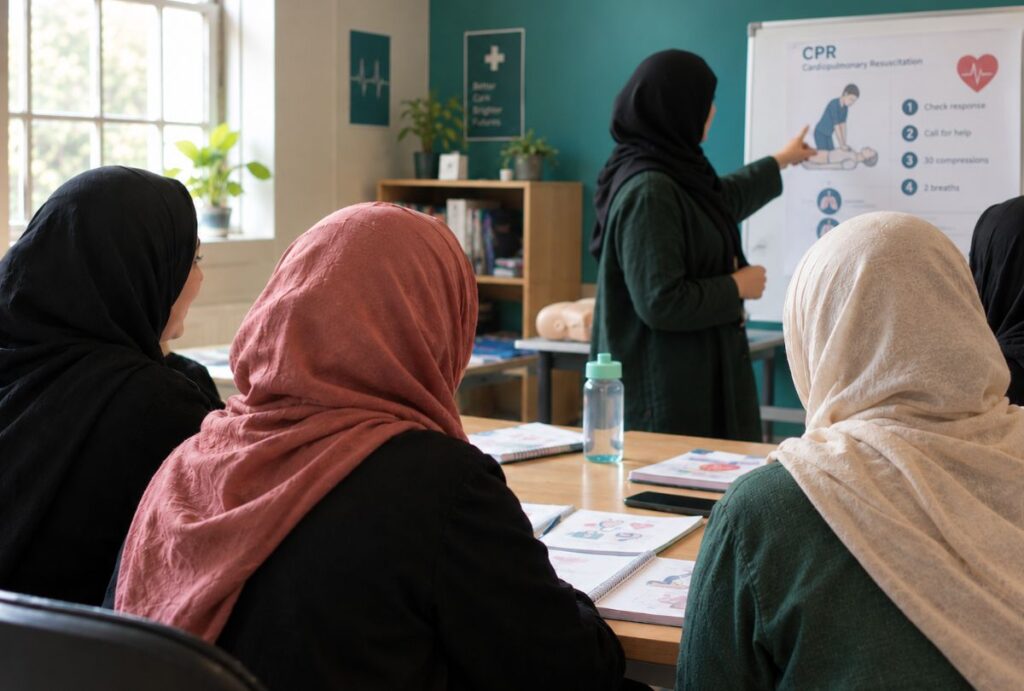
A skill can become much more than something learned during a training session. For families living with financial hardship, practical education can provide a starting point for earning an income, meeting essential needs and building greater stability.
Vocational education is designed to connect learning with practical application. When someone learns a trade and receives the tools or support needed to use it, that knowledge can become a livelihood.
For women supporting children, the effects can reach throughout the household. An additional income can help with food, schooling, healthcare and housing, while a skill can also be shared with children and others in the community.
The Quran reminds us:
Skills training cannot remove every challenge facing a family. It can, however, give someone practical knowledge and an opportunity to take steps towards a more secure future.
From Learning a Skill to Strengthening a Family
The real value of vocational education often becomes visible after the training is complete.
A participant may learn tailoring, agriculture, food processing, electrical work, mechanics or business management. If that skill corresponds with local demand, it can provide a route into employment or self-employment.
The potential progression is straightforward:
Training → practical ability → earning opportunity → household resilience.
Evidence from Pakistan demonstrates how these benefits can extend beyond the individual trainee. The Skills for Market program provided four months of tailoring training to rural women in southern Punjab. Its evaluation found that graduates were more likely to engage in tailoring-related work and that their households had 11.6% higher income than households of women who did not receive the training.
The evaluation also found that households receiving market-linkage support recorded 6.2% higher consumption, while children experienced improvements in certain nutrition indicators.
This suggests that training can have wider effects when people are also connected to the resources and markets needed to put their skills into practice.
Dhuha’s Journey Towards a New Livelihood
In Najaf, Iraq, Dhuha is using a newly acquired skill to create a different possibility for her family.
Dhuha is 34 years old and lives in southern Najaf with her two daughters. She has been a widow for six years and is the sole provider for her household.
Without formal employment and with limited family support, Dhuha had been relying on irregular assistance. As living costs increased, meeting everyday expenses became increasingly difficult.
Her daughters’ education was one of her major concerns. Food, clothing, healthcare and housing also had to be considered. After a lengthy process with government social services, Dhuha began receiving a monthly allowance, but this covered only a portion of her household expenses.
She responded by prioritizing essentials and cutting out anything she considered unnecessary. The uncertainty of not knowing whether the allowance would last through the month added to the pressure, particularly as the school year began.
Dhuha wanted to find a way to earn. What she lacked was the experience and equipment to begin.
Skills That Can Work Around Real-life Circumstances
In Dhul-Hijjah 2026, The Zahra Trust included Dhuha in its Economic Empowerment Program for Widows and the Vulnerable.
She joined a 30-hour workshop alongside 14 widows, orphans and vulnerable women, where she learned how to sew the Najafi women’s abaya. The program also provided her with an abaya and sewing equipment so she could begin the work from her home.
For Dhuha, home-based work provides a practical option. She can develop her new livelihood while remaining at home with her daughters.
She expects to sew four abayas each month to generate additional income.
There is also a potential benefit beyond her own earnings. Dhuha can pass the sewing skill on to her daughters, giving them practical knowledge that could be useful in the future.
As she described it:
“I longed to start a business, but I had no experience. Now my dream has come true by taking a course in sewing the women’s abaya that is distinctive in our provinces, and I can also sew clothes in cooperation with my daughters.”
Her experience demonstrates how a vocational opportunity can become part of a family’s longer-term plans.
A Livelihood Can Support More Than Income
Skills training can also be understood through the Islamic emphasis on work, effort and lawful provision.
The Prophet (saww) is reported to have said:
For someone facing hardship, earning an income can mean more than employment. It can mean being better positioned to provide food, education, healthcare and other necessities for a household.
Research from Zambia shows how livelihood interventions can affect these areas. The World Bank’s Supporting Women’s Livelihoods program combined life and business-skills training with mentoring, a productivity grant and savings-group support.
Three years after participation, households recorded a 62% increase in household income, a 38% increase in overall consumption and a 35% increase in food consumption. The program was also associated with a 30% reduction in extreme poverty and fewer months of insufficient food.
The findings reinforce the importance of pairing knowledge with practical support.
When Skills Reach the Next Generation
Economic empowerment can influence a family’s future as well as its present.
When parents have more reliable income, they may be better able to meet education costs, provide nutritious food and respond to healthcare needs. Children can also benefit from seeing practical skills modelled within their own household.
The International Labour Organization has reported examples that illustrate this connection.
In Ethiopia, Almaz received business training and used market research to move from food retailing into butchery. Her business eventually generated average monthly revenues of approximately 15,000 Ethiopian birr, and she used the profits to send all three of her children to school.
In Uganda, Benedicta and other women received training to turn discarded plastic straws into products for sale. After learning about production, marketing and exhibiting, the group increased its sales. Benedicta reported that the additional income helped her feed her family and return children who had previously been out of school to education.
The Quran says:
“…A person does not deserve (anything) but what he strives for…” (53:39)
For people experiencing economic hardship, practical training can help turn effort into a productive capability. It does not guarantee a particular result, but it can create a foundation from which people can pursue livelihood opportunities.
Learning Needs a Pathway to Opportunity
A training certificate is only one step. Sustainable change depends on what happens afterwards.
A participant may have the ability to perform a trade but lack the equipment, capital, customers or employment opportunity needed to generate an income. The local market also matters. Training must be relevant to what people can realistically sell or what employers need.
UNICEF’s “Let Us Learn” initiative found that vocational programs were particularly effective when they included a clear pathway into employment. In Bangladesh, 96% of graduates in one program found employment, with many joining the businesses of the master craftspersons who had trained them.
However, UNICEF also found that earnings could remain modest when participants entered low-paid informal work.
This is why effective skills training can include more than technical instruction. Mentoring, financial literacy, apprenticeships, equipment, start-up resources and connections to employers or customers can all help participants apply what they have learned.
For Dhuha, the sewing equipment provided after her training gives her a practical means of beginning to turn her new skill into income.
Prophet Muhammad (saww) is reported to have said:
A Skill Can Become a Legacy
Dhuha is one of 15 widows, orphans and vulnerable women who received this educational support. More than 150 women have previously been included in The Zahra Trust’s Women’s Economic Empowerment Program in Najaf.
Her story illustrates why the effects of training should not be measured only by immediate earnings.
She now has a skill she can practise at home, equipment to help her get started and an expectation of how much work she may be able to complete each month. She can also share what she has learned with her daughters.
The potential impact therefore reaches beyond one individual.
A practical ability can become an income source. An income source can contribute to household stability. And knowledge can move from one generation to the next.
Rasoolallah (saww) is reported to have said:
“The best livelihood is that which suffices.” (Bihar al-Anwar, v.77, p.168, n.4)
For families living with uncertainty, having enough to meet essential needs can be an important step toward greater security and dignity.
Give Skills That Can Build a Future
Education can have an impact long after a workshop ends.
For vulnerable women and families, practical skills can create pathways toward lawful employment, self-employment and greater household resilience. When training is combined with the tools and support needed to use those skills, its effects can continue beyond the classroom.
Dhuha’s experience provides one example. She began without the experience needed to establish a business. Through a 30-hour sewing workshop, she gained a practical skill and equipment that can help her work from home. She now expects to use that skill to generate additional income for her family.
She can also pass the skill on to her daughters.
Your support can help women and vulnerable families access practical training and the resources needed to turn learning into opportunity.
Give more than a lesson. Give a livelihood.
Frequently Asked Questions
What is skills training?
Skills training provides practical knowledge and abilities that can be applied to employment, self-employment or small businesses. Depending on the program, this can include tailoring, agriculture, food processing, technical trades and business development.
How can skills training help families?
A marketable skill can provide a pathway towards earning income. That income may help a household manage essential expenses such as food, education, healthcare and housing. The results depend on access to appropriate work, customers and markets.
Why is vocational education important?
Vocational education focuses on practical abilities that can be used in real working environments. For people experiencing financial hardship, it can offer a route toward earning a lawful livelihood and strengthening financial resilience.
Can skills training help women become financially independent?
It can create opportunities for women to earn through employment or self-employment. The effectiveness of these opportunities can increase when programs consider barriers such as mobility, family responsibilities, access to equipment and local market demand.
Does skills training benefit children too?
The impact can extend to children when additional household income helps parents meet costs related to education, food and healthcare. Children may also benefit by learning practical abilities directly from parents who have received training.
Why does skills training need support beyond the classroom?
Completing a course does not necessarily result in employment or income. Participants may also need tools, mentoring, financial literacy, start-up support or connections with employers and customers. These additional resources can help translate training into sustainable livelihood opportunities.
More from Blog
Bridging the Digital Divide Through Education
Explore how technology can make education more accessible and create equal learning opportunities for children. Support digital inclusion and help equip young…
The Future Starts with Education
Help vulnerable children access education, technology and skills for a brighter future. Support The Zahra Trust with a Back to School gift…
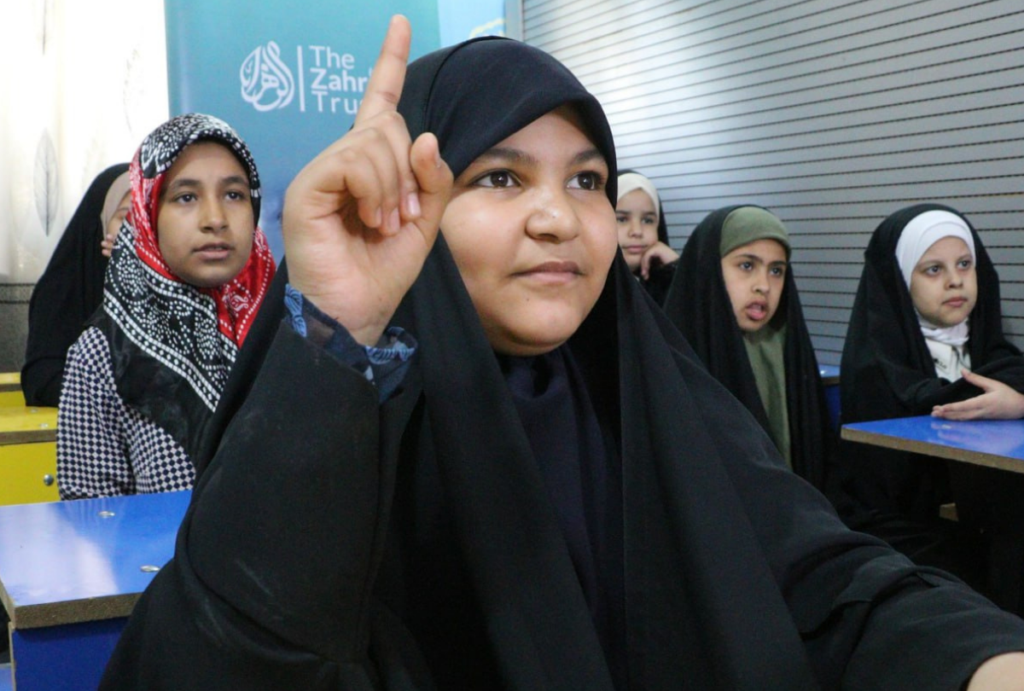
Rebuilding Futures Through Education: Restoring Hope, Dignity and Opportunity
When communities experience crisis, the effects can continue long after the immediate hardship has passed. Conflict, poverty, and displacement can interrupt a…