
Lessons From Imam Sajjad (as): Rebuilding After Hardship Through Faith, Patience and Service

When we remember Karbala, our minds are often drawn to sacrifice.
The bravery of Imam Hussain (as), the loyalty of his companions, and the immense suffering of the Ahlulbayt (as) stand at the heart of this tragedy.
Yet what followed Karbala is just as important to understand.
Because after loss comes the harder question.
How do you rebuild when everything has been taken from you?
How do you continue when grief reshapes your entire world?
For the surviving Imam, Imam Ali ibn Hussain (as), known as Imam Sajjad (as), this became his life’s responsibility.
He did not only survive Karbala.
He carried its message forward, rebuilt its meaning in the hearts of people, and guided a broken community back towards faith and purpose.
The Imam Who Survived Karbala
Imam Sajjad (as) was present in Karbala but was unable to participate in the battle due to severe illness.
The Muslim community had just witnessed one of the greatest tragedies in its history.
Fear had spread across society.
Oppression had tightened its grip.
And many people were unsure how to respond after witnessing such injustice.
Yet despite these circumstances, Imam Sajjad (as) remained firm in faith and focused on preserving the message of Karbala.
Allah (swt) says in the Holy Qur'an:
“Indeed, with hardship comes ease. Indeed, with hardship comes ease.” (94:5–6)
The life of Imam Sajjad (as) reflects this divine promise. Even in the aftermath of tragedy, he worked to rebuild hope through faith in Allah (swt).
Strength After Hardship
Strength is often misunderstood as physical power.
Karbala certainly demonstrated courage on the battlefield.
But Imam Sajjad (as) showed a different kind of strength.
The strength to continue after loss.
The strength to carry grief while still serving others.
The strength to remain faithful when the world around you has changed forever.
After Karbala, Imam Sajjad (as) faced captivity, grief, and political pressure.
Yet he never allowed hardship to define him.
Instead, he focused on guiding the community and preserving the teachings of Islam.
His example reminds us that resilience is not the absence of suffering.
It is the ability to continue forward with faith despite it.
For believers in Canada facing hardship today—whether financial stress, family difficulty, or personal loss—his life is a reminder that hardship does not last forever, and faith can carry us through it.
Patience With Purpose
Imam Sajjad (as) embodied patience, or sabr, throughout his life.
But patience in Islam is not passive.
It is not silence in the face of injustice.
It is not giving up.
True patience means remaining firm in faith while continuing to act with purpose.
Despite his circumstances, Imam Sajjad (as) continued teaching, guiding, and supporting others.
He preserved the knowledge of the Ahlulbayt (as) during one of the most difficult periods in Islamic history.
He remained committed to his responsibility regardless of personal hardship.
His life teaches us that patience must lead to action.
Believers are called to remain steadfast while continuing to serve their communities and support those in need.
Healing Through Faith
One of the most defining aspects of Imam Sajjad’s (as) life was his deep connection to worship.
His title, Al-Sajjad, reflects his devotion to sujood and remembrance of Allah (swt).
Through worship, he found strength in the most difficult of times.
And through prayer, he helped others reconnect with Allah (swt).
His collection of supplications, Sahifa Sajjadiyya, remains one of the most powerful spiritual legacies in Islam.
These prayers speak of hope, forgiveness, reliance on Allah (swt), compassion, and gratitude.
They remind believers that healing is not only physical or emotional.
It is deeply spiritual.
When believers turn to Allah (swt) in sincerity, they find strength they did not know they had.
Rebuilding Through Knowledge and Compassion
After Karbala, Imam Sajjad (as) focused on rebuilding the Muslim community through education and compassion.
He understood that survival alone was not enough.
Communities must be rebuilt through knowledge, values, and care for one another.
He preserved Islamic teachings during a time when truth was under threat.
He guided future generations through knowledge and spiritual leadership.
At the same time, he became known for his quiet but consistent charity.
He supported widows, orphans, and vulnerable families across his community.
Often, people only discovered his generosity after his passing.
His example teaches us that rebuilding communities begins with serving people.
When we support education, care for families, and uplift the vulnerable, we strengthen society as a whole.
A Legacy That Continues Today
More than thirteen centuries later, the lessons of Imam Sajjad (as) remain deeply relevant.
Across the world—including here in Canada—communities continue to face hardship.
Families struggle with displacement, poverty, and uncertainty.
Individuals carry grief, stress, and difficulty in silence.
Yet the message of Imam Sajjad (as) remains clear.
Faith brings strength.
Patience brings stability.
Service brings healing.
Knowledge brings continuity.
His life reminds us that even after the darkest moments, rebuilding is possible.
Carry Forward the Legacy of Imam Sajjad (as)
At The Zahra Trust Canada, we see how faith and service can transform lives every day.
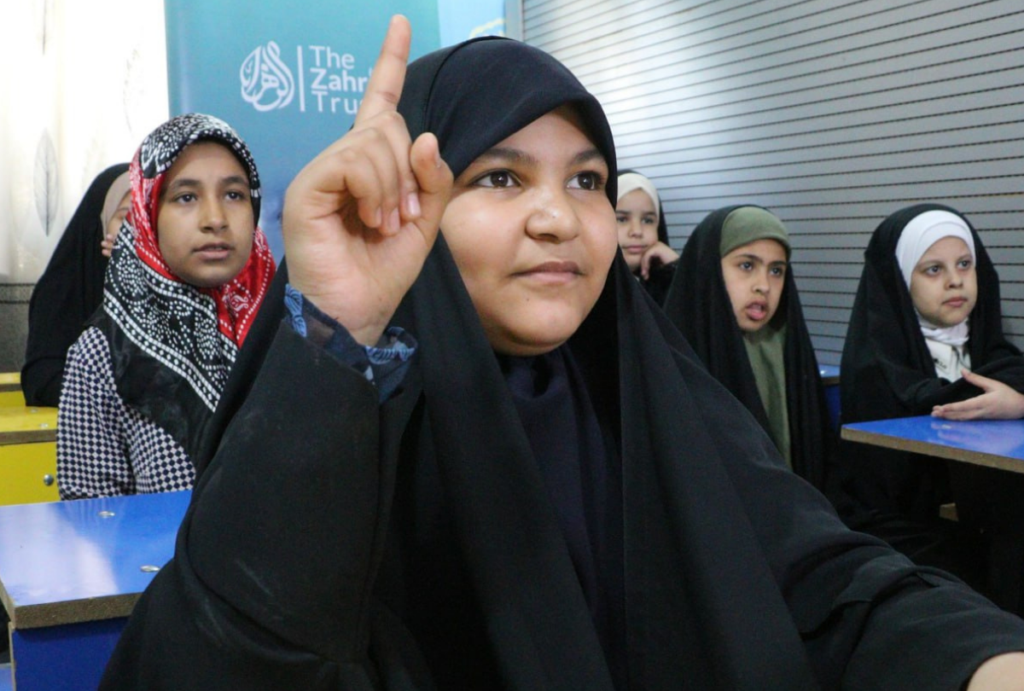
Through education programmes, humanitarian aid, and support for vulnerable families, communities are able to rebuild with dignity and hope.
This Muharram, honour the legacy of Imam Sajjad (as) through action.
Support those in hardship.
Invest in education.
Help rebuild communities.
Restore hope where it is needed most.
His legacy continues through every act of service done with sincerity and compassion.
Frequently Asked Questions
Who was Imam Sajjad (as)?
Imam Sajjad (as), also known as Imam Ali ibn Hussain (as) and Imam Zain ul Abideen (as), was the fourth Imam of the Ahlulbayt (as) and the son of Imam Hussain (as).
Why is Imam Sajjad (as) important after Karbala?
He preserved the message of Karbala and guided the Muslim community through grief, fear, and rebuilding.
Was Imam Sajjad (as) present at Karbala?
Yes, but he was unable to fight due to illness and survived the tragedy.
What does Imam Sajjad (as) teach about hardship?
He teaches that hardship should be met with patience, faith, and continued service to others.
What is Sahifa Sajjadiyya?
It is a collection of supplications from Imam Sajjad (as) that focuses on spirituality, ethics, and connection to Allah (swt).
How did Imam Sajjad (as) help rebuild society?
Through education, worship, charity, and guiding the next generation of the Muslim community.
What does patience mean in Islam?
It means remaining firm in faith while continuing to act with purpose and righteousness.
How can we follow Imam Sajjad (as) today?
By strengthening faith, helping those in need, supporting education, and serving our communities.
More from Blog

Bridging the Digital Divide Through Education
Explore how technology can make education more accessible and create equal learning opportunities for children. Support digital inclusion and help equip young…

The Future Starts with Education
Help vulnerable children access education, technology and skills for a brighter future. Support The Zahra Trust with a Back to School gift…
Rebuilding Futures Through Education: Restoring Hope, Dignity and Opportunity
When communities experience crisis, the effects can continue long after the immediate hardship has passed. Conflict, poverty, and displacement can interrupt a…