
In a world where much of what we do is measured by outcome, recognition, or return, Islam offers a different way of thinking about service. True value is found in sincerity, where actions are done purely for the sake of Allah (swt), without waiting for praise or repayment.
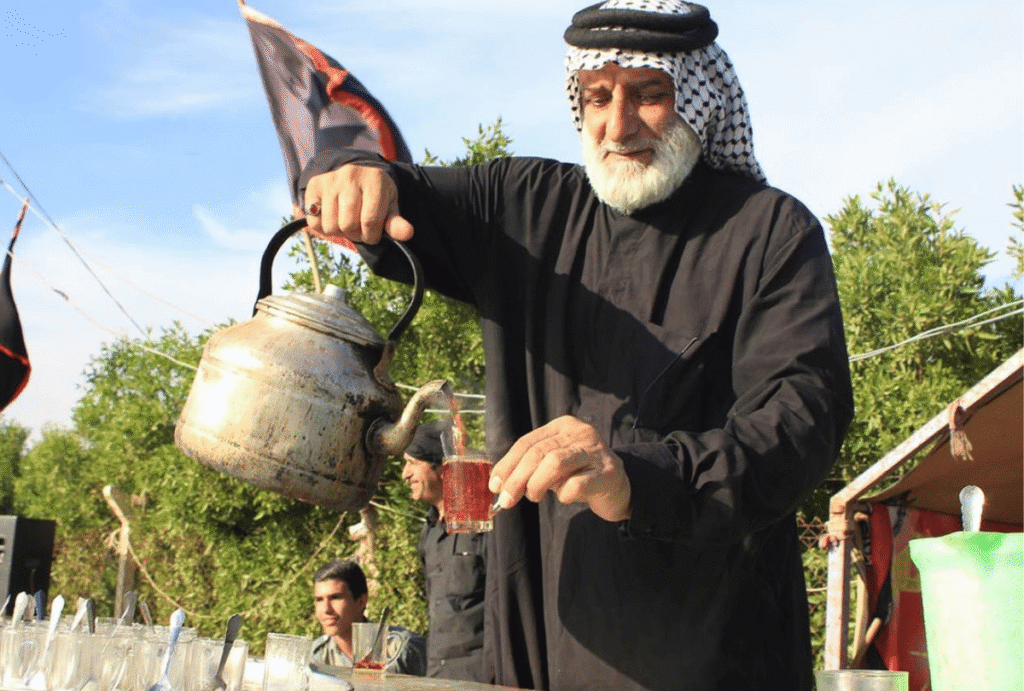
Arbaeen brings this principle to life in a powerful and visible way. Millions of pilgrims travel towards Karbala, while countless volunteers open their homes, kitchens, and hearts to serve them. Food is shared freely, water is distributed, shelter is offered, and care is provided without hesitation. No expectation of payment, no desire for recognition, only devotion to Allah (swt) and love for Imam Hussain (as).
Arbaeen transforms service into worship, showing that khidmah (service) is not transactional but deeply spiritual.
The spirit of giving on the path to Karbala
Along the journey of Arbaeen, generosity is not defined by wealth. Many families spend months saving from modest incomes just to serve pilgrims. Some even give from what little they have, prioritizing guests of Aba Abdillah (as) over their own comfort.
This reflects the words of Allah (swt):
What is given for Allah (swt) is never lost. It is multiplied in ways beyond human understanding.
Arbaeen makes this promise visible through action, where giving becomes an expression of trust in Allah (swt), not expectation from people.
Serving with sincerity, not recognition
One of the key lessons of Arbaeen is that the worth of a deed lies in its sincerity. Some acts are seen by others, while many remain hidden, but both are valuable when done for Allah (swt) alone.
Allah (swt) tells us:
This verse reminds us that while public acts of charity can inspire others, sincere giving that is free from showing off carries immense spiritual value. What matters most is the intention that accompanies every act of service.
A hadith attributed to Imam al-Sadiq (as) also says:
This spirit is evident throughout Arbaeen. Many volunteers serve quietly, seeking neither attention nor praise. They view every meal they prepare, every bottle of water they hand out, and every act of kindness they offer as an opportunity to serve for the sake of Allah (swt) and in honour of Imam Hussain (as).
When expectations affect our deeds
Islam repeatedly warns against allowing expectation to shape our actions. When service becomes tied to what we hope to receive from people, it loses its spiritual strength.
A hadith attributed to Imam Ali (as) says:
"There is no end to expectation." (Ghurar al-Hikam, n.1010)
A second hadith also attributed to him says:
"The fruit of expectation is the spoilage of deeds." (Ghurar al-Hikam, n.4641)
In another hadith attributed to Ima Ali (as), he says:
"A man who has high expectations is deficient in his action." (Bihar al-Anwar, v.77, p.421, n.40)
Arbaeen teaches the opposite. Service is offered without expectation, and goodness continues even when no recognition follows.
The Ahlulbayt (as) and the meaning of selfless giving
The Ahlulbayt (as) provide the purest example of service without expectation. Their lives were defined by sacrifice, sincerity, and compassion for others.
One of the most well-known examples is the household of Imam Ali (as), Lady Fatima al-Zahra (sa), Imam Hassan (as), and Imam Hussain (as). After fasting for several days, they prepared to break their fast, but each night a needy person came to their door. On three consecutive nights, they gave away their food, choosing others over themselves.
Their actions reflected complete sincerity and trust in Allah (swt). They served without seeking gratitude, recognition, or any worldly return. Their example captures the very spirit that fills the roads of Arbaeen today, where countless volunteers dedicate themselves to serving pilgrims purely for the sake of Allah (swt) and out of love for Imam Hussain (as).
Imam al-Baqir (as) also advised:
"Equip yourself with low expectation for this world's life." (Tuhaf al-Uqul, n.286)
Reducing our expectations of this world allows us to increase our focus on pleasing Allah (swt). It shifts our perspective from what we receive to what we are able to give.
Carrying the lessons of Arbaeen into daily life
The message of Arbaeen is not limited to one journey or one season. It is a way of life that can shape how we treat others every day.
Selfless service can be found in small, consistent actions: helping someone in need, giving quietly in charity, supporting vulnerable families, volunteering time, or offering kindness without expecting anything in return.
Allah (swt) reminds us:
This consistency shows that sincere service is not occasional, but a continuous state of the believer.
Arbaeen invites us to live with this same spirit wherever we are.
Serve the path of Hussain (as)
The journey to Karbala is carried not only by pilgrims, but also by those who serve them. Behind every step are countless individuals and communities providing food, shelter, medical care, and support through mowkebs and service networks.
Supporting these efforts ensures that the spirit of Arbaeen continues to reach millions of pilgrims each year. It helps sustain those who give their time, wealth, and energy solely for the sake of Allah (swt).
Your giving becomes part of this same path of devotion, helping service continue without expectation and allowing others to experience the generosity that defines Arbaeen.
Frequently asked questions
What does Arbaeen teach us about selfless service?
Arbaeen teaches that true service is done solely for the sake of Allah (swt), without expecting payment, praise, or recognition. Volunteers serve pilgrims as an act of devotion and love for Imam Hussain (as).
Why is sincerity important when serving others in Islam?
Sincerity ensures that actions are accepted by Allah (swt). Islam teaches that charity should be given purely for His sake, not for status or recognition, as intention defines the value of every deed.
How can I practise selfless service in my daily life?
You can practise selfless service through small acts such as helping others, volunteering, giving charity quietly, supporting those in need, or offering kindness without expecting anything in return.
How does supporting Arbaeen services continue the message of Imam Hussain (as)?
Supporting Arbaeen services helps sustain the mowkebs and volunteers who serve millions of pilgrims. It continues the legacy of Imam Hussain (as) by enabling hospitality, sacrifice, and service on a global scale.
More from Blog
The Future Starts with Education
Help vulnerable children access education, technology and skills for a brighter future. Support The Zahra Trust with a Back to School gift…
Rebuilding Futures Through Education: Restoring Hope, Dignity and Opportunity
When communities experience crisis, the effects can continue long after the immediate hardship has passed. Conflict, poverty, and displacement can interrupt a…
From Backpack to Graduation: The Ripple Effect of Education
Learn how an education donation can help remove barriers to learning and support a child's journey from school towards adulthood. Donate today…