
The decision that saved Islam: Imam Hasan (as) and the wisdom of the peace treaty
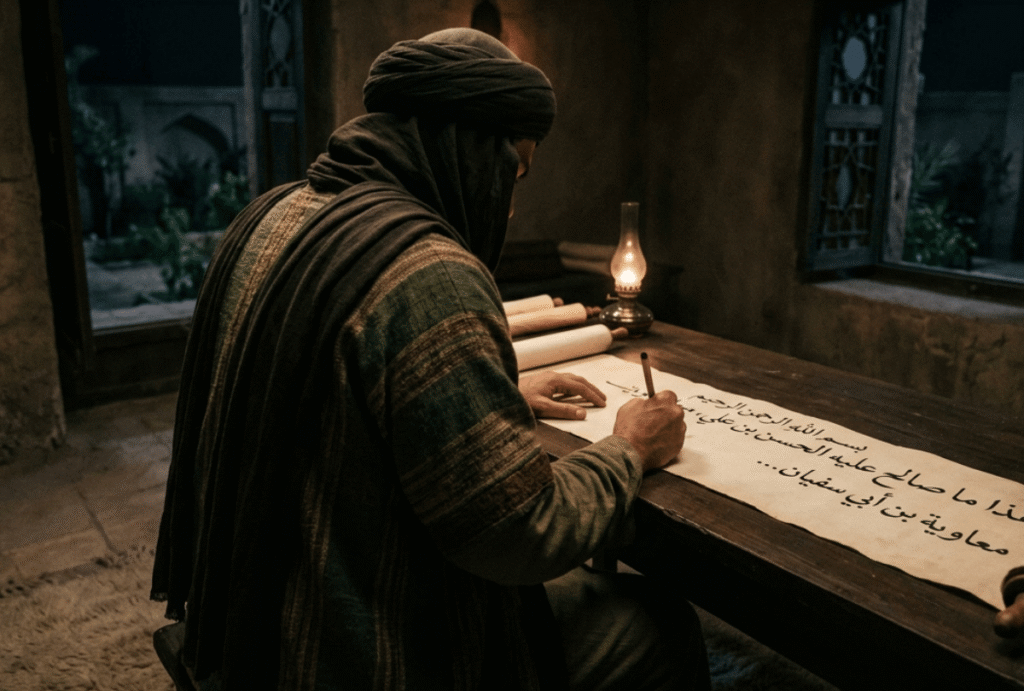
Not every moment of victory in Islam happens on the battlefield.
Some of the most important turning points in Islamic history come through patience, wisdom, and restraint.
One such moment was the decision of Imam Hasan (as) to sign a peace treaty with Muawiyah.
At the time, many people were unsure why the grandson of the Prophet Muhammad (saww) would step back from leadership.
But this decision was not weakness – it was wisdom.
Allah (swt) says in the Holy Qur'an:
“And reconciliation is best.” (4:128)
A choice few understood
When Imam Hasan (as) agreed to the peace treaty, the Muslim community was deeply divided.
His supporters were weakened, trust had broken internally, and continued conflict risked widespread Muslim bloodshed.
Many misunderstood the decision as retreat.
But in reality, it was a decision of courage and foresight.
Imam Hasan (as) chose to protect the Ummah from destruction.
Protecting the ummah
The situation was extremely fragile.
If war had continued, it would have caused severe loss of life and deepened division within the Muslim community.
The peace treaty was not surrender.
It was a protective decision to preserve Islam and prevent internal collapse.
Imam Hasan (as) prioritised the survival of the Ummah over immediate confrontation.
Exposing the truth
The treaty included conditions meant to uphold justice and accountability.
When those conditions were broken, the truth of the political situation became clear.
Through this, Imam Hasan (as) safeguarded the message of Islam without further violence or chaos.
His decision ensured clarity for future generations.
Different paths, one mission
Imam Hasan (as) and Imam Hussain (as) share one unified mission.
Both stood for truth and justice.
Both sought to protect Islam.
But they did so in different ways based on their circumstances.
Imam Hasan (as) through peace and restraint.
Imam Hussain (as) through sacrifice and resistance.
A legacy of wisdom
Imam Hasan’s (as) decision shows that leadership is not always about confrontation.
Sometimes it is about patience, wisdom, and protecting life even in the face of criticism.
His peace treaty remains one of the most significant decisions in Islamic history, preserving Islam for generations to come.
Frequently asked questions
Why did Imam Hasan (as) make a peace treaty?
He made the treaty to prevent Muslim bloodshed and protect the unity of the Islamic community.
Was Imam Hasan (as) in a position of strength?
No. His supporters were divided and weakened, making continued conflict unsustainable.
Did the treaty mean surrender?
No. It was a strategic decision to preserve Islam and protect the Ummah.
What was achieved through the treaty?
Temporary peace and the exposure of political realities that followed.
How does Imam Hasan (as) relate to Imam Hussain (as)?
Both Imams (as) worked toward the same goal of preserving Islam through different methods.
What can we learn from this today?
That wisdom, patience, and restraint can sometimes be the strongest form of leadership.
More from Blog

The Future Starts with Education
Help vulnerable children access education, technology and skills for a brighter future. Support The Zahra Trust with a Back to School gift…

Rebuilding Futures Through Education: Restoring Hope, Dignity and Opportunity
When communities experience crisis, the effects can continue long after the immediate hardship has passed. Conflict, poverty, and displacement can interrupt a…

From Backpack to Graduation: The Ripple Effect of Education
Learn how an education donation can help remove barriers to learning and support a child's journey from school towards adulthood. Donate today…