
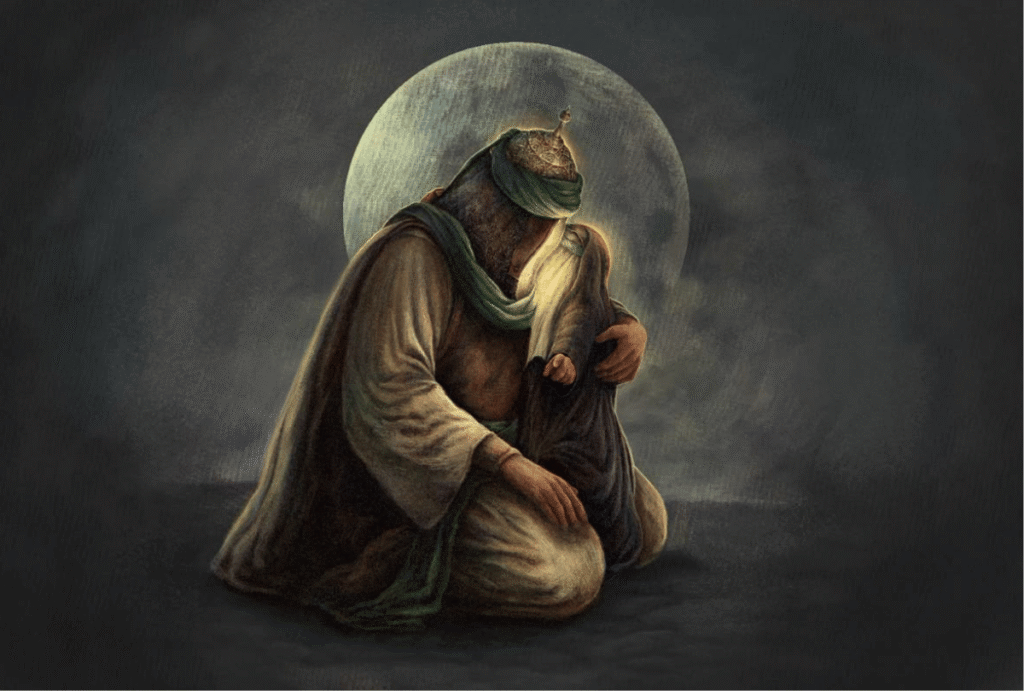
The legacy of Sayyida Sakina (sa) continues to inspire hearts centuries after the tragedy of Karbala and the journey to Shaam. Her life has become a lasting symbol of innocence confronted by oppression and a reminder that every child deserves to be protected with compassion and dignity.
Within the teachings of the Ahlulbayt (as), children are regarded as a precious trust from Allah (swt). The experiences of Sayyida Sakina (sa), the cherished young daughter of Imam Hussain (as), encourage us to look beyond remembrance and towards responsibility. During Muharram and Safar, her story reminds us that faith is expressed not only through reflection but also through caring for vulnerable children in our own communities and around the world.
The innocence at the heart of Karbala
Karbala is remembered as the defining stand between truth and tyranny. Amidst those historic events, Sayyida Sakina (sa) represents the innocence of childhood affected by unimaginable hardship.
She grew up in the blessed household of Imam Hussain (as), surrounded by worship, wisdom, and unwavering devotion to Allah (swt). Following the events of Karbala, she endured the hardships of captivity alongside the Ahlulbayt (as), becoming a powerful reminder of the suffering experienced by them.
Although her story belongs to history, its message reaches every generation. It calls us to remember the children of today who continue to face fear, displacement, and loss.
A Quranic command to care for the vulnerable
The Qur'an repeatedly reminds believers to uphold the rights and dignity of those who are most vulnerable. Caring for orphans and children in need is presented as a defining characteristic of sincere faith.
Allah (swt) says: “Therefore, as for the orphan, do not humiliate (him).” (93:9)
This verse is a timeless instruction to treat every orphan with honour, kindness, and compassion. When considered alongside the legacy of Sayyida Sakina (sa), it serves as a powerful reminder that no child should experience neglect or abandonment.
The remembrance of Karbala should strengthen our resolve to ensure that vulnerable children are met with mercy, care, and hope.
Love within the household of the Ahlulbayt (as)
The household of Imam Hussain (as) was founded upon love, mercy, and deep family bonds. The relationship between Imam Hussain (as) and Sayyida Sakina (sa) beautifully reflects those values.
This narration offers a moving glimpse into the affection that existed within the family of the Ahlulbayt (as). It reminds us that behind the tragedy of Karbala was a family united by love, making their sacrifices even more profound.
The legacy of Sayyida Sakina (sa) therefore speaks not only through suffering, but also through the enduring love that defined her home.
Sakina (sa) as the face for every vulnerable child
The legacy of Sayyida Sakina (sa) continues wherever children experience hardship, uncertainty, or grief.
Across the world, millions of children continue to endure challenges such as:
The loss of one or both parents.
Displacement caused by conflict or crisis.
Poverty and food insecurity.
Emotional pain and trauma.
Limited opportunities for education and stability.
Her story encourages us to recognize the humanity behind every child facing adversity. Rather than seeing numbers or headlines, we are reminded to see individuals who deserve protection, dignity, and hope.
Finding compassion through the example of the Ahlulbayt (as)
The lives of the Ahlulbayt (as) consistently demonstrate that compassion must be reflected in action. Their example teaches believers to stand alongside those who are vulnerable and to uphold justice with mercy.
The events surrounding Karbala continue to inspire people to defend the dignity of others, especially children who cannot defend themselves. Through patience, faith, and resilience, the Ahlulbayt (as) showed that devotion to Allah (swt) is inseparable from caring for His creation.
The legacy of Sayyida Sakina (sa) reminds us that genuine compassion is demonstrated through practical support that brings hope to vulnerable children and families.
Our shared responsibility today
The message carried by Sayyida Sakina’s (sa) legacy remains deeply relevant in our modern world.
Countless children continue to live without the safety, security, or support that every child deserves. Their circumstances invite each of us to consider how we can make a meaningful difference.
During Safar, we can reflect by asking ourselves:
How can we better support children facing hardship?
What role can we play in caring for orphans and vulnerable families?
How can our remembrance of Karbala inspire lasting acts of compassion?
True remembrance is not limited to reflection alone. It should encourage us to respond with generosity, kindness, and meaningful action.
Continuing her legacy beyond Muharram and Safar
The lessons of Karbala are meant to shape the way we live long after the days of remembrance have passed. The legacy of Sayyida Sakina (sa) calls upon us to transform reflection into meaningful service.
Supporting orphan care through The Zahra Trust is a powerful way to continue the values embodied by the Ahlulbayt (as). Every child who receives care, encouragement, and protection reflects a commitment to preserving those values for future generations.
Give beyond the season by supporting orphan care. Together, we can build a legacy that lives on by helping vulnerable children experience the compassion, dignity, and hope that lie at the heart of the message of Karbala.
Frequently asked questions
Who was Sayyida Sakina (sa)?
Sayyida Sakina (sa) was the beloved young daughter of Imam Hussain (as). She is remembered for her innocence, devotion, and perseverance during the tragedy of Karbala and the difficult journey that followed.
Why is Sayyida Sakina (sa) important in Islamic history?
She represents the suffering experienced by innocent children during Karbala and remains a lasting symbol of patience, dignity, and compassion in the face of oppression.
What does the Quran say about caring for orphans?
The Quran says in verse 9 of Surah ad-Duha, “Therefore, as for the orphan, do not humiliate (him).” This verse reminds believers to protect the dignity and rights of orphaned and vulnerable children.
How is Sayyida Sakina (sa) connected to orphan care today?
Her story encourages Muslims to care for orphaned and vulnerable children by providing compassion, protection, and practical support that helps improve their lives.
What can we learn from the legacy of Sayyida Sakina (sa)?
Her legacy teaches us to uphold compassion, justice, patience, and mercy while standing beside those who are most vulnerable.
How can we honour her memory in modern times?
We can honour her memory by supporting orphan care, helping vulnerable families, and ensuring that children have opportunities to grow with dignity, hope, and security.
More from Blog
The Future Starts with Education
Help vulnerable children access education, technology and skills for a brighter future. Support The Zahra Trust with a Back to School gift…
Rebuilding Futures Through Education: Restoring Hope, Dignity and Opportunity
When communities experience crisis, the effects can continue long after the immediate hardship has passed. Conflict, poverty, and displacement can interrupt a…
From Backpack to Graduation: The Ripple Effect of Education
Learn how an education donation can help remove barriers to learning and support a child's journey from school towards adulthood. Donate today…