
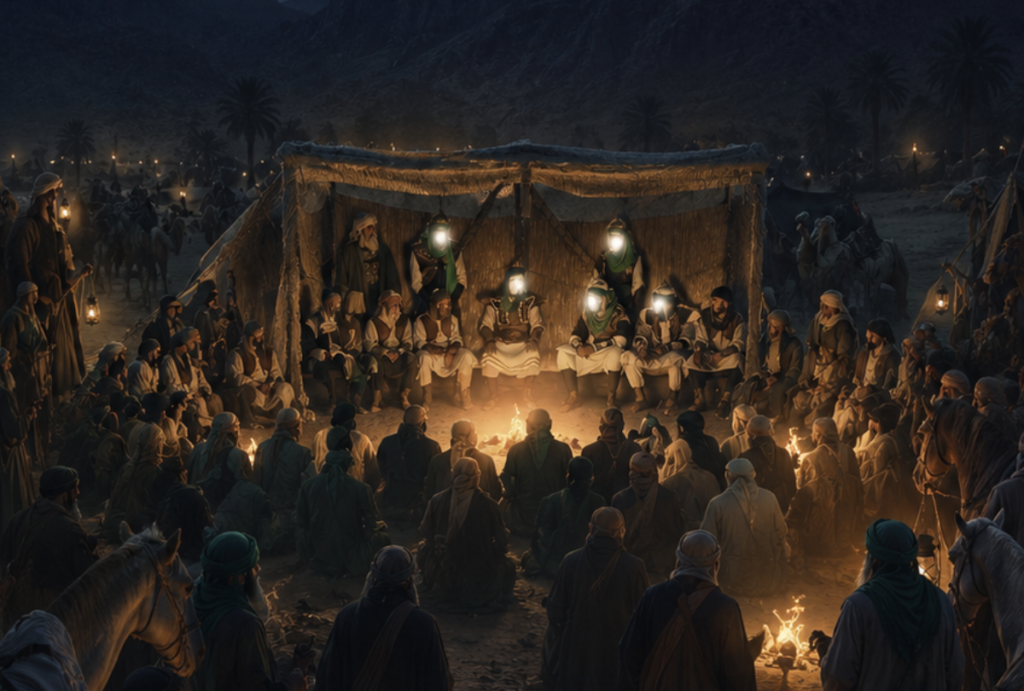
The Night of Ashura was one of the most memorable and spiritually significant nights in Islamic history. It was the final evening before the events of Ashura, when Imam Hussain (as), his family, and his companions prepared themselves for the sacrifices that awaited them in Karbala.
As the sun set on the 9th of Muharram, those gathered in the camp of Imam Hussain (as) knew they faced an uncertain morning. They were heavily outnumbered and surrounded by the forces of Yazid. Yet the atmosphere within the camp was not dominated by fear. Instead, it was marked by worship, reflection, and unwavering trust in Allah (swt).
For generations, Muslims have looked to the Night of Ashura as a source of inspiration. It demonstrates how faith, loyalty, and devotion can remain strong even in the most difficult circumstances.
Why the Night of Ashura matters
The Night of Ashura is important because it allows us to understand the spiritual foundation of Karbala. While the Day of Ashura is remembered for its sacrifice and martyrdom, the preceding night reveals the values that motivated those who stood with Imam Hussain (as).
The events of the night show that the movement of Imam Hussain (as) was rooted in principle rather than personal interest. He stood to defend truth, justice, and the teachings of Islam, even when doing so carried immense personal cost.
The companions who remained with him understood the significance of this stand. Their choices reflected sincere belief and a willingness to place faith above worldly concerns.
For this reason, the Night of Ashura remains a powerful reminder that character is often revealed during times of trial.
Permission to leave
Understanding the danger they faced, he made it clear that the enemy’s primary objective was him. He did not want anyone to remain out of obligation or pressure. Before giving them the opportunity to leave, he praised both his companions and his family, reportedly saying:
Maqtal al-Hussain
After expressing his gratitude, Imam Hussain (as) relieved them of their duty and granted them permission to depart if they wished.
This was an extraordinary demonstration of leadership. Rather than demanding allegiance, he ensured that every individual present was free to make their own choice.
The courage of the companions
The response of the companions became one of the defining moments of Karbala.
Despite being given complete freedom to leave, they chose to remain with Imam Hussain (as). One by one, they expressed their loyalty and commitment, making it clear that they would not abandon him.
Their decision was not motivated by personal gain or expectation of victory. Instead, it was based on faith, conviction, and a recognition of the truth represented by Imam Hussain (as).
The companions understood the risks involved. They knew that the coming day would bring hardship and sacrifice. Yet they chose to stand firm.
Their loyalty continues to inspire believers because it was rooted in principle. It serves as a timeless reminder that supporting truth often requires courage and selflessness.
A night filled with worship and preparation
Following this powerful exchange, the camp of Imam Hussain (as) devoted itself to worship and spiritual preparation.
Historical reports describe the companions spending the night in prayer, recitation of the Holy Quran, supplication, and remembrance of Allah (swt). The sounds of devotion could be heard throughout the camp as they strengthened their connection with their Creator.
While the opposing forces prepared for battle, Imam Hussain (as) and his companions prepared their hearts and souls.
This atmosphere reflected a deep sense of certainty and trust in Allah (swt). The companions were aware of what awaited them, yet they remained focused on worship and spiritual readiness.
The spirit of that night is beautifully reflected in the words of the Holy Quran:
These verses capture the tranquillity and submission that characterised the camp of Imam Hussain (as) during its final night together.
Loyalty through the example of the companions
The companions of Karbala left behind an example of loyalty that continues to inspire people centuries later.
When Imam Hussain (as) granted permission for everyone to leave, he removed every reason for someone to stay except sincere belief. There was no pressure, no reward, and no expectation. Each individual was free to decide their own path.
Yet every companion chose to remain.
Their loyalty was based on a clear understanding of the values Imam Hussain (as) represented. They recognised that standing beside him meant standing for justice, truth, and faith.
This example teaches that loyalty is more than words. It is demonstrated through choices and actions, especially when those choices involve sacrifice. The companions knew the dangers ahead, but they refused to abandon what they believed was right.
Their decision remains one of the most powerful lessons of the Night of Ashura. It reminds us that genuine loyalty requires sincerity, courage, and commitment to principle.
Whether in our faith, our families, or our communities, the companions of Karbala show us the importance of standing firm in support of what is right.
What the Night of Ashura teaches us today
The lessons of the Night of Ashura remain relevant for people in every generation.
One of the most important lessons is the value of sincerity. Imam Hussain (as) wanted those around him to remain by choice, not because they felt obligated. This teaches us that true commitment comes from conviction.
The night also highlights the importance of turning to Allah (swt) during times of difficulty. The companions responded to uncertainty with worship, prayer, and trust rather than fear.
Finally, the Night of Ashura reminds us that standing for truth often requires sacrifice. The companions chose principle over personal comfort, leaving behind an example that continues to guide believers today.
Their actions encourage us to uphold justice, support worthy causes, and remain steadfast in our values.
Final reflections
The Night of Ashura was a night of faith, devotion, and remarkable loyalty. It revealed the character of Imam Hussain (as), the strength of his companions, and the spiritual foundation of the movement of Karbala.
Given the freedom to leave, the companions chose to remain. Faced with uncertainty, they turned to worship. Knowing what lay ahead, they stood firm in their commitment to truth.
Their example continues to inspire people around the world and demonstrates the enduring power of faith in action.
To answer “Labbayk Ya Hussain” is to carry his message beyond remembrance.
Give in honour of Imam Hussain (as) and turn mourning into mercy.
FAQs
What happened on the Night of Ashura?
The Night of Ashura was the evening before the Battle of Karbala. Imam Hussain (as) gathered his companions, gave them permission to leave, received their renewed pledges of loyalty, and spent the night with his family and supporters in worship and prayer.
Why did Imam Hussain (as) tell his companions they could leave?
Imam Hussain (as) wanted to ensure that nobody remained with him out of obligation or pressure. He made it clear that they were free to depart, allowing each person to choose whether to stay based on sincere conviction.
How did the companions respond?
The companions refused to leave Imam Hussain (as). They reaffirmed their loyalty and commitment, choosing to remain by his side despite knowing the dangers they would face the following day.
What did the camp do during the night?
Historical accounts describe the camp spending the night in prayer, recitation of the Holy Quran, supplication, and remembrance of Allah (swt) as they prepared spiritually for the Day of Ashura.
Why is the Night of Ashura important?
The Night of Ashura is important because it demonstrates the faith, loyalty, courage, and devotion of Imam Hussain (as), his family, and his companions. It offers timeless lessons about standing for truth and trusting in Allah (swt) during times of difficulty.
More from Blog
Bridging the Digital Divide Through Education
Explore how technology can make education more accessible and create equal learning opportunities for children. Support digital inclusion and help equip young…
The Future Starts with Education
Help vulnerable children access education, technology and skills for a brighter future. Support The Zahra Trust with a Back to School gift…
Rebuilding Futures Through Education: Restoring Hope, Dignity and Opportunity
When communities experience crisis, the effects can continue long after the immediate hardship has passed. Conflict, poverty, and displacement can interrupt a…