
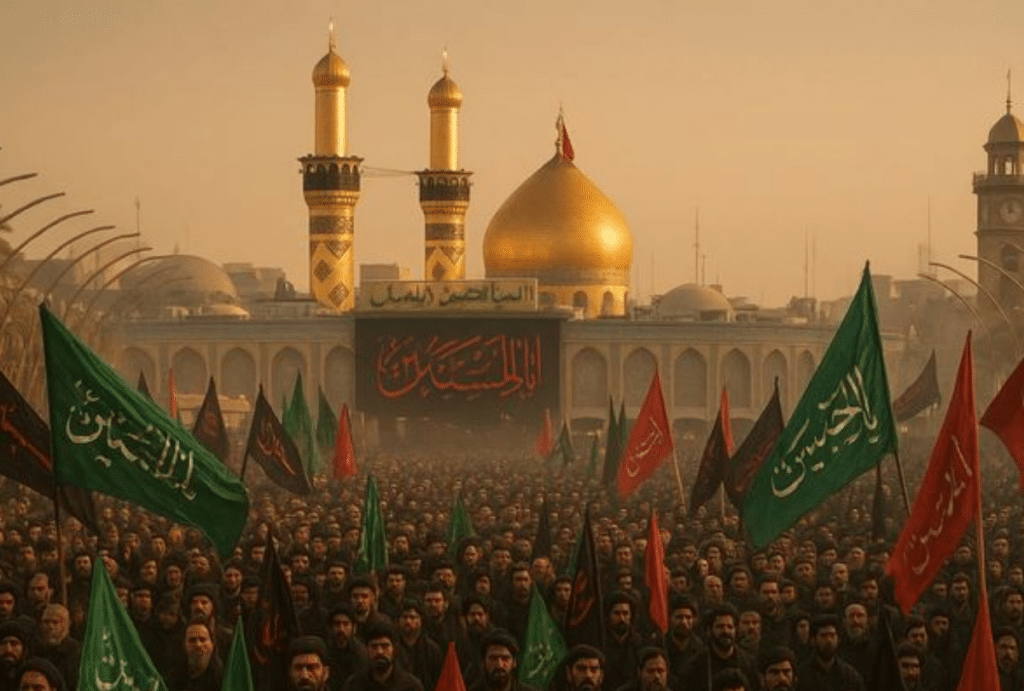
Ziyarat is commonly understood as visiting the shrines of the Imams (as), yet its true meaning goes beyond travelling to a physical place.
Whether one stands at a shrine or recites from a distance, ziyarat represents an ongoing relationship with their teachings.
This relationship is grounded in a clear Quranic instruction.
Allah (swt) says:
“(O Muhammad, say to your followers:) “I do not ask of you any reward for it (i.e., the task of conveying Allah’s message to you) except love for (my) near relatives.”
Surah Ash-Shuraa, Ayah 23
Ziyarat becomes one of the most meaningful ways this love is expressed, turning belief into something active and lived.
What is ziyarat? A unified understanding
Physical expression: Visiting the shrines
The journey itself carries meaning, as it reflects effort, intention, and devotion.
Being present in these spaces allows for deeper reflection on their lives and sacrifices.
Spiritual expression: Recitation and remembrance
At the same time, ziyarat is not restricted by location.
These recitations carry the same purpose as visiting in person.
Both forms work together to show that ziyarat is not tied to distance.
It is a shared expression of connection that can be experienced in different ways.
The spiritual purpose of ziyarat
Love for Ahlulbayt (as)
Ziyarat reflects a sincere love for the Ahlulbayt (as).
It moves beyond words and becomes something that is demonstrated through remembrance and continued loyalty.
Seeking closeness to Allah (swt)
Honouring the Imams (as) is a way of drawing closer to Allah (swt).
Their lives serve as guidance and remembering them helps strengthen one’s relationship with faith and purpose.
Inner transformation
Ziyarat encourages individuals to pause and reflect.
It creates an opportunity to evaluate whether one’s actions align with the teachings of the Imams (as), making it a meaningful and ongoing spiritual practice.
This connection is highlighted in the narration of the Prophet (saww):
“On Judgment Day, I will visit one who has performed my ziyarat or the ziyarat of anyone from my progeny; till I save him from the terrors of that day.”
Kamil al-Ziyarat, ch.1, n.4
Ziyarat and the legacy of the Imams (as)
A legacy of justice and truth
The Imams (as) consistently upheld justice and truth, even in the face of difficulty.
Their lives reflect unwavering commitment to Allah (swt) and serve as examples for believers in every generation.
The example of Karbala
The stand of Imam Hussain (as) in Karbala remains central to understanding ziyarat.
His sacrifice represents a clear and lasting message about standing for what is right, regardless of the cost.
From memory to responsibility
Ziyarat encourages believers to move beyond remembrance.
It invites them to carry forward the values of the Imams (as) through their own actions and decisions.
This is further reinforced in the narration of Imam al-Baqir (as):
“Order our Shias to visit the grave of Imam Hussain (as.), because his ziyarat increases sustenance, prolongs life and keeps afflictions away. And his ziyarat is obligatory on every believer who believes that Husain (as) is an Imam appointed by Allah (swt).”
Kamil al-Ziyarat, ch.61, n.1
Forms of ziyarat: Different paths, same message
Through presence
Visiting the shrines provides a direct and personal experience.
The act of travelling itself becomes meaningful, reflecting commitment and sincerity while allowing time for reflection.
Through words
Ziyarat is also practised through recitation.
Some widely known texts include:
- Ziyarat Ashura
- Ziyarat Arbaeen
- Ziyarat Warith
- Ziyarat Nahiya
- Ziyarat of the Ahlulbayt (as) for each day of the week
These recitations combine remembrance with clear affirmations of belief and loyalty.
One message, many expressions
Whether through visiting or reciting, the essence of ziyarat remains the same.
It is a way of maintaining a connection with the Imams (as) and their teachings.
Living the spirit of ziyarat today
Inspired by the journey
For those who perform ziyarat in person, the experience often leads to deeper reflection.
It encourages individuals to think about how they can better live according to the values of the Imams (as).
Strengthened through recitation
Reciting ziyarat regularly helps keep this connection active.
It provides a consistent reminder of one’s beliefs and responsibilities.
Turning remembrance into action
Ziyarat becomes meaningful when it shapes behaviour.
This includes:
- Standing for justice
- Showing patience in hardship
- Upholding truth in everyday actions
Through this, ziyarat becomes part of everyday life rather than a separate act of devotion.
Final reflections
Ziyarat is not limited to a single form or moment.
It is a continuous practice that brings together remembrance, reflection, and action.
Whether through visiting or reciting, it allows believers to maintain a meaningful connection with the Imams (as).
By engaging with ziyarat, individuals carry forward the legacy of the Imams (as), ensuring that their message continues to guide and inspire in everyday life.
Frequently Asked Questions
Ziyarat refers to visiting the shrines of the Imams (as) or reciting words of salutation to them. It is a way to maintain a connection through remembrance and devotion.
No, ziyarat includes both visiting and reciting. Each form reflects the same intention of honouring and connecting with the Imams (as).
Imam Hussain (as) is central because of his sacrifice in Karbala. His stand continues to shape how believers understand justice and faith.
Common recitations include Ziyarat Ashura, Ziyarat Arbaeen, Ziyarat Warith, and Ziyarat Nahiya. These texts express remembrance and loyalty.
Ziyarat helps strengthen faith, encourages reflection, and reinforces commitment to the teachings of the Imams (as). It also carries spiritual benefits mentioned in hadith.
More from Blog

Bridging the Digital Divide Through Education
Explore how technology can make education more accessible and create equal learning opportunities for children. Support digital inclusion and help equip young…

The Future Starts with Education
Help vulnerable children access education, technology and skills for a brighter future. Support The Zahra Trust with a Back to School gift…
Rebuilding Futures Through Education: Restoring Hope, Dignity and Opportunity
When communities experience crisis, the effects can continue long after the immediate hardship has passed. Conflict, poverty, and displacement can interrupt a…